 Bellingham Siding
 Deck Building in Lynden: What the Local Climate Actually Does to a Deck
Lynden sits inland from Bellingham Bay, out in the Nooksack River valley, and that changes what a deck has to survive out here compared to a lot closer to the water. Homes near the bay deal with salt-laden air working into fasteners and finishes. Lynden decks fight a different fight: open farmland exposure with less tree canopy than town lots, a river valley that holds humidity and fog longer into the morning, and the same long, wet Whatcom County winters that keep every exterior wood surface from ever fully drying out between storms.
That combination matters more than most homeowners realize when they're picking materials or planning a build. A deck design that works fine in a drier climate can trap moisture here, grow moss in the shaded corners, and start showing rot or corrosion years before it should. Building correctly for this specific area means designing around the moisture, not just picking decking that looks good in a showroom.
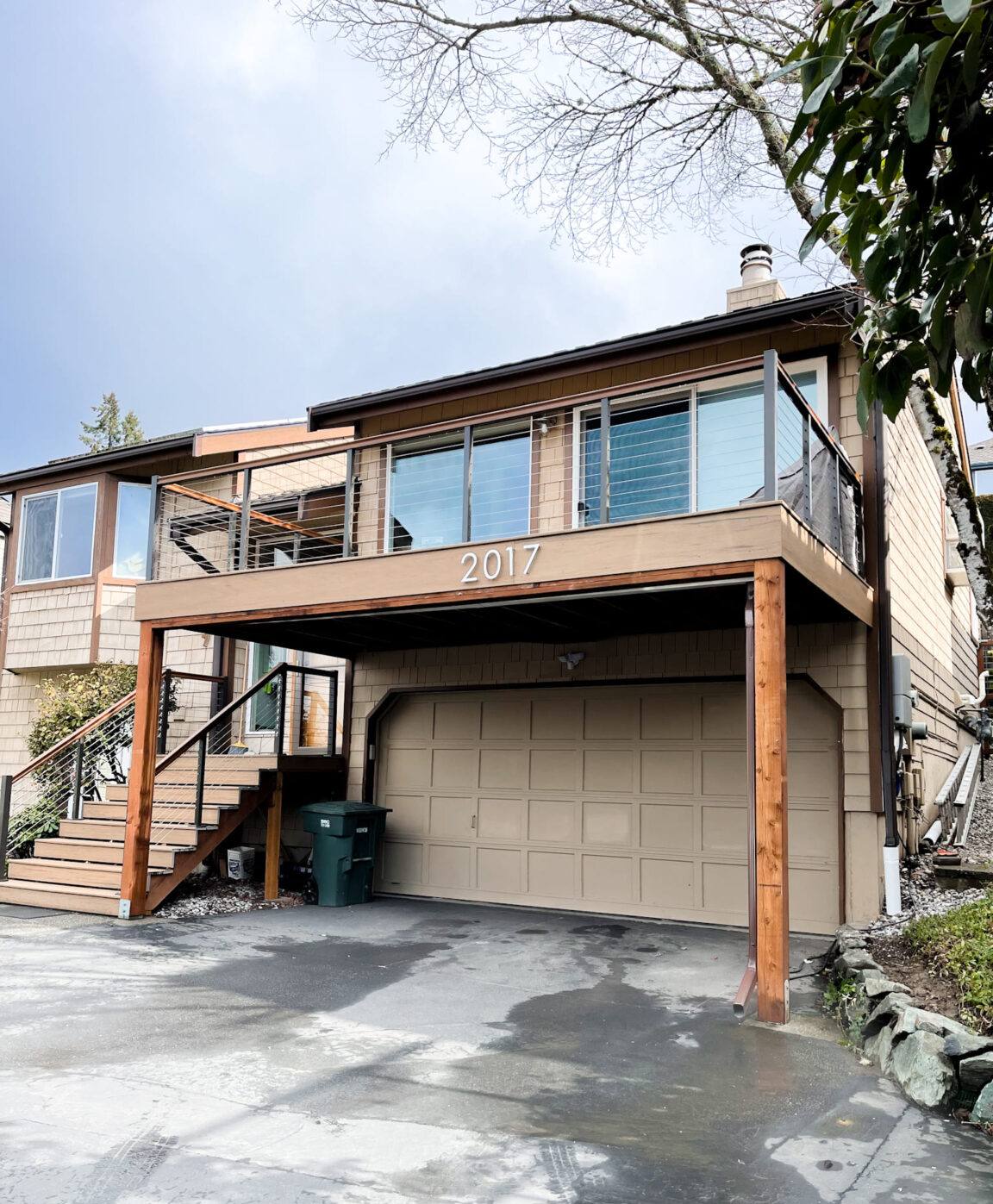
The Real Problems We See on Decks Built in This Area
Moisture Trapped at the Ledger Board
The ledger board — where the deck attaches to the house — is the single most common failure point on any deck in this climate. If it isn't flashed correctly, water works its way behind the siding and into the house framing, and you don't find out until there's rot or a soft spot. This is a bigger issue in a valley with steady rainfall and slow-drying humidity than it is in drier parts of the country, and it's the detail we check first on any deck we're asked to repair.
Moss and Algae on Low or Shaded Decks
Whatcom County's moss season runs long, and any deck surface that stays damp and shaded — under a covered porch, on the north side of a house, near mature trees — will start growing moss and algae faster than an exposed, sunny deck. Beyond looking bad, moss holds moisture against the decking material and makes the surface genuinely slick and unsafe when wet.
Fastener and Hardware Corrosion
Cheap or mismatched fasteners are one of the fastest ways a deck fails early here. Galvanized coatings that are too thin, or hardware that isn't rated for ground contact or treated lumber, corrode and weaken well before the decking boards themselves show wear.
Footing Movement in River Valley Soil
Lynden's low-lying, river valley terrain tends to hold more moisture in the soil than higher ground closer to Bellingham. Footings that aren't poured to proper depth and bearing conditions can shift slightly over time in soil that's regularly saturated, which shows up later as a deck that feels bouncy or slightly out of level.
Choosing the Right Decking Material for Lynden
There's no single "best" decking material — the right choice depends on how much maintenance you want to do, your budget, and how exposed the deck is to sun, shade, and moisture. Here's how the common options stack up for this climate specifically:
| Material | Moisture & Moss Resistance | Maintenance Needed | Typical Lifespan | Relative Cost |
|---|---|---|---|---|
| Pressure-Treated Wood | Fair — needs sealing to perform well | Annual cleaning and re-sealing | 10–15 years with upkeep | Low |
| Cedar | Good natural resistance, but surface needs care | Regular cleaning, periodic oiling | 15–20 years with upkeep | Moderate |
| Capped Composite | Very good — resists moisture absorption | Occasional washing, no sealing | 25+ years | Moderate to High |
| PVC Decking | Excellent — doesn't absorb moisture | Occasional washing | 25+ years | High |
Our honest take: pressure-treated wood is a fine choice if you don't mind the yearly upkeep and want the lowest upfront cost. Cedar looks great and holds up well, but it's a real commitment to keep it looking that way in a climate this wet. Capped composite is what we recommend most often for Lynden decks that get real weather exposure and shade — the moisture resistance matters more here than in a drier climate, and it cuts down dramatically on the moss and mildew problems we see on older wood decks.
What a Correctly Built Deck Requires Here
A deck that's going to hold up to Whatcom County weather needs a few things done right that aren't always obvious from the outside:
- Proper ledger flashing — metal flashing installed correctly behind the siding, not caulk alone, to keep water out of the house framing.
- Joist tape on the framing — a protective membrane over the tops of joists and beams so standing water doesn't sit directly on bare, exposed wood.
- Adequate airflow underneath — proper spacing and ventilation so the underside of the deck can actually dry out between rain events instead of staying damp for weeks.
- Corrosion-rated fasteners and hardware — matched to the type of lumber and connectors being used, not just whatever is cheapest.
- Footings poured to proper depth and bearing — sized for the soil conditions on the lot, not a one-size-fits-all footing.
- Board spacing that accounts for expansion — wood and composite both move with moisture, and gaps that are too tight or too wide cause problems within a year or two.
Our Deck Building Process
We keep the process straightforward and make sure you know what's happening at each stage:
- Site visit and design. We look at sun exposure, drainage, shade patterns, and how the deck will attach to your house, then talk through material options based on how you'll use the space.
- Permitting. Deck permits and footing requirements vary depending on whether the property falls under Whatcom County or a local jurisdiction, and we handle that paperwork so it's done correctly the first time.
- Footings and framing. This is where we protect the whole structure — proper depth, proper hardware, proper ledger flashing before anything else goes on.
- Decking and railing installation. Boards, railings, and any built-in features go on with attention to spacing, fastener pattern, and drainage.
- Final walkthrough. We go over the finished deck with you, including what maintenance it will and won't need going forward.
Permits, Footings, and Local Requirements
Deck construction in and around Lynden is subject to Whatcom County building codes, and footing depth requirements are tied to local soil and frost conditions rather than a national default. Skipping or shortcutting the permit process on a deck attached to your home is a common mistake — it can create real problems later with insurance claims or when you go to sell the house. We pull the correct permits and build to the depth and bearing requirements the local jurisdiction actually calls for, rather than guessing.
Railings and Hardware That Actually Hold Up
Railings take a beating in this climate — they're the part of the deck most exposed to driving rain, and the connection points are where corrosion shows up first. We use fasteners and structural hardware rated for the specific lumber or composite being used, sized correctly for the load the railing needs to carry, not just whatever happens to be on the shelf. This is a small detail on paper, but it's one of the most common shortcuts we see on decks that come apart early.
Maintaining Your Deck Once It's Built
Even a well-built deck needs some seasonal attention in a climate like ours. A simple yearly routine keeps most problems from ever starting:
- Sweep debris and standing leaves off the deck surface regularly through fall, especially in shaded corners where moisture collects.
- Wash the surface at least once a year to remove early moss and algae growth before it takes hold.
- Check the ledger board flashing and the area where the deck meets the house for any signs of water staining or soft wood.
- Inspect fasteners and railing connections yearly for corrosion or looseness.
- Re-seal wood decking on the schedule appropriate to the product — don't wait until it's visibly gray and worn.
- Keep gutters and downspouts clear so runoff isn't draining directly onto or under the deck.
Why Hiring a Crew That Already Works in Lynden Matters
A deck built to a generic national standard isn't automatically wrong, but it's not necessarily built for what actually happens to wood and hardware in a Whatcom County winter. A crew that already works decks in Lynden knows which permitting office to go through, what the local soil and moisture conditions actually demand for footings, and which details — ledger flashing, fastener grade, board spacing — matter most given how long this area stays damp. That familiarity isn't something you can shortcut, and it's the difference between a deck that needs attention again in a few years and one that holds up the way it should.
If you're planning a new deck or replacing one that's showing its age, we're happy to come take a look and talk through what makes sense for your property. There's no cost and no pressure — just a straight assessment of what your home actually needs. Use the form below to request a free estimate.