 Bellingham Siding
 Birch Bay's Climate Is Harder on Siding Than Most Homeowners Realize
Birch Bay sits right on the water in Whatcom County, and that location comes with a specific set of exterior problems that inland Bellingham homes deal with less often. Salt-laden air moves off the bay and settles on everything facing the water, including the exterior walls of the house. Add in wind-driven rain that comes in sideways during winter storms, and a shoulder season that stays damp and shaded for months at a time, and you have conditions that will find every weak point in a siding system. This isn't a page about siding in general — it's about what actually needs to happen when James Hardie fiber cement goes on a home in Birch Bay specifically, and why the details matter more here than they would twenty miles inland.
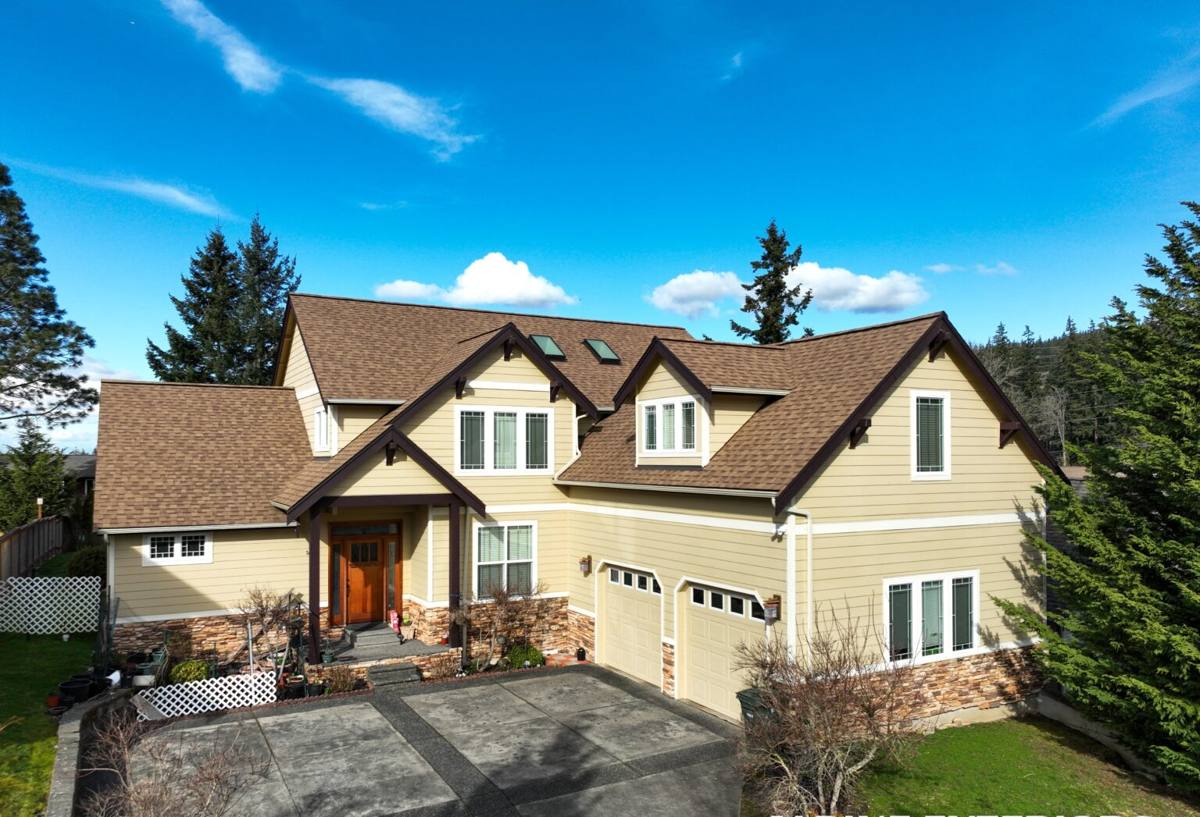
What Siding in Birch Bay Actually Has to Withstand
Salt-Laden Air
Homes closer to the water take on a fine mist of salt-tinged moisture almost daily, even on days without rain. Over years, that salt exposure accelerates corrosion on unprotected fasteners, degrades cheap paint finishes faster than manufacturers' warranties account for, and leaves a chalky residue that traps grime against the wall surface. Siding material and finish both matter here — a product that isn't engineered to shed salt spray will show it within a few paint cycles.
Driving, Wind-Driven Rain
Storms coming off the water don't just fall straight down — they push rain sideways into every seam, corner, and butt joint on the wall. A siding system with weak flashing details or gaps that rely on caulk alone will eventually let water behind the cladding. Once moisture gets behind siding on a coastal wall, it has fewer chances to dry out because the air itself stays humid for long stretches.
A Long Moss and Moisture Season
Whatcom County's wet, mild winters and shaded, tree-covered lots common around Birch Bay mean siding often stays damp for days after a rain event. Moss and algae take hold on surfaces that don't shed water well or that hold moisture at the bottom edge. That's a cosmetic problem at first, but persistent moss buildup against a wall also keeps that section of the wall wetter than the rest of the house, which is exactly the condition that leads to bigger problems over time.
Why We Only Install James Hardie Fiber Cement
We made a standard several years ago to install James Hardie exclusively — not vinyl, not LP SmartSide, not Cemplank or Allura, not primed wood. That's not a marketing position; it's a practical one built around exactly the conditions described above. Hardie's fiber cement is non-combustible, dimensionally stable in wet climates, and finished at the factory with a baked-on ColorPlus coating that's built to resist fading and moisture intrusion far better than field-applied paint. For a coastal, wet-winter climate like Birch Bay's, that combination is the reason we stopped installing anything else. We'd rather do one product right than offer five products and cut corners on all of them.
Choosing the Right Hardie System for a Birch Bay Home
James Hardie makes several siding profiles, and the right mix depends on the home's style, exposure to wind and water, and how much of the wall faces the weather side of the property. Most Birch Bay projects use a combination rather than a single profile.
| Hardie Product | Best Use | Why It Fits Birch Bay |
|---|---|---|
| HardiePlank Lap Siding | Primary wall cladding, most home styles | Traditional lapped profile sheds driving rain effectively when installed with correct overlap and clearance |
| HardiePanel Vertical Siding | Modern facades, accent walls, gable ends | Fewer horizontal seams reduces the number of joints exposed to wind-driven rain |
| HardieShingle | Accent gables, dormers, coastal cottage styling | Popular for the shingle-style look common on Pacific Northwest coastal homes, with the durability of fiber cement instead of cedar |
| HardieTrim | Corners, fascia, window and door trim | Matches the siding's moisture resistance so trim doesn't become the weak point in the system |
James Hardie also engineers its products by climate zone — HZ5 for markets that see freeze-thaw cycles, and HZ10 for consistently milder, wetter coastal regions. Getting this specification right for Birch Bay's specific exposure is part of what we account for before we ever write an estimate.
What Correct Installation Actually Involves
James Hardie siding performs the way it's rated to perform only when it's installed to the manufacturer's specifications. On a coastal property, the margin for error is smaller than it is inland, because any gap or shortcut gets tested by weather sooner and more often.
Moisture Barrier and Flashing
A correctly installed weather-resistive barrier, proper window and door flashing, and kick-out flashing at roof-wall intersections all have to work together before the first piece of siding goes up. This is the part of the job that's invisible once the siding is on, and it's also the part that matters most in wind-driven rain.
Fastening and Clearances
Hardie specifies exact fastener spacing, minimum clearance from grade, decks, and roof lines, and proper gapping at butt joints to allow for expansion. Skipping these details doesn't show up as a problem in year one — it shows up as staining, cupping, or moisture intrusion several years down the road.
ColorPlus Finish Handling
ColorPlus prefinished siding is factory-cured for a more durable, salt- and UV-resistant finish than job-site paint, but it requires touch-up products matched to the specific finish and careful handling during installation to avoid chipping the factory coating. Field-painted fiber cement loses some of that advantage, which is worth knowing if a contractor proposes it as a cost-saving option.
Our Process for a Birch Bay Project
- On-site assessment — we walk the exterior, check for existing moisture damage, and note wind and water exposure on each elevation of the home.
- Moisture and sheathing check — before any new siding goes on, we confirm the wall assembly underneath is dry and sound, since covering a wet wall just traps the problem.
- Product and color selection — we match Hardie profiles and ColorPlus finishes to the home's style and its exposure, not just the homeowner's first color pick.
- Tear-off and prep — old siding, trim, and any compromised sheathing come off, and the wall gets a proper weather-resistive barrier and flashing system.
- Installation to spec — fastening, clearances, and joint treatment follow James Hardie's published installation guidelines, not shortcuts.
- Final inspection and cleanup — we walk the finished job with the homeowner and clear the site of debris and old material.
Cost Factors for a Birch Bay Siding Job
Every home is different, so exact numbers depend on square footage, home style, and how much repair work is needed underneath the old siding. These are the factors that move the price up or down.
| Factor | Effect on Project |
|---|---|
| Existing wall condition | Rot or moisture damage found during tear-off adds repair scope before new siding can go on |
| Home style and wall complexity | More corners, gables, and trim details increase labor time |
| Profile mix | Combining lap, panel, and shingle accents costs more than a single profile but often fits coastal home styles better |
| Exposure side | Water- and wind-facing elevations sometimes warrant upgraded flashing detail work |
| Trim and accessory scope | Full trim, fascia, and soffit replacement alongside siding adds cost but avoids mismatched materials later |
Maintenance Checklist for Coastal Homes
James Hardie siding is low-maintenance compared to wood or vinyl, but "low-maintenance" isn't "no-maintenance," especially this close to the water.
- Rinse salt residue off the siding a couple times a year, especially on water-facing walls
- Keep gutters clear so overflow doesn't run down the wall face and feed moss growth
- Trim back vegetation that shades siding and keeps it damp longer than it should be
- Check caulking at trim joints and penetrations annually and re-caulk if it's cracked or pulling away
- Address any moss or algae buildup early with a gentle wash rather than pressure-washing, which can force water behind the siding
- Watch for chalking or fading on older, field-painted fiber cement as a sign it may need attention sooner than ColorPlus-finished siding
Why Hiring a Crew That Already Works Birch Bay Matters
A siding job in Birch Bay isn't the same job as one a few miles inland, even though the material and the crew might be identical on paper. A contractor who already works this stretch of the coast knows which elevations tend to take the worst of the weather, understands how long moss season really runs here, and doesn't need a learning curve on flashing details that matter more on a water-facing wall. That experience shows up in fewer callbacks and a siding system that actually performs the way it's rated to over the long run — not just in the first year when everything looks new.
If you're considering James Hardie siding for a home in Birch Bay, we're happy to take a look and walk you through what your specific home needs. Fill out the form below for a free, no-pressure estimate.