 Bellingham Siding
 Siding Repair Built for Happy Valley's Climate
Happy Valley sits close enough to Bellingham Bay and the surrounding hills that homes here take on a specific mix of weather stress: salt-tinged air rolling in off the water, wind-driven rain that finds every gap in a siding system, and a long, damp moss season that can run from fall through spring. None of that is unusual for Whatcom County, but it does mean siding repair here isn't a one-size-fits-all job. A patch that would hold up fine in a drier inland climate can fail within a season or two on a Happy Valley home if it doesn't account for how moisture actually moves through this neighborhood's air and rainfall patterns.
We repair siding on Happy Valley homes regularly, and the damage we see tends to follow a pattern: moisture intrusion at butt joints and corners, paint and caulk failure on sun-exposed elevations, and soft or delaminating material on north- and west-facing walls that stay shaded and damp longer after a storm. Understanding that pattern is the difference between a repair that actually holds and one that's papering over a problem that comes back in a year.
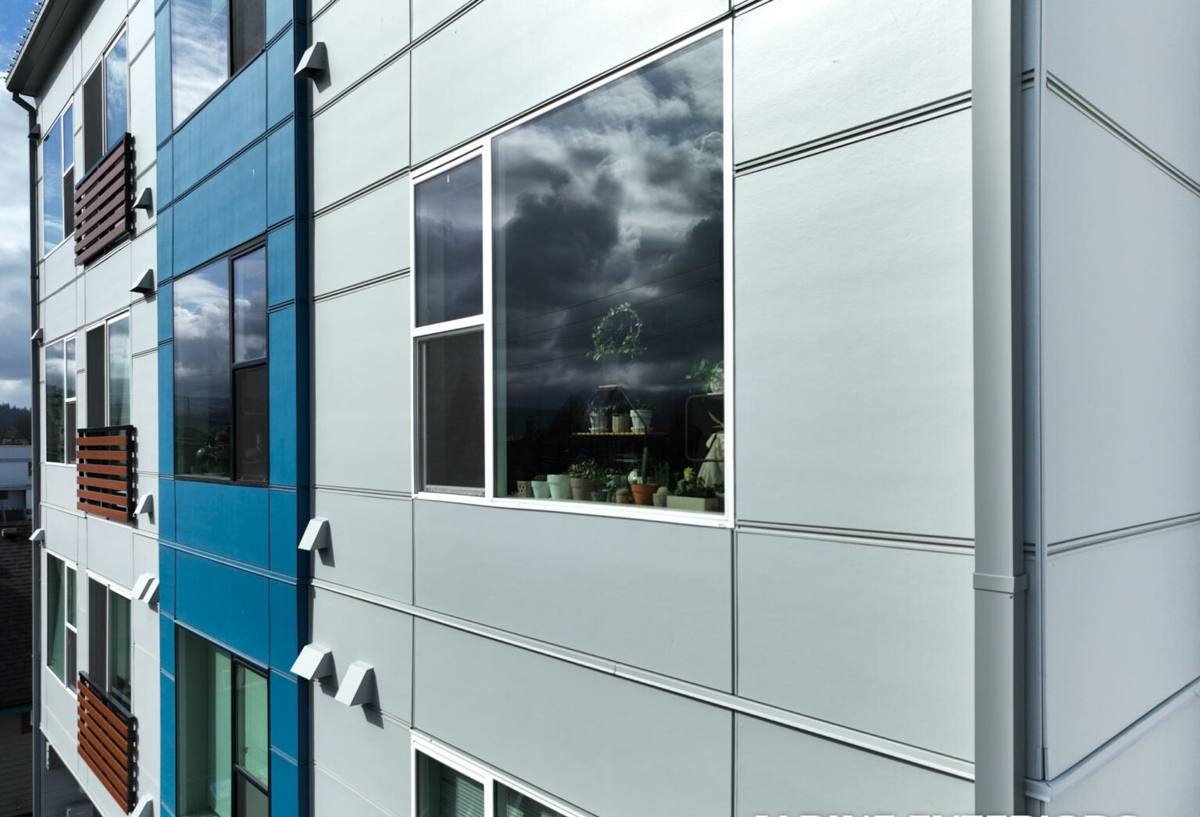
Why Bellingham's Weather Is Hard on Siding
Three climate factors do most of the work here:
- Salt air: proximity to Bellingham Bay means airborne salt settles on exterior surfaces, which accelerates corrosion of fasteners and trim metal and breaks down lower-quality paint finishes faster than inland exposure would.
- Driving rain: Pacific storms often come in sideways rather than straight down, which pushes water into laps, joints, and penetrations that a system designed only for vertical rain exposure won't handle.
- Moss and prolonged dampness: Whatcom County's wet season keeps north-facing and shaded siding damp for extended stretches, which is exactly the condition moss, algae, and rot organisms need to take hold.
Any one of these is manageable. Stacked together, over years, they're why siding that looked fine five years ago can suddenly show soft spots, peeling paint, or visible staining in a single wet winter.
Signs a Happy Valley Home Needs Siding Repair
Most siding problems announce themselves before they become structural. Homeowners in this neighborhood should watch for:
- Soft or spongy spots when pressed, especially near the bottom courses or around window and door trim
- Visible gaps, cracking, or warping at panel joints and corners
- Paint that's bubbling, peeling, or chalking, particularly on south- and west-facing walls
- Persistent moss, algae, or dark staining on shaded elevations that doesn't wash off
- Water stains or discoloration on interior walls near exterior siding lines
- Rusting or corroding fasteners, flashing, or trim visible at seams
Any of these can start small. The reason to address them early isn't cosmetic — it's that once water gets behind the siding plane, it starts affecting sheathing, framing, and insulation, and what would have been a straightforward panel repair turns into a much larger opening-up job.
Repair vs. Replacement: How We Decide
Not every problem calls for full replacement, and not every problem is safely solved with a patch. We evaluate three things on every Happy Valley repair call: how much of the wall is affected, whether the damage is surface-level or has reached the sheathing, and how the existing material was installed in the first place. A single cracked panel from an impact is a straightforward repair. Widespread soft spots across multiple elevations, especially paired with interior staining, usually points to a systemic moisture problem that repair alone won't fix.
| Situation | Usually Repair | Usually Replace |
|---|---|---|
| Isolated impact damage (one or two panels) | Yes | No |
| Localized rot at a single trim detail | Yes | No |
| Moss/staining limited to shaded sections, material still sound | Yes | No |
| Soft sheathing found behind multiple wall sections | No | Yes |
| Original siding is a moisture-sensitive product (LP SmartSide, primed wood) with recurring failures | Sometimes, short-term | Yes, long-term |
| Widespread paint failure plus interior water stains | No | Yes |
We'll always tell you honestly which category your home falls into. A repair that's really a stopgap on a failing system isn't a favor to the homeowner — it just delays a bigger job and costs money twice.
What a Correct Siding Repair Actually Involves
A repair that's done right isn't just "cut out the bad piece, nail in a new one." On a Happy Valley home, given the rain exposure, it needs to address the whole assembly:
- Assess beyond the visible damage. We check the sheathing and house wrap behind the affected area, not just the siding surface, since water damage often extends past what's visible from outside.
- Correct the water path first. If the damage came from a flashing gap, a missing kick-out, or a caulk failure, we fix that cause before replacing any siding — otherwise the repair fails the same way again.
- Match the material and profile. Replacement panels need to match existing reveal, thickness, and profile so the repair doesn't stand out or create a new water-trapping seam.
- Re-establish proper laps and clearances. Correct overlap at joints and proper clearance from grade, decks, and roofing keeps water shedding the way the system was designed to.
- Seal and finish to spec. Fasteners, caulking, and touch-up paint or factory-matched finish all need to meet the same standard as new installation — a rushed finish is where most repairs start failing again within a year or two.
Why We Only Repair and Replace With James Hardie Fiber Cement
We install James Hardie fiber cement exclusively — not vinyl, not LP SmartSide, not primed wood or cedar. That standard applies to repair work too, and there's a practical reason for it in a climate like Bellingham's. Fiber cement doesn't absorb and swell with moisture the way engineered wood products can, and it doesn't become brittle or crack the way some vinyl products do in freeze-thaw swings. For a neighborhood dealing with driving rain and a long damp season, that stability matters more than it does in drier climates.
It also matters for how a repair blends in. Hardie's ColorPlus factory-finish system is engineered to hold color consistency, so when we're patching in new panels next to existing Hardie siding, we can match reveal, texture, and finish closely enough that the repair doesn't read as an obvious patch. That's much harder to do with field-painted or lower-consistency materials, where a touch-up section often ages differently than the surrounding siding within a year.
If your home currently has a different siding product and needs repair, we'll be straightforward with you about the trade-offs of patching that material versus using the repair as an opportunity to transition affected sections — or eventually the whole elevation — to fiber cement. We won't tell you to replace a whole house over a small repair, but we also won't pretend every product holds up the same way in this climate.
Our Repair Process
For Happy Valley homeowners, the process is straightforward:
- On-site assessment: we inspect the damaged area and check behind it, and we look at the rest of the exterior for related issues that might not have been reported yet.
- Honest scope and estimate: you get a clear explanation of what's actually wrong, whether it's a repair or points to a bigger issue, and a written estimate before any work starts.
- Root-cause fix: flashing, sealant, or water-management issues get corrected as part of the repair, not left for the next call.
- Matched material and finish: replacement panels are matched to existing profile and color as closely as the product allows.
- Final check: we walk the completed repair with you before we consider the job done.
Why Local Experience in Happy Valley Matters
A crew that already works this neighborhood knows which elevations tend to take the worst of the driving rain, which shaded walls hold moss longest, and how salt exposure from the bay factors into fastener and trim choices. That's not something you can fully substitute with a general inspection — it comes from having repaired enough homes in this specific pocket of Bellingham to recognize the pattern before it's fully visible. It also means faster, more accurate estimates, since we're not guessing at how Whatcom County's weather behaves — we're accounting for what we've already seen it do to siding a few streets over.
Quick Checklist: Is It Time to Call for a Repair Estimate?
- Soft or spongy siding anywhere on the exterior
- Visible cracking, warping, or gapping at joints
- Peeling or bubbling paint, especially on sun-facing walls
- Moss or algae that keeps returning on shaded sections
- Water stains on interior walls near exterior siding
- Rusting fasteners or trim at visible seams
- It's been several years since the exterior was last inspected
If any of these sound familiar, it's worth getting a look before the next wet season rather than after. Reach out for a free, no-pressure estimate — we'll assess the siding, tell you honestly whether it's a repair or something bigger, and lay out the options in plain terms.