 Bellingham Siding
 New-Construction Windows for Ferndale Homes, Done Right the First Time
Building new in Ferndale gives you one advantage that a remodel never does: the chance to get window flashing and water management right before the walls are ever closed up. That window only exists once. Get it wrong at framing stage, and you're looking at hidden rot, mold, or a callback five years down the road when the drywall is already up and the landscaping is in. Get it right, and the windows in a new Ferndale build should outlast the mortgage.
We install new-construction windows for builders, general contractors, and owner-builders throughout Ferndale and the surrounding Whatcom County area. This page covers what that job actually involves, what the local climate demands from it, and why it matters to work with a crew that already knows this stretch of coastline.
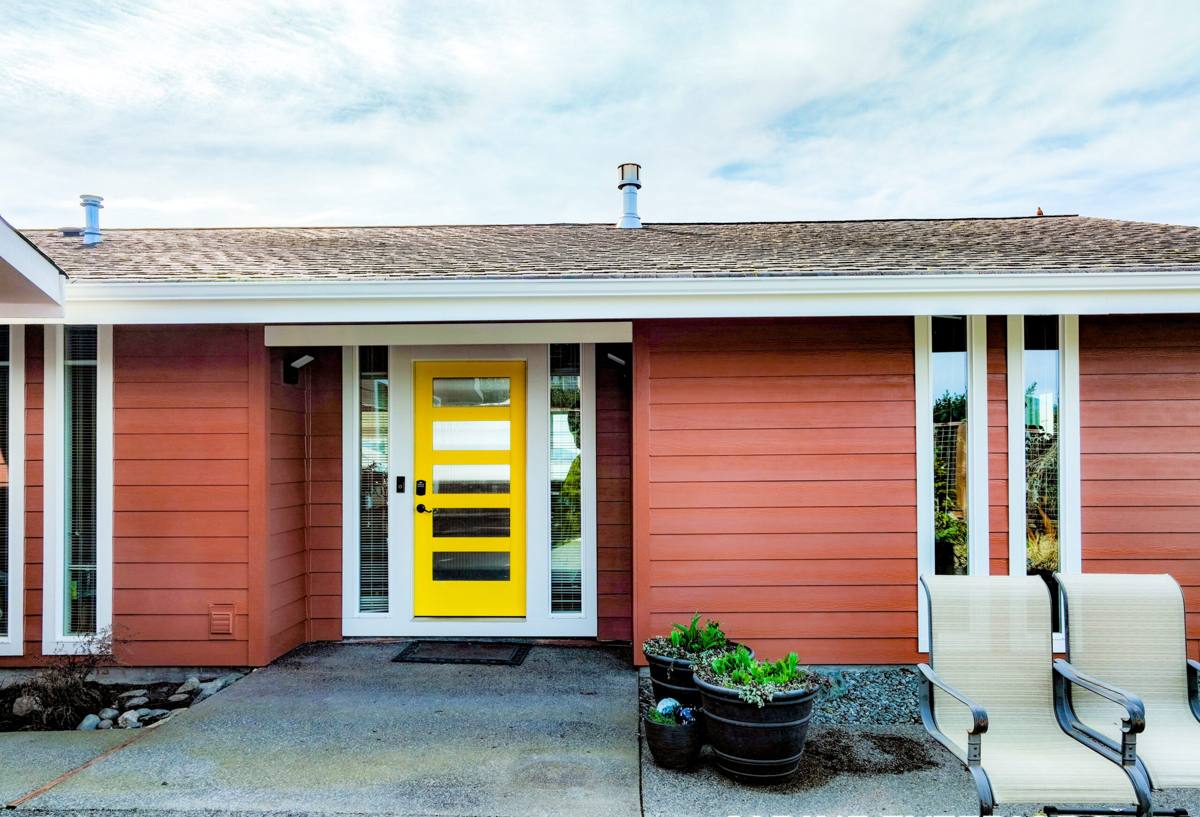
What Ferndale's Climate Demands from a New-Construction Window Install
Ferndale sits close enough to Bellingham Bay and the Strait of Georgia that salt-laden marine air is a real factor in material selection and hardware longevity, not a theoretical one. Add Whatcom County's long, wet fall-through-spring stretch of driving, wind-pushed rain, and a moss season that can run half the year on north-facing walls and shaded rooflines, and you've got three separate stresses working on every window opening in a new build:
- Salt air corrosion — accelerates the breakdown of unprotected fasteners, low-grade hardware, and some aluminum components over time.
- Wind-driven rain — pushes water sideways and upward against the building envelope, not just straight down, which is why flashing laps and sill pans matter more here than in drier climates.
- Prolonged damp and moss growth — keeps siding, trim, and sills wet for extended stretches, which means any gap in the water management plan stays wet longer and does more damage before it's ever noticed.
None of this makes Ferndale unusual for western Whatcom County — it's the same set of pressures every home on this side of the Cascades deals with. It does mean a new-construction window install has to be planned for that reality from day one, not treated as a generic product install.
New-Construction vs. Replacement Windows — Why the Distinction Matters
These are two different jobs with two different sets of standards, and the terms aren't interchangeable. A new-construction window has a nailing flange built into the frame that gets integrated directly with the house wrap and flashing during framing, before siding goes on. A replacement window is designed to fit into an existing, already-finished opening without disturbing the exterior cladding. Using the wrong approach — or the wrong window type — for the situation is one of the most common sources of long-term water problems in new builds.
| Factor | New-Construction Window | Replacement (Pocket) Window |
|---|---|---|
| Installed at | Framing stage, before siding/finish | Existing finished opening |
| Water management | Integrated with WRB and flashing tape at the frame | Relies on the existing frame's condition |
| Best suited for | New builds, additions, full-wall reframes | Swapping an aging window without touching siding |
| Long-term risk if misused | Low, when flashed correctly | Hidden gaps if opening isn't square or sound |
For a new build in Ferndale, the right call is almost always a true new-construction window with a nailing flange, flashed into the wall assembly as part of the framing sequence. That's the version of this job that lets us control every layer of the water path instead of working around one that's already in place.
What a Correct New-Construction Window Install Involves
Rough opening and sill pan
Before a window ever goes in, the rough opening gets checked for square and level, and a sloped sill pan is built or installed so any water that does get past the window has somewhere to go — outward, away from the framing, not down into the wall cavity. On a site with as much sustained rain exposure as Ferndale gets, skipping the sill pan is one of the more common shortcuts that shows up as rot years later.
Flashing sequence
Flashing tape and building wrap have to be layered in a specific shingle-style order — bottom, sides, then top — so that water draining down the wall always moves over the next layer down, never behind it. The head flashing above the window is what actually protects it from wind-driven rain coming off the water; if that lap is backwards or skipped, the window will leak eventually, regardless of how good the window itself is.
Fastening and frame integrity
Nailing flange fasteners need to be corrosion-resistant and set correctly — not overdriven, not under-driven — so the frame stays square and the flange stays flat against the wall. In a salt-air environment, this is one of the details where using the right-grade fastener actually matters over a 20-plus year timeline, not just at the final walkthrough.
Sealing and backer rod
Interior and exterior sealant joints get backer rod where the gap calls for it, and sealant gets tooled properly rather than just laid in a bead. A window can be flashed perfectly and still fail if the sealant joint around the frame isn't done with the right material and technique for our climate.
Choosing the Right Frame Material for This Environment
There's no single "best" window brand for every new build — the right choice depends on the home's design, the builder's spec, and budget. What we do steer clients toward, given Ferndale's coastal exposure, is being deliberate about frame material and hardware grade rather than defaulting to whatever is cheapest per unit.
| Frame Type | How It Handles This Climate | Trade-offs to Know |
|---|---|---|
| Vinyl | Good moisture and corrosion resistance, low maintenance | Can flex on very large openings; color choices are more limited |
| Fiberglass | Very stable in temperature swings, holds paint well, strong corrosion resistance | Higher upfront cost per window |
| Aluminum-clad wood | Attractive interior wood look with an exterior shell | Cladding and hardware quality matters more near salt air; wood core still needs the envelope to stay dry |
Whatever frame material a builder or homeowner chooses, hardware grade is the detail we push on hardest. Standard-grade hinges, locks, and cranks can show premature corrosion in marine air within a handful of years; upgraded, marine-rated hardware costs a little more per window and holds up far longer. We'll walk through this trade-off honestly at the estimate stage rather than upselling it as mandatory.
Our Process for New-Construction Window Installs in Ferndale
Before framing is closed
We coordinate directly with the builder or GC's schedule so windows go in at the right point in the framing sequence — after the WRB is up, before siding starts. Showing up too early or too late in that sequence is how flashing details get rushed or skipped.
Walk-through and window selection
For owner-builders or homeowners managing their own build, we'll walk the plans, talk through frame material and glass package options for the home's orientation and sun exposure, and give straight answers about what's worth spending more on and what isn't.
Install and in-progress inspection
Each opening gets sill pan, flashing, and fastening done in sequence, with photos taken at the flashing stage before siding covers it up — so there's a record of what's behind the wall, not just a finished look at the end.
Final walkthrough
Operation, sealant lines, and trim get checked together with the builder or homeowner before we call the job done, and we're straightforward about anything that needs a follow-up visit rather than leaving it for someone else to find later.
A Practical Checklist Before You Sign Off on a New-Construction Window Job
- Confirm the windows spec'd are true new-construction units with a nailing flange, not pocket/replacement units adapted for a new opening.
- Ask whether sloped sill pans are included at every opening — not just a bead of sealant.
- Ask to see the flashing sequence before siding goes on, or ask for photos if you won't be on-site that day.
- Confirm fastener and hardware grade, especially for openings facing the water or prevailing weather.
- Get the glass package (U-factor, solar heat gain) in writing so it matches what was quoted, not just "double pane."
- Confirm who's responsible for the window warranty versus the installation warranty — they're not the same thing.
Why It Matters to Hire a Crew That Already Works in Ferndale
A window flashed correctly in a dry inland climate can still fail in Ferndale if it was detailed for the wrong amount of wind-driven rain or the wrong level of salt exposure. Crews who work this specific stretch of Whatcom County day in and day out already know how the weather off Bellingham Bay behaves against a wall, which sides of a new build take the worst of it, and where builders in this area tend to cut corners on flashing because it's faster. That local pattern-recognition is the difference between a window install that's technically finished and one that's actually built for where it sits.
It also matters for the practical side of a build: knowing how Whatcom County and City of Ferndale inspections tend to go, showing up reliably on a framing schedule that a GC is trying to hold together, and being reachable afterward if a question comes up — not a crew that did one job in the area and moved on.
Get a Straight Answer for Your Ferndale Build
If you're framing a new home or addition in Ferndale and want windows installed the right way the first time, we're happy to walk the plans with you or your builder and give a straightforward, no-pressure estimate. There's a form below — tell us a bit about the project and we'll follow up.