 Bellingham Siding
 Storm Damage Roof Repair Built for Fairhaven's Conditions
Fairhaven sits right where Bellingham Bay meets the hills, and that location shapes everything about how a roof ages here. Homes close to the water take wind straight off the bay during fall and winter storms, while the neighborhood's mature tree canopy keeps roofs shaded, damp, and slow to dry between rain events. Add in a housing stock that skews older — many Fairhaven roofs sit on original framing and decking from an earlier building era — and you get a neighborhood where storm damage shows up differently than it does on a newer subdivision roof across town.
We work storm damage repairs in Fairhaven regularly, which means we're not guessing at how the wind moves through this part of Bellingham or how quickly moss reclaims a north-facing slope here. That local pattern recognition is most of what separates a repair that actually holds from one that fails again next storm season.
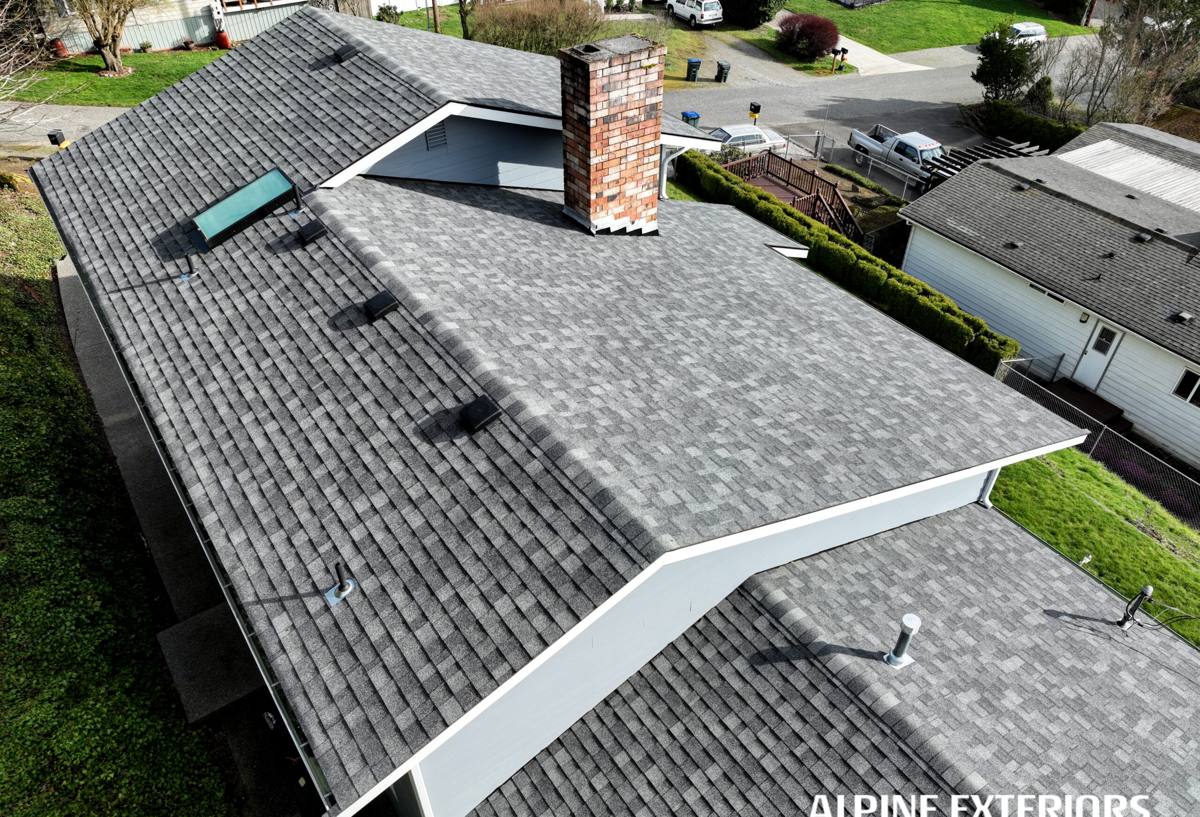
Why Fairhaven Roofs Take a Different Kind of Beating
Salt Air and Corrosion
Proximity to Bellingham Bay means airborne salt settles on roofing metal — flashing, fasteners, gutter hardware, vent caps — and accelerates corrosion compared to homes further inland in Whatcom County. A fastener or flashing seam that would last decades in a dry inland climate can start failing years earlier this close to saltwater, and a corroded fastener is exactly the kind of weak point a windstorm finds first.
Wind Off the Water
Storms tracking in off the Pacific tend to hit waterfront-facing neighborhoods like Fairhaven with more direct, sustained wind than they hit more sheltered parts of Bellingham. That wind gets under shingle tabs, ridge caps, and loose flashing edges, and it's the driving force behind most of the wind-lift and blow-off damage we see here after a storm.
Moss, Shade, and Moisture
Fairhaven's tree cover is part of its character, but shade plus a long, wet Pacific Northwest roofing season adds up to a moss problem almost every roof in the neighborhood deals with sooner or later. Moss holds moisture against the roofing material long after a storm has passed, which softens shingles, lifts edges, and — on older wood decking — can lead to slow rot that isn't obvious until a storm finally pushes water through.
Older Roof Framing and Complex Rooflines
A lot of Fairhaven homes were built with steeper pitches, dormers, and multiple roof planes that were standard for the era but create more valleys, transitions, and penetrations than a simple modern roof. Every one of those transitions is a potential leak point, and storm damage tends to concentrate exactly where two roof planes meet.
Common Storm Damage We Find on Fairhaven Roofs
- Wind-lifted or missing shingles — usually along ridges, roof edges, or the windward side facing the bay
- Damaged or displaced ridge caps — the first thing to go in sustained gusts
- Tree limb impact — bruised, cracked, or punctured roofing from Fairhaven's mature trees shedding branches in high wind
- Flashing failures — around chimneys, dormers, and roof-to-wall transitions, worsened by salt-air corrosion
- Moss-related soft spots — areas where trapped moisture has already started breaking down the roofing before the storm ever hit
- Gutter and downspout damage — wind-torn sections that then dump water where it shouldn't go, compounding roof-edge saturation
- Skylight and vent leaks — seals that were already marginal and finally gave way under wind-driven rain
Why Fast, Correct Repair Actually Matters Here
A small storm-damaged area on a Fairhaven roof rarely stays small if it's left alone. Once wind lifts an edge or cracks a shingle, driving rain — which is common through the fall and winter in Whatcom County — finds that opening and starts working underneath the roofing system. On an older home with original decking, that means water reaching wood that's already had years of moss and shade working against it. What starts as a repair measured in square feet can turn into a decking replacement measured in sheets of plywood if it sits through even one more soaking storm.
Speed matters, but so does getting the repair right the first time. A rushed patch that doesn't address the flashing detail, the moss underneath, or the actual extent of the damage just delays the next leak — it doesn't prevent it.
What a Correct Storm Damage Repair Involves
1. A Real Inspection, Not a Drive-By Estimate
We get on the roof, not just look at it from the ground. Wind and impact damage often extends further than what's visible from the driveway, especially on the steeper, more complex rooflines common in Fairhaven.
2. Checking the Decking, Not Just the Surface
Storm damage repair that only replaces shingles without checking what's underneath is incomplete work. If moss or a prior leak has already softened the decking, that has to be addressed or the new roofing is going down on a compromised base.
3. Matching Materials Honestly
On older homes, exact shingle matches aren't always available. We tell you upfront what will and won't match, rather than letting you find out after the repair is done.
4. Flashing Done Right
Given how much salt-air corrosion affects metal components this close to the bay, we don't just patch around failing flashing — we replace it when it's compromised, since that's usually the actual root of the leak, not just the shingles around it.
5. Addressing the Moss, Not Just the Symptom
If moss contributed to the damage, we deal with it as part of the repair — not as a separate problem left for later — because leaving it means the same failure point is likely to come back.
Our Storm Damage Repair Process
- Contact and initial assessment — you describe what happened, we schedule a roof inspection promptly, especially if there's active leaking
- On-roof inspection — full evaluation of the damage, the surrounding roofing condition, and the decking underneath
- Documentation — clear photos and a written scope of damage, useful whether you're filing an insurance claim or just want a record of what was found and fixed
- Temporary protection if needed — if there's an active leak or exposed decking, we get it protected before the next rain, not days later
- Written estimate — a clear scope of what the repair involves and why, so you're not guessing at what you're paying for
- The repair itself — done to match the surrounding roof as closely as materials allow, with attention to the flashing and decking, not just the visible surface
- Final walk-through — so you can see what was done and ask questions before we consider the job finished
Repair, Partial Re-Roof, or Full Replacement?
Not every storm-damaged roof needs the same scope of work. The right call depends on how much of the roof is affected, how old the existing roofing already was, and what condition the decking is in underneath.
| Factor | Favors Targeted Repair | Favors Partial or Full Replacement |
|---|---|---|
| Extent of damage | Isolated to one section or slope | Spread across multiple roof planes |
| Age of existing roof | Roofing has significant remaining service life | Roofing was already near the end of its lifespan |
| Decking condition | Solid, dry decking under the damaged area | Soft spots, rot, or widespread moss-related moisture damage |
| Material availability | Close match available for a clean repair | Discontinued material makes a seamless patch impossible |
| Underlying issues | No prior leak history in the area | Repeated leaks or chronic moss problems in that section |
We'll walk you through where your roof actually falls on that spectrum rather than defaulting to the more expensive option. A lot of storm damage in Fairhaven is genuinely repairable without a full replacement — but we'll tell you plainly if the underlying roof condition means a repair is just delaying an inevitable bigger job.
Working With Your Homeowners Insurance
Most homeowners insurance policies cover sudden storm damage — wind, falling limbs, impact — though coverage details, deductibles, and claim processes vary by policy and insurer. We can't speak for your specific policy, but we can give you clear, honest documentation of what we found and what caused it, which is what your adjuster will need to process a claim. We won't inflate a scope of damage to pad a claim, and we won't downplay real damage to make a job look smaller than it is — that documentation needs to hold up, and it's your home either way.
Reducing the Chance of Repeat Storm Damage
- Moss treatment and removal — especially on shaded, north-facing slopes common throughout Fairhaven
- Gutter maintenance — clear gutters move storm water off the roof edge instead of letting it back up under shingles
- Tree limb management — trimming branches that overhang the roof reduces both impact risk and the shade that feeds moss growth
- Flashing checks — periodic inspection matters more here than in drier inland areas, given how salt air accelerates corrosion
- Prompt attention to minor damage — a missing shingle or lifted ridge cap addressed early rarely turns into a bigger repair
Signs Your Fairhaven Roof May Have Storm Damage
- Shingles in the yard or on the ground after a windstorm
- Visible gaps, curling, or lifted edges on the roof from ground level
- Water stains on interior ceilings or upper walls following heavy rain
- Granules collecting in gutters or at downspout outlets
- Daylight visible through the attic roof deck
- A ridge cap that looks uneven or partially detached
- New or worsening moss growth right after a wet, windy stretch
- Musty odor in an attic or top-floor closet after a storm
If you notice any of these after a storm moves through Whatcom County, it's worth getting a roof looked at before the next rain rather than waiting to see if it gets worse.
Get a Free, No-Pressure Estimate
If a recent storm has left you with damage — or you're just not sure whether what you're seeing on your Fairhaven roof needs attention — we're happy to take a look. Use the form below to request a free estimate, and we'll give you a straight answer about what we find and what it would take to fix it right.