 Bellingham Siding
 Fairhaven's Marine Climate Is Harder on Siding Than Most Homeowners Realize
Fairhaven sits close enough to the water that its siding takes a different kind of beating than a home ten miles inland. Salt-laden air drifts off Bellingham Bay and settles on exterior surfaces year-round, wind-driven rain comes in sideways during winter storms rather than falling straight down, and the long, damp shoulder seasons that define Whatcom County give moss and algae months at a time to gain a foothold on north-facing walls and anything shaded by mature trees. None of this is exotic weather — it's just persistent, and persistence is what wears out the wrong siding material.
The practical result is that siding decisions made for a drier, more sheltered climate often underperform here. Products that hold up fine in eastern Washington or inland Oregon can show swelling, staining, or coating failure on a Fairhaven home within a handful of years. Understanding why matters before you understand what to replace it with.
Salt Air and Slow Corrosion
Airborne salt is mildly corrosive to exposed metal fasteners, trim flashing, and any coating with weak adhesion. It also accelerates the breakdown of lower-grade paints and finishes, which is why homes closer to the water tend to need repainting more often than homes just a mile or two inland. Over time, a finish that can't resist salt exposure chalks, fades unevenly, and loses its ability to shed water.
Wind-Driven Rain and Water Intrusion
Bellingham's winter storms frequently push rain horizontally against west- and south-facing walls. That kind of driving rain finds every weak seam, every under-caulked joint, and every place where siding wasn't lapped or flashed correctly. Materials that rely on paint film alone to stay watertight are more exposed to this than materials engineered to resist moisture at the core.
A Genuinely Long Moss Season
Whatcom County's mild, wet stretch from fall through spring gives moss, lichen, and algae far more time to establish than most parts of the country get. Shaded elevations, north walls, and areas near overhanging trees are especially prone. Moss holds moisture against the siding surface, and materials that absorb water or swell when damp are far more vulnerable to the damage that sustained moss growth causes underneath.
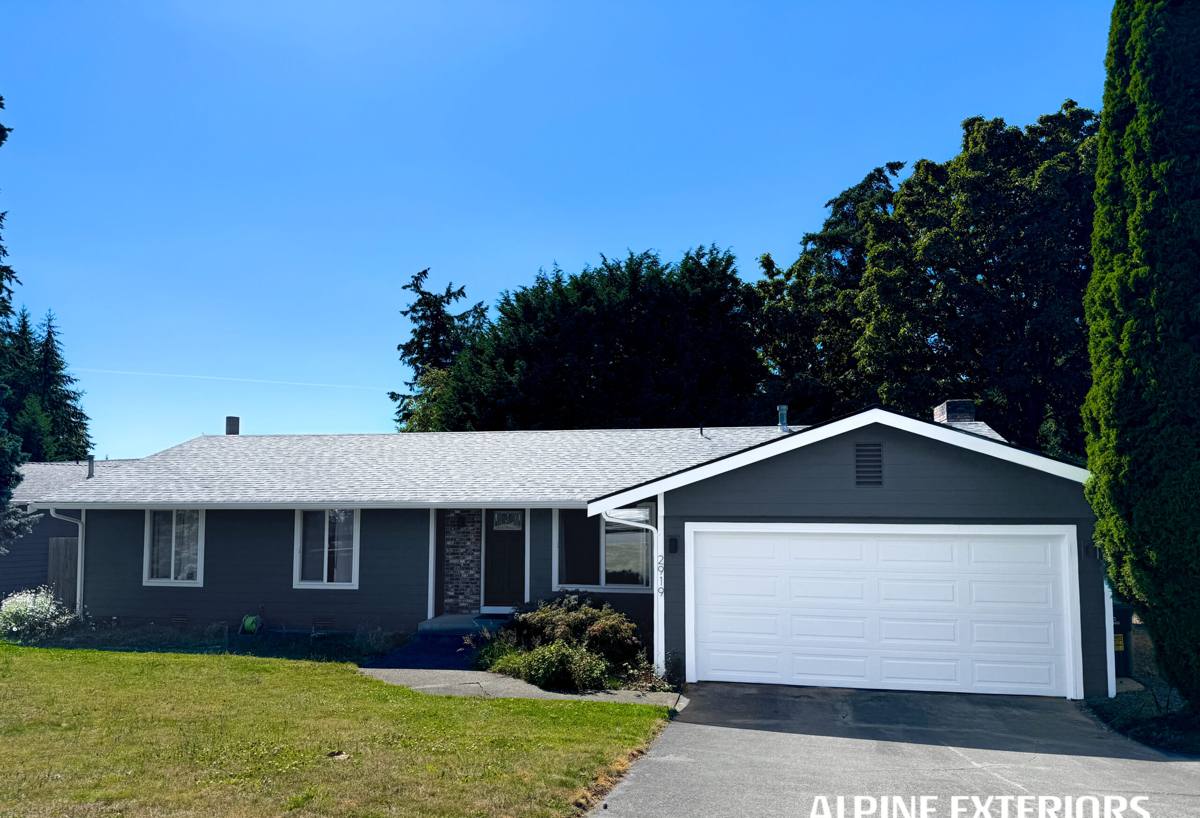
Why We Install Only James Hardie Fiber Cement in This Neighborhood
We standardized on James Hardie siding company-wide, and Fairhaven's climate is a good illustration of why. Hardie's fiber cement is engineered from cement, sand, and cellulose fiber — a composition that doesn't absorb and swell with moisture the way wood-based products can, and that holds paint and factory finishes far longer than vinyl or composite alternatives typically manage in a coastal, high-moisture environment.
A Non-Combustible, Moisture-Stable Core
Fiber cement doesn't rot, and it doesn't provide the food source that mold, moss, and pests look for in wood-based siding. In a neighborhood with a long damp season, that stability at the material level matters more than it does in a drier climate — it's the difference between siding that needs to be scraped and repainted every few years and siding that simply keeps performing.
ColorPlus Factory Finish
James Hardie's ColorPlus finish is baked on at the factory under controlled conditions, rather than field-applied with a brush or sprayer on-site. That process produces a more consistent, more durable bond than most site-applied paint jobs, which is exactly what you want on a wall that's regularly exposed to salt air and driving rain. It also resists the fading and chalking that lower-grade coatings show first.
Climate-Engineered HZ Product Lines
Hardie manufactures its siding in different formulations tuned to regional climate zones — HZ5 for colder, wetter regions like ours. That's not a marketing label; it reflects real differences in how the product is engineered to perform under freeze-thaw cycles and sustained moisture exposure, which is precisely the combination Fairhaven sees for a good portion of the year.
What a Correct James Hardie Install Actually Involves
The material only performs as well as the installation. Most of the siding failures we get called out to inspect aren't material failures at all — they're installation shortcuts that let water behind the siding, where no product survives long-term. A correct Hardie install in a wet coastal climate means getting the details right in a specific order.
- A properly lapped and sealed weather-resistant barrier installed over clean, sound sheathing before any siding goes up
- Correct flashing at every window, door, and roofline intersection, integrated with the water-resistant barrier — not just caulked over afterward
- Manufacturer-specified fastener type, spacing, and penetration depth, matched to Hardie's published installation instructions
- Proper clearance at the bottom edge of the siding from grade, decks, and roof lines to keep the board out of standing water and splash-back
- Correctly gapped and sealed joints at panel ends, corners, and trim, using sealants rated for exterior exposure
- Field-touch-up of any cut edges with Hardie-approved product to maintain the factory finish's protection
Skip any one of these steps and you can end up with siding that looks fine from the curb for a year or two but is already trapping moisture behind it. That's a slower, more expensive problem to fix than getting it right the first time.
How We Approach a Fairhaven Siding Project
Every home is different, but the sequence we follow doesn't change, because it's built around keeping water out from day one.
1. On-Site Assessment
We walk the exterior, check the condition of the existing siding and sheathing, look for signs of past moisture intrusion, and note anything specific to the lot — shade patterns, drainage, prevailing wind exposure — that should inform the installation plan.
2. Tear-Off and Substrate Check
Old siding comes off and we inspect the sheathing underneath. Any rot, soft spots, or prior water damage gets addressed before anything new goes up. Installing new siding over a compromised substrate just hides a problem instead of solving it.
3. Weather Barrier and Flashing
A new water-resistant barrier is installed and properly lapped, with flashing detailed around every penetration and opening. This layer is what actually keeps a home dry — the siding itself is the second line of defense, not the first.
4. Hardie Panel Installation
Boards go up to manufacturer specification: correct fastening, correct spacing, correct clearances. We follow James Hardie's published installation guidelines rather than shortcuts, because that's what keeps the warranty intact and the performance real.
5. Final Detailing and Walkthrough
Caulking, touch-up, trim work, and a final walkthrough with the homeowner close out the project. We want any questions answered on-site, not discovered later.
Signs Older Siding in Fairhaven Is Past Its Useful Life
Because the neighborhood's climate is demanding, siding problems here tend to show up earlier and more visibly than they would inland. Some signs are cosmetic; others point to moisture already working behind the surface.
- Persistent moss or algae growth that returns quickly after cleaning, especially on north-facing or shaded walls
- Paint that's chalking, peeling, or fading unevenly, particularly on walls exposed to prevailing wind and salt air
- Soft spots, bubbling, or visible swelling in the siding material itself
- Staining or streaking below seams, trim, or window flashing, which often indicates water is tracking behind the surface
- Visible gaps at joints, corners, or trim where caulking has shrunk or failed
- A musty smell or soft drywall on interior walls that back up to exterior siding
Any one of these on its own might be minor. Several together, especially combined with the age of the home, usually means it's worth having someone look at the whole wall assembly, not just the surface.
Why Hiring a Crew That Already Works This Area Matters
Siding installation isn't identical everywhere in Whatcom County. A crew that mostly works drier, more sheltered inland lots doesn't necessarily think the same way about flashing details, clearance from grade, or moss-prone shaded walls that a crew working Fairhaven and the rest of Bellingham regularly does. Local experience shows up in the small decisions — where extra flashing gets added even though it's not strictly required, which wall orientations get watched closest during the walkthrough, how joints are detailed on the sides of the house that catch the worst of the winter wind.
It also matters for accountability. A contractor who works this neighborhood regularly has a reputation to protect here and is easier to reach if a question comes up after the job is done.
Ongoing Maintenance in a Coastal, High-Moisture Climate
James Hardie siding, correctly installed, is low-maintenance — but low-maintenance isn't no-maintenance, especially this close to the water.
| Task | Why It Matters Here | Rough Frequency |
|---|---|---|
| Rinse down exterior walls | Removes salt residue and airborne debris before it accumulates | 1–2 times per year |
| Check and clear moss/algae on shaded walls | Moss traps moisture against the surface; Whatcom's damp season gives it a long window to grow | Annually, more often on north-facing walls |
| Inspect caulking at joints and trim | Sealant is the first thing driving rain finds if it's degraded | Annually |
| Walk the perimeter after major storms | Catches loose trim or flashing before wind-driven rain gets behind it | After significant winter storms |
| Touch up any cut or damaged finish | Keeps the factory ColorPlus protection intact at exposed edges | As needed |
What Drives the Cost of a Fairhaven Hardie Project
Every home is priced individually, but the same handful of factors move the number up or down on most jobs in this area.
| Factor | Why It Affects Cost |
|---|---|
| Condition of existing sheathing | Rot or water damage found during tear-off requires repair before new siding goes on |
| Home size and wall complexity | More corners, gables, and trim details mean more labor and cutting |
| Siding profile and trim selection | Lap width, shingle-style panels, and trim options carry different material costs |
| Access and site conditions | Tight lots, slopes, or limited staging area can add time to a project |
| Extent of flashing and detail work needed | Homes with more window and roofline intersections need more flashing labor |
We don't quote sight-unseen prices, because two homes of similar size can differ significantly once we're actually up close to the walls. What we can tell you upfront is that we price for a correct installation — the flashing, clearances, and fastening detailed above aren't optional add-ons, they're the baseline.
Get a Straightforward Estimate
If your Fairhaven home's siding is showing its age, or you're planning ahead of a repaint you'd rather not do again in a few years, we're happy to take a look and walk you through what we see — no pressure, no obligation. Use the form below to request a free estimate.