 Bellingham Siding
 Why Decks Wear Out Faster in Fairhaven
Fairhaven sits close enough to Bellingham Bay that homes here deal with a different set of conditions than a deck built ten miles inland. Salt-laden air moves through the neighborhood off the water, driving rain comes in sideways during fall and winter storms, and the tree cover that makes Fairhaven so pleasant to live in also means shade, moisture, and moss stick around longer than they would on a more exposed lot. None of that is a reason to avoid a wood or composite deck — it just means the deck has to be built correctly for the environment it's actually in, not for a generic climate.
Salt air accelerates corrosion on anything metal: nails, screws, joist hangers, post bases, railing brackets. Driving rain finds every gap in flashing and every unsealed end cut. And moss doesn't just look bad — it holds moisture against wood and decking surfaces long after a storm has passed, which is exactly the condition that leads to rot, mildew, and slippery footing. A deck built without those three factors in mind will show problems years before it should.
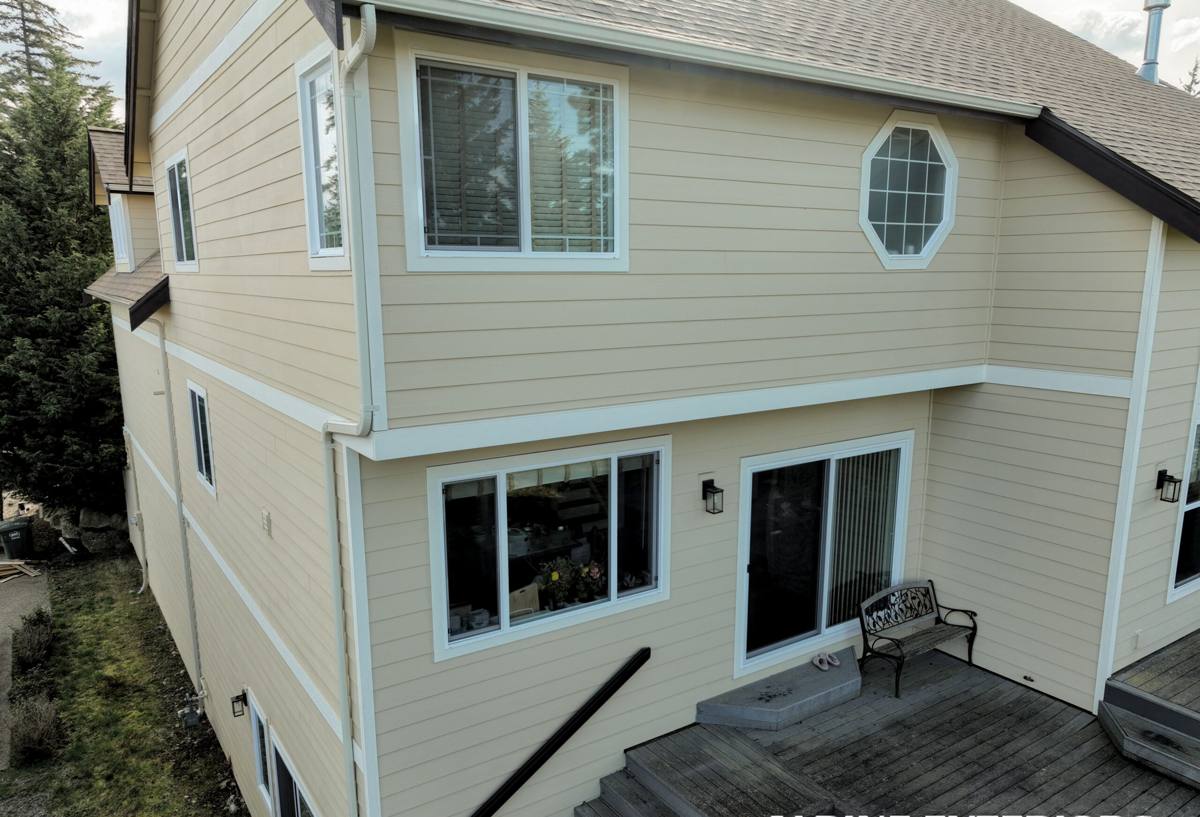
Signs a Deck Needs Replacement, Not Just Repair
Homeowners often call us asking for a repair quote and end up learning the deck is past the point where patching makes sense. Here's how to tell the difference before we even come out.
- Soft, spongy, or spalling wood in the deck boards, especially near the house or in shaded corners where moss collects
- Rust streaks running down from fasteners, joist hangers, or post connections
- Visible gaps or separation where the deck meets the house — a common entry point for water
- Railings or posts that flex or feel loose when you lean on them
- Persistent green or black staining that comes back within weeks of cleaning
- A deck more than 20-25 years old built to older code, especially with undersized or corroded ledger attachment
One or two of these on a structurally sound frame can often be repaired. Several at once, or any sign of a compromised ledger board or footing, usually means the whole structure needs to come out. We'll tell you honestly which category your deck falls into rather than selling a repair that won't hold up through another wet Whatcom County winter.
Choosing the Right Decking Material for This Climate
There's no single "best" decking material — there's a best material for your budget, your maintenance tolerance, and how much sun versus shade your deck actually gets. In a salt-air, high-rainfall setting like Fairhaven, the trade-offs matter more than they would somewhere drier.
| Material | How It Handles Salt Air & Rain | Maintenance | Typical Lifespan |
|---|---|---|---|
| Pressure-treated wood | Good with proper sealing and fasteners rated for coastal use; untreated hardware corrodes faster here | Annual cleaning and re-sealing recommended | 15-25 years with upkeep |
| Cedar | Naturally rot- and insect-resistant, but still needs sealing to resist moss staining and moisture absorption | Sealing every 1-2 years | 20-25 years with upkeep |
| Composite decking | Handles moisture and salt air well; doesn't absorb water like wood, resists moss staining better | Periodic washing, no sealing or staining | 25-30+ years |
| PVC/capped polymer | Fully moisture-resistant surface, best option where shade and moss are persistent problems | Occasional washing | 25-30+ years |
We install all of the above depending on what the homeowner wants and what the deck's exposure calls for. For a heavily shaded Fairhaven lot with a lot of moss buildup, we'll usually recommend composite or PVC because they don't give moss and mildew the organic surface they need to take hold. For a sunnier, more open deck, a well-sealed cedar or treated wood deck can perform just as well and costs less up front — the honest answer depends on your specific lot, not a one-size pitch.
A Note on Fasteners and Hardware
This is the detail that gets skipped most often, and it's the one that matters most near the water. Standard galvanized fasteners can start showing rust within a few years in a salt-air environment. We use stainless steel or coated fasteners and connectors rated for coastal exposure on every deck we build in this area, along with corrosion-resistant joist hangers and post bases. It costs more than standard hardware, but it's the difference between a deck that's still tight in fifteen years and one with rust-streaked, weakening connections in five.
What a Correct Deck Replacement Actually Involves
A deck is only as good as what's underneath it. Replacing the boards on a failing frame just delays the real problem. Here's what we check and rebuild on every replacement:
Footings and Foundation
We verify footing depth and condition meet current code, not whatever was standard when the original deck went in. Undersized or frost-heaved footings are a common issue on older Bellingham-area decks and are not something to patch around.
Ledger Board Attachment and Flashing
The ledger board — where the deck attaches to the house — is the single most common point of water intrusion and structural failure on decks in wet climates. Correct flashing here, installed to shed water away from the house rather than trap it, is non-negotiable on every job we do.
Joist Layout and Spacing
Joist spacing has to match the decking material's span rating. Composite and PVC boards often require tighter joist spacing than traditional wood — skipping this is a common shortcut that leads to bouncy, sagging decking within a few years.
Railings and Guard Systems
Railing height, baluster spacing, and post attachment all have to meet current code, which has tightened over the years. If your existing railing was built to an older standard, we'll bring it up to current requirements as part of the replacement.
Our Deck Replacement Process
- On-site assessment — we inspect the existing structure, footings, ledger attachment, and note the deck's sun/shade exposure and moss history
- Honest scope and material recommendation — we walk you through material options and what actually fits your lot, budget, and maintenance preference
- Permitting — where required, we handle the permit process so the work is inspected and documented correctly
- Removal — full tear-out of the old deck, including inspection of ledger area and framing behind it for hidden rot once boards are off
- Framing and flashing — new footings as needed, corrosion-resistant hardware throughout, proper ledger flashing tied into the house's water management
- Decking, railing, and finish work — installation per the manufacturer's fastening and spacing specs, plus any sealing or finishing the material requires
- Final walkthrough — we go over the finished deck and basic care with you before calling the job done
Permits and Local Requirements
Deck replacement in and around Bellingham typically requires a permit once you're rebuilding the structure rather than just replacing boards on an intact frame, and requirements can vary depending on deck height, size, and attachment to the house. We handle this as part of the job rather than leaving it for the homeowner to sort out, and we build to current code rather than matching whatever the original deck happened to meet when it went in years ago.
Maintaining a New Deck Through Whatcom County Winters
Even the right material and the right build benefit from basic seasonal care, especially with the moss season Fairhaven sees every fall through spring.
- Sweep leaves and debris off the deck regularly in fall — trapped organic matter is what feeds moss and mildew
- Rinse or lightly scrub composite and PVC decking a couple times a year to prevent surface staining
- Re-seal wood decking on the schedule appropriate to the product — skipping a season lets moisture in faster than most homeowners expect
- Check fastener heads and railing connections once a year for early rust or looseness
- Keep gutters and downspouts near the deck clear so runoff isn't draining directly onto or under it
- Address any moss growth promptly rather than letting it establish — it's far easier to remove early
Cost Factors to Expect
Every deck is different, so a real number only comes from an on-site estimate, but these are the factors that move the price the most:
| Factor | Why It Matters |
|---|---|
| Deck size and height | More square footage and elevated decks with stairs require more framing and labor |
| Material choice | Composite and PVC cost more up front than treated wood but require less long-term maintenance |
| Condition of the substructure | Rotted framing, footings, or ledger areas found during tear-out add scope |
| Railing style and code updates | Bringing older railings up to current code adds material and labor |
| Site access | Tight side yards or limited equipment access can affect labor time |
Why Hiring a Crew That Works Fairhaven Already Matters
A contractor who already works in Fairhaven has seen how the salt air, rain patterns, and shade cover in this part of Bellingham actually affect a deck over time — not in theory, but from having replaced decks that failed early because they were built for a drier or less coastal climate. That experience shows up in the small decisions: which hardware to spec, where to add extra flashing, which materials actually hold up under this neighborhood's moss season versus which ones just look good on a sunny install day. It's the difference between a deck that's built to last in Fairhaven specifically, and one that was built to a generic standard and happens to be located here.
If your deck is showing its age or you're planning ahead before the next wet season sets in, we're happy to take a look and give you a straightforward assessment. Reach out for a free, no-pressure estimate using the form below.