 Bellingham Siding
 Energy-Efficient Windows Built for Blaine's Climate
Blaine sits at the top of Whatcom County, close enough to Semiahmoo Bay and Drayton Harbor that salt-laden air is part of daily life for most homes in town, not just the ones with a water view. That exposure, paired with rain that regularly arrives sideways instead of straight down, changes what "energy-efficient" actually needs to mean for a window here. A window that tests well in a lab under still-air conditions can still underperform on a Blaine wall if the installation doesn't account for wind-driven moisture and salt exposure working against the seals and frame day after day.
Energy efficiency in a window comes down to two things working together: how well the glass and frame resist heat transfer, and how well the unit is sealed and installed so that performance doesn't degrade over the following years. In a climate like this one, the second half of that equation matters as much as the first. This page covers what an energy-efficient window replacement actually involves in Blaine specifically, not a generic rundown that could apply anywhere in the Pacific Northwest.
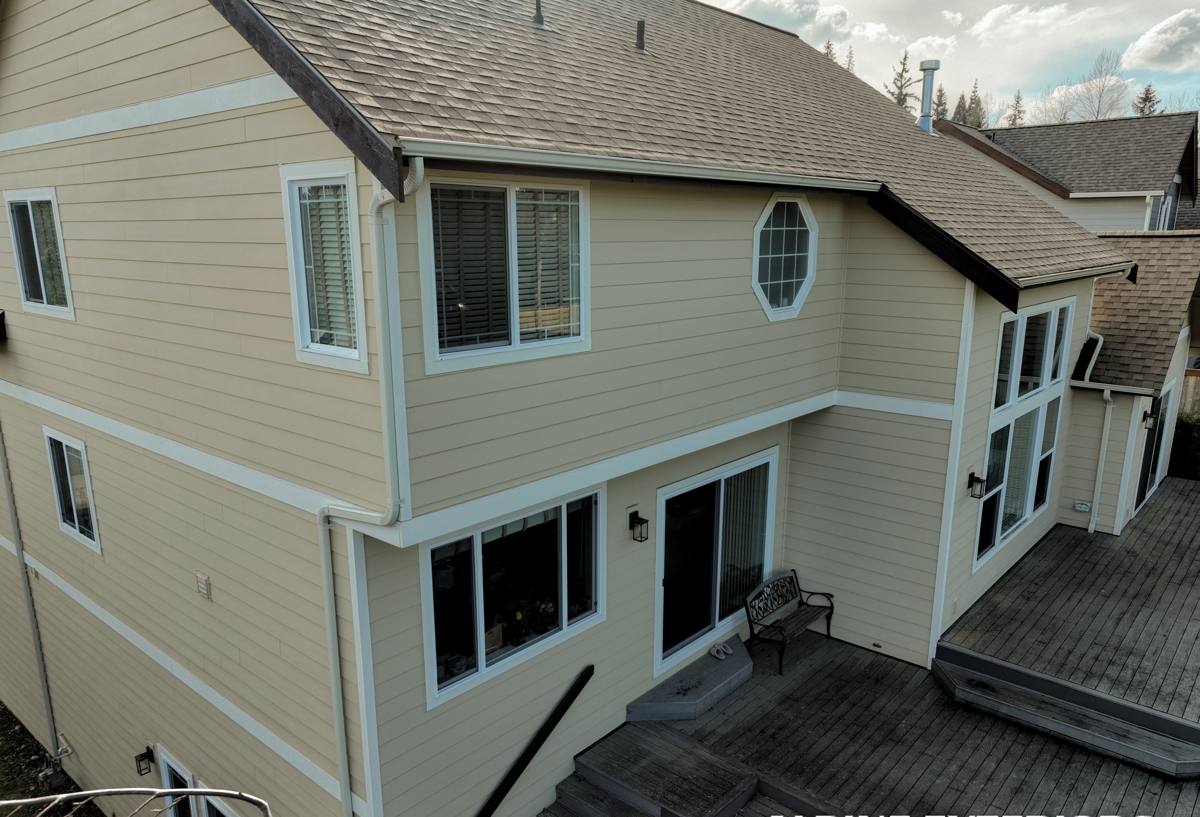
What Blaine's Climate Demands From a Window
Salt Air Off the Bay and Harbor
Homes near Semiahmoo Bay and Drayton Harbor take a steadier dose of salt-laden air than towns set further inland, and that air works on a window in ways that aren't always obvious at first. Salt accelerates corrosion on hardware, locks, and lower-grade fasteners, and it degrades weatherstripping and seals faster than a drier inland environment would. A seal that starts breaking down lets in both drafts and moisture, which quietly undoes whatever energy performance the window was rated for when it left the factory.
Driving Rain and Wind
Storms coming off the water in Blaine push rain sideways into wall assemblies and window flashing rather than letting gravity do the work the way it would somewhere more sheltered. A window that isn't flashed and sealed correctly for that kind of exposure can develop air and water infiltration around the frame even when the glass and sash themselves are performing fine. Once air is leaking around a window rather than through it, no amount of glass upgrade fixes the problem — it's an installation issue, not a product issue.
A Moss and Mildew Season That Runs Most of the Year
Mild temperatures and near-constant moisture give moss and mildew a long growing season in Blaine, and window sills, frames, and trim are common places it takes hold, especially on shaded or north-facing walls. Beyond the appearance issue, sustained dampness against a frame or sill adds ongoing stress to seals and finish that a drier climate simply doesn't produce.
Why "Energy-Efficient" Isn't Just a Glass Spec
Homeowners often go looking for a specific glass package or U-factor number, and that's a reasonable place to start, but it's only part of the picture. Three factors determine how a window actually performs over time in this climate:
- Glass and gas fill — low-E coatings and inert gas fills (typically argon) reduce heat transfer through the glass itself
- Frame material and construction — the frame is often a bigger source of heat loss than most homeowners expect, and frame material affects how well it holds up to sustained moisture and salt exposure
- Installation quality — flashing, sealing, and air-sealing around the rough opening determine whether the window's rated performance actually holds up once it's exposed to real Blaine weather
A high-end glass package installed with a weak flashing sequence will underperform a mid-range window installed correctly. We lead with installation quality for that reason — it's the part of the equation that's most often shortcut, and the part that determines whether the window is still performing well in ten years or drafting and fogging by year five.
Understanding the Performance Ratings
Window energy performance is measured a few specific ways, and it's worth knowing what each one actually tells you before comparing options.
| Rating | What It Measures | Why It Matters in Blaine |
|---|---|---|
| U-Factor | How well the window resists heat transfer (lower is better) | Directly affects heating costs through the county's long, damp, cool season |
| SHGC (Solar Heat Gain Coefficient) | How much solar heat passes through the glass (lower blocks more heat) | Less critical here than in sunnier climates, but still relevant on south- and west-facing walls |
| Air Leakage Rate | How much air passes through the assembly when closed | Directly tied to how well the unit resists wind-driven infiltration off the water |
| Condensation Resistance | How well the frame and glass resist interior condensation | Relevant given the sustained humidity and temperature swings common in this climate |
We'll walk through what these numbers mean for your specific home and orientation rather than just handing over a spec sheet. A window facing the water on an exposed wall has different priorities than one on a sheltered, inland-facing side of the same house.
Frame Materials: The Honest Trade-Offs
Frame material affects both energy performance and how well the window holds up to Blaine's specific exposure. None of these are wrong choices — the right one depends on the wall, the budget, and how much upkeep a homeowner wants to take on.
Vinyl
Vinyl frames offer solid insulating value and hold up well to sustained moisture without the corrosion concerns metal frames face in salt air. They're a common, cost-effective choice for straightforward replacements in this climate.
Fiberglass
Fiberglass frames insulate at least as well as vinyl and hold their dimensional stability better across temperature swings, which matters on walls that see both cold snaps and damp warm stretches through the year. They typically cost more than vinyl but need less long-term babying against this coastline's conditions.
Wood and Wood-Clad
Wood frames insulate well and many homeowners prefer the interior look, but bare exterior wood is a poor match for sustained salt air and moisture without diligent maintenance. A wood-clad option, with a low-maintenance exterior cladding over a wood interior, can be the right call when the interior appearance matters and the exterior is properly protected — that's a trade-off worth discussing against your specific wall and budget, not a default we push on every job.
Aluminum
Aluminum frames are strong and slim-profiled but conduct heat readily unless they include a thermal break, and bare aluminum hardware is more exposed to salt-air corrosion than vinyl or fiberglass. We don't lead with uninsulated aluminum on weather-facing walls in Blaine given that combination, though thermally-broken aluminum can still make sense for specific architectural applications.
What a Correct Installation Involves Here
The window unit itself gets most of the attention, but in Blaine's climate, the installation details around it are what actually determine whether the energy performance holds up. A correct job includes:
- Removing the old unit carefully and inspecting the rough opening for hidden rot, moisture damage, or prior flashing failures before anything new goes in
- Repairing or correcting any framing or sheathing issues found during removal, rather than sealing a new window over an existing problem
- Installing flashing in the correct shingle-lap sequence at the sill, jambs, and head so water is directed out and away from the wall assembly
- Using corrosion-resistant fasteners appropriate for sustained salt-air exposure, not standard hardware that starts corroding within a few seasons
- Air-sealing the gap between the window frame and the rough opening with an appropriate sealant or low-expansion foam, not just caulk around the exterior trim
- Setting the unit level, plumb, and square so the sash operates correctly and seals compress evenly for the life of the window
- Integrating the new flashing cleanly with the existing weather-resistive barrier and siding, rather than just caulking the perimeter and calling it finished
Skip any one of those steps and a new, well-rated window can still draft, fog, or leak within a few years — not because the product was wrong, but because the installation didn't account for what this climate actually does to a wall assembly.
Signs Your Current Windows Are Costing You Money
- Noticeable drafts near the frame, especially during Blaine's windier storm events
- Condensation forming between panes on double- or triple-glazed units, which usually means the seal has failed
- Difficulty opening, closing, or locking the window, often from corroded hardware or a frame that's shifted out of square
- Visible fogging, discoloration, or soft spots on the frame or sill
- A noticeable temperature difference near the window compared to the rest of the room
- Rising heating costs without any other clear explanation
How Our Process Works
We start with an on-site assessment — checking the existing windows and openings, noting sun and wind exposure through the day, and looking at how close the home sits to the bay or harbor. From there we talk through frame and glass options that fit the budget and the specific walls being addressed, since a water-facing wall and a sheltered interior wall don't always call for the same specification.
Permitting for window replacement in Blaine and the rest of Whatcom County is typically straightforward for like-for-like swaps, and we handle any required paperwork as part of the job. Installation follows the sequence above — careful removal, opening inspection and repair as needed, flashing and air-sealing, then setting and finishing the new unit. We finish with a walkthrough covering how to operate and maintain the specific windows installed, since upkeep expectations vary somewhat by frame material.
Why It Matters That We Already Work Blaine
A crew that mostly installs windows further inland can still do competent work, but a Blaine job has variables that don't come up as often elsewhere in Whatcom County — corrosion-grade fastener and hardware requirements from sustained salt exposure, flashing sequences built for wind-driven rain rather than straight-down weather, and moss and mildew pressure that runs longer here than it does in more sheltered towns. Working this area regularly means we're not guessing at those requirements on your project. We've seen which frame materials and hardware grades actually hold up against Blaine's specific combination of salt air, driving rain, and moss, and which details are worth the extra time rather than an upsell.
That familiarity also shows up in smaller judgment calls — how to sequence flashing on a wall that takes wind-driven rain more directly than others on the same house, or being straightforward about which upgrades genuinely pay off in energy savings here versus which are just a nicer number on a spec sheet.
Get a Straight Answer About Your Windows
Whether you're dealing with drafty older windows, planning ahead for a remodel, or just want an honest read on what energy-efficient replacement would take on your Blaine property, we're happy to walk the site with you and lay out the options plainly. Reach out below for a free, no-pressure estimate.