 Bellingham Siding
 Roof Repair Built for Edgemoor's Bluffs and Tree Canopy
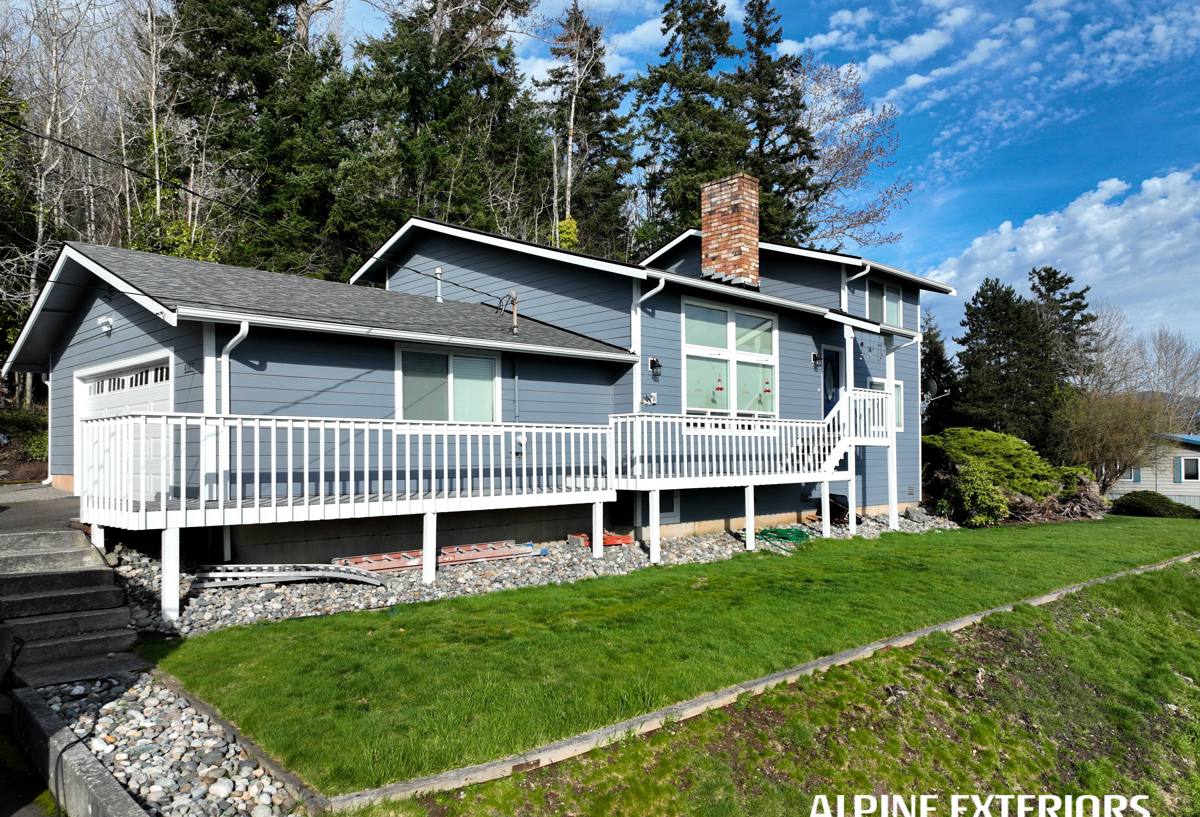
Edgemoor sits above Bellingham Bay under some of the heaviest tree cover in the city — mature fir, cedar, and madrona canopy that shades roofs for most of the day and drops needles, cones, and leaf litter year-round. Combine that with the bay's salt-laden air and the driving, wind-pushed rain that comes off the water, and you get a roofing environment that behaves differently than roofs a few miles inland. We repair a lot of roofs in this neighborhood, and the failures we find here follow a pretty consistent pattern tied directly to those conditions.
This page covers what actually goes wrong with Edgemoor roofs, what a repair should include to hold up here, and how our process works when you call us out for an estimate.
Why Edgemoor Roofs Wear the Way They Do
Shade and Moisture Retention
Tree cover keeps roofs cooler and shadier, which sounds like a benefit until you consider what it does to drying time. A roof in full sun sheds moisture within an hour or two after a storm. A shaded roof under fir and madrona canopy can stay damp for a day or longer, especially on north-facing slopes. That extended dampness is exactly what moss, lichen, and algae need to establish, and once moss gets a foothold under shingles or shakes, it lifts the material and holds water against the roof deck.
Salt Air and Metal Fatigue
Proximity to Bellingham Bay means fasteners, flashing, and any exposed metal on an Edgemoor roof are exposed to salt-bearing air more than a roof further inland would be. Over years, this accelerates corrosion on lower-grade nails, staples, and flashing — which shows up as rust streaking, loosened fasteners, and pinhole leaks well before a roof's expected service life would suggest.
Driving Rain and Wind Direction
Bellingham gets a lot of rain, but what causes damage isn't just volume — it's the wind-driven angle it often arrives at off the bay. Rain pushed sideways finds its way under lifted shingle tabs, poorly lapped flashing, and gaps around penetrations that would stay dry in a straight vertical downpour. Roofs on bluff-exposed sides of Edgemoor homes take this the hardest.
Common Roof Repair Issues We Find in Edgemoor Homes
- Moss and organic growth wedging shingles or shakes apart, especially on shaded north and east slopes
- Rusted or fatigued flashing around chimneys, skylights, and roof-to-wall transitions
- Granule loss and cracking on older asphalt shingles from years of damp-dry cycling
- Clogged gutters and valleys from needle and leaf debris, causing water to back up under the roofing material
- Soft or rotted decking discovered under moss mats or old, undersized patch repairs
- Loose or missing fasteners along ridge caps and eaves exposed to wind off the water
- Interior water stains that trace back to a small, longstanding leak rather than a sudden failure
What a Correct Roof Repair Actually Involves
A lot of "roof repairs" in wooded, coastal neighborhoods are really just cosmetic patches — a bead of sealant over a visible gap, or a shingle swapped out without checking what's underneath. That approach doesn't hold up in Edgemoor's conditions, because the moisture and salt exposure here punish shortcuts faster than they would in a drier, sunnier part of Whatcom County.
A repair we stand behind starts with finding the actual cause of the problem, not just the symptom. That usually means:
- Removing moss and debris from the repair area and the surrounding roof plane, not just the visible damage spot
- Checking the roof deck underneath for soft spots or rot before replacing any surface material
- Inspecting and, where needed, replacing flashing rather than resealing corroded metal
- Matching replacement shingles, shakes, or panels as closely as possible in material and exposure
- Confirming proper fastener type and placement for wind and moisture exposure specific to the site
- Checking adjacent gutters and drainage paths so the repair isn't undone by standing water next season
Skipping any of these steps tends to buy a homeowner one or two dry seasons before the same leak reappears, often larger and with more deck damage than the first time around.
Our Roof Repair Process
1. On-Site Assessment
We walk the roof (or use a ladder and camera where pitch or access makes that unsafe) and inspect the problem area along with the rest of the roof plane. Shade and moss patterns often mean the visible leak isn't the only trouble spot.
2. Honest Diagnosis
We tell you plainly what's causing the issue, what it will take to fix it correctly, and whether a targeted repair makes sense or whether the roof's age and condition point toward a larger conversation about replacement. We're not going to talk you into work you don't need.
3. Written Estimate
You get a clear scope of work and price before anything happens — no surprise add-ons once we're on the roof.
4. The Repair Itself
We match materials, replace what actually needs replacing (including decking, if it's compromised), and reinstall flashing and fasteners suited to Edgemoor's salt air and wind exposure rather than whatever is fastest.
5. Follow-Up
We check our own work after the next significant rain where practical, and we're straightforward with you about basic upkeep — like keeping moss and debris off the repaired area — so the fix lasts.
Repair vs. Replacement: What Drives the Decision
Not every roof problem in Edgemoor needs a full replacement, but tree cover and salt exposure do shorten the window where repair alone still makes sense. Here's how we generally weigh it:
| Factor | Leans Toward Repair | Leans Toward Replacement |
|---|---|---|
| Roof age | Under 15-20 years, material still has service life left | Approaching or past manufacturer's expected lifespan |
| Extent of damage | Isolated to one area, flashing, or a section of shingles | Recurring leaks in multiple areas, widespread granule loss |
| Decking condition | Solid, dry decking under the damaged material | Soft, rotted, or repeatedly wet decking found on inspection |
| Moss/organic growth | Surface growth, removable without lifting material | Growth has worked under shingles or shakes across large areas |
| Cost trajectory | Repair cost is a small fraction of full replacement | Repeated repairs are adding up close to replacement cost |
Roofing Materials We Work With in Edgemoor
Edgemoor has a mix of roof ages and styles, from older cedar shake homes to more recent asphalt composition and standing-seam metal roofs. Each has different repair considerations in this climate:
| Material | What to Know for This Climate |
|---|---|
| Asphalt composition shingles | Widely used and cost-effective; needs regular moss control since shade accelerates granule loss and curling |
| Cedar shake | Common on older Edgemoor homes; requires more diligent moss and moisture management, and repairs should match existing shake exposure and thickness |
| Metal (standing seam) | Sheds moss and debris better than shingles or shake, but fastener and flashing quality matters even more given salt air exposure |
| Flat or low-slope sections | Common on additions and porches; drainage and membrane seams need extra attention where tree debris collects |
We don't push homeowners toward a particular material for its own sake. What we recommend depends on your existing roof, your budget, and how much ongoing maintenance you're willing to keep up with — moss control especially, since shaded, wooded lots like most of Edgemoor's demand more of it than open, sunny sites.
Why a Crew That Already Works in Edgemoor Matters
Roof repair isn't one-size-fits-all across Whatcom County. A crew used to open, sunny roofs elsewhere in the region can miss the signs of moss undermining a shake roof, or under-spec flashing for salt exposure because it's not something they deal with regularly. Working Edgemoor's streets and roof lines repeatedly means we already know to check north-facing shaded slopes first, to expect fastener corrosion on older homes near the bluff, and to plan repairs around the debris load these trees drop through fall and winter.
That familiarity also means faster, more accurate estimates — we're not guessing at how this neighborhood's climate and tree cover behave, we're working from what we've already seen on roofs nearby.
Keeping an Edgemoor Roof Healthy Between Repairs
Whatever material your roof is, a few habits go a long way in this environment:
- Clear moss and organic debris from shaded roof sections at least once a year, ideally before the wet season
- Keep gutters and valleys free of needles and leaves so water isn't backing up under roofing material
- Trim back branches that overhang the roofline to reduce shade, debris, and abrasion during wind
- Have flashing around chimneys, skylights, and vents checked periodically for corrosion, especially on homes closer to the water
- Address small leaks or stained ceiling spots early — in this climate, a small entry point rarely stays small for long
If you're dealing with a leak, moss buildup, or aging flashing on an Edgemoor roof, we're glad to take a look and give you a straight answer about what it needs. Reach out for a free, no-pressure estimate using the form below.