 Bellingham Siding
 Birchwood Decks Take a Different Kind of Beating
Birchwood sits close enough to Bellingham Bay and the rest of Whatcom County's marine weather pattern that decks here age differently than they would inland. Salt-laden air off the water accelerates corrosion on fasteners and hardware. Driving rain, pushed sideways by wind off the water, gets up under railings and behind ledger boards in ways a straight-down rain never would. And the long, wet, mild winters we get mean moss and algae have months at a time to establish themselves on any horizontal wood surface that doesn't dry out quickly. None of this means a deck in Birchwood is doomed — it just means repairs need to account for conditions a deck built in Arizona or even eastern Washington never has to deal with.
We've worked on enough decks around Bellingham and greater Whatcom County to know the failure patterns are consistent. This page walks through what actually goes wrong, what a correct repair looks like, and how we handle the job when you call us.
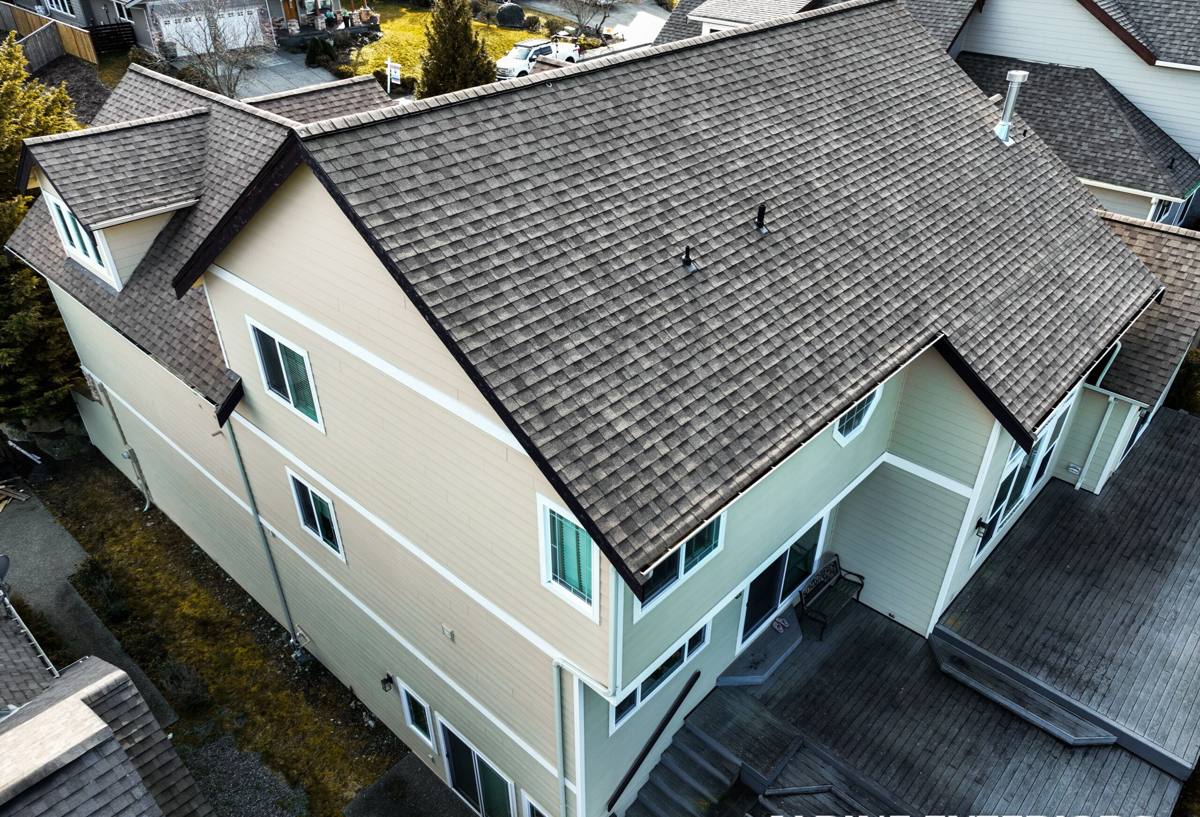
What Actually Fails on a Deck in This Climate
The Ledger Board Connection
The ledger board — where the deck attaches to the house — is the single most important structural point on most decks, and it's also the most common place we find hidden rot. Water works its way behind the ledger through gaps in flashing, cracked caulk, or a flashing detail that was never installed correctly in the first place. Because the damage is hidden behind the rim joist and siding, homeowners often don't know there's a problem until the deck feels spongy near the house or a board pulls away slightly during a heavy storm.
Joists and Framing
Underneath the decking boards, joists take on moisture from above (through gaps between boards) and below (from ground moisture and poor airflow under low decks). In a climate that stays damp for months at a stretch, joists that were never sealed on the cut ends or that sit too close to grade will show soft spots, dark staining, or outright rot well before the surface boards look bad.
Decking Boards and Surface Wear
Wood decking checks, cups, and splinters as it repeatedly wets and dries. Add moss and algae growth into the mix and you get a surface that's slippery as well as deteriorating — a real safety issue on stairs and near entry doors. Composite and PVC decking resist rot but aren't immune to problems: boards can fade unevenly, fastener systems can loosen, and moss still grows on any composite surface that stays shaded and damp long enough.
Stairs, Railings, and Fasteners
Stairs and railings get the most physical use and the least forgiveness for looseness. Galvanized fasteners that weren't rated for the coastal moisture load will show rust streaks and lose holding power years before they look obviously "done." A wobbly railing post is very often a sign that the post's connection to the framing below has already failed, not just that a bolt needs tightening.
Signs Your Deck Needs Attention
Most deck problems don't show up as one dramatic failure — they show up as a handful of small signs that are easy to explain away individually. Worth checking for:
- Soft, spongy, or bouncy spots when you walk across the deck
- Boards that have cupped, split lengthwise, or lifted at the ends
- Rust streaks bleeding out from screws, nails, or joist hardware
- A railing or stair post that moves when you push on it
- Gaps or daylight visible where the deck meets the house at the ledger board
- Persistent green or black staining on stair treads or shaded boards
- Standing water or slow drainage on the deck surface after rain
- Visible sagging along the outer edge or between support posts
Any one of these on its own might be minor. Two or more together, especially anything involving the ledger board or a structural post, is worth having looked at before the next stretch of wet weather.
Repair or Replace? What Actually Drives That Decision
Not every deck problem calls for a full rebuild, and not every deck problem can be patched. The honest answer usually comes down to how much of the structure — versus the surface — is affected.
| Factor | Leans Toward Repair | Leans Toward Replacement |
|---|---|---|
| Ledger board condition | Solid, flashing intact | Rot or hidden water damage found |
| Framing/joists | Localized soft spots only | Widespread rot or undersized framing |
| Decking surface | A few damaged boards | Most boards cupped, split, or delaminating |
| Age of deck | Under 12-15 years | Original build is decades old |
| Code compliance | Meets current guardrail/spacing rules | Railings, spacing, or footings out of date |
| Typical cost range | A few hundred to a few thousand dollars | Several thousand into the low five figures |
That last row is intentionally broad — the real number depends on size, accessibility, the decking material you choose, and how much of the substructure has to come apart to fix the problem underneath. We give a firm number after we've actually looked at the deck, not before.
How We Handle a Deck Repair
- Inspection first. We check the ledger connection, get underneath the deck to look at joists and posts, and test railings and stairs by hand — not just a walk-around from the top.
- Identify the actual source, not just the symptom. A soft board near the house is often a ledger or flashing problem, not just a board problem. We trace water paths before we start cutting anything out.
- Repair the structure before the surface. Framing, hardware, and flashing get addressed first. There's no point installing new decking over joists that are still failing underneath.
- Match or upgrade hardware to the environment. Fasteners and connectors get chosen for this climate, not the cheapest option that would work somewhere drier.
- Restore or replace the surface. Depending on what you want, that's new boards matched to the existing deck, a full resurface, or a switch to composite where it makes sense.
- Final check on rails, stairs, and drainage. Nothing gets called finished until railings are solid, stairs are even, and water has somewhere to go.
Moss, Algae, and Drainage — the Maintenance Side
Bellingham's moss season isn't a minor annoyance — it's a genuine contributor to deck failure. Moss and algae hold moisture against the wood (or against composite boards) far longer than bare wood would dry on its own, and that constant dampness is exactly what accelerates rot and makes surfaces dangerously slick. Part of a proper repair is looking at why moss is establishing itself in the first place: is the deck shaded most of the day, is drainage pooling water instead of shedding it, are boards spaced tightly enough to trap debris between them? Fixing the underlying moisture and airflow problem matters as much as scrubbing the moss off, because moss that comes back every year is a sign the deck's drainage or spacing needs correcting, not just cleaning.
Materials and Hardware — Our Standard for This Climate
We don't chase the cheapest material or fastener option on repair work here, because the coastal, wet Whatcom County climate punishes shortcuts faster than a drier climate would. In practice that means:
- Stainless steel or high-grade coated fasteners in areas exposed to driving rain and salt air, instead of standard galvanized hardware that corrodes faster near the water
- Proper flashing at every ledger board repair, not just caulk over the existing gap
- Joist hangers and structural connectors rated for exterior, wet-use conditions
- Pressure-treated framing lumber sized and sealed at cut ends, since an unsealed cut is where rot typically starts first
- Decking material matched to how the deck is actually used and how much sun and shade it gets — wood, composite, and PVC each have real trade-offs in maintenance, cost, and moisture behavior, and we'll walk you through them honestly rather than push whatever's easiest for us to install
None of this is about any brand being bad — it's about choosing materials and details that hold up to the specific way weather behaves in this part of Washington.
Why It Matters to Hire a Crew That Already Works in Birchwood
A contractor who mostly works drier inland areas can still do competent framing — but they may not automatically think about ledger flashing the way someone who repairs Bellingham decks year-round does, or recognize moss staining as a drainage symptom rather than just a cosmetic issue. Working regularly in Birchwood and the surrounding Bellingham area means we're used to the specific combination of salt air, sideways rain, and extended damp seasons that this deck's problems actually came from, and we build the repair around that reality rather than a generic checklist.
Get an Honest Look at Your Deck
If your deck has a soft spot, a wobbly rail, or just isn't holding up the way it used to, it's worth having someone look before another wet season adds to the damage. We're happy to come take a look, tell you honestly whether you're looking at a repair or a replacement, and give you a straightforward estimate with no pressure attached — just fill out the form below.