 Bellingham Siding
 Building a Deck That Can Actually Handle Edgemoor's Climate
Edgemoor sits close to Bellingham Bay, under a heavy canopy of mature conifers and hardwoods, which is a big part of what makes the neighborhood beautiful — and a big part of what makes deck-building here different from a standard Whatcom County job. Homes here deal with a specific combination: salt-tinged air coming off the bay, long stretches of driving rain through fall and winter, and shade from tree cover that keeps surfaces damp and slow to dry out. That combination is exactly what shortens the life of a deck that wasn't built for it.
A deck that's correct for a dry, sunny lot inland can fail early on a shaded, bay-adjacent lot in Edgemoor. The framing rots from the inside out before the surface ever looks bad. The fasteners corrode. Moss builds a moisture-holding mat on the boards and never fully dries between rain events. None of this is dramatic — it's slow, and that's exactly why so many decks in this part of Bellingham look fine for a few years and then need major structural repair all at once.
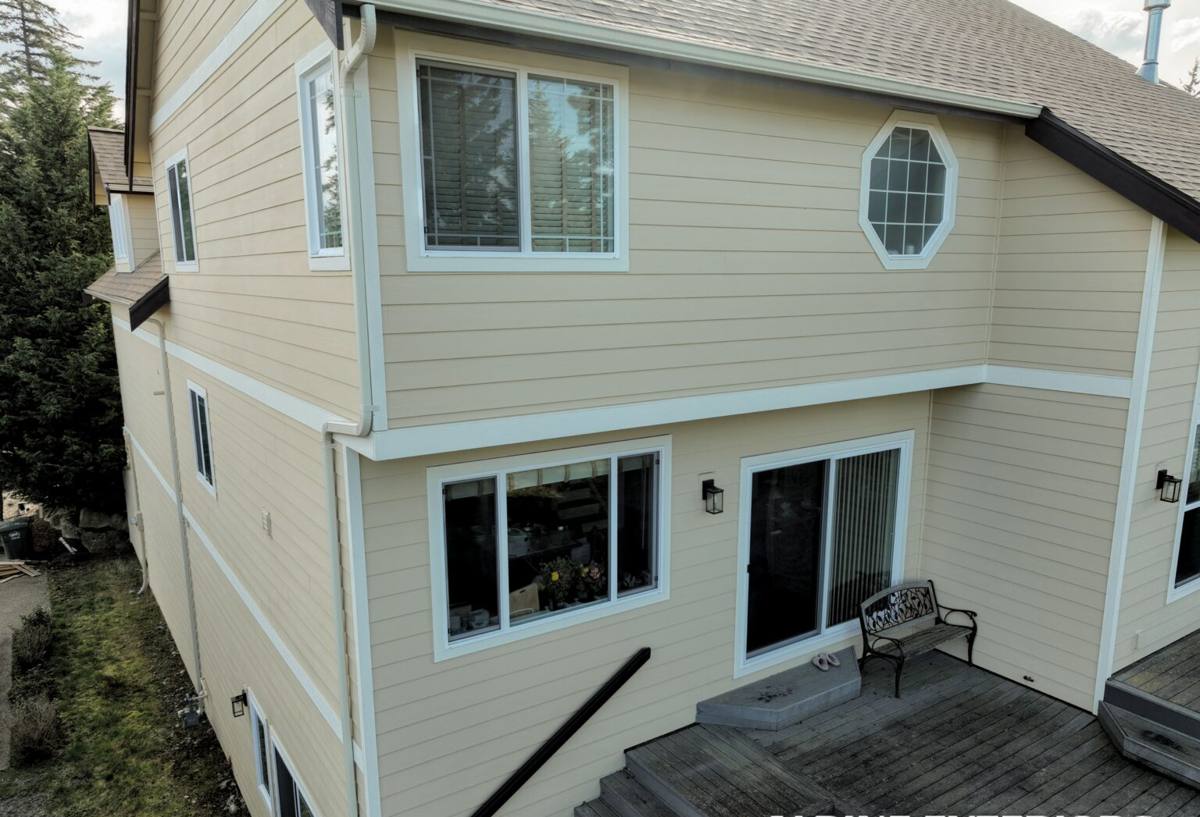
What "Salt Air, Driving Rain, and Moss Season" Actually Does to a Deck
Salt Air and Metal Fatigue
Proximity to Bellingham Bay means airborne salt is a real factor, even a few blocks inland. Standard fasteners and connectors that are fine in drier, inland parts of Whatcom County can corrode faster near the water. Corroded fasteners lose holding strength quietly — you won't see it until a board pulls loose or a ledger connection starts to fail.
Driving Rain and Water Intrusion
Bellingham's rain doesn't just fall straight down — wind off the bay pushes it sideways into ledger connections, stair stringers, and any spot where the deck meets the house. Any gap in flashing or any fastener hole that wasn't properly sealed becomes a path for water to get behind siding and into framing where it can't dry out.
Moss Season and Trapped Moisture
Tree cover keeps a lot of Edgemoor lots shaded well into the day, and shade plus moisture is exactly what moss needs. Moss on a deck surface isn't just a slip hazard — it holds water against the wood or composite surface long after the rest of the yard has dried, which accelerates rot in wood decking and can void warranties on some composite products if it's left to sit.
What a Correctly Built Deck Looks Like Here
None of this means Edgemoor homeowners need to over-build or over-spend. It means the details that don't show up in a quick estimate — flashing, fastener grade, framing spacing, drainage — need to be handled correctly the first time, because redoing them later means tearing the deck apart.
Ledger Flashing Done Right
The ledger board — where the deck attaches to the house — is the single most common failure point on decks in wet climates. It needs proper flashing that directs water out and away from the house framing, not just a bead of caulk. This is also where a lot of cut-rate deck jobs fail first, because it's hidden work that's easy to shortcut and hard for a homeowner to inspect afterward.
Fastener and Hardware Grade
In a marine-influenced climate, hardware matters more than it does thirty miles inland. Structural connectors, joist hangers, and fasteners should be rated for the level of corrosion resistance the coastal exposure calls for — not just whatever meets minimum code in a drier region.
Joist Protection and Drainage
Wrapping or taping the tops of joists before decking goes down keeps water from sitting in fastener holes and wicking into the wood grain. Combined with a deck height, spacing, and slope that actually lets water and airflow move underneath, this is what prevents the slow rot that shows up as soft spots two or three years after installation.
Choosing a Decking Surface for a Shaded, Damp Lot
There's no single "best" decking material — there's a best fit for your specific lot, sun exposure, and how much upkeep you want to do. On a shaded, moss-prone lot near the bay, the trade-offs below matter more than they would on an open, sunny site.
| Decking Material | Moisture & Moss Behavior | Maintenance | Typical Lifespan |
|---|---|---|---|
| Cedar | Naturally rot-resistant but still needs to breathe and dry; moss/algae will grow if shaded and not cleaned | Periodic cleaning and refinishing | 15-20 years with upkeep |
| Pressure-Treated Fir/Pine | Treated for rot resistance but end cuts and fastener holes are vulnerable; moss holds moisture against the surface | Regular cleaning, sealing every few years | 15-20 years with upkeep |
| Composite (capped) | Won't rot, but moss and mildew can still grow on the surface film in shaded, damp spots and needs washing | Low — occasional washing, no sealing/staining | 25-30+ years |
| PVC Decking | Fully synthetic, most resistant to moisture damage; surface growth still needs washing off | Lowest — washing only | 25-30+ years |
For heavily shaded Edgemoor lots specifically, we tend to steer homeowners toward capped composite or PVC when low maintenance is the priority, since the framing underneath — not the decking surface — is where wood really struggles in constant shade. If you want the look and feel of real wood and are willing to clean and treat it on a schedule, cedar is still a solid choice; it just asks more of you over the life of the deck.
Site Factors That Are Common in Edgemoor
Edgemoor's terrain and setting bring a few site conditions that come up often enough to plan for before design work starts:
- Sloped or bluff-adjacent lots: Some Edgemoor properties sit on sloped terrain near the bay bluff, which can affect footing design and may involve additional permitting or engineering review depending on the specific lot and setback.
- Heavy tree canopy: Mature trees mean more shade (slower drying, more moss) and more debris — leaves and needles that collect between boards and hold moisture if the gapping and drainage aren't right.
- Root protection: Footings near established trees need to be placed and sized with root systems in mind, both to protect the tree and to avoid future footing movement.
- View orientation: Decks built to take advantage of bay views often end up more exposed to wind-driven rain than decks tucked against the house, which raises the bar on flashing and fastener choices.
Our Process for an Edgemoor Deck Project
1. On-Site Walkthrough
We look at your specific lot — sun exposure, slope, tree cover, drainage, and how the deck will tie into the house — before recommending materials or a layout. What's right for a sunny, flat lot isn't automatically right for a shaded, sloped one two streets over.
2. Design and Material Selection
We'll walk you through the honest trade-offs between materials for your specific situation — not just what looks good, but what will hold up given your shade, exposure, and how much maintenance you actually want to do.
3. Permitting
Deck projects in the City of Bellingham typically require a permit, and lots with slope or bluff proximity may need additional review. We handle this as part of the process so there are no surprises mid-project.
4. Construction
Ledger flashing, footings, framing, joist protection, and fastener selection are handled to the standard the climate calls for — not just the code minimum. This is where a deck's real lifespan is determined, well before the decking boards go down.
5. Final Walkthrough
We go over the finished deck with you, including what maintenance (if any) your specific decking material needs and roughly when to expect it, so there are no surprises down the road.
Living With a Deck in a Marine, Moss-Prone Climate
Even a correctly built deck needs some seasonal attention in this climate — the difference is that a well-built deck needs maintenance to stay looking good, while a poorly built one needs repair to stay standing. Here's what actually matters:
- Sweep or blow off leaves and needles regularly in fall, especially between boards where they trap moisture
- Clean moss and algae off the surface before it builds into a thick mat — a stiff brush and a deck-safe cleaner is usually enough
- Check that gaps between boards are clear so water can drain through, not pool on the surface
- Inspect the ledger board area yearly for any signs of water staining or soft wood
- For wood decking, plan on cleaning and resealing on the schedule the product calls for — skipping a cycle in this climate costs more than it saves
- Keep any nearby vegetation trimmed back so airflow and sunlight can reach the deck surface
Why a Local Crew That Already Works Edgemoor Makes a Difference
A lot of what determines whether a deck lasts 10 years or 30 in this neighborhood isn't visible on a spec sheet — it's judgment calls about flashing details, fastener grade, and framing spacing that a crew only gets right consistently once they've seen how decks actually perform in this specific combination of salt air, shade, and rain. A crew that's only worked drier, sunnier sites can build a deck that meets code and still struggles here within a few years.
We've built and repaired decks throughout Bellingham and Whatcom County, including neighborhoods along the bay with the same shade and moisture challenges Edgemoor lots face. That means when we walk your property, we're not guessing at what the climate will do to different materials and details — we've already seen what holds up and what doesn't.
Get a Free, No-Pressure Estimate
If you're planning a new deck or need an existing one evaluated for rot, moss damage, or failing hardware, we're happy to take a look and give you an honest assessment — no pressure, no upsell. Use the form below to request a free estimate for your Edgemoor property.