 Bellingham Siding
 Why Ferndale Windows Take More Punishment Than Most
Ferndale sits close enough to the water and the Nooksack lowlands that its homes deal with a specific combination of weather most window manufacturers don't design for by default: salt-laden air rolling in off Bellingham Bay and the Strait, wind-driven rain that hits window assemblies sideways instead of straight down, and a wet season that stretches long enough to grow moss on anything that stays damp for more than a few days. None of that is dramatic on its own. What it does is slow and cumulative — it finds the weak seam in a frame, the gap in old caulking, the low spot where water pools instead of shedding.
We work on homes throughout Whatcom County, and Ferndale's older housing stock in particular tends to carry original or early-replacement windows that were never built with this exposure in mind. Aluminum frames from decades past conduct cold and sweat on the inside. Early vinyl units flex and gap as the sealant ages. Wood sashes that aren't maintained every year or two start absorbing moisture at the joints, which is where rot actually begins — not in the middle of a board, but at the corners and the sill.
What "Custom" Actually Means for a Window Job
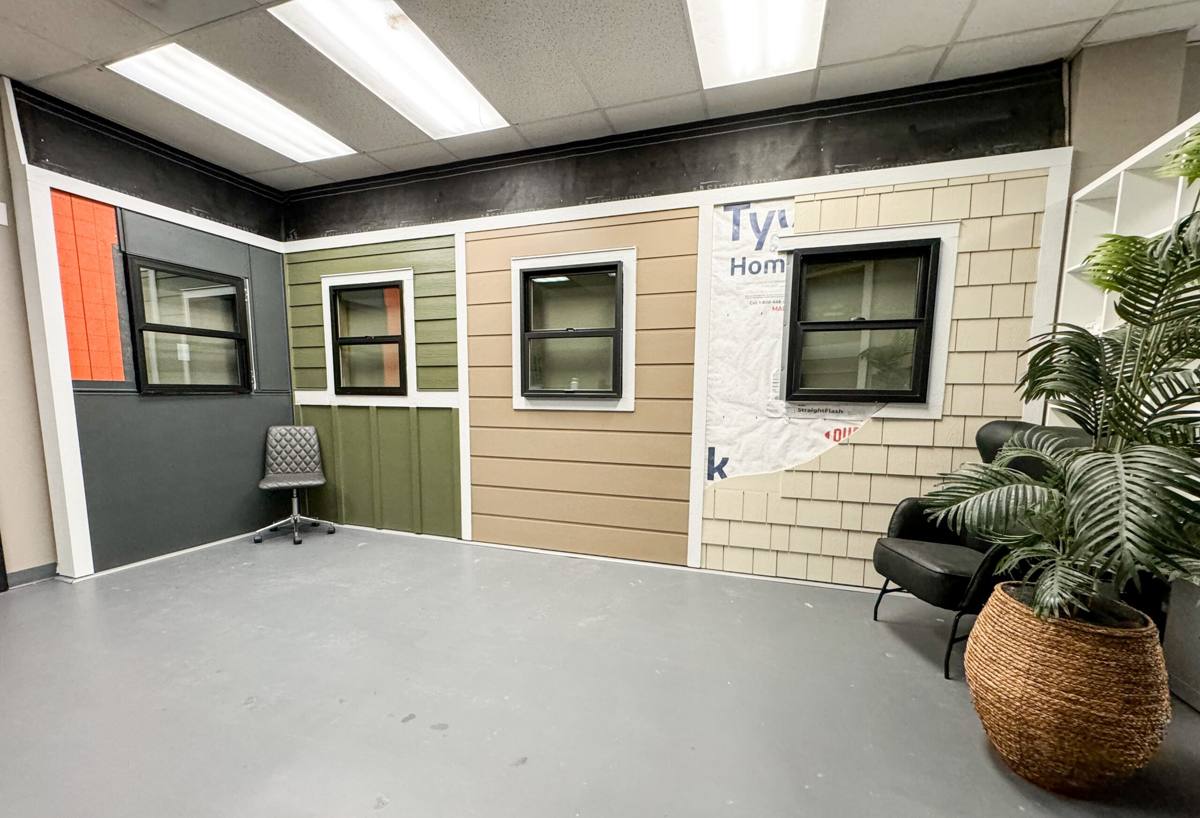
Custom doesn't mean expensive or unusual-looking. It means the window is built and installed to fit your specific opening, your specific wall assembly, and your specific exposure — not pulled off a shelf in a standard size and shimmed into place. On older Ferndale homes, openings are rarely perfectly square anymore after decades of settling, so a true custom order accounts for that instead of forcing a stock size to work.
Custom also covers choices that matter more here than in a drier climate:
- Frame material matched to how much direct weather and salt exposure that side of the house gets
- Glass package selected for the room's orientation — a west-facing window dealing with driving rain needs different performance than a sheltered north window
- Sightlines and grille patterns that match the home's existing style, especially on additions or partial replacements
- Sill and flashing details built for the specific wall assembly, whether that's original wood siding, a later re-side, or fiber cement
When Full Custom Isn't Necessary
Not every job needs a fully custom-built window. If an opening is square, in good condition, and a standard size is a clean fit, a quality standard unit installed correctly will perform just as well and cost less. Part of an honest estimate is telling you which situation you're actually in, rather than upselling custom sizing you don't need.
Signs Your Windows Are Due for Replacement
Homeowners usually notice a problem long before they call — they just don't always realize what they're looking at. A few signs are worth acting on before they turn into a bigger repair:
- Fogging or a permanent haze between panes — the seal on the insulated glass unit has failed and moisture is trapped inside
- Visible moss or dark streaking on the sill or frame that keeps coming back even after cleaning
- Drafts you can feel with your hand near the frame on a windy day
- Windows that are hard to open, close, or lock — frames swelling, sagging, or racking out of square
- Soft or spongy wood at the sill, especially on wood-framed windows
- Paint that keeps failing in the same spot year after year, which usually means water is getting behind it
- A noticeably higher heating bill with no other explanation
Any one of these on its own isn't an emergency. Several at once, or moisture damage that's spreading into the wall framing, is worth getting looked at before another wet season passes.
Frame Materials: What Actually Holds Up Here
There's no single "best" window frame material — there's a best fit for the exposure, the home's style, and the budget. Here's how the common options actually perform under Whatcom County's coastal, wet-winter conditions:
| Material | How It Handles Salt Air & Rain | Maintenance | Typical Fit |
|---|---|---|---|
| Vinyl | Good — won't rust or rot, holds up well to moisture | Low — occasional cleaning | Most Ferndale homes, best value |
| Fiberglass | Excellent — very stable in temperature swings and driving rain | Low | Homes with heavier weather exposure, larger openings |
| Wood | Fair — needs a sound exterior clad or diligent upkeep to resist rot | High — regular painting or staining | Historic or period-style homes where wood interior look matters |
| Wood-clad (wood interior, aluminum or vinyl exterior) | Good — exterior shell protects the wood from the weather | Moderate | Homes wanting a wood interior without the maintenance |
| Aluminum | Poor for this climate — conducts cold, prone to condensation | Moderate | Generally not our recommendation for this area |
We don't install bare aluminum frames on Whatcom County homes as a matter of professional standard — not because the material is inherently bad everywhere, but because it performs poorly against the condensation and thermal bridging this climate produces, and the maintenance and comfort trade-offs aren't worth it for homeowners here.
Glass Packages: Matching Performance to Exposure
The frame keeps water out; the glass does most of the work on comfort and energy use. A few things worth understanding before you pick a package:
Low-E Coatings
Low-E (low-emissivity) coatings reflect heat back into the room in winter and block excess solar heat in summer. For our climate, a Low-E coating tuned for heat retention rather than heat rejection is usually the right call, since heating load matters more here than cooling load.
Argon or Krypton Gas Fill
The space between panes is typically filled with argon gas rather than plain air, which slows heat transfer. It's a small, inexpensive upgrade that pays off over the life of the window.
Double vs. Triple Pane
Double-pane with a good Low-E coating and gas fill is sufficient for most Ferndale homes. Triple-pane adds real value on north- or west-facing rooms that take the brunt of the wind and rain, or in rooms where noise from wind and weather is a bigger concern, but it adds weight and cost that isn't always worth it on every opening.
Our Installation Process
A window is only as good as its installation — a premium unit installed poorly will leak and fail faster than a mid-grade unit installed correctly. Here's how a typical job runs:
- On-site measurement and assessment. We check every opening individually, look at the condition of the surrounding wall and sill, and flag anything — soft wood, prior water damage, out-of-square framing — before it becomes a surprise mid-installation.
- Product selection. We walk through frame material, glass package, and style options based on that specific opening's exposure, not a one-size answer for the whole house.
- Removal of the old unit. Done carefully to protect interior finishes and give us a clear look at the framing and sheathing behind the old window before anything new goes in.
- Inspection and repair of the opening. Any rot, soft sheathing, or damaged framing gets addressed now — sealing a problem behind a new window guarantees a bigger repair later.
- Flashing and weather barrier installation. This is the step that actually keeps water out over the long run, covered in more detail below.
- Setting and shimming the window. The unit is leveled, plumbed, and squared, then fastened per manufacturer spec — not just caulked into a rough opening.
- Insulation and interior/exterior sealing. Gaps get properly insulated, not stuffed, and sealed with materials rated for exterior exposure.
- Trim, cleanup, and final walkthrough. Interior and exterior trim is finished, the work area is cleaned, and we walk the job with you before calling it done.
Flashing and Moisture Management — the Part Homeowners Never See
Most window failures in this region aren't glass failures — they're flashing failures. Water finds its way behind a window not through the glass but around the frame, and once it's behind the siding it can sit against the sheathing and framing for months before anyone notices, which is exactly the kind of slow damage a long moss season and constant driving rain are good at causing.
A correctly flashed window uses a layered, shingle-style approach: sill pan flashing at the bottom to catch and direct out any water that gets past the frame, side flashing that overlaps the sill pan, and head flashing at the top that overlaps the side flashing and integrates with the home's weather-resistive barrier. Every layer overlaps the one below it, the same way roof shingles do, so water is always directed outward and down — never allowed to work its way inward.
This is also where a lot of lower-cost installations cut corners, because proper flashing takes more time and can't be rushed without risking a leak that won't show up until a wall cavity is already damaged. It's not a step we skip or shortcut, regardless of the size of the job.
Cost Factors on a Custom Window Job
Every job is different, but the same handful of factors drive most of the cost difference between a simple swap and a larger custom project:
| Factor | Why It Affects Cost |
|---|---|
| Frame material | Vinyl is the most budget-friendly; fiberglass and wood-clad cost more upfront but often less over time |
| Number of custom (non-standard) sizes | Custom-built units cost more than stock sizes ordered in bulk |
| Condition of the existing opening | Rot or framing repair adds labor before the new window can even go in |
| Glass package | Triple-pane, upgraded Low-E, or specialty coatings add cost per unit |
| Access and building height | Second-story or hard-to-reach openings take more time and equipment |
| Exterior finish work | Trim, siding repair, or paint touch-up around the new window adds to the scope |
We give straightforward, itemized estimates so you can see what's driving the number — not a flat per-window price that hides whether you're getting stock or custom, standard glass or upgraded.
Why a Crew That Already Works Ferndale Matters
Window installation is one of those jobs where local experience shows up in details you'd never think to ask about. A crew that regularly works Ferndale and the surrounding Bellingham area already knows which orientations catch the worst of the wind-driven rain, how the local moss and mildew growth behaves on different frame finishes, and what kind of flashing detail actually holds up through a full wet season here rather than in a showroom or a different climate zone entirely.
That familiarity also means fewer surprises during the job itself — knowing what condition to expect behind an original window in an older Ferndale home, what siding types are common, and how to sequence the work around Whatcom County's weather windows instead of losing days to rain that a crew unfamiliar with the area might not have planned around.
Caring for New Windows After Installation
Custom windows installed correctly need very little upkeep, but a small amount of seasonal attention keeps them performing for the long haul:
- Rinse frames and tracks periodically to keep salt residue and grime from building up, especially on homes with more direct coastal exposure
- Check and clear weep holes on vinyl and fiberglass frames so water can drain instead of pooling
- Keep an eye out for moss or algae starting on sills and address it early rather than letting it establish
- Test locks and operation each season — a window that's suddenly hard to open or close is worth a quick look before it becomes a bigger issue
- Reapply exterior sealant around trim if you notice cracking, rather than waiting for a leak to show up inside
If you're weighing whether it's time to replace a window or two, or you're ready to talk through options for a full custom project, we're happy to come take a look at your Ferndale home and put together a free, no-pressure estimate. There's a form below to get that started.