 Bellingham Siding
 Roof Repair Built for Cordata's Climate
Cordata sits in north Bellingham, close enough to Bellingham Bay and the Strait of Georgia that the air carries a steady dose of moisture and salt, even on days when it isn't raining. Add Whatcom County's long, gray stretch of driving rain each fall and winter, and a moss season that can run eight months or more, and you have a climate that is genuinely hard on a roof. None of this means Cordata roofs fail faster than roofs anywhere else in Bellingham — it means they need repair work that actually accounts for how moisture moves, how moss spreads, and how salt-laden air accelerates corrosion on metal flashing and fasteners.
A roof repair that only patches the spot where water is showing up inside the house, without figuring out why it got there, tends to come back within a year or two. That's the difference we aim for on every Cordata roof repair call: fix the actual cause, not just the symptom.
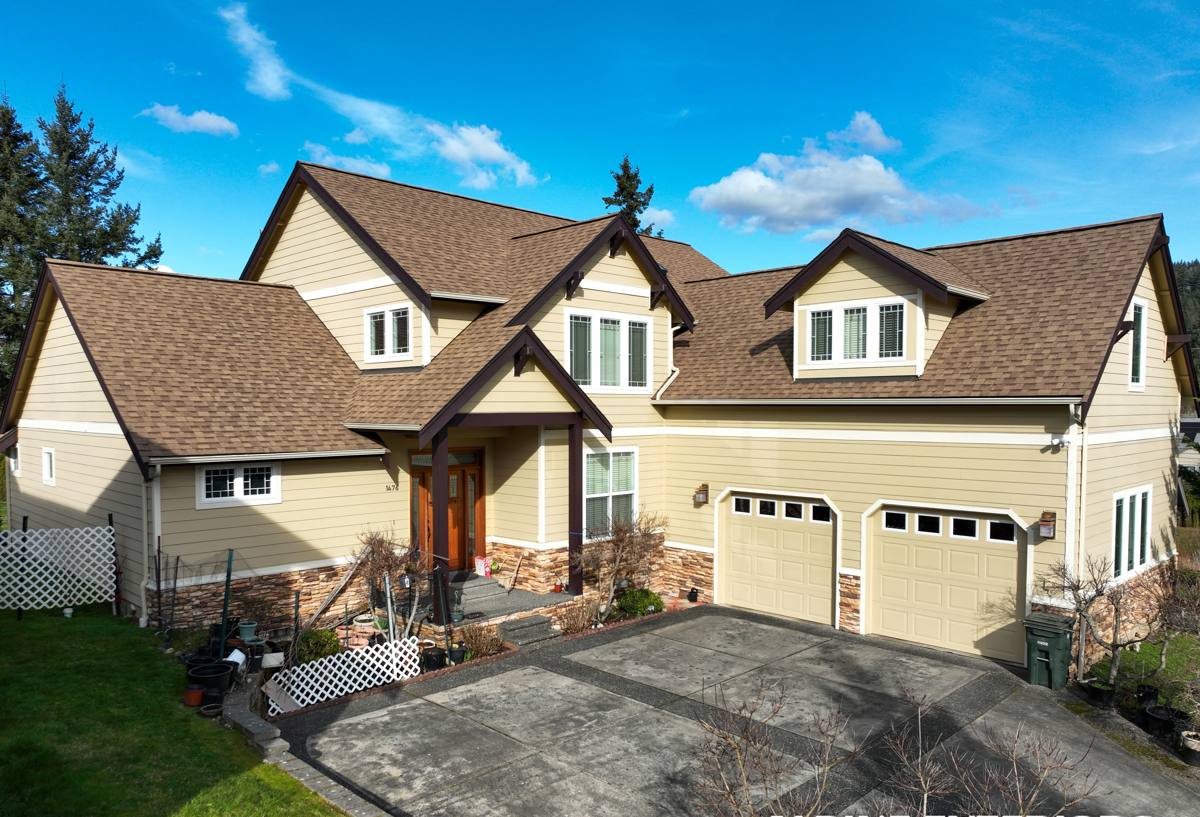
Common Roof Problems We See in Cordata
Moss and Organic Growth
North Bellingham's tree cover, shade patterns, and damp air make moss and moss spores a near-constant presence. Left alone, moss lifts shingle edges, holds water against the roof deck, and works its way under flashing. By the time moss is visible from the ground, it has usually been growing under the surface for a while.
Flashing and Valley Failures
Flashing around chimneys, skylights, vent pipes, and roof valleys is where most leaks actually start — not in the open field of shingles. Driving, wind-blown rain common to this area pushes water sideways and uphill under poorly sealed or corroded flashing, especially where salt air has sped up rust on older metal.
Granule Loss and Shingle Aging
Constant wet-dry cycling wears the protective granules off asphalt shingles faster in a marine climate than in a dry one. Once granules are gone in patches, that section of roof ages faster than the rest and becomes the first place to fail.
Gutter and Edge Backup
Clogged gutters and undersized drip edge detailing let water back up under the first course of shingles during heavy rain events — a frequent, avoidable cause of interior ceiling stains in this area.
What a Correct Repair Actually Involves
A proper roof repair starts inside, not on the roof. We trace the water stain, damp insulation, or ceiling discoloration back to its actual entry point, which is often several feet from where the damage shows up indoors — water travels along rafters and sheathing before it drips. Once we find the real entry point, the repair itself generally includes:
- Removing and replacing damaged or saturated decking, not just shingles, if the leak has been active for a while
- Re-flashing the area with new step, counter, or valley flashing rather than caulking over old, corroded metal
- Matching shingle type, color, and exposure as closely as possible to the surrounding roof
- Installing proper underlayment at the repair area, including ice-and-water shield in valleys and around penetrations
- Clearing moss and treating the surrounding area so regrowth doesn't undo the repair within a season
- Checking attic ventilation near the repair, since poor airflow accelerates both moss growth and shingle aging from underneath
Caulk and roof cement have a place in roofing, but they are a short-term fix, not a repair. If a contractor's plan for your roof is mostly sealant, that's a sign the underlying flashing or shingle problem hasn't actually been addressed.
Repair or Replace? How We Decide
Not every roof problem in Cordata needs a full replacement, and not every leak is fixable with a small patch. We walk homeowners through the real trade-offs rather than defaulting to whichever job is bigger.
| Factor | Leans Toward Repair | Leans Toward Replacement |
|---|---|---|
| Roof age | Under 12-15 years, isolated issue | Nearing or past expected shingle lifespan |
| Extent of damage | One area, one clear cause | Multiple areas, granule loss spread across the roof |
| Decking condition | Solid, dry sheathing under the damaged spot | Soft, delaminated, or repeatedly wet decking |
| Moss history | First real infestation, caught early | Years of untreated moss with lifted shingle edges throughout |
| Flashing condition | Localized corrosion or gaps | Original flashing failing broadly across the roof |
When a roof falls in the middle, we say so and lay out both options honestly, including the maintenance cost of deferring a replacement versus the upfront cost of doing it now.
Our Roof Repair Process
- Inspection. We check the interior damage, the attic if accessible, and the full roof surface — not just the spot the homeowner flagged.
- Diagnosis and estimate. We identify the actual water path and give a clear, itemized estimate before any work starts, including what's repair-only versus what would need replacement.
- Repair. Damaged decking, flashing, and shingles are removed and rebuilt correctly, with materials matched to the existing roof where possible.
- Moss and debris cleanup. We clear moss, needles, and debris from the repair area and adjacent roof planes so the fix isn't undone by trapped moisture within the first wet season.
- Final walkthrough. We show the homeowner what was found and what was done, in plain language, before we consider the job complete.
Materials and Workmanship Standards
We use roofing underlayment, flashing metal, and fasteners rated for coastal, high-moisture climates rather than the minimum-grade materials sometimes used in drier regions. Corrosion-resistant flashing matters more here than in most of the country, given the salt content in the air near Bellingham Bay.
We're selective about which moss-treatment and cleaning methods we use, too. Aggressive pressure washing can drive water under shingles and strip protective granules, so we favor low-pressure application methods and treatments that kill moss without damaging the shingle surface. It's a slower approach, but it protects the roof instead of just making it look clean for a season.
What We Won't Do
- Seal over active leaks without finding and fixing the source
- Pressure-wash a roof at damaging force just to make it look clean
- Mix mismatched shingle products in a visible repair without discussing it with the homeowner first
- Skip attic ventilation checks on a roof with an active moss or moisture problem
Preventive Maintenance Between Repairs
A repair lasts longer when the rest of the roof is maintained around it. Homeowners in Cordata can extend the life of a repair — and often avoid needing one at all — with a short seasonal routine:
- Clear gutters and downspouts at least twice a year, more often under mature trees
- Have moss treated before it visibly spreads, not after shingles start lifting
- Check attic insulation and ventilation for signs of trapped moisture
- Look at flashing around chimneys and skylights annually for gaps or rust
- Address small leaks immediately — a slow drip in a marine climate becomes rot faster than homeowners expect
What Affects the Cost of a Roof Repair
Every repair is different, but a few factors consistently drive cost up or down. We give firm, itemized numbers only after inspecting the roof, but this is generally what moves the estimate:
| Cost Factor | Why It Matters |
|---|---|
| Roof pitch and access | Steep or hard-to-access roofs take longer and require more safety setup |
| Extent of deck damage | Rotted sheathing adds material and labor beyond a surface shingle fix |
| Flashing scope | Replacing flashing around multiple penetrations costs more than a single spot repair |
| Shingle matching | Discontinued or unusual shingle colors can require sourcing or a larger blend area |
| Moss severity | Heavy, longstanding moss growth adds cleanup and treatment time before repair work begins |
Why Hire a Crew That Already Works in Cordata
A roof repair crew that regularly works this part of Bellingham already knows how moss behaves on north-facing slopes shaded by mature trees, how far wind-driven rain can travel up a valley, and which flashing details tend to fail first in homes exposed to salt-tinged coastal air. That's not something a crew unfamiliar with Whatcom County's marine climate picks up overnight — it comes from doing the work here, season after season, and seeing which repairs actually hold up through a full Pacific Northwest winter.
It also means faster, more accurate estimates. We're not guessing at how local weather patterns affect a given roof orientation — we've seen it play out on homes throughout Bellingham and can tell you honestly what your roof needs and why.
Get a Straight Answer on Your Roof
If you're seeing a stain on a ceiling, moss creeping across your shingles, or you just want a second opinion before a small problem becomes a bigger one, we'll come take a look. Fill out the form below for a free, no-pressure estimate on roof repair for your Cordata home — we'll tell you plainly what we find and what it would take to fix it right.