 Bellingham Siding
 New Roof Installation Built for Cordata's Climate
Cordata sits in north Bellingham, a mixed neighborhood of newer subdivisions and older single-family homes that all share the same weather problems: steady Pacific rain for much of the year, salt-laden air drifting in off Bellingham Bay and the Salish Sea, and a moss season that can run from early fall through late spring. A roof in this part of Whatcom County isn't just shedding water during a storm — it's dealing with near-constant dampness, temperature swings, and organic growth for most of the calendar year. That combination is exactly why a roof that's installed correctly, with the right materials and the right details at the edges and penetrations, lasts so much longer here than one that's just "put on fast."
This page covers what a proper new roof installation looks like for a Cordata home specifically — not a generic overview, but the actual decisions and details that matter given our climate and the kinds of houses in this neighborhood.
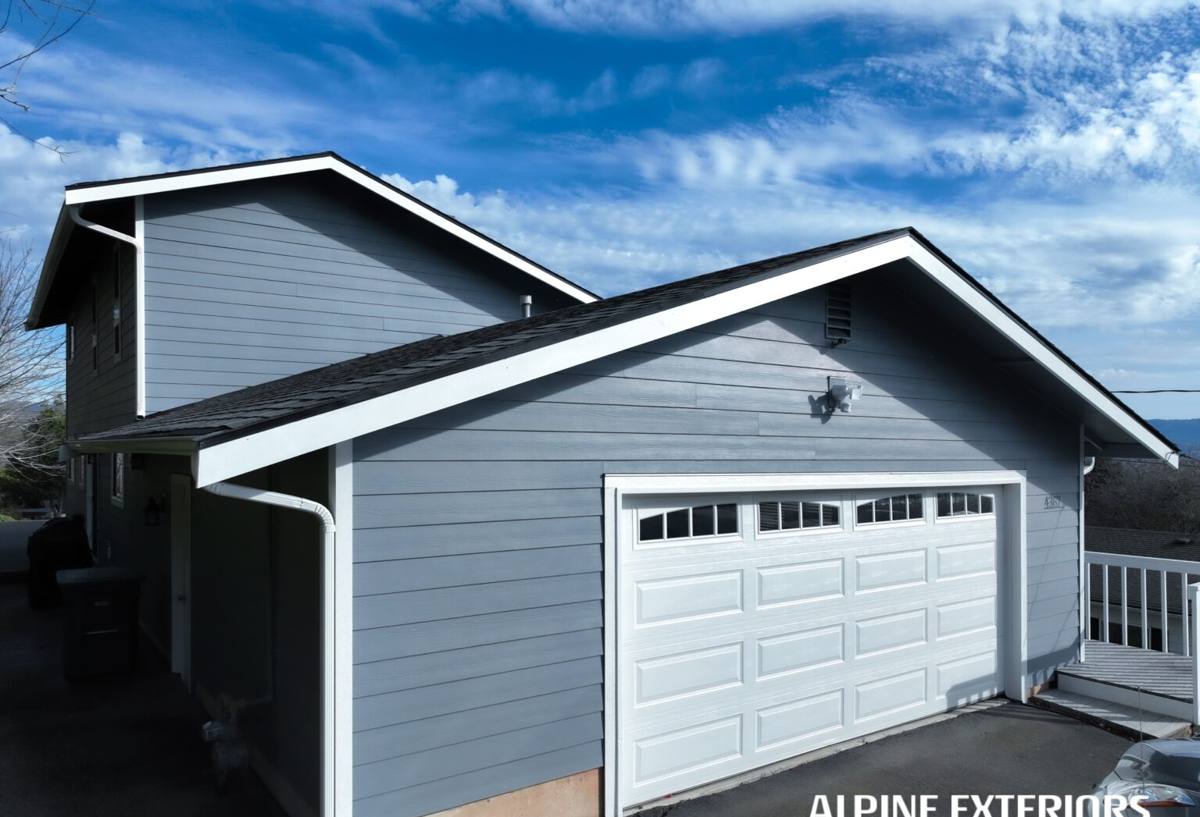
Why Cordata Homes Wear Out Roofs Differently
Homeowners who move to Bellingham from drier climates are often surprised at how much faster roofing materials age here compared to what they're used to. A few reasons why:
Moisture Load, Not Just Rainfall Totals
It's not just how much rain falls — it's how long the roof stays wet. Bellingham's marine climate means overcast, damp conditions linger for days at a time, even between rain events. Shingles, underlayment, and sheathing spend a lot more hours "wet" than the same materials would in a sunnier climate, which accelerates wear on lower-grade products and punishes any installation shortcuts in flashing or ventilation.
Salt Air and Metal Components
Being close to the water means airborne salt reaches roofing hardware — nails, flashing, vents, and any exposed metal trim. Lower-grade fasteners and flashing corrode faster in this environment, which is why fastener and flashing quality matters more here than it would inland.
Shade, Tree Cover, and Moss
Many Cordata lots have mature trees or sit close to neighboring tree lines, which means partial shade on parts of the roof for much of the day. Shaded, damp roof sections are where moss and algae take hold first — usually on north-facing slopes or areas that don't get direct afternoon sun. Once moss establishes, it holds moisture against the roofing material and can work under shingle tabs, which shortens the life of the roof significantly if it isn't addressed early and design decisions (ventilation, slope, material choice) don't account for it from day one.
Signs a Cordata Roof Needs Replacing, Not Just Repairing
Not every roof problem calls for full replacement, but there's a point where patching becomes false economy. Common signs we look for on Whatcom County homes:
- Granule loss heavy enough that you can see bare, shiny patches on asphalt shingles
- Shingles that are cupping, curling at the edges, or cracking when walked on
- Moss buildup that has spread across multiple sections of the roof, not just isolated patches
- Soft or spongy spots underfoot, which usually mean the decking underneath has taken on moisture
- Daylight visible through the roof deck from inside the attic
- Repeated leaks in different spots each season rather than one consistent trouble area
- A roof that's approaching or past the manufacturer's expected service life for its material type
If a roof is showing two or more of these at once, replacement is usually the more cost-effective path over the next decade compared to chasing repairs.
What a Correct New Roof Installation Actually Involves
A roof replacement is more than swapping old shingles for new ones. The parts that actually determine how long a roof lasts in this climate are mostly things you can't see once the job is done.
Full Tear-Off and Deck Inspection
We remove the existing roofing down to the deck rather than layering over old material. This lets us actually inspect the sheathing for rot, soft spots, or delamination caused by long-term moisture exposure — a real risk on older Cordata homes where a roof may have been re-covered once already. Any damaged decking gets replaced before anything new goes down; installing new roofing over compromised sheathing just hides a problem that gets worse.
Underlayment and Ice-and-Water Protection
Given how much of the year our roofs stay wet, underlayment quality matters. We use synthetic underlayment as the primary water-resistant layer across the field of the roof, with self-adhering ice-and-water shield membrane at the vulnerable points: eaves, valleys, around chimneys and skylights, and any roof-to-wall transitions. These are the spots where wind-driven rain is most likely to find a way in, and they're the first places a rushed installation cuts corners.
Flashing at Every Transition
Flashing — the metal that seals joints where the roof meets a wall, chimney, vent pipe, or skylight — is where the majority of roof leaks actually originate, not in the open field of shingles. We install new flashing rather than reusing old pieces, and pay particular attention to step flashing along dormers and sidewalls, which is a common failure point on the two-story home styles common in Cordata.
Proper Nailing and Fastener Selection
Correct nail placement and pattern affects both wind resistance and manufacturer warranty coverage. Given the salt air exposure this close to the water, we also use corrosion-resistant fasteners rather than standard-grade ones, since standard fasteners can start rusting and staining a roof years before the shingles themselves would otherwise need replacing.
Ventilation and Moisture: The Part Homeowners Don't See
A new roof is only as good as the airflow underneath it. Attic ventilation pulls moist, warm air out from under the roof deck before it can condense and soak into the sheathing from below — a problem that's easy to miss because it happens from the inside out, not the outside in.
We check and correct three things on every Cordata installation:
- Intake at the eaves — soffit vents that let cooler outside air in
- Exhaust at the ridge or roof — ridge vents or roof vents that let warm, moist air escape
- Balance between the two — mismatched intake and exhaust can actually make ventilation worse, not better, even with new vents installed
Homes with insufficient ventilation tend to show premature shingle aging from underneath, plus a higher risk of moss and algae growth because the roof deck stays damper longer than it should.
Choosing the Right Material for a Cordata Home
Material choice should match both the home's style and the realities of our climate — heavy moss pressure, salt air, and near-constant moisture. Here's how the common options compare for this area:
| Material | Typical Lifespan Here | Moss/Algae Resistance | Best Fit |
|---|---|---|---|
| Standard 3-tab asphalt | 15–20 years | Low unless algae-resistant granules specified | Budget-conscious replacements, rental properties |
| Architectural (dimensional) asphalt | 25–30 years | Better with algae-resistant granule options | Most Cordata single-family homes |
| Standing seam metal | 40–50+ years | High — sheds moss and debris well on adequate slope | Steeper roofs, homeowners planning to stay long-term |
| Cedar shake | 20–30 years with upkeep | Low — requires regular treatment and cleaning | Homes prioritizing a specific traditional look, with owners committed to maintenance |
We're honest about the trade-offs on each: cedar shake looks great but demands ongoing maintenance to fight moss in a climate like ours, and skipping that upkeep shortens its life considerably. Metal costs more upfront but performs the best against moss and lasts the longest with the least maintenance. For most Cordata homes, a quality architectural asphalt shingle with algae-resistant granules hits the best balance of upfront cost, appearance, and performance against our specific climate pressures.
What Drives the Cost of a New Roof
Every roof is priced based on its own specifics, but the factors that move the number up or down are consistent. We walk through these with every Cordata homeowner before providing an estimate:
| Factor | Why It Matters |
|---|---|
| Roof size and number of planes | More square footage and more complex shapes mean more material and labor |
| Roof pitch/steepness | Steep roofs require more safety equipment and slower, more careful work |
| Number of layers to remove | Tearing off two layers of old roofing costs more than one |
| Decking condition | Rotten or soft sheathing found during tear-off requires replacement before new roofing goes on |
| Material selected | Standard asphalt, architectural shingle, and metal carry different material costs |
| Roof complexity (valleys, dormers, skylights, chimneys) | Each transition needs custom flashing work, which adds labor time |
| Access and staging | Tight lots, tall trees, or difficult access can add setup time |
We don't give ballpark numbers over the phone without seeing the roof — pitch, size, and decking condition swing the price too much for a rough guess to be useful to you.
Our Installation Process, Step by Step
- On-site inspection — we walk the roof and attic, check decking, flashing, ventilation, and current material condition
- Written estimate — a clear scope of work and price, with material options explained honestly
- Scheduling around weather — we plan tear-off days around dry weather windows, which matters more here than in drier climates
- Property protection — landscaping, siding, and gutters are protected before work begins
- Tear-off and deck inspection — full removal down to sheathing, with any damaged decking replaced
- Underlayment and flashing installation — ice-and-water shield at vulnerable points, new flashing throughout
- Roofing material installation — installed to manufacturer specifications to preserve warranty coverage
- Ventilation check and correction — intake and exhaust balanced properly
- Final cleanup and walkthrough — magnetic sweep for debris, full walkthrough of the finished work with the homeowner
Why Hiring a Crew That Already Works Cordata Matters
Roofing crews who work across a lot of different climates tend to default to generic specs — whatever underlayment and ventilation setup works "well enough" almost everywhere. A crew that regularly works Cordata and the rest of Bellingham knows which slopes on a given home style tend to hold moss, where wind-driven rain typically finds weak flashing, and which ventilation setups actually keep up with our damp winters instead of just meeting minimum code. That local pattern recognition is the difference between a roof that looks fine for the first year and one that's still performing well after fifteen.
It also matters for accountability. A local crew is still around — and easy to reach — years later if a warranty question comes up, which isn't always true of crews that travel in from outside the area for one job.
Maintaining Your New Roof After Installation
A correctly installed roof still benefits from basic upkeep in this climate:
- Keep gutters clear so water isn't backing up under the roof edge during heavy rain
- Trim back tree branches that overhang the roof to reduce shade and debris buildup
- Have moss growth addressed early, before it spreads across a full roof slope
- Schedule a periodic visual check, especially after major storms, rather than waiting for a visible leak
None of this is intensive, but skipping it entirely tends to shorten the effective life of even a well-installed roof.
If your Cordata home's roof is aging, showing moss buildup, or you're just planning ahead, we're happy to take a look and walk you through what we see — no pressure, no obligation. Use the form below to request a free estimate.