 Bellingham Siding
 A deck in Cordata lives outside for eleven or twelve months of the year, whether anyone is using it or not. Between the rain that settles in for days at a time, the salt-tinged air blowing in off the Sound, and the moss that finds a foothold on anything shaded and damp, the structure underneath a deck can fail long before the surface boards look bad enough to worry anyone. Replacing a deck the right way in this part of Whatcom County means building for that reality, not just swapping old boards for new ones.
Why Decks in Cordata Wear Out on Their Own Schedule
Cordata sits far enough north that the marine layer and coastal weather patterns common to Bellingham hit it just as hard as anywhere else in town. Long stretches of light, steady rain keep wood assemblies damp for days, and the moss season here can run from fall into spring. Moss doesn't just look bad on decking — it holds moisture against the wood surface and, more importantly, against ledger boards, joists, and post bases that were never designed to stay wet for months at a stretch. A deck that's twelve or fifteen years old in this climate has usually absorbed a lot more moisture cycling than the same deck would in a drier region, even if the top boards were replaced or refinished along the way.
Salt-laden air moving in from Bellingham Bay accelerates corrosion on any fastener, bracket, or hanger that isn't rated for exterior, coastal exposure. We regularly find older decks in the area held together with fasteners that were adequate when installed but have since rusted, loosened, or split the wood around them. None of that shows up from the top. It shows up when a board springs, a rail wiggles, or — in the worst cases — when a structural connection lets go under load.
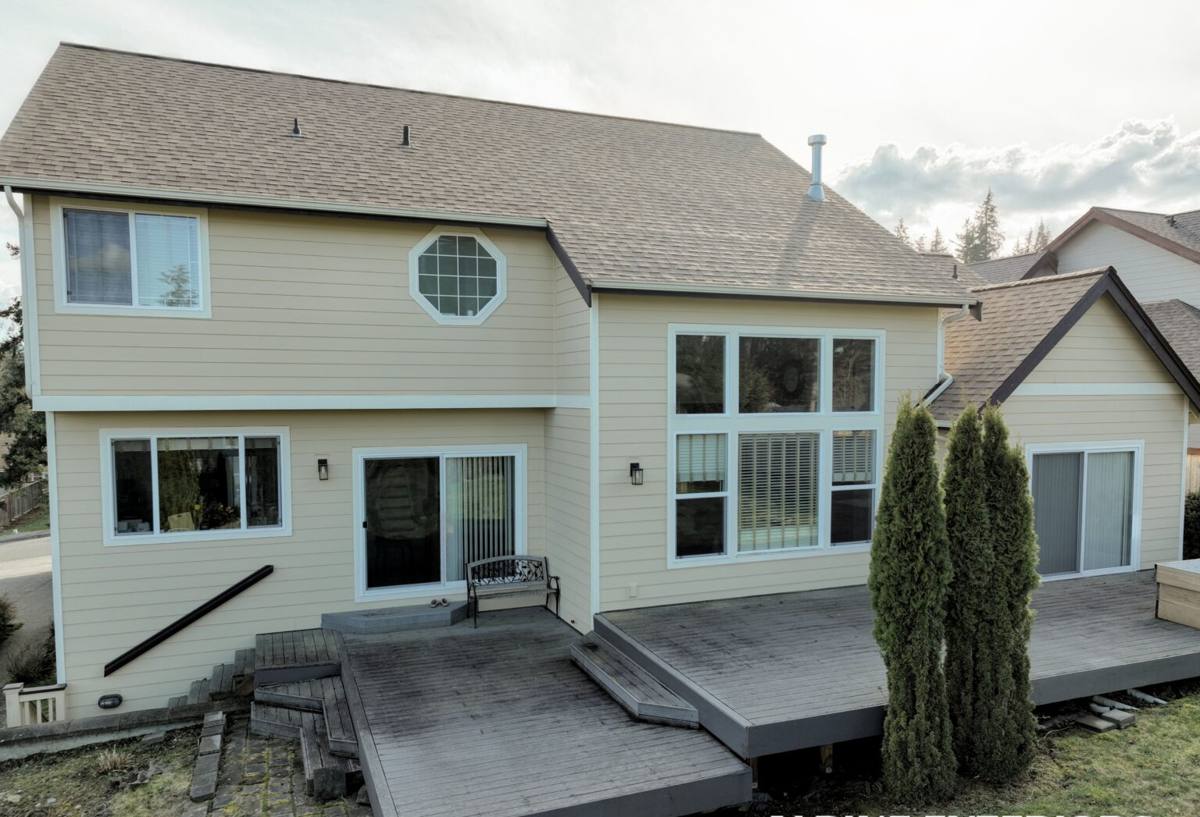
Repair, Resurface, or Full Replacement — Knowing Which One You Actually Need
Not every tired-looking deck needs to come out entirely. Sometimes the frame is sound and only the decking and railing have reached the end of their life. Other times the surface looks fine but the structure underneath is the real problem, and replacing boards alone would just be putting new material on a bad foundation. Part of an honest estimate is telling you which situation you're actually in before any work starts.
Signs it's time for a full replacement, not a patch
- Soft, spongy, or spring-y spots in the decking, especially near the house or around post locations
- Visible rot, dark staining, or fungal growth at the ledger board where the deck meets the house
- Rust streaks running from fasteners, joist hangers, or bolts
- Posts that wobble, or footings that have shifted, heaved, or settled unevenly
- A railing system that doesn't meet current height or baluster-spacing requirements
- A deck built without proper flashing at the ledger, which is common on homes from certain eras and almost guarantees hidden water damage over time
If even one or two of these show up, the honest move is usually a full tear-off and rebuild rather than a resurface. Boarding over a compromised frame just delays the same problem and adds cost on top of cost.
What's Under the Boards: Framing, Ledger, and Footings
The ledger board connection
The ledger — the board that attaches the deck to the house — is the single most common failure point on older decks in wet climates, and it's almost always invisible until the deck is opened up. A ledger that was face-nailed or lag-bolted without proper flashing lets water track behind the band board and into the house framing itself. Any deck replacement worth doing includes cutting back siding as needed, installing proper flashing that sheds water away from the house, and fastening the ledger with structural screws or through-bolts rated for the load.
Joists, blocking, and posts
We size joists and spacing to current code span tables rather than matching whatever was there before, since older decks are frequently under-built by today's standards. Posts get set on footings sized for the actual load and local frost depth, not just "however deep the old hole was." Where soil conditions or drainage around a Cordata lot are questionable, that's addressed at the footing stage — it's far cheaper to fix before the deck goes back together than after.
Hardware that matches the climate
Every joist hanger, hurricane tie, and structural screw goes in rated for exterior and, where salt exposure is a factor, coastal-grade corrosion resistance. This is one of the cheapest upgrades in the entire project relative to what it protects, and it's also one of the most commonly skipped by anyone trying to hit a low bid.
Choosing a Decking Material for This Climate
Every decking material has a place, and the right choice depends on your budget, how much upkeep you want to take on, and how much sun versus shade the deck actually gets. Shaded decks under mature trees — common in parts of Cordata — deal with moss and algae growth much more aggressively than a deck in full sun, which should factor into the decision as much as price does.
| Material | Upfront Cost | Maintenance | How It Handles This Climate |
|---|---|---|---|
| Pressure-treated wood | Lowest | Annual cleaning, periodic sealing/staining | Prone to moss and mildew in shaded, damp spots without upkeep; needs the most attention |
| Cedar | Moderate | Regular sealing to hold color and resist moisture | Naturally moisture-resistant but still needs maintenance to prevent graying and moss in wet, shaded areas |
| Capped composite | Higher | Occasional washing, no sealing or staining | Resists moisture absorption well; a plastic cap sheds water and resists moss better than wood, though the surface still needs periodic cleaning in shaded spots |
| PVC decking | Highest | Occasional washing only | Fully synthetic, doesn't absorb moisture, holds up well against rain and moss but can feel less "natural" underfoot and cost the most upfront |
We don't push one material on every job. What we do push is matching the material to how the deck actually sits on the property — sun exposure, drainage, and how much maintenance you're realistically going to keep up with year after year.
Fasteners, Flashing, and the Small Details That Add Years
Most of what separates a deck that lasts fifteen years from one that lasts thirty happens in details that are invisible once the project is finished. Hidden fastener systems reduce the number of exposed screw heads where water can pool and wick into the board. Proper gapping between boards allows water to drain rather than sit. Flashing tape at every joist top and at the ledger keeps moisture from soaking into end grain, which is where wood decking fails first. None of this shows up in a photo of the finished deck, and none of it is optional if the goal is a deck that actually holds up to a Whatcom County winter year after year.
Railing and stairs
Railings and stair stringers see just as much weather exposure as the deck surface and often get replaced with less thought. We build railing systems to current code height and baluster spacing, and treat stair stringers with the same attention to fastener quality and end-grain protection as the rest of the structure, since stairs are usually the first place rot shows up on a deck that's otherwise in decent shape.
Permits and Code Considerations
Deck replacement work in and around Bellingham typically requires a permit once the structure exceeds a certain size or height above grade, and requirements can differ depending on whether a property sits inside city limits or unincorporated Whatcom County. Since Cordata includes areas on both sides of that line depending on the exact address, we confirm jurisdiction and permit requirements for your specific property before work begins rather than assuming. Pulling the right permit protects you at resale and makes sure the finished structure meets current safety standards, not just whatever was allowed when the original deck went in.
How Our Process Works, Start to Finish
- On-site assessment. We look at the existing deck from the ground up — decking, framing, ledger connection, footings, and drainage — not just the surface.
- Honest scope and estimate. You get a clear picture of what needs to be replaced versus what can stay, along with material options and a straightforward cost range.
- Permitting. We handle the permit application and inspection scheduling for the applicable jurisdiction.
- Tear-off. The old deck comes out, and we take a second look at the ledger, framing, and house connection now that everything is exposed.
- Rebuild. New footings, framing, ledger flashing, and hardware go in to current code, followed by decking, railing, and stairs in the material you've chosen.
- Final walkthrough. We go over the finished deck together, including what maintenance it actually needs going forward.
Why Hiring a Crew That Already Works in Cordata Matters
A contractor who works this specific pocket of Bellingham regularly already knows how moss behaves on a shaded north Whatcom County deck, which fastener grades hold up against the salt air, and which framing shortcuts show up again and again on decks built a couple decades ago. That's the difference between a crew that's guessing at climate exposure from a manual and one that's opened up dozens of decks in this exact weather pattern and seen firsthand what fails first. It also means faster, more accurate estimates, because we're not learning the local conditions on your project.
Keeping Your New Deck Looking Right Through the Wet Season
A properly built deck still needs some seasonal attention, especially in a climate this wet. A little upkeep goes a long way toward protecting the investment.
- Sweep leaves and debris off the deck regularly in fall, especially in shaded corners where moss gets a foothold first
- Rinse off algae or moss buildup before it has a chance to stain the surface, particularly on wood or cedar decking
- Check that gaps between boards stay clear of debris so water can keep draining properly
- Inspect railings and stair connections once a year for any looseness
- Reseal wood or cedar decking on the schedule recommended for the specific product used
- Keep gutters and downspouts near the deck clear so runoff isn't dumping extra water onto or under the structure
If you're weighing whether your Cordata deck needs a repair or a full replacement, we're happy to take a look and give you a straight answer along with a free, no-pressure estimate. There's a form below to get that scheduled.