 Bellingham Siding
 Bellingham's Coastal Climate Is Hard on Decks
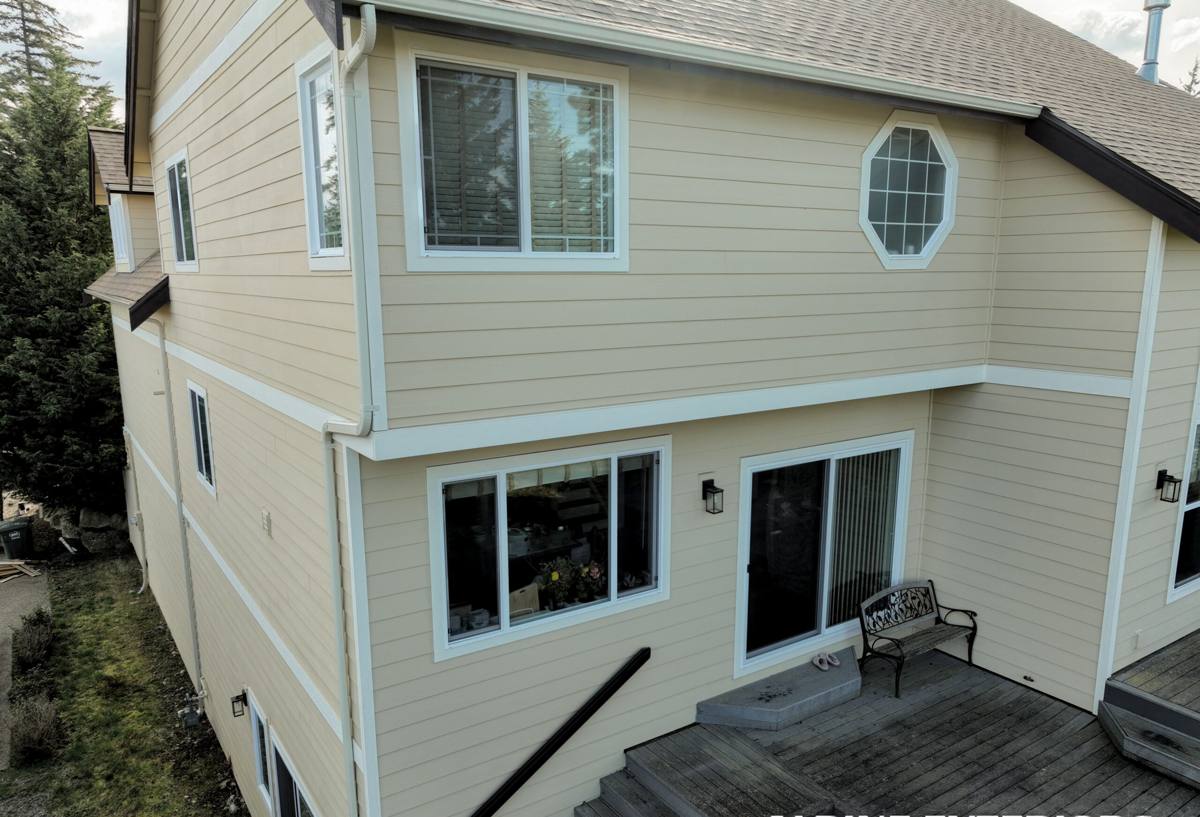
If you own a home in Columbia, you already know your deck works harder than one in a drier part of the country. This close-in Bellingham neighborhood sits near enough to the bay that salt-laden air reaches fasteners and metal hardware, while the mature tree canopy common on older Columbia lots keeps large sections of many decks shaded for most of the day. Add in a wet season that runs from fall well into spring, and you have three separate stresses working on the same structure at once: corrosion, standing moisture, and moss growth that thrives wherever sun can't reach.
None of that means a deck in Columbia is doomed to rot out early. It means the repair has to account for those conditions specifically, not just patch whatever board looks bad this week. A repair done without factoring in drainage, airflow, and material behavior in a damp, shaded environment tends to fail again in the same spot within a season or two.
Signs Your Deck Needs Repair, Not a Full Rebuild
Most decks we look at in this area don't need to be torn out. They need specific problem areas addressed before those problems spread into the framing. Here's what we look for, and what you can check yourself before calling anyone:
- Boards that feel soft, spongy, or flex underfoot, especially near the house or in shaded corners
- Rust streaking or dark staining around screws, nails, or bolts
- A visible gap or separation where the deck meets the house (the ledger board)
- Railings or stair stringers that wobble, even slightly, when you lean on them
- A persistent mildew or earthy smell coming from under the deck
- Green or black film on boards that doesn't scrub off easily, especially in the shaded half of the deck
- Cracked, split, or cupped boards concentrated in one area rather than spread evenly
If what you're seeing is limited to a few boards, a section of railing, or one corner where water collects, that's almost always a repair, not a replacement. Widespread soft framing underneath multiple boards is a different conversation, and we'll tell you honestly if that's what we find.
The Parts of a Deck That Actually Fail First
Decking Boards
Surface boards are the first thing homeowners notice, but they're rarely the whole story. Cupping, splitting, and soft spots on the walking surface are often the visible symptom of moisture sitting underneath the board rather than draining away.
Ledger Board and Flashing
The ledger is the board that bolts the deck to the house, and it's the single most important structural connection on the whole build. In a climate with regular driving rain, poor or missing flashing at this joint lets water track behind the siding and into the rim joist for years before it becomes visible. Any deck repair that doesn't include a real look at ledger flashing is an incomplete repair.
Framing, Joists, and Posts
This is what you don't see from the top. Joists and posts that stay wet longer than they should — because of poor airflow under a shaded deck, or because water is draining the wrong direction — lose structural strength well before the decking above shows obvious damage.
Railings and Stairs
Rail posts anchor into the frame, and stair stringers carry direct foot-traffic load. Both take a disproportionate amount of stress and are usually the first components to show fastener corrosion, given how exposed they are to weather compared to boards protected under a roofline or overhang.
Repair or Replace? What Actually Determines the Answer
Homeowners often assume any rot means starting over. In practice, the decision comes down to how much of the structure is affected, not just how bad it looks on the surface.
| Factor | Usually Points to Repair | Usually Points to Replacement |
|---|---|---|
| Extent of damage | Isolated boards, one rail section, one stair | Rot or corrosion spread across multiple framing members |
| Ledger condition | Flashing failed but rim joist is sound | Rim joist itself has significant rot |
| Age of structure | Under 15-20 years, built to a reasonable standard | Original build was undersized or poorly fastened from the start |
| Footings and posts | Solid, no movement or heaving | Settling, shifting, or inadequate footing depth |
| Homeowner goals | Keep current layout and footprint | Want a larger deck, different layout, or different material |
We won't sell a full rebuild when a targeted repair will hold up. We also won't patch something that's structurally compromised just because it's the cheaper quote today. Either way, you get a straight answer about which category your deck falls into.
Material Choices When We Rebuild a Section
When boards, joists, or railing sections need to come out entirely, the material we use in the replacement matters more here than in a drier climate. Pressure-treated lumber is the standard for framing and remains a solid, economical choice for decking boards, provided it's properly sealed and re-sealed on a schedule — something that's easy to let slide once a deck is a few years old. Composite decking costs more up front but trades routine sealing for a different maintenance task: keeping it clean of moss and organic debris, since composite doesn't dry out the way wood does and can stay damp longer on the surface in shaded spots. Cedar is attractive and naturally rot-resistant to a degree, but it's softer and more sensitive to fastener choice and finish maintenance than either of the other two.
None of these is a wrong choice. The right one depends on how much sun exposure your specific deck gets, how much upkeep you want to do, and what the rest of the structure can support. We'll walk through the honest maintenance trade-offs for your situation rather than pushing whichever product carries the best margin.
Our Deck Repair Process
- On-site inspection. We check decking, framing, ledger attachment, posts, footings, and hardware — not just the boards that prompted the call.
- Moisture and structural check. We probe suspect framing to find soft wood that isn't visible from the surface, since surface staining doesn't always match what's happening underneath.
- Written scope. You get a clear breakdown of what's failing, what we recommend fixing now, and what to keep an eye on for later — no vague "while we're in there" upsells.
- Permit check. If the repair involves structural framing, the ledger connection, or railing height changes, we confirm what the City of Bellingham requires before starting.
- The repair itself. Damaged material comes out, framing gets corrected where needed, and flashing at the ledger gets addressed properly rather than covered back up.
- Hardware and fasteners. We use fasteners rated for the exposure the specific area gets, since a deck near the bay doesn't need the same hardware everywhere — some areas see far more airborne salt than others.
- Finish and seal. New wood gets sealed before it's exposed to a full wet season, not left bare over a winter.
- Final walkthrough. We show you exactly what was done and what maintenance, if any, keeps the repair holding up.
Moss and Algae Are a Year-Round Concern Here
Whatcom County's moss season isn't really a season — on shaded, tree-covered lots like many in Columbia, it's closer to a constant low-level battle. Moss and algae hold moisture directly against the board surface, and on a deck that's already damp more often than dry, that moisture has nowhere to go. Left alone, it accelerates wood softening and makes boards genuinely slick and unsafe underfoot, which is a real fall hazard on stairs and near rail openings.
Part of an honest repair conversation includes talking about airflow. A deck built low to the ground or boxed in tightly on the sides will grow moss and hold moisture no matter what board material sits on top. Sometimes the right fix isn't just cleaning or replacing boards — it's opening up the skirting or improving drainage underneath so the space can actually dry out between storms.
Permits and Code Considerations for Deck Repair
Not every repair needs a permit — replacing a handful of decking boards typically doesn't. But structural work, changes to the ledger connection, or anything affecting guardrail height can fall under the City of Bellingham's building code requirements. Skipping a required permit on structural work can create real problems later, from insurance questions to complications when you eventually sell the home. We check what applies before we start rather than after, so there are no surprises on either end.
Why Hiring a Crew That Already Works in Columbia Matters
Older, established neighborhoods like Columbia have a lot of decks built decades apart, under different code editions, with different original construction quality. A crew that's worked on homes in this specific area already has a feel for what tends to fail first on a mature-tree lot versus an open one, how the local moisture and salt exposure actually play out over time, and what past repair shortcuts to watch for when we open things up. That familiarity shortens the inspection, sharpens the scope, and means fewer surprises mid-project — all things that matter when you're trying to get an honest fix rather than a guess.
If you're noticing soft boards, a shaky rail, or moss that keeps coming back no matter how often you scrub it, it's worth getting a second set of eyes on it before it gets worse. We offer free, no-pressure estimates — use the form below to get one scheduled.