 Bellingham Siding
 Board & Batten Siding Built for Blaine's Coastline
Blaine sits about as close to the water and the border as a Whatcom County home can get, and that location comes with a specific set of siding problems. Salt-laden air off the Strait of Georgia and Semiahmoo Bay works on fasteners and finishes year-round. Driving rain off the water hits walls at an angle, not straight down, which matters enormously for a vertical siding style like board and batten. And the long, damp moss season that defines this corner of the Pacific Northwest doesn't stop at the roofline — it colonizes north-facing walls, batten shadow lines, and anywhere moisture lingers. Board and batten is a beautiful look for the farmhouse and craftsman-style homes common in this area, but it is also one of the least forgiving siding styles when it's installed without accounting for local weather. This page covers what that means in practice for a Blaine home.
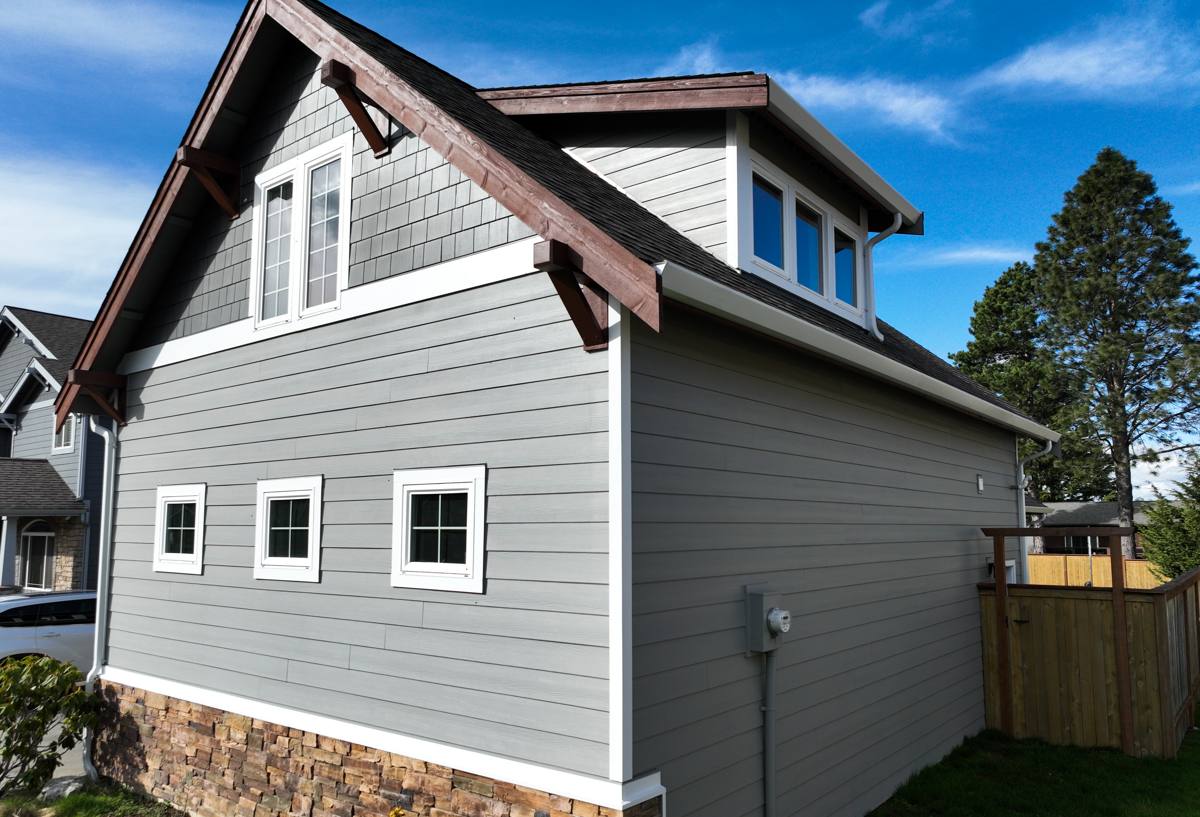
Why Blaine's Climate Is Tougher on Board & Batten Than Most Sidings
Salt Air and Metal Fasteners
Any home within a few miles of Semiahmoo Bay or the Strait deals with airborne salt that accelerates corrosion on exposed or marginal-quality fasteners. Board and batten uses more linear feet of fastening than lap siding because both the base panel and every batten strip need to be secured. If the wrong fastener spec is used, or fasteners are spaced incorrectly, corrosion shows up first as rust streaking down the battens — a cosmetic problem that's also an early warning sign of a fastening failure.
Driving Rain and Vertical Seams
Board and batten's vertical lines are part of its appeal, but every vertical batten creates a seam, and every seam is a potential path for wind-driven rain to find its way behind the cladding. On a home exposed to weather coming off the water, those seams need to be detailed correctly — lapped and fastened so wind-driven rain can't work its way in sideways, which is a very different failure mode than rain simply running down a flat wall.
Moss, Algae, and North Walls
Whatcom County's moss season runs long, and board and batten's textured, shadow-lined profile gives moss and algae more surface area and more shaded crevices to take hold in than a flat panel would. Left unaddressed, this isn't just cosmetic — sustained moisture retention against any siding material shortens its service life.
What a Correct Board & Batten Installation Actually Involves
A board and batten system is really two layers of defense: what's behind the visible siding, and the siding itself. Homeowners rarely see the first layer, but it's the one that determines whether the second layer lasts.
- Weather-resistive barrier: A continuous, correctly lapped water barrier behind the siding, with all penetrations (hose bibs, vents, light fixtures) properly flashed before a single panel goes up.
- Rain screen gap: A drainage gap between the barrier and the siding lets any moisture that does get past the outer layer drain and dry instead of sitting against the wall sheathing — important anywhere driving rain is common.
- Correct panel-to-batten spacing: Battens need consistent spacing and secure fastening into framing, not just into sheathing, so the whole assembly holds up to wind loading off the water.
- Sealed and back-primed cuts: Every field cut exposes raw material edges. Cut ends need to be sealed and, on factory-finished products, back-primed or capped so moisture can't wick in from an exposed edge.
- Proper flashing at windows, doors, and trim transitions: Board and batten around window and door openings needs flashing details that shed water outward, not into the wall assembly.
Skip any one of these steps and the siding may look correct for a year or two before problems start showing up — usually as staining, soft trim, or paint failure at the seams.
Why We Install Board & Batten Only in James Hardie Fiber Cement
We don't offer board and batten in vinyl, LP SmartSide, primed spruce, or cedar. That's a deliberate standard, not a limitation of what we're capable of installing. Here's the reasoning:
Vinyl board and batten profiles are lightweight and can visibly flex or warp in direct sun, and the vertical batten lines make any waviness more noticeable than it would be on a horizontal lap profile. Wood board and batten — cedar or primed spruce — looks excellent when new but demands a repainting and caulk-maintenance cycle that only gets more frequent in a climate with this much sustained moisture exposure. Engineered wood products like LP SmartSide perform reasonably well when installation and maintenance are followed to the letter, but they remain wood-based, meaning edge-swelling risk is always present if a cut edge or seam isn't sealed and stays sealed.
James Hardie's fiber cement board and batten system — built from HardiePanel vertical siding paired with Hardie batten strips — is non-combustible, dimensionally stable in wet-dry cycling, and available with a factory-applied ColorPlus finish that's baked on rather than field-painted, which means the color and the moisture-blocking topcoat are consistent across every panel and batten before it ever reaches Blaine. Hardie also engineers specific product lines for different climate exposures, and Pacific Northwest installations use the HZ5 formulation suited to our freeze-thaw and moisture profile. The transferable warranty backing the product is meaningful specifically because Hardie's fiber cement doesn't rot, delaminate, or attract moss the way wood-based sidings can when a maintenance cycle gets missed — a realistic scenario for anyone who owns a home part-time or simply has other priorities most years.
Board & Batten Siding Options — How They Compare
| Material | Moisture & Salt-Air Resistance | Maintenance Cycle | Typical Lifespan Concern |
|---|---|---|---|
| James Hardie fiber cement | Excellent; non-combustible, engineered for PNW moisture exposure | Repaint only when owner chooses a new color; no sealing cycle | Installation quality is the main variable |
| Cedar | Good if maintained; absorbs moisture if finish lapses | Refinish/reseal every 3-5 years | Rot and insect activity if maintenance slips |
| Primed spruce / wood composite | Fair; vulnerable at cut edges and seams | Repaint every 5-7 years, caulk inspection annually | Edge swelling, paint failure at seams |
| LP SmartSide | Good when sealed correctly and maintained per spec | Field-applied finish maintenance on cut edges | Edge/seam moisture intake if maintenance lapses |
| Vinyl board and batten | Fair; doesn't absorb water but can warp/fade in sun | Low, but panels aren't repairable individually if damaged | Visible waviness, brittleness in cold |
Our Process for a Blaine Board & Batten Project
1. On-Site Assessment
We walk the exterior with you, note which elevations take the most weather (typically the water-facing and north sides on Blaine properties), and check the current wall assembly for any existing moisture damage that needs addressing before new siding goes up.
2. Prep and Water Management
We remove the old siding down to the sheathing, repair or replace any compromised sheathing, and install a continuous weather-resistive barrier with a rain screen gap — the layer that does the real work of keeping a coastal home dry.
3. Installation to Manufacturer Spec
HardiePanel and battens go up per James Hardie's fastening schedule and spacing requirements, with all cut edges sealed and every window, door, and trim transition flashed correctly — not just caulked over.
4. Final Walkthrough
We review the completed work with you, point out anything you should know for the years ahead, and make sure you know what routine care (if any) this siding needs going forward.
Why a Crew That Already Works Blaine Matters
Blaine's exposure isn't uniform — a home a few blocks from the water faces different wind-driven rain conditions than one set back and sheltered by trees or terrain. A crew that has worked this specific stretch of Whatcom County coastline knows which elevations typically need extra flashing attention, understands how the moss season here differs from siding work done inland, and isn't guessing at fastener specs based on a generic install manual. That local pattern recognition is the difference between a board and batten job that looks right on installation day and one that still looks right in year ten.
What to Ask Before You Hire Anyone for Board & Batten Work
- Will you install a rain screen gap behind the siding, or fasten directly over the weather barrier?
- What fastener type and spacing schedule will you use, and is it rated for coastal/salt-air exposure?
- How will cut edges and seams be sealed, and is that detailed in the written estimate?
- Are you a James Hardie-certified or preferred installer, and what does that certification actually require?
- What does the manufacturer's warranty cover, and what does it require of the installer to stay valid?
If a contractor can't answer these clearly before the contract is signed, that's worth noticing.
Let's Look at Your Blaine Home
If you're weighing board and batten siding for a home in Blaine, we're happy to come take a look, walk the exposure on your specific lot, and talk through what a correctly built system would involve for your house. There's no pressure and no cost to have us out — just a straight conversation and a written estimate you can take your time with.