 Bellingham Siding
 Windows Built for Birchwood's Climate, Not a Catalog Average
Birchwood sits close enough to Bellingham Bay and the Puget Sound air stream that its windows take a different kind of beating than windows a hundred miles inland. Salt-laden air corrodes hardware and finishes faster than dry-climate air does. Driving rain off the water pushes moisture sideways into gaps that would stay dry in a calmer climate. And Whatcom County's long, gray moss season keeps north- and west-facing walls damp for months at a stretch, which is exactly the kind of condition that finds every weak seam in an aging window.
None of that means Birchwood homes need exotic products. It means the installation has to be done right, with materials and flashing details matched to a wet marine climate, not to a generic install method that works fine in a drier region. That's the standard we hold every Birchwood window job to.
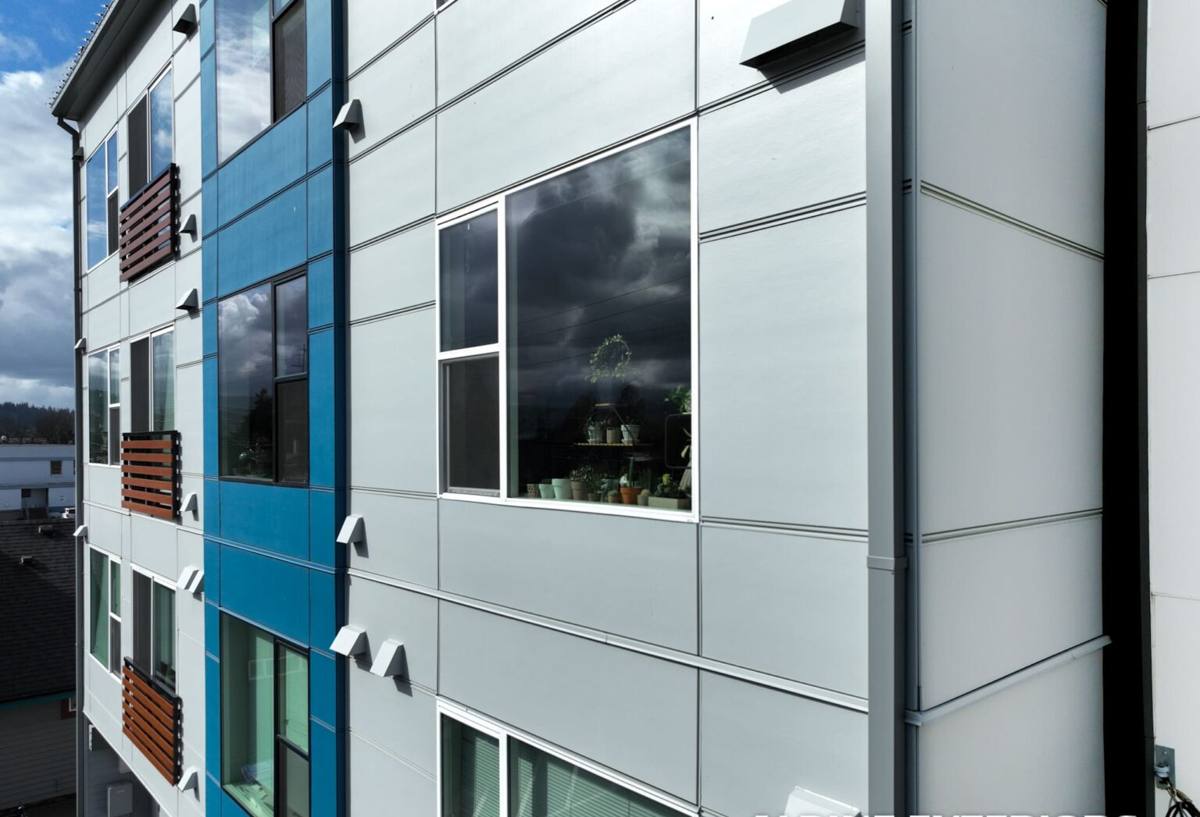
Signs a Birchwood Home Is Ready for New Windows
Window failure in this climate is usually slow and quiet — it shows up as a draft, a stain, or a window that's harder to open than it used to be, long before anyone calls it a "failed window." Here's what we look for and what homeowners should watch for between now and their next estimate:
- Fogging or a permanent haze between panes of a double-pane window — the seal has failed and the gas fill is gone
- Soft or discolored wood on the sill, jamb, or trim, especially on north- or west-facing walls
- Visible moss, algae, or black staining on the frame or the wall directly around the window
- Noticeable draft or cold spot near the window during a windy, rainy stretch
- Windows that stick, won't stay open, or need to be forced closed
- Rising heating bills with no other explanation
- Condensation forming on the inside of the glass regularly, even with normal ventilation
Any one of these on its own might just mean a repair. Several of them together, especially on an older single-pane or original-builder-grade window, usually means replacement is the more honest recommendation — and we'll tell you that directly rather than selling a repair that won't hold.
Why Older Birchwood Windows Wear Faster
Like much of Bellingham, Birchwood has a mix of home ages, and older windows in this neighborhood were often installed before local builders fully accounted for how much sideways-driven rain and sustained damp shade a marine climate produces. Original wood windows without modern flashing behind the trim are especially prone to hidden rot — the paint on the surface can still look fine while the wood underneath is failing.
What a Correct Window Replacement Job Actually Involves
Swapping glass and frame is the easy part. The work that actually determines whether a window lasts in this climate happens in the parts you don't see once the trim goes back on.
Removal and Inspection
We remove the old window carefully and inspect the rough opening before anything new goes in. This is where hidden moisture damage from years of driving rain shows up — soft sheathing, rotted framing, or old flashing that was never sealed properly. If we find damage, we address it before installing the new window, not after. Installing a new window into a wet or rotted opening just hides the problem for a few more years.
Flashing and Weatherproofing
This is the step that matters most in a wet coastal climate and the one that's easiest to shortcut. Proper flashing — sill pan, side flashing, and head flashing installed in the right order, with compatible sealants — directs any water that gets past the exterior finish back out, instead of letting it pool at the sill or wick into the framing. Salt air also means we pay attention to fastener and hardware corrosion resistance, not just the glass package.
Installation and Air Sealing
The window gets set level, plumb, and square, shimmed correctly, and fastened per the manufacturer's specification — not just "close enough." Gaps are sealed with the right foam or sealant for the material, not overfilled in a way that bows the frame. A window that's slightly out of square will bind, leak, or fail its seal years before it should.
Trim and Finish
Interior and exterior trim goes back on with attention to the same water-management principles — caulking where it belongs, left open where it needs to drain, and finished to match the rest of the house.
Choosing the Right Window for a Birchwood Home
There's no single "best" window for every house — the right choice depends on sun exposure, whether the wall is sheltered or takes direct weather, and the look you're going for. Here's how the common frame materials compare for a marine climate like Bellingham's:
| Frame Material | How It Handles This Climate | Maintenance |
|---|---|---|
| Vinyl | Won't rot or corrode from salt air; performs consistently in damp, shaded areas | Low — occasional cleaning |
| Fiberglass | Very stable in temperature swings and moisture; strong resistance to warping | Low — occasional cleaning |
| Wood (unclad) | Attractive but vulnerable to prolonged dampness and moss-season shade without diligent upkeep | High — regular painting/sealing |
| Wood-clad (exterior-clad) | Combines wood's interior look with a weather-resistant exterior shell; a reasonable middle ground | Moderate |
| Aluminum | Durable but conducts cold and can corrode faster in salt air without a quality finish | Moderate |
On glazing, double-pane with a low-E coating and argon fill is the practical baseline for this climate — it manages both the heat loss of a Pacific Northwest winter and the glare and solar gain on the days the sun does show up. For walls that take direct wind-driven rain, we'll also talk through hardware and weatherstripping options that hold up better under repeated wet-dry cycling than bargain-grade parts.
A Note on What We Won't Install
We steer homeowners away from bargain builder-grade vinyl windows with minimal weatherstripping and thin corner welds. They're not a bad product in a mild, dry climate — but in a marine environment with sustained rain and salt exposure, their seals and hardware tend to wear out faster, which just means paying for the job twice. We'd rather recommend a mid-grade window installed correctly than a cheap window installed either way.
Our Process, Start to Finish
- Free on-site estimate — we look at your existing windows, the exposure of each wall, and any signs of moisture damage, and give you a straight assessment of what needs replacing versus what can wait
- Product selection — we walk through frame material, glazing, and hardware options suited to your home's exposure and budget, no upselling
- Scheduling — we plan around the weather where we can, since a dry install window matters for sealing and finish work
- Removal and inspection — old windows come out, and we check the opening before installing anything new
- Installation — flashing, air sealing, and setting the window to spec, one at a time so your home isn't left exposed
- Trim, cleanup, and walkthrough — finished, cleaned up, and reviewed with you before we call the job done
What Drives the Cost
Every home is different, but these are the main factors that move a window replacement estimate up or down. We'll break these out clearly on your quote so there's no guessing.
| Factor | Why It Affects Cost |
|---|---|
| Number and size of windows | More openings and larger units mean more material and labor |
| Frame material chosen | Vinyl, fiberglass, and clad-wood are priced differently and perform differently long-term |
| Condition of the rough opening | Hidden rot or moisture damage found during removal adds repair work before the new window goes in |
| Access and wall height | Second-story or hard-to-reach windows take more time and equipment |
| Trim and finish work | Matching existing interior/exterior trim adds labor versus a standard finish |
| New construction vs. replacement | Full-frame replacement into a repaired opening costs more than a straightforward insert replacement into a sound frame |
Why a Crew That Already Works Birchwood Matters
A window installer who works Whatcom County regularly already knows how driving rain behaves against a wall that faces open exposure versus one tucked behind trees, and how quickly moss and shade-driven moisture build up on the sides of a house that don't get afternoon sun. That's not something you get from a national install crew running through town on a regional route. It shows up in small decisions — how much flashing overlap to use, which sealant actually stays flexible through a Bellingham winter, where to expect a rough opening might need repair before anyone even opens the wall.
It also matters for accountability. A local crew is here next season if a question comes up, not three states away.
After Installation: Keeping New Windows Performing
A correctly installed window in this climate should need very little from you, but a few habits extend its life:
- Rinse salt residue and grime off exterior frames a couple of times a year, especially on walls facing open exposure
- Keep gutters and downspouts clear so water isn't sheeting down past window heads
- Trim back vegetation that keeps a wall shaded and damp through moss season
- Check exterior caulking annually and have any cracked or missing sealant addressed before winter
- Operate hardware periodically through the year so mechanisms don't seize from disuse
If you're in Birchwood and dealing with drafty, foggy, or hard-to-operate windows, we're glad to take a look. The estimate is free, there's no pressure, and you'll get a straight answer about whether you need a full replacement or just a repair — use the form below to get started.