 Bellingham Siding
 Birch Bay Sits Right at the Edge of the Weather
Birch Bay takes a different kind of weather beating than homes further inland around Bellingham. Sitting directly on the Salish Sea, homes here get salt-laden wind off the water, long stretches of driving rain, and a shady, damp microclimate that keeps moss and algae growing on siding almost year-round. A siding system that holds up fine on a sheltered lot in the Puget Sound foothills can fail years early right on the waterfront. When we replace siding in Birch Bay, we're not just swapping old boards for new ones — we're solving for salt exposure, wind-driven moisture, and constant dampness all at once.
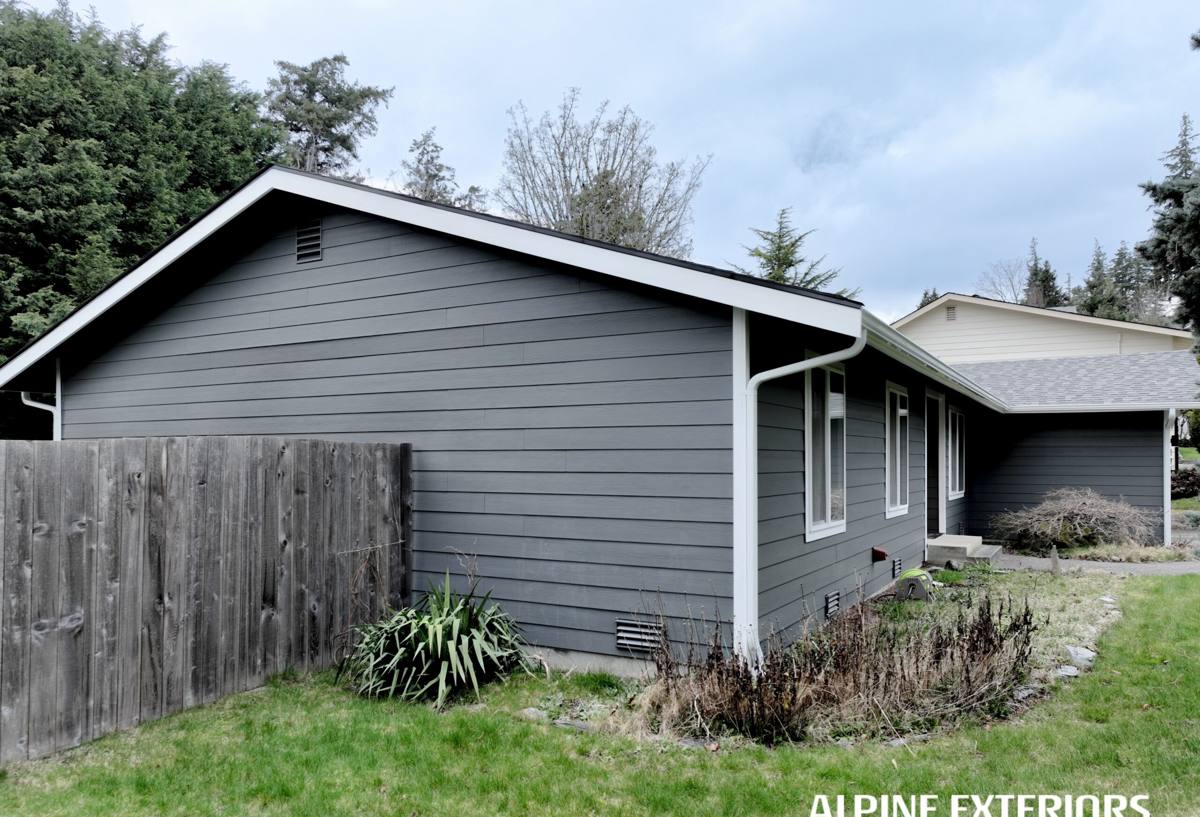
What Salt Air, Rain, and Moss Actually Do to Siding
Salt-Laden Wind
Airborne salt is corrosive to metal fasteners and trim, and it accelerates the breakdown of paint films and lower-grade cladding. Over years, homes closer to the water show chalking, fading, and edge deterioration well ahead of similar homes set back from the shoreline.
Wind-Driven Rain
Rain that comes in sideways off the water finds every gap in a siding installation — behind loose laps, around poorly flashed windows, at inside corners that weren't detailed correctly. Once water gets behind the cladding, it doesn't dry out quickly in this climate. It sits against the wall sheathing, and that's where rot starts.
Moss and Algae
Shade, moisture, and mild temperatures are exactly what moss and algae need to thrive, and Birch Bay has all three for most of the year. On porous or wood-based siding, that growth holds moisture against the surface and speeds up decay. On siding with a weak factory finish, it also leaves stains that pressure washing only partly removes.
Why We Only Install James Hardie Fiber Cement Here
We install one siding system on Birch Bay homes: James Hardie fiber cement. That's a deliberate standard, not a lack of options. We don't install vinyl, LP SmartSide, Cemplank, Allura, primed spruce, or raw cedar, and in a climate like this one, the reasons are practical, not sentimental.
Vinyl siding is affordable and low-maintenance in mild, dry climates, but it's a petroleum-based product that expands and contracts with temperature swings, and its seams and corner pieces are the weak points where wind-driven rain gets behind the wall. Wood-based siding, whether that's cedar or an engineered wood product like LP SmartSide, depends entirely on an intact factory or field-applied finish to keep moisture out — and in a location with this much sustained dampness and moss pressure, any breach in that finish becomes an entry point for rot. Fiber cement alternatives to Hardie, like Cemplank or Allura, are similar in concept but don't carry the same track record or the same factory-finish warranty backing.
James Hardie fiber cement is non-combustible, dimensionally stable in wet-dry cycling, and available in HZ5 formulations engineered specifically for climates like ours — wetter, cooler, and prone to moisture cycling. Paired with the factory-applied ColorPlus finish, it resists the fading and chalking that salt air and UV cause on field-painted products, and it carries a strong, transferable warranty that isn't contingent on us using a specific paint brand or coating schedule.
What a Correct Siding Replacement Actually Involves
Replacing siding well in a wet, salt-exposed location is mostly about what happens before the new boards go up. A rushed tear-off and reinstall on top of hidden problems just repeats the failure a few years later.
- Full removal of old siding and trim, not overlay installation on top of existing cladding
- Inspection of the wall sheathing underneath for soft spots, staining, or rot, with any damaged sheathing replaced before new siding goes on
- Installation of a code-compliant weather-resistive barrier, lapped and taped correctly at every seam
- Proper flashing at windows, doors, and any wall penetration, so water is directed out and away from the sheathing rather than trapped behind it
- Correct fastener placement and spacing per Hardie's published installation instructions, using fasteners rated for the exposure
- Proper clearances at the foundation, roofline, and any horizontal trim so water sheds instead of wicking upward
- Factory-finished Hardie boards installed with the manufacturer's specified gaps and caulking practices, not field-painted after the fact
Every one of those steps matters more in Birch Bay than it would on a dry, inland lot, because there's less margin for error before moisture becomes a long-term problem.
Choosing the Right Hardie Product Line for a Waterfront Home
James Hardie makes climate-specific formulations, and for a Birch Bay home we generally look at the HZ5 line, engineered for regions with more moisture cycling and cooler, wetter conditions. Within that line, homeowners typically choose between:
HardiePlank Lap Siding
The traditional horizontal lap look, available in a range of textures and ColorPlus finishes. It's the most common choice for the classic Pacific Northwest home profile and holds up well against wind-driven rain when the laps are installed with correct exposure and fastening.
HardiePanel Vertical Siding
Used for board-and-batten style accents or full vertical applications, often paired with lap siding to break up larger wall sections. It sheds water differently than horizontal lap and can be a good fit for gable ends or accent walls that see heavy rain exposure.
HardieTrim
Matching trim boards for corners, window and door surrounds, and fascia, finished to hold up under the same salt and moisture exposure as the field siding rather than relying on a separate wood trim package that ages faster.
Comparing Siding Materials for a Salt-Air, High-Rain Location
| Material | Moisture & Salt Resistance | Maintenance Burden | Typical Lifespan Here |
|---|---|---|---|
| James Hardie Fiber Cement (HZ5) | High — non-combustible, engineered for wet climates, factory ColorPlus finish resists fading | Low — occasional wash, no repainting on a normal schedule | Decades, backed by a strong transferable warranty |
| Vinyl Siding | Moderate — seams and corners are vulnerable to wind-driven rain intrusion | Low, but prone to cracking and fading over time | Shorter in high-exposure coastal conditions |
| LP SmartSide / Engineered Wood | Moderate — depends entirely on an intact finish; vulnerable if that finish fails | Moderate to high — finish maintenance is critical | Reduced if moisture gets behind the finish |
| Cedar / Raw Wood | Low to moderate — natural material, absorbs moisture, feeds moss growth | High — regular sealing, staining, and moss treatment | Shorter without disciplined upkeep |
Our Process, From Estimate to Final Walkthrough
We start with a walk-around inspection of the home, looking specifically for water staining, soft trim, moss buildup, and any areas where past patch jobs suggest a recurring moisture problem. From there we put together a written estimate that spells out the Hardie products, colors, and trim details we recommend for that specific home and its exposure to wind and water.
Once a project is scheduled, we sequence the tear-off and reinstall around the weather rather than fighting it — this stretch of Whatcom County doesn't give you unlimited dry work windows, so timing matters. During installation we check flashing and barrier work before it's covered, since that's the part of the job nobody sees again once the siding is on. We finish with a walkthrough so the homeowner can see the completed work and ask questions before we consider the job done.
Signs a Birch Bay Home May Need Siding Replacement Soon
- Persistent moss or algae staining that returns quickly after cleaning
- Soft, spongy, or discolored siding, especially near the bottom courses or around windows
- Visible cracking, warping, or separation at seams and corners
- Paint that's peeling, bubbling, or chalking faster than it used to
- Drafts, musty smells, or interior wall staining that suggest moisture behind the cladding
- Fasteners that are rusting, backing out, or leaving streaks down the wall
Why a Local Crew That Already Works Birch Bay Matters
Siding performance in this location is a function of how well the installer accounts for salt exposure, wind direction off the water, and the long stretches of damp weather that keep everything wet longer than it would be a few miles inland. A crew that already works this stretch of coastline has already seen how these variables play out on real homes — which wall orientations take the worst of the wind-driven rain, where moss tends to build up fastest, and what flashing details actually hold up over time here. That local pattern recognition is hard to replace with a generic installation approach, no matter how good the materials are.
If your Birch Bay home's siding is showing its age, or you're planning ahead of a problem rather than reacting to one, we're happy to take a look and talk through what a correct James Hardie replacement would involve for your specific home. Reach out for a free, no-pressure estimate using the form below.