 Bellingham Siding
 Birch Bay's Waterfront Climate Puts Extra Stress on a Roof
Birch Bay sits right on the water, and that location shapes what a roof has to deal with year after year. Salt-laden air drifts inland off the Salish Sea and settles on every exposed surface, including fasteners, flashing, and metal roofing components. Over time, that salt exposure accelerates corrosion on materials that would hold up fine twenty miles inland in Bellingham. Add in wind-driven rain that comes at the house sideways during winter storms, and you have water finding its way into laps, seams, and fastener penetrations that a calmer climate would never test.
Then there's moss. Whatcom County's damp, mild winters and shaded, tree-lined lots around Birch Bay create ideal conditions for moss and algae to take hold on roofing surfaces, especially on north-facing slopes that stay wet longest. Moss isn't just cosmetic — it holds moisture against the roofing material, lifts shingle edges, and shortens the life of whatever's underneath it. A roof built for a drier or more sheltered part of the state, without accounting for salt exposure, wind, and moss together, tends to show its age early here.
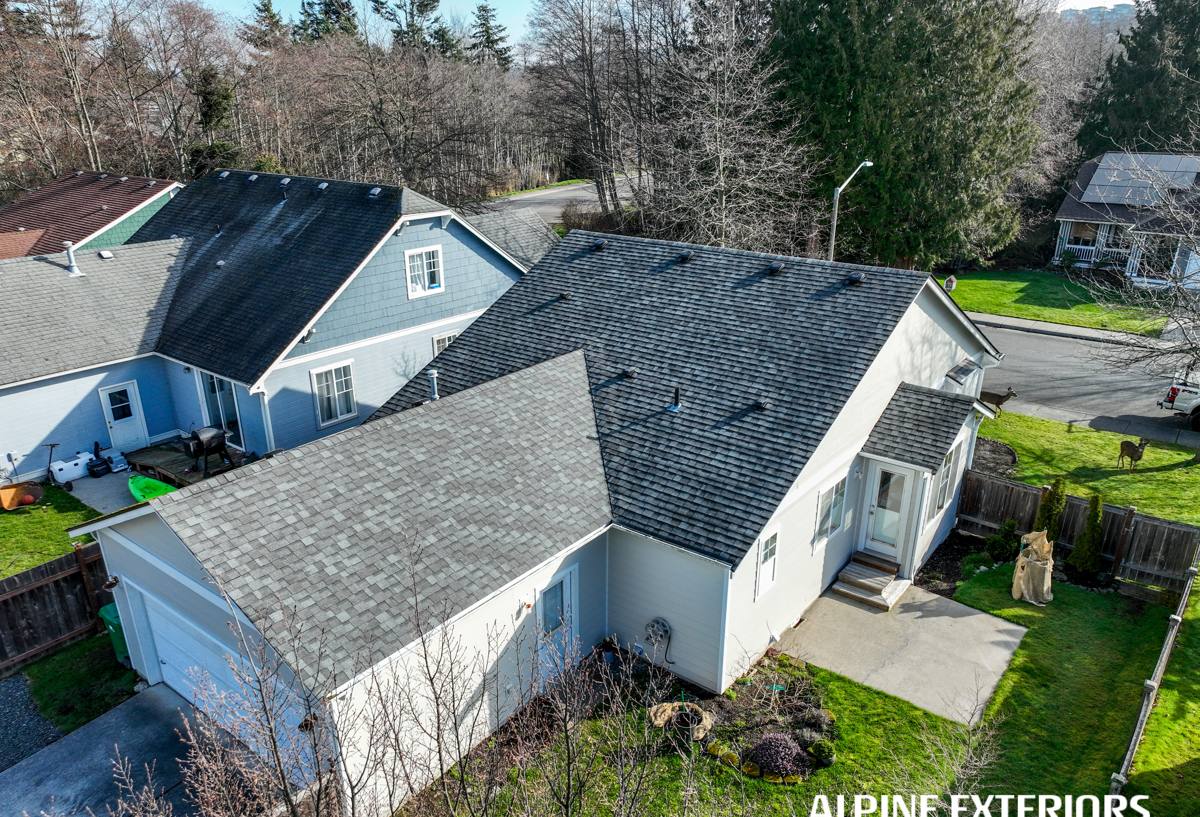
Signs a Birch Bay Home Needs a New Roof, Not Another Repair
Not every roofing issue calls for full replacement. A cracked pipe boot or a handful of lifted shingles after a windstorm can often be repaired. But repeated repairs on an aging roof usually mean the underlying material is past the point where patching makes financial sense, especially with the marine exposure Birch Bay sees.
- Shingles are curling, cupping, or losing their granules in patches rather than just around one repair area
- Moss has been scraped off more than once and keeps coming back within a season or two
- You can see daylight through the roof deck from the attic, or find damp insulation after a storm
- Flashing around chimneys, vents, or skylights is rusted, lifted, or was never properly stepped and counter-flashed to begin with
- The roof is nearing or past the manufacturer's expected service life for coastal exposure, which typically runs shorter than the standard rating printed on the shingle wrapper
- Granules are collecting in gutters in noticeable amounts, a sign the shingle's protective surface is breaking down
If a roof is showing two or more of these signs at once, a full replacement is usually the more cost-effective path compared to chasing leaks one repair at a time.
What a Correct New Roof Installation Actually Involves
Tear-Off and Deck Inspection
We remove the old roofing down to the deck rather than layering new material over old. That's the only way to actually see what's underneath — soft or delaminated plywood, rot around old flashing, or framing damage from a slow leak that never showed up as a stain on the ceiling below. Any compromised decking gets replaced before anything new goes down, because no underlayment or shingle can compensate for a deck that isn't solid.
Underlayment and Ice-and-Water Shield
Given how much wind-driven rain Birch Bay gets, we don't treat underlayment as an afterthought. A synthetic underlayment goes down across the full deck, with self-adhered ice-and-water shield membrane at the eaves, valleys, and around every roof penetration — the spots most likely to take on water under wind pressure. This is the layer that protects the house even if wind ever drives water past the shingles themselves.
Flashing Details
Flashing failures are one of the most common causes of roof leaks, and they're almost always an installation problem rather than a material problem. Step flashing at walls, proper counter-flashing at chimneys, and correctly lapped flashing in valleys all matter more here than in a drier climate, because there's more water looking for a way in. We flash these details the way they're supposed to be done, not the way that's fastest.
Ventilation
A roof deck that can't breathe traps moisture, which speeds up rot and gives moss and mildew a head start. Balanced intake and exhaust ventilation keeps air moving through the attic space, which helps the roof dry out between storms instead of staying damp for days.
Choosing a Roofing Material for Birch Bay Conditions
There's no single "best" roofing material for every home — it depends on budget, the home's style, and how much long-term maintenance an owner wants to take on. Here's how the common options stack up against Birch Bay's specific mix of salt air, wind, and moss:
| Material | Typical Upfront Cost | Wind & Salt Performance | Moss Resistance | Maintenance |
|---|---|---|---|---|
| Architectural asphalt shingle | Lowest to mid-range | Good, when properly nailed and rated for higher wind exposure | Moderate — benefits from zinc/copper strips and periodic cleaning | Periodic moss removal and gutter checks |
| Standing-seam metal | Higher | Excellent wind uplift resistance; needs corrosion-resistant fasteners and coatings near salt air | Very good — sheds moisture quickly, little surface for moss to grip | Low; occasional fastener and coating inspection |
| Synthetic/composite shingle | Mid to high | Good, product-dependent | Moderate to good, varies by product | Moderate; follow manufacturer cleaning guidance |
Asphalt shingle remains the most common choice in Birch Bay because it balances cost and performance well when it's rated for coastal wind exposure and installed with the fastener pattern that rating requires. Standing-seam metal costs more up front but performs especially well on homes closer to the water where wind and salt exposure are most severe. We'll walk through the honest trade-offs for your specific home and roof pitch rather than pushing one product across the board.
Ventilation and Moisture Control: The Difference Between a Roof That Lasts and One That Doesn't
Two roofs installed with identical shingles can age very differently depending on what's happening underneath them. A poorly ventilated attic traps warm, moist air against the underside of the deck, especially during Whatcom County's wet winters. That trapped moisture contributes to premature deck rot, encourages mold and mildew, and can even cause shingles to fail from underneath before they show visible wear on top. Proper intake at the eaves paired with exhaust at or near the ridge lets that moisture escape instead of building up. It's one of the least visible parts of a new roof installation and one of the most important for long-term performance in a climate like this one.
Our New Roof Installation Process in Birch Bay
- On-site inspection of the current roof, deck, ventilation, and flashing details, with photos and a clear explanation of what we find
- A written estimate covering material options, scope of work, and a straightforward cost breakdown — no pressure to decide on the spot
- Material selection based on your home, budget, and how exposed the roof is to wind and salt air off the bay
- Permitting handled before work begins, and delivery/staging scheduled around your property and driveway access
- Tear-off and deck inspection, with any damaged decking replaced and documented before covering it up
- Underlayment, ice-and-water shield, flashing, and ventilation installed to spec, not shortcuts
- Shingle or metal installation, followed by a full cleanup including a magnetic sweep for stray nails
- Final walkthrough and warranty paperwork, so you know exactly what's covered and for how long
Permits, Timeline, and What to Expect During the Project
Whatcom County requires a permit for full roof replacement, and we handle that process as part of the job rather than leaving it to the homeowner. Timeline for a typical single-family home runs a few days once tear-off starts, though we schedule around weather — driving rain and higher wind off the water can push a start date if conditions aren't safe or dry enough to keep the deck protected. We'll give you a realistic window up front and keep you updated if weather forces an adjustment, rather than surprising you mid-project.
During the work itself, expect noise, some debris staging in the driveway or yard, and crew vehicles on site for the duration. We take care to protect landscaping, gutters, and siding during tear-off, and we do a full cleanup pass — including checking the ground for dropped nails — before we consider the job finished.
Why Local Birch Bay Experience Matters
A roofing crew that mainly works inland jobs doesn't always account for what a shoreline location like Birch Bay actually experiences — the added wind exposure on homes close to the water, the salt air's effect on fasteners and flashing over time, or how much longer moss lingers under the tree cover common on many Birch Bay lots. We work in this specific area regularly, which means we're not guessing at fastener schedules for wind exposure or treating moss as an afterthought instead of something the roof design should account for from the start. Some Birch Bay neighborhoods also have design or color covenants through their community associations, and we're used to working within those rather than treating them as a surprise partway through a project.
After Installation: Keeping a New Roof Performing in Birch Bay's Climate
A correctly installed roof still benefits from basic upkeep, especially in this climate. Zinc or copper strips near the ridge can help suppress future moss growth by allowing metal ions to wash down the roof surface with every rain. Keeping gutters clear prevents water from backing up under the shingle edge, which is a common cause of edge rot on coastal homes. We recommend a visual check after major windstorms and a more thorough look every couple of years, catching small issues — a lifted shingle tab, a gap in caulking around a vent — before they turn into deck damage.
If your Birch Bay roof is showing its age or you're planning ahead rather than waiting for a leak, we're happy to take a look and give you a straightforward assessment. Reach out for a free, no-pressure estimate using the form below.