 Bellingham Siding
 Barkley's Roofs Face a Different Kind of Wear
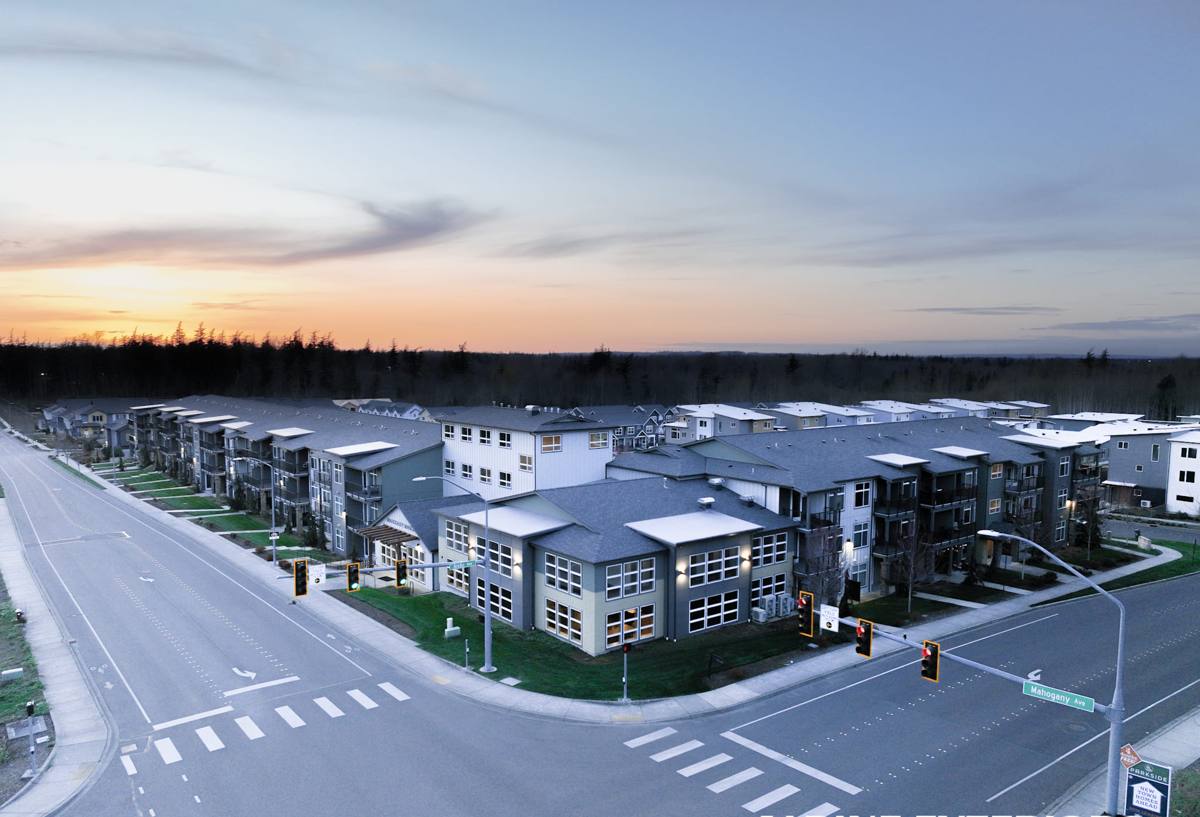
Barkley is one of Bellingham's newer, more established neighborhoods, with a mix of home ages and roof types tucked among mature landscaping and tree cover. That tree cover is nice for shade and privacy, but it also means shingles here spend a lot of the year damp and shaded, which is exactly what moss and algae need to get established. Add in the moisture that blows in off Bellingham Bay and the driving rain that Whatcom County sees for a good chunk of the year, and you've got a roof that ages differently than one in a drier inland climate.
None of this means Barkley roofs fail faster than roofs anywhere else in Bellingham. It means the failure points are specific: moss lifting shingle edges, trapped moisture rotting decking from underneath, and flashing that was never quite sealed right giving up years before the shingles around it do. A roof replacement done for this neighborhood needs to account for all of that, not just swap old shingles for new ones.
Signs a Barkley Roof Needs Full Replacement, Not Just a Repair
A lot of homeowners call us wanting a patch job, and sometimes that's genuinely the right call. But there are signs that tell us a repair is just delaying an inevitable full tear-off, and it's worth knowing them before you spend money on a short-term fix.
- Granules collecting in gutters and at downspout outlets in noticeable amounts, not just a light dusting
- Moss growing in mats rather than thin patches, especially on north-facing or shaded slopes
- Shingles that are curling, cupping, or cracking across multiple areas of the roof, not just one spot
- Soft or spongy decking felt when walking the roof, or sagging visible from the ground
- Daylight visible through the roof deck from inside the attic
- Interior water stains on ceilings or in the attic that reappear after rain
- A roof that's 20-plus years old on standard asphalt shingles, regardless of how it looks from the curb
If you're seeing two or more of these, especially the moisture-related ones, it's worth having someone get up on the roof rather than guessing from the ground.
What a Proper Tear-Off Replacement Actually Includes
"Roof replacement" gets used loosely. Some crews will lay new shingles over the old layer, which is faster and cheaper but hides problems instead of solving them. In a wet climate like this one, an overlay traps moisture between layers and gives you no chance to inspect or repair the decking underneath. We don't do overlays on roofs that need replacing — a real replacement means a full tear-off, and that includes several steps that are easy to skip if a crew is in a hurry.
Tear-Off and Deck Inspection
Every layer comes off down to the decking, and the decking gets inspected board by board. Any wood that's soft, delaminated, or water-stained gets replaced before anything new goes down. Skipping this step is the single most common shortcut in the industry, and it's the one that causes the most callbacks.
Underlayment
A synthetic or felt underlayment goes down as the roof's real waterproof layer, with ice-and-water shield along eaves, valleys, and any low-slope transitions where wind-driven rain tends to find its way in.
Flashing
New flashing at chimneys, skylights, vent pipes, and wall transitions — not just caulk over the old pieces. Flashing failure is one of the top causes of hidden leaks in this region, and it's cheap to do right the first time and expensive to fix later.
Ventilation
Intake and exhaust venting get checked and corrected as part of the job, not treated as a separate upsell. More on why this matters below.
Final Shingle Installation
Manufacturer nailing patterns and exposure specs, matched starter and ridge product, and a clean finish at every edge and penetration.
Choosing a Roofing Material for This Climate
There's no single "best" roofing material — the right choice depends on your budget, your roof's slope and shade exposure, and how much long-term maintenance you're willing to do. Here's how the common options actually compare for a shaded, damp neighborhood like Barkley.
| Material | Moss/Algae Resistance | Typical Lifespan | Maintenance |
|---|---|---|---|
| Standard architectural asphalt shingle | Moderate — improves with algae-resistant granules | 25-30 years | Periodic moss removal on shaded slopes |
| Algae-resistant (copper/zinc granule) asphalt shingle | Good | 25-30 years | Lower, but not maintenance-free |
| Standing seam metal | Very good — little for moss to grip | 40-50+ years | Low |
| Cedar shake | Poor without regular treatment | 20-30 years with upkeep | High — treatment and cleaning needed |
| Synthetic/composite shingle | Good | 40-50 years | Low to moderate |
We install cedar when a homeowner wants that look and understands the upkeep it needs in a wet climate — we won't talk anyone out of it, but we'll be honest that it demands more attention here than in a drier region. For most Barkley homes looking for the best balance of cost and low maintenance, algae-resistant asphalt or metal are the two we recommend most often.
Ventilation, Moisture, and Moss: The Long Game
A roof replacement that ignores attic ventilation is only solving half the problem. Poor airflow lets warm, moist air linger against the underside of the deck, which speeds up rot from the inside and creates the exact damp conditions moss thrives on from the outside. Balanced intake at the eaves and exhaust at the ridge keeps air moving, which helps the deck dry out between rain events and reduces how quickly moss and algae can re-establish after a cleaning.
Trimming back overhanging branches, keeping gutters clear so water doesn't back up under the shingle edge, and having moss treated before it forms thick mats all extend the life of a new roof significantly. We'll walk through this with every replacement — it costs nothing and saves years of wear.
Our Roof Replacement Process, Start to Finish
- On-site inspection — we get on the roof, not just the ground, and check decking, flashing, and ventilation before quoting anything.
- Written estimate — a clear scope and price, with material options explained rather than pushed.
- Scheduling around weather — we plan tear-offs for dry stretches whenever possible and tarp exposed sections if weather turns mid-job.
- Tear-off and deck repair — full removal, deck inspected and repaired board by board.
- Underlayment, flashing, and ventilation correction — the parts that determine whether the roof actually performs in this climate.
- Shingle or panel installation — installed to manufacturer spec, not shortcut spec.
- Cleanup and walk-through — magnetic sweep for nails, debris hauled off, and a final walk-through so you know exactly what was done.
What Roof Replacement Cost Depends On
We don't post fixed prices because roof cost genuinely varies by job, but the factors that move the number are consistent and worth understanding before you get quotes.
| Factor | Why It Matters |
|---|---|
| Roof size and number of slopes | More material and more labor hours, plus more valleys and hips to flash |
| Deck condition | Rotted or soft decking found during tear-off adds material and labor to replace it |
| Material choice | Asphalt, metal, and cedar carry different material and installation costs |
| Roof pitch and access | Steep or hard-to-access roofs take longer and require more safety setup |
| Layers being removed | Tearing off two layers of old shingles costs more than tearing off one |
| Ventilation upgrades | Adding proper intake/exhaust venting where none existed is a smart add, not just an expense |
Anyone quoting a full replacement without getting on your roof first is guessing. Be cautious of a bid that's dramatically lower than others — it usually means an overlay instead of a tear-off, or corners being cut on decking and flashing that you won't see until the roof leaks.
Questions Worth Asking Before You Hire
- Is this a full tear-off or an overlay, and why?
- Will you inspect and replace bad decking, and how is that priced if it's needed?
- What underlayment and ice-and-water shield are included, and where?
- Are you licensed and insured in Washington, and can I see proof?
- What's the manufacturer warranty, and what's your own workmanship warranty?
- Do you have recent work in this area you can point me to?
Why a Crew That Already Works in Barkley Matters
Roofing crews that work across Whatcom County regularly know how this neighborhood's tree cover and moisture patterns actually behave through the year — not from a textbook, but from having torn off enough roofs here to know where moss builds up fastest and where flashing tends to fail first. That familiarity shows up in small decisions during the job: where to add extra ice-and-water shield, whether a slope needs better ventilation, how to sequence the work around a wet forecast. It's the difference between a roof that's technically new and one that's actually built for where it sits.
If your Barkley home's roof is showing its age or you just want an honest opinion on whether repair or replacement makes sense, we're happy to take a look. Reach out for a free, no-pressure estimate using the form below — we'll give you a straight answer, not a sales pitch.