 Bellingham Siding
 Barkley Roofs Face a Different Kind of Wear
Barkley sits close enough to the water and tucked into enough tree cover that its roofs deal with a combination most drier climates never see: salt-laden air off Bellingham Bay, wind-driven rain that comes in sideways off winter storms, and a moss season that can run from October clear through May. None of these alone is unusual for Western Washington. Together, on the same roof, year after year, they wear down shingles faster than homeowners expect and hide problems until they show up as a stain on a ceiling.
An asphalt shingle roof that's installed correctly for this specific mix of conditions holds up. One installed to a generic spec sheet, without attention to local moisture patterns and moss pressure, tends to show granule loss, soft spots, and moss colonization years before it should. The difference is almost never the shingle brand — it's the details underneath it.
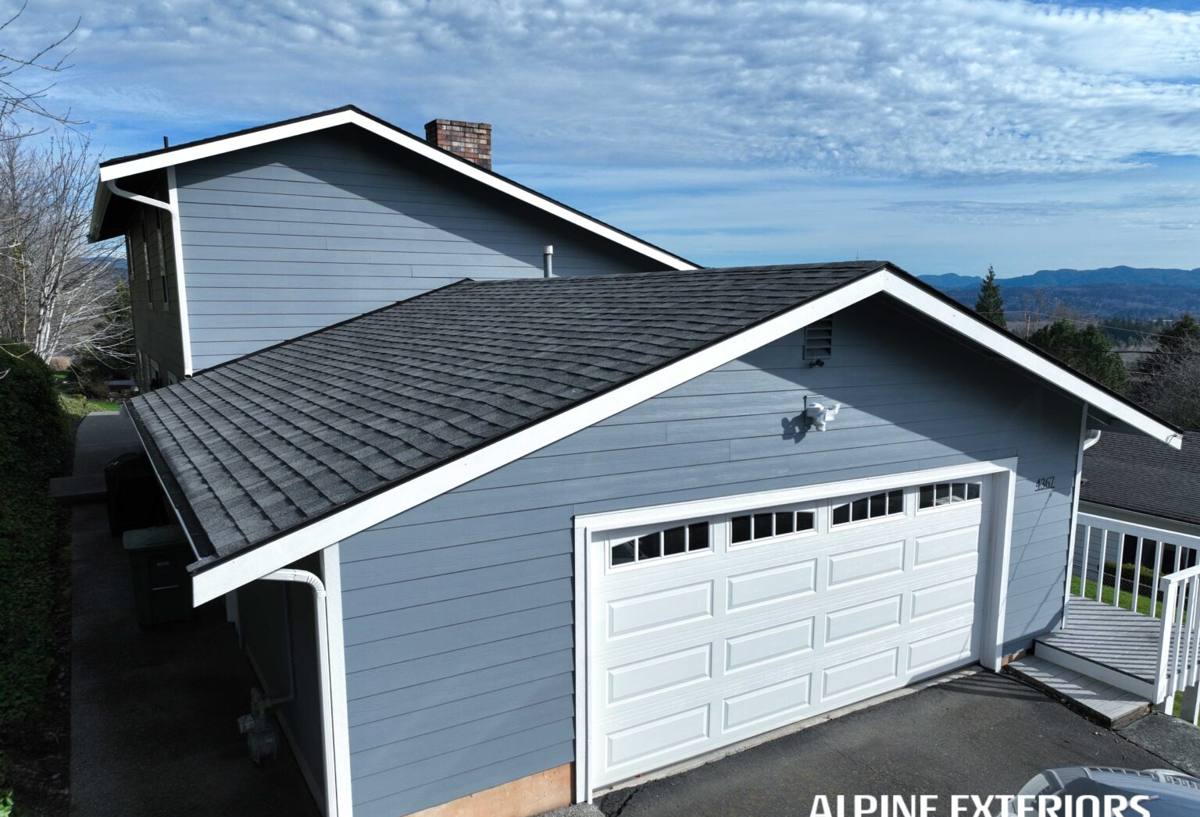
What Salt Air, Rain, and Moss Actually Do to a Shingle Roof
Salt Air and Fastener Corrosion
Homes closer to the water see accelerated corrosion on exposed metal — nail heads, flashing edges, vent boots with metal collars. Once a fastener starts to rust, it can work loose or stain the shingle around it. Roofs a few blocks inland see less of this, but Barkley's proximity to the bay means it's a real factor worth planning for, not an edge case.
Driving Rain and Wind-Driven Water Intrusion
Standard rain falls straight down and mostly respects a shingle's overlap. Driving rain, which is common during Whatcom County's winter storm systems, gets pushed sideways and upward under shingle edges, around chimneys, and along valleys. A roof that would be watertight in a calm rain can leak in a windstorm if the underlayment, flashing, and nailing pattern weren't built with that wind direction in mind.
Moss: Slow, Quiet, and Expensive if Ignored
Moss doesn't cause sudden failures — it causes slow ones. Spores land in the shaded, north-facing, and debris-collecting parts of a roof and take hold in the granule layer. As moss mats grow, they hold moisture against the shingle surface far longer than the shingle was designed to tolerate, and the root structure can lift granules and shingle edges over time. A roof with heavy moss coverage is often several years older functionally than its actual age.
What a Correct Asphalt Shingle Install Involves
The shingle itself is the visible 10% of the job. The other 90% is what happens underneath it, and it's where most of the roof's real-world performance in a climate like Barkley's gets decided.
- Deck inspection and repair — any soft, delaminated, or water-stained sheathing gets replaced before anything new goes down. Shingles installed over a compromised deck fail early no matter how good the shingle is.
- Ice-and-water shield at vulnerable points — eaves, valleys, and roof-to-wall transitions get a self-adhering waterproof membrane underneath the felt or synthetic underlayment. These are the spots where wind-driven rain and ice damming (on the rare cold snap) find their way in.
- Synthetic or felt underlayment across the full deck — a second line of defense under the shingles, lapped correctly so water sheds downhill at every seam.
- Balanced ventilation — intake at the eaves, exhaust at the ridge, sized to the attic. Poor ventilation traps moisture under the deck, which shows up as premature shingle failure from underneath — a problem that has nothing to do with the shingle brand and everything to do with airflow.
- Proper nailing pattern — correct nail count, placement in the manufacturer's nailing strip, and hand-driven or gun-calibrated so nails aren't overdriven or underdriven. This is the single biggest factor in wind resistance and warranty validity, and it's also the easiest step to rush.
- New flashing at every penetration — chimneys, plumbing vents, skylights, and sidewalls get new step flashing, counterflashing, and boots rather than reusing old metal. Flashing is a cheap material and an expensive mistake to skip.
- Starter strips and ridge caps rated to match — these small components carry a disproportionate amount of the roof's wind and water resistance at the edges and ridge.
Choosing a Shingle for a Barkley Home
Most Barkley homes do well with either a standard 3-tab shingle or an architectural (laminated) shingle, and the right choice usually comes down to budget, roof pitch, and how much wind and moss resistance you want built in from day one.
| Shingle Type | Typical Lifespan | Wind Rating | Best Fit |
|---|---|---|---|
| 3-Tab Asphalt | 15–20 years | Good, lower than architectural | Budget-conscious re-roofs, simple rooflines |
| Architectural (Laminated) | 25–30+ years | Higher, better in gusty coastal wind | Most Barkley homes; better moss and impact resistance |
| Algae-Resistant (AR) Shingles | Same as base type | Same as base type | Shaded lots, north-facing slopes, heavy tree cover |
We lean toward recommending algae-resistant granules on any Barkley roof with meaningful shade or tree overhang, since that's exactly the condition that accelerates moss and algae growth here. It's not a dramatic upcharge, and it buys real time before the roof needs moss treatment or a wash.
Our Process, Start to Finish
- On-site inspection — we walk the roof (not just look from the ground), check the attic for ventilation and moisture signs, and note deck condition, flashing condition, and moss coverage.
- Written estimate — a clear scope covering tear-off, deck repair allowance, underlayment, flashing, shingle selection, and ventilation work, so there are no surprise line items mid-project.
- Tear-off and deck check — old roofing comes off down to the deck, and we address any rot or soft sheathing before anything new is installed.
- Waterproofing and underlayment — ice-and-water shield at eaves, valleys, and penetrations, then full underlayment.
- Shingle installation — installed to manufacturer nailing spec, with new flashing and boots throughout.
- Ventilation check — intake and exhaust confirmed balanced for the attic's size.
- Cleanup and magnetic sweep — job site and yard cleared of debris and stray fasteners.
- Final walkthrough — we go over the finished roof with you before calling the job done.
Keeping a Barkley Roof Healthy After Install
A well-installed roof still needs basic upkeep in this climate, especially around moss and debris. None of this is complicated, but skipping it is the most common reason a good roof underperforms its expected lifespan.
- Keep gutters and valleys clear of needles and leaf litter, especially going into fall storm season.
- Trim back overhanging branches to reduce shade and debris drop, which slows moss regrowth.
- Have moss treated or gently removed before it mats — a light annual treatment is far cheaper than dealing with established growth.
- Never pressure wash a shingle roof — it strips granules and shortens shingle life; use low-pressure moss treatment methods only.
- Have flashing and boots visually checked every few years, since these wear out faster than the shingles themselves.
Signs Your Current Roof Needs a Closer Look
A few warning signs are worth acting on before they become interior damage:
- Granules collecting in gutters or at downspout outlets
- Dark streaking or thick moss mats, particularly on shaded slopes
- Curling, cupping, or cracked shingles
- Soft or spongy spots when walking the roof
- Daylight visible through the attic roof deck
- Water stains on interior ceilings after a windy rainstorm
What It Typically Costs to Get Right
Every roof is different, and the only accurate number comes from an on-site look at your specific roof, but these are the factors that move the price the most:
| Cost Factor | Why It Matters |
|---|---|
| Roof size and number of planes | More material and labor, more edges and flashing detail |
| Pitch and access | Steeper or harder-to-access roofs take longer and need more safety setup |
| Deck condition | Rotten sheathing found during tear-off adds repair cost, but skipping it costs far more later |
| Shingle grade | 3-tab vs. architectural vs. algae-resistant changes material cost and lifespan |
| Number of penetrations | Chimneys, skylights, and multiple vents each need proper flashing |
| Existing layers | Tear-off of multiple old layers adds disposal and labor time |
Why It Matters That We Already Work in Barkley
A crew that already works this neighborhood knows what a Barkley roof is up against without having to guess: how much shade a given lot typically holds through the year, how hard the wind gets off the bay during winter storms, and which parts of a roof tend to hold moisture longest. That's not a marketing point — it changes real decisions on the job, like where to add extra waterproofing, how much ventilation an attic needs, and whether algae-resistant shingles are worth the small upcharge for your specific lot.
It also means being reachable if something needs a look after the fact — during the next big Whatcom County windstorm, or when moss shows up again a few winters down the road. Roofing isn't a one-and-done transaction when it's done by a crew that's actually local.
Get a Straight Answer About Your Roof
If you're not sure whether your roof needs a full replacement, a repair, or just some moss maintenance, we're happy to take a look and tell you honestly which one it is. Reach out for a free, no-pressure estimate using the form below.