 Bellingham Siding
 Window Replacement Built for Columbia's Bay-Side Conditions
Columbia sits close enough to Bellingham Bay that its windows take a different kind of beating than homes further inland in Whatcom County. Salt-laden air off the water, wind-driven rain that hits windows sideways rather than straight down, and a moss season that stretches for months all work on window frames, seals, and sills year-round. If you're starting to notice drafts, fogged glass, or wood that feels soft to the touch, it's worth understanding what's actually going on before you get quotes.
This page covers window replacement specifically for Columbia — what the local climate demands, what a properly done job looks like, and how our process works from first look to final walkthrough.
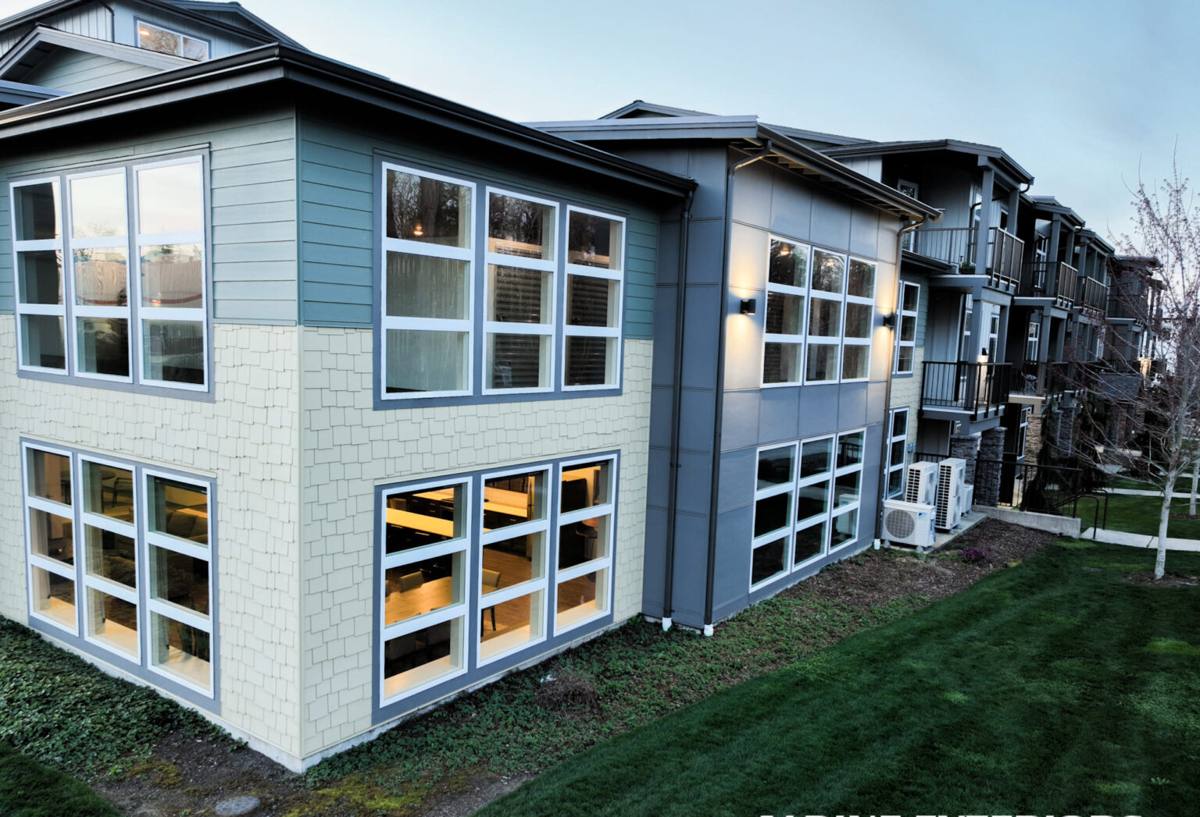
What Bellingham Bay's Climate Does to Windows
Three things drive most of the window problems we see in bay-adjacent neighborhoods like Columbia:
Salt Air
Airborne salt from the bay accelerates corrosion on window hardware — hinges, locks, and especially aluminum or lower-grade vinyl components. Over years, this shows up as stiff or failing hardware, pitted metal, and finishes that chalk or discolor faster than they would a few miles inland.
Driving Rain
Whatcom County's rain doesn't just fall — a lot of it arrives horizontally during winter storms, driven by wind off the water. That means window assemblies here need to shed water that's actively being pushed into the wall, not just water running down the glass. This is a flashing and installation issue as much as a product issue.
Moss Season
Bellingham's damp, mild winters give moss and algae months to establish themselves on anything that stays wet — window sills, trim, and the wood or fiber-cement siding around openings. Once moss takes hold near a window opening, it holds moisture against the frame and trim, which speeds up rot in wood components and can compromise sealant lines.
None of this means windows in Columbia fail faster by nature — it means the installation and product choices have to account for these conditions from day one, or the home ends up paying for it in maintenance and early replacement.
Signs Your Columbia Home Is Due for Window Replacement
- Visible condensation or fogging between panes (a failed seal on double- or triple-pane glass)
- Drafts you can feel near the frame, especially during winter storms with wind off the bay
- Wood sills or frames that feel soft, spongy, or show dark staining
- Hardware — locks, cranks, hinges — that's stiff, corroded, or no longer closes tightly
- Paint or finish that's peeling or bubbling around the window opening, often a sign of trapped moisture
- Moss or algae growth on sills or nearby trim that keeps coming back no matter how often it's cleaned
- A noticeable rise in heating costs with no other explanation
Any one of these on its own might just need a repair. Several together, especially on a home more than 20-25 years old, usually points to replacement being the more cost-effective move.
What a Correct Window Replacement Job Actually Involves
The window unit itself is only part of the job. In a climate that pushes rain into wall assemblies, how the window is installed matters as much as what's installed. A correct job includes:
Opening Inspection
Before anything goes in, we check the rough opening for hidden rot or water damage from the old window's seals or flashing failing over time. This is common enough near the bay that we plan for it rather than treating it as a surprise.
Proper Flashing and Water Management
Flashing tape and pan flashing at the sill are installed to direct any water that gets past the exterior trim back out of the wall, not into it. This is the single biggest factor in whether a window stays watertight through a Bellingham winter.
Air Sealing
Gaps between the window frame and the rough opening are sealed with appropriate low-expansion foam or backer rod and sealant — enough to stop drafts and moisture intrusion without bowing the frame out of square.
Correct Fastening and Shimming
Windows that aren't shimmed level and square bind, leak, and wear out their hardware early. This is a slow, careful part of the job — not one to rush.
Exterior Trim and Sealant
Final trim work and exterior caulking are done with sealants rated for exterior UV and moisture exposure, with attention to keeping horizontal surfaces (like sills) sloped to shed water rather than pool it.
Choosing the Right Window Material for a Bay-Adjacent Home
There's no single "best" window material — the right choice depends on your home's exposure, your budget, and how much upkeep you want to take on. Here's how the common options compare for a Columbia home's conditions:
| Material | Salt/Moisture Resistance | Maintenance | Typical Trade-Offs |
|---|---|---|---|
| Vinyl | Good — won't rot or corrode | Low | Budget-friendly; limited color/frame-size flexibility on some lines |
| Fiberglass | Very good — dimensionally stable, resists warping | Low | Higher upfront cost; strong long-term value in wet climates |
| Wood (unclad) | Poor without diligent upkeep — most vulnerable to Bellingham's rain and moss | High | Best classic appearance; needs regular refinishing to hold up here |
| Wood-clad (exterior clad in vinyl or aluminum) | Good on the exterior face; interior wood still needs indoor care | Moderate | Interior warmth of wood with better exterior protection |
| Aluminum | Fair — prone to corrosion and condensation near salt air unless thermally broken | Moderate | Slim sightlines; less common for residential in this climate |
For most homes in Columbia, we steer clients toward vinyl or fiberglass for standard replacements, and wood-clad when a homeowner wants a specific interior look and understands the added upkeep. We're upfront about the maintenance a given material will actually require here — not just how it performs in a showroom.
Cost Factors for Window Replacement
Every home is different, so we don't quote sight-unseen, but these are the main things that move the price up or down:
| Factor | Effect on Cost |
|---|---|
| Window count and size | More/larger openings raise total cost proportionally |
| Material (vinyl vs. fiberglass vs. wood-clad) | Vinyl is typically most affordable; fiberglass and wood-clad cost more upfront |
| Existing rot or water damage found at the opening | Repair work needed before installation adds cost, but skipping it costs more later |
| Full-frame replacement vs. insert (pocket) replacement | Full-frame costs more but is often necessary when the old frame or flashing has failed |
| Access and story height | Second-story or hard-to-access windows add labor time |
| Glass package (double-pane, triple-pane, low-E coatings) | Better-performing glass adds cost but improves comfort and energy bills |
Our Process, Start to Finish
- Free on-site assessment — we look at every window being considered, check for hidden moisture damage, and talk through what's actually needed versus optional.
- Straightforward estimate — a written quote broken down by window, material, and labor, with no pressure to decide on the spot.
- Scheduling around Bellingham weather — we plan installs to minimize how long any opening sits exposed, which matters more here than in drier climates.
- Careful removal and opening prep — including addressing any rot or damage found once the old window is out.
- Installation with proper flashing and sealing — the water-management work described above, done the same way whether it's one window or twenty.
- Final walkthrough — checking operation, seals, and trim before we consider the job done.
Why a Crew That Already Works in Columbia Matters
A window that's correctly installed in a dry inland climate can still leak within a few years on a home exposed to driving rain off Bellingham Bay, if the flashing and sealing weren't done with that exposure in mind. Crews who work regularly in Columbia and similar Whatcom County neighborhoods know which details can't be shortcut here — sill flashing, sealant selection, and how much clearance to leave for the moss and moisture that build up over a wet winter. That local pattern recognition is the difference between a window that lasts and one that needs revisiting in a few years.
Keeping New Windows Performing Once They're In
- Rinse sills and tracks periodically to keep salt residue and debris from building up
- Clear moss or algae from sills and nearby trim as soon as you notice it, rather than letting it establish
- Check exterior caulking annually, especially after the first winter, for any cracking or separation
- Operate hardware — locks and cranks — a few times a year even on windows you don't open often, to keep mechanisms from seizing
- Watch for condensation between panes, which signals a seal failure worth addressing early rather than ignoring
New windows installed correctly for this climate shouldn't need much beyond this — but a little seasonal attention goes a long way toward getting the full lifespan out of them.
If your Columbia home has windows showing any of the signs above, or you're planning ahead for a remodel, we're happy to take a look and give you a straightforward, no-pressure estimate — just fill out the form below.