 Bellingham Siding
 Roofing in Barkley: What the Climate Actually Demands
Barkley sits close enough to Bellingham Bay that salt-laden air is a constant, low-grade factor on every exposed surface of a home, roofs included. Add in the driving rain that comes through Whatcom County off the Sound most of the year, plus the shade and moisture that mature landscaping in this part of Bellingham holds onto, and you get a roofing environment that punishes shortcuts. A roof that would be fine in a drier inland climate can fail early here if it's missing the right underlayment, flashing detail, or airflow.
None of this means Barkley homes need anything exotic. It means the installation has to be done correctly, with materials and methods matched to what this specific stretch of Bellingham throws at a roof year-round, not just what's cheapest or fastest to install.
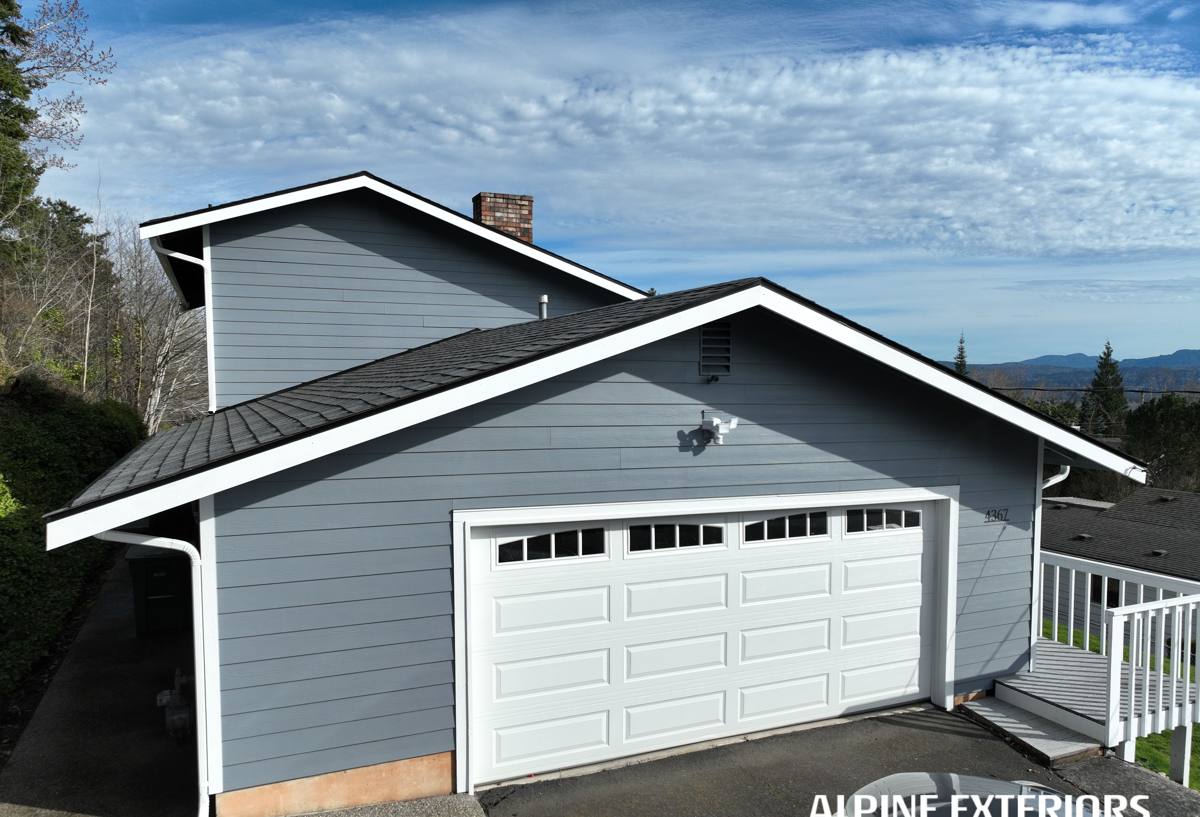
Signs a Barkley Roof Needs Replacement, Not Another Repair
Many homeowners call us after a leak, but the leak is usually the last sign, not the first. Here's what we actually look for when deciding whether a roof is a repair candidate or has reached the end of its service life:
- Granule loss heavy enough that you can see bare, shiny patches on asphalt shingles
- Shingles that are cupping, curling at the edges, or cracking when lightly flexed
- Moss or algae streaking that keeps coming back within a season of cleaning
- Soft or spongy spots underfoot on a roof walk, which usually means the decking underneath is compromised
- Daylight visible through the attic roof deck, or damp insulation below
- Flashing around chimneys, skylights, or vents that's rusted, lifted, or was never properly step-flashed
- A roof at or past the age its material is rated for, especially with a history of repeated small repairs
If a roof is showing two or three of these at once, patching it usually just delays a full replacement while costing money that doesn't carry forward. We'll tell you honestly which category your roof falls into — we'd rather lose a repair job than sell you a replacement you don't need yet, or let you keep patching one you do.
Roofing Materials That Actually Hold Up in This Climate
There's no single "best" roofing material — the right choice depends on your home's roof pitch, your budget, and how much long-term maintenance you're willing to take on. Here's how the main options compare for a Bellingham-area home like the ones in Barkley:
| Material | Typical Lifespan | Performance in Salt Air & Rain | Moss Resistance |
|---|---|---|---|
| Architectural (laminate) asphalt shingle | 25–30 years | Good when installed with proper underlayment and flashing | Moderate — benefits from zinc/copper strips and clean airflow |
| Standing seam metal | 40–50+ years | Excellent; sheds water fast and resists coastal corrosion with the right coating | High — little for moss to grip |
| Synthetic (composite) shake | 30–50 years | Good; doesn't absorb moisture like natural wood | Moderate to high depending on product |
| Cedar shake | 20–30 years with upkeep | Attractive but moisture-sensitive; needs regular maintenance in wet climates | Low without diligent cleaning and treatment |
We install architectural asphalt and standing seam metal most often on Barkley homes, because both give a strong balance of upfront cost, longevity, and low maintenance in a climate that stays wet for much of the year. We're honest about cedar shake specifically: it can look great, but it's the highest-maintenance option in a rainy, mossy climate, and we make sure clients understand that trade-off before committing to it rather than after.
Underlayment Matters as Much as the Shingle
What's under the visible roofing material does most of the actual work of keeping water out. In a climate with sustained, wind-driven rain, we use synthetic underlayment across the full roof deck and self-adhered ice-and-water membrane at the vulnerable points — eaves, valleys, and around every penetration. This is one of the places corners get cut on lower-bid jobs, and it's usually invisible until years later when it fails.
What a Correct Roof Installation Actually Involves
A new roof is more than laying shingles over what's already there. Here's what we consider non-negotiable on every full installation:
Full Tear-Off and Deck Inspection
We remove the old roofing down to the deck rather than layering over it. This lets us actually see the plywood or OSB underneath and replace any sections that are soft, delaminated, or water-stained — problems that a re-roof over the top would simply seal in.
Flashing Done Right
Chimneys, skylights, vent pipes, and roof-to-wall transitions are where the majority of leaks start, not the open field of shingles. We step-flash and counter-flash these properly rather than relying on caulk or roof cement as the primary seal, which is a common shortcut that fails within a few years.
Ventilation That Actually Balances
Intake at the eaves and exhaust at the ridge need to work together. Without balanced ventilation, moist air gets trapped in the attic, which shortens the life of the roof deck from underneath and contributes to the kind of persistent dampness that feeds moss and algae growth on the surface above.
Fastening to Manufacturer Spec
Nail placement, pattern, and count directly affect wind resistance and warranty validity. We follow the manufacturer's installation instructions exactly — it's what keeps the material warranty intact if you ever need to use it.
Ventilation, Moisture, and the Long Moss Season
Whatcom County's moss season runs long — shaded roof sections, especially those under trees or on the north-facing slopes common on Barkley lots, can stay damp for months at a stretch. Moss isn't just cosmetic: as it grows, it lifts shingle edges and holds water against the roofing surface, which accelerates wear underneath it. A correctly installed roof reduces this problem at the source through good airflow and proper drainage, and we can install zinc or copper control strips near the ridge on new installations, which release trace metal ions in the rain that inhibit moss and algae growth over time without chemical treatments.
Our Installation Process, Start to Finish
- On-site inspection and estimate — we walk the roof (or use aerial measurement where access is limited), check the attic, and give you a written scope and price, not a verbal ballpark.
- Material selection — we go over the options that fit your home, budget, and how much maintenance you want to take on long-term.
- Scheduling around weather — Bellingham's rain windows mean we plan tear-off days with dry-in as the priority; we don't leave a deck exposed overnight if it can be avoided.
- Tear-off and deck repair — full removal, deck inspection, and replacement of any compromised sheathing.
- Underlayment and flashing installation — synthetic underlayment, ice-and-water membrane at vulnerable points, new flashing throughout.
- Roofing material installation — installed to manufacturer spec for fastening pattern, exposure, and ventilation components.
- Cleanup and magnetic sweep — full site cleanup including a nail sweep of the yard and driveway.
- Final walkthrough — we go over the finished roof with you before calling the job done.
What Drives the Cost of a Roof Replacement
Every roof is priced based on its own specifics, but the same handful of factors move the number up or down on most jobs:
| Factor | How It Affects Cost |
|---|---|
| Roof size and number of planes | More square footage and more valleys/hips mean more material and labor |
| Roof pitch and accessibility | Steep or hard-to-access roofs require more safety setup and time |
| Deck condition | Rotten or soft sheathing found during tear-off adds material and labor to replace it |
| Material choice | Asphalt shingle is generally the lowest upfront cost; metal costs more upfront but less over its life |
| Number of penetrations | Chimneys, skylights, and vents each need proper flashing, which adds labor |
| Ventilation upgrades | Adding or correcting ridge and soffit ventilation is worth doing at replacement time |
We give a firm written estimate before work starts, and if we find deck damage during tear-off, we show it to you and get approval before doing any additional work — no surprise invoices.
Why a Crew That Already Works Barkley Matters
A roofing crew that regularly works this part of Bellingham already knows what the local building department expects for permits and inspections, what a typical Barkley roof pitch and truss layout looks like, and how the salt air and rain pattern in this specific area tend to wear roofs over time. That familiarity shows up in small ways — the right underlayment spec from the start, flashing details sized for the amount of wind-driven rain this area actually gets, and a realistic sense of how long a job will take given the weather windows we work with here. It also means we're not learning the local permitting process on your project.
After Installation: Keeping a New Roof Performing
A correctly installed roof still benefits from basic upkeep in this climate. We recommend a visual check once or twice a year, gutter cleaning to keep water moving off the roof rather than backing up under the edge, and prompt moss removal if it starts to establish, rather than waiting for it to spread. None of this is intensive, but skipping it entirely shortens the effective life of even a well-installed roof.
If your roof in Barkley is showing wear, or you just want an honest read on whether it's a repair or replacement situation, we're glad to take a look. The estimate is free, there's no pressure attached to it, and you'll get a straight answer either way — use the form below to get started.