 Bellingham Siding
 Why Decks in Sunnyland Wear Out Faster Than Homeowners Expect
Sunnyland sits close enough to Bellingham Bay that salt-laden air is a constant presence, even on days when you can't smell it. Combine that with Whatcom County's long, wet fall-through-spring stretch and the deep shade many of this neighborhood's mature trees throw across yards, and you get a set of conditions that are genuinely hard on outdoor structures. Decks here don't fail because the original builder did shoddy work — most of the time they fail because the materials and details underneath were never matched to this specific climate in the first place.
Driving rain off the Sound pushes moisture sideways into ledger boards and joist hangers, not just straight down onto the decking surface. Moss and algae take hold anywhere shade lingers and airflow is limited, and once established they hold moisture against wood fibers for months at a time. None of this is unusual for the area — it's just the baseline a deck has to survive year after year. A deck built without that baseline in mind will show it within five to ten years, sometimes sooner.
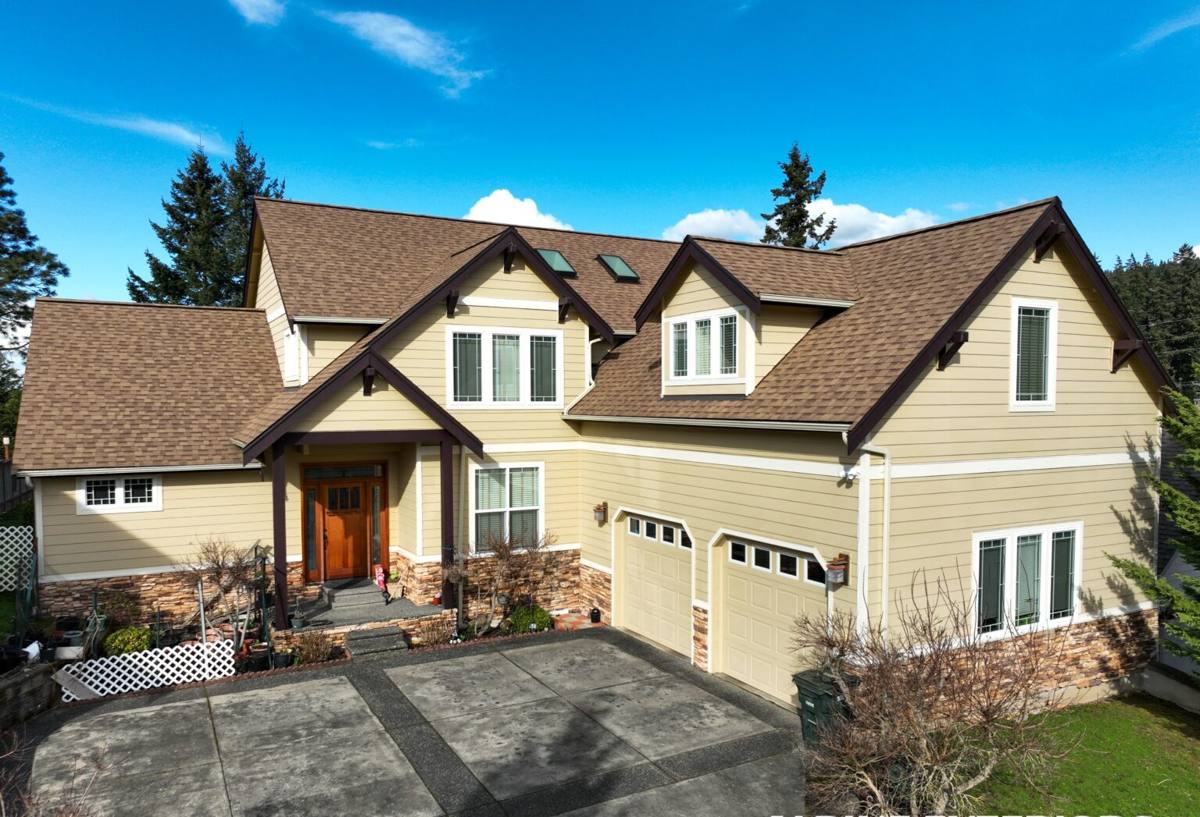
Signs a Sunnyland Deck Needs Replacement, Not Just Repair
Repair makes sense when the problem is isolated — a few soft boards, a loose railing, a fastener pattern that's failed early. Replacement becomes the honest recommendation when the damage has reached the structure itself or when patching one area would just mean another area fails next season. Here's what we look for during an assessment:
- Soft, spongy decking in multiple locations rather than one or two boards
- Rot or discoloration at the ledger board where the deck attaches to the house
- Visible gaps, rust streaks, or movement at joist hangers and post connections
- Persistent moss or dark staining that returns within weeks of cleaning
- Railings or stairs that flex, wobble, or have visibly corroded hardware
- A deck that's more than 15-20 years old and has never had the substructure inspected
If two or more of these show up, replacement usually costs less over time than a string of repairs that keep chasing the same underlying moisture problem.
What a Correct Deck Replacement Actually Involves
Footings and Framing
Everything starts below the surface. Footings need to sit below frost depth and bear on stable, well-drained soil — a real concern in parts of Sunnyland where clay-heavy ground holds water longer than sandier soils elsewhere in Whatcom County. Framing lumber should be rated for ground contact where it's close to grade, and every joist hanger and structural connector should be corrosion-resistant hardware rated for treated lumber, not standard galvanized fasteners that break down faster near salt air.
Ledger Board and Flashing
This is where we see the most failures on older decks in this neighborhood. The ledger board — the piece that bolts the deck to the house — needs proper flashing that sheds water away from the house sheathing, not just caulk and hope. Driving rain finds any gap in this detail eventually, and once water gets behind the ledger, rot spreads into both the deck framing and the home's wall structure. Doing this correctly is non-negotiable on every replacement we build.
Decking Surface and Drainage
Board spacing, ventilation underneath the deck, and grading around footings all affect how fast the structure dries out after a storm. A deck that can't shed water and dry between rain events is a deck that grows moss no matter what surface material sits on top.
Guardrails and Stairs
Beyond looks, guardrails and stair railings are structural safety items with specific height, spacing, and load requirements. Replacement is the right time to bring these fully up to current code, especially on older Sunnyland homes where the original deck may predate today's standards.
Choosing the Right Decking Material for This Climate
There's no single "best" decking material — there's a best fit for your budget, your maintenance appetite, and how much shade and moss pressure your specific lot deals with. Here's an honest comparison of the main options we install:
| Material | Moisture Behavior | Maintenance | Typical Lifespan Here |
|---|---|---|---|
| Pressure-treated lumber | Prone to moss/algae in shade; needs sealing | Annual cleaning + resealing every 2-3 years | 10-15 years |
| Cedar | Naturally rot-resistant but still absorbs moisture | Regular cleaning + periodic staining | 15-20 years |
| Composite decking | Won't rot; can still grow surface algae in deep shade | Periodic washing, no sealing/staining | 25+ years |
| PVC/capped composite | Best moisture resistance of surface options | Lowest maintenance; occasional washing | 25-30+ years |
We don't push composite or PVC on every job — a well-detailed cedar or treated-lumber deck can perform well here too, as long as the framing underneath is done right and the homeowner is realistic about the upkeep. What we do avoid is cutting corners on the substructure regardless of which surface material goes on top, because that's the part that actually determines how long the deck lasts.
Our Deck Replacement Process
1. On-Site Assessment
We look at the existing deck's framing, footings, ledger connection, and drainage — not just the surface — so the estimate reflects what's actually needed, not a guess based on square footage alone.
2. Design and Material Selection
We walk through material options, layout, and any code items (railings, stair geometry, guardrail height) that need addressing, so there are no surprises once work starts.
3. Permitting
Most deck replacements in Bellingham require a permit, especially when framing, footings, or attachment to the house is involved. We handle the permit application and inspections as part of the job.
4. Demolition and Disposal
The old deck comes out, including footings that aren't reusable, and debris is hauled off-site. We check the ledger area and house framing for hidden moisture damage at this stage, since it's the only point where that framing is fully exposed.
5. Build and Inspection
Framing, flashing, decking, and railings go in to code, with the required inspections scheduled at the appropriate stages rather than skipped or bundled at the end.
6. Final Walkthrough
We go over the finished deck together, including basic care guidance specific to the material installed, before calling the job complete.
Permits and Code Considerations for Sunnyland Homeowners
Deck work in Bellingham and unincorporated Whatcom County generally falls under building code requirements once the structure exceeds a certain size or height above grade, or when it attaches to the house. Guardrail height, baluster spacing, and stair rise-and-run are all specified in code and get checked during inspection. Skipping permits on a deck replacement isn't just a compliance issue — it can complicate a home sale later and, more importantly, means no third-party inspector ever verified that the framing and connections are actually safe. We build to pass inspection, not to pass a glance.
What Affects the Cost of a Deck Replacement
Every deck is different, but the same handful of factors drive most of the cost variation we see on Sunnyland jobs:
| Factor | Why It Matters |
|---|---|
| Deck size and shape | Square footage plus number of angles, levels, or built-in features |
| Height above grade | Taller decks need more substantial footings, framing, and stair runs |
| Decking material chosen | Composite and PVC cost more upfront than wood but less in upkeep over time |
| Ledger and flashing condition | Hidden rot at the house connection adds repair scope once uncovered |
| Access to the site | Tight side yards or sloped lots common in Sunnyland can add labor time |
| Railing and stair complexity | Custom railings or multiple stair sets add material and labor |
We give a firm, itemized estimate after the on-site assessment rather than a rough number over the phone, because the framing condition underneath the old deck genuinely changes the scope more often than homeowners expect.
Why Hire a Crew That Already Works in Sunnyland
A contractor who works this specific pocket of Bellingham regularly already knows how the salt air, drainage patterns, and shade coverage in this part of the county behave on real jobs — not just in general terms. That familiarity shows up in small decisions: how footings are placed relative to drainage, which fastener hardware holds up best given the salt exposure, and how much ventilation a deck needs underneath to keep moss from becoming a yearly battle. It also means faster, more accurate estimates, because we're not guessing at local permitting timelines or soil conditions for the first time.
Protecting Your New Deck After It's Built
A correctly built deck still needs basic seasonal care to hit its full lifespan, especially given how long the wet season runs here. A short annual routine goes a long way:
- Sweep debris and standing leaves off the surface before fall rains set in
- Clean moss and algae early in the season before it embeds into the surface
- Check that gutters and downspouts near the deck aren't dumping extra water onto it
- Inspect railings and stair connections once a year for movement or corrosion
- Reseal or restain wood decking on the schedule appropriate to that material
- Keep the area underneath the deck clear of stored materials that block airflow
If your deck is showing its age or you're just not sure whether it needs repair or full replacement, we're happy to take a look and give you a straight answer. Fill out the form below for a free, no-pressure estimate — there's no obligation, and you'll walk away knowing exactly where things stand.