 Bellingham Siding
 Ferndale Roofs Work Harder Than Roofs Inland
Ferndale sits close enough to the water and open farmland that its roofs take on a different kind of wear than homes tucked further inland around Bellingham. There's salt-laden air coming off the coast, long stretches of driving rain that push water sideways instead of straight down, and a moss season that can run most of the year in the shadier, north-facing sections of a roof. None of that means a roof here needs to be exotic or overbuilt. It means the ordinary parts of an asphalt shingle roof — underlayment, flashing, ventilation, fastening — have to be done correctly, every time, because this climate finds every shortcut eventually.
We work on roofs throughout Whatcom County, and Ferndale has its own personality: mixed lot sizes, a fair number of older homes with roofs that have been patched more than once, and newer construction where builder-grade shingles are already starting to show granule loss earlier than they should. A roof that's correctly installed for this specific environment will outlast one built to a generic national standard, and it won't need constant attention to get there.
What a Correct Asphalt Shingle Installation Involves
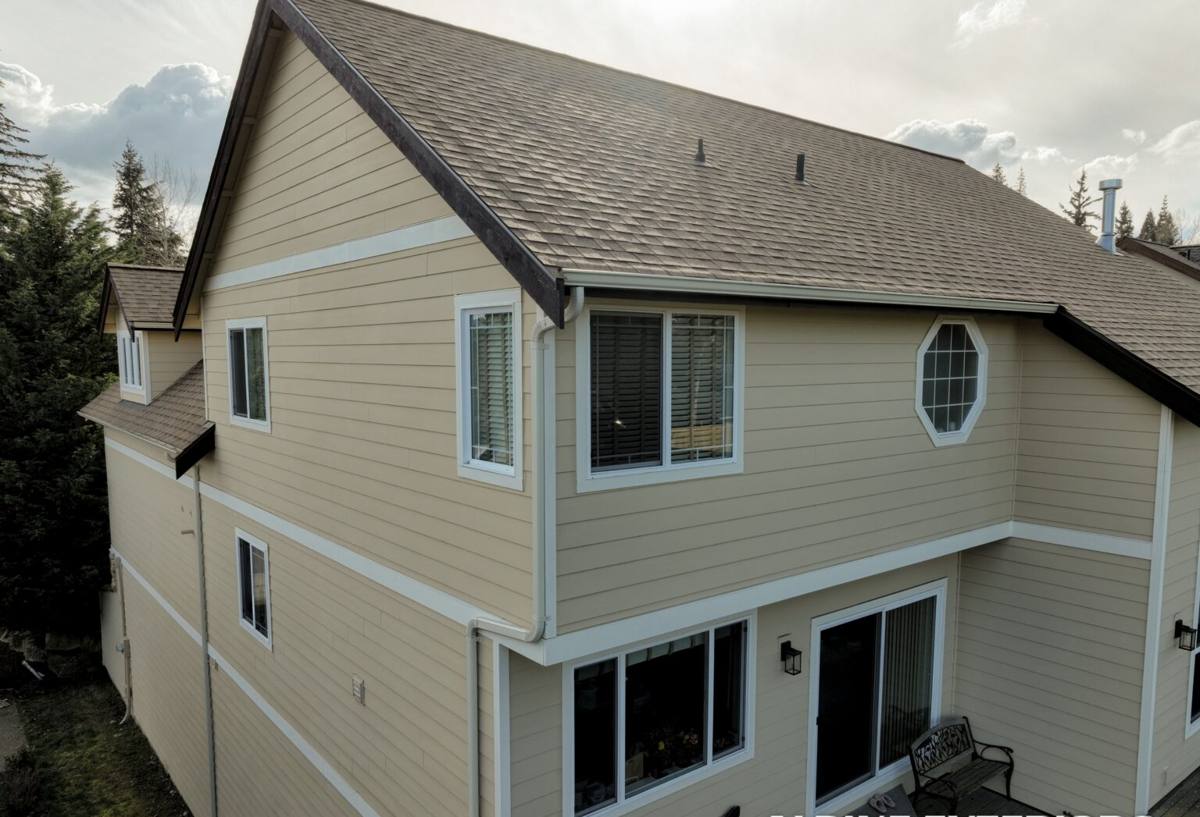
Asphalt shingle roofing looks simple from the ground, which is exactly why so many roofs fail early — the shingle itself is rarely the problem. The layers underneath it, and the details around penetrations and edges, are what determine whether a roof handles our rain and wind or slowly lets water in.
Underlayment and Ice-and-Water Protection
A synthetic underlayment is the roof's backup layer if wind-driven rain gets under a shingle tab, which happens more often here than in drier climates. We pay particular attention to valleys, eaves, and any low-slope sections, where self-adhering ice-and-water membrane belongs even though hard freezes aren't the primary concern in Whatcom County — the real driver here is sustained wind-driven rain finding its way up and under shingle courses during a winter storm.
Flashing Details That Get Skipped
Step flashing at walls and chimneys, counter-flashing, and properly lapped valley metal are where a lot of leaks actually originate, not from the field of shingles. It's common to find flashing on older Ferndale roofs that was caulked instead of properly integrated during a past repair. Caulk is a maintenance item, not a flashing system — it dries out and cracks, and when it does, the leak comes back. We rebuild flashing correctly rather than sealing over old mistakes.
Ventilation and Moisture Control
Salt air and persistent moisture make attic ventilation more important here than in a dry inland climate. A roof deck that can't breathe traps moisture, which shortens shingle life from underneath and feeds the moss and algae growth that show up on the surface. Balanced intake at the eaves and exhaust at the ridge keeps the deck dry and the attic temperature stable, which also protects the shingles' warranty — most manufacturers require adequate ventilation for their warranty to remain valid.
Choosing Shingles for Salt Air, Rain, and Moss
Not every asphalt shingle is built the same way, and the right choice for a Ferndale roof depends on the home's exposure — how shaded it is, how much wind it takes off open fields or the water, and how long the owner plans to stay in the house. We'll walk through the honest trade-offs rather than pushing the most expensive option by default.
| Shingle Type | Typical Lifespan | Moss/Algae Resistance | Best Fit |
|---|---|---|---|
| Standard 3-tab | Shorter end of the range | Low unless algae-resistant granules are specified | Budget-conscious jobs on lower-exposure roof faces |
| Architectural / dimensional | Mid to upper range | Moderate; better with algae-resistant granules | Most Ferndale homes — good balance of cost and durability |
| Impact-resistant (Class 4) | Upper range, with added durability against debris | Depends on granule package | Open-exposure roofs or owners wanting the strongest warranty terms |
| Algae-resistant (copper-infused granules) | Same as base shingle line | High — specifically engineered for this | Shaded, north-facing, or heavily wooded lots prone to moss and streaking |
For most Ferndale properties, we recommend an architectural shingle with algae-resistant granules as the practical middle ground — it holds up to driving rain and wind better than a 3-tab, resists the streaking and moss that shaded roofs develop here, and doesn't carry the premium of an impact-rated product that a moderately exposed roof may not need. We'll always base the recommendation on the specific roof, not a default upsell.
Signs Your Ferndale Roof Needs a Closer Look
Because a lot of shingle roof damage happens underneath the surface, homeowners often don't notice a problem until there's a stain on a ceiling. A few visible warning signs are worth checking for, ideally from the ground or with binoculars rather than climbing up yourself:
- Granules collecting in gutters or at downspout outlets, which signals accelerated shingle wear
- Dark streaking or thick moss growth, especially on north-facing or shaded slopes
- Shingle tabs that look curled, cupped, or lifted at the edges
- Visible daylight or soft spots in the attic decking near penetrations
- Flashing around chimneys, skylights, or vent pipes that looks rusted, cracked, or heavily caulked
- Sagging along the roofline or in valleys, which can indicate deck or structural moisture damage
- Interior ceiling stains that appear or worsen after a heavy rain event
One or two of these on their own aren't necessarily an emergency, but they're worth a professional look before the next wet season. A small, correctable issue now is a lot cheaper than a full deck repair later.
Our Process, Start to Finish
We keep the process straightforward because most homeowners are trying to understand what they're paying for, not learn roofing terminology.
- Inspection and estimate. We look at the whole roof system — shingles, flashing, ventilation, and, where accessible, the attic side — and give a written estimate that spells out materials and scope, not just a total number.
- Material selection. We walk through shingle options based on the roof's exposure and the homeowner's budget and timeline, using the trade-offs above rather than a one-size answer.
- Tear-off or overlay decision. In most cases we recommend a full tear-off so we can inspect and repair the deck underneath. An overlay is occasionally appropriate on a sound, single-layer roof, but it hides problems rather than fixing them, so we're direct about when it's genuinely a good option and when it isn't.
- Deck repair. Any soft, delaminated, or water-damaged sheathing gets replaced before new underlayment goes down — this is the step that gets skipped on cut-rate jobs and causes early failures.
- Installation. Underlayment, ice-and-water membrane at vulnerable areas, drip edge, flashing, and shingles installed to the manufacturer's nailing pattern and exposure specs, not a rushed approximation of it.
- Cleanup and final walkthrough. We run a magnetic sweep for stray nails, clear debris, and walk the finished roof with the homeowner before calling the job done.
Moss and Debris: Ongoing Care After Installation
A correctly installed roof still needs basic seasonal upkeep in this climate, particularly on lots with tree cover or heavy shade. Moss doesn't just sit on top of shingles — left alone, it holds moisture against the granule surface and can work its way under tab edges over time, which shortens the roof's life regardless of how well it was installed. Keeping gutters and valleys clear of needles and leaf litter matters just as much, since clogged drainage is one of the more common causes of water backing up under shingle courses during a heavy storm.
We generally recommend a gentle moss treatment or soft wash rather than pressure washing, which can strip granules and shorten shingle life faster than the moss itself would. If a roof we installed starts showing moss growth in a shaded section sooner than expected, that's useful information — it may mean a spot treatment or a look at nearby tree cover, not necessarily a roofing defect.
Repair, Partial Replacement, or Full Replacement
Not every roofing problem calls for a full replacement, and we won't tell a homeowner they need one when a repair will do the job. The right call usually comes down to the roof's age, how localized the damage is, and whether the underlying deck is still sound.
A roof with isolated flashing failure, a handful of wind-damaged shingles, or a single leak point is often a straightforward repair, especially if the roof is still reasonably young. A roof approaching the end of its expected service life, with widespread granule loss, multiple problem areas, or deck damage found during inspection, is usually better served by a full replacement — patching a roof that's genuinely at the end of its life tends to cost more over a few years than doing the job once. We'll give a direct opinion on which category a roof falls into, along with the reasoning behind it, rather than defaulting to whichever option costs more.
Why Working With a Crew That Already Knows Ferndale Matters
A roofing crew that regularly works in and around Ferndale already understands how this specific stretch of Whatcom County behaves — where the wind tends to push rain, which older subdivisions commonly have particular flashing or ventilation issues, and how aggressively moss establishes itself on shaded roofs near the coast versus roofs further inland. That local pattern recognition shows up in small decisions during a job: where to add extra ice-and-water protection, how much ventilation a specific attic actually needs, and which shingle line will hold up best given a home's exposure.
It also matters for accountability. A crew that works this area consistently is going to be around next year and the year after if a question comes up about the work, not just for the length of a single job.
If you're dealing with an aging roof, visible moss, or you just want an honest read on where your current roof stands, we're glad to come take a look. Estimates are free, there's no pressure attached, and you'll get a straight answer about what your roof actually needs — whether that's a repair, a partial fix, or a full replacement. The form below is the easiest way to get started.