 Bellingham Siding
 Metal Roofing for Lynden Homes and Properties
Lynden sits inland from Bellingham Bay in the heart of Whatcom County's farmland, but the roof over a Lynden home deals with the same marine-influenced weather as the rest of the county: long stretches of driving rain, wind that comes across open fields with nothing to slow it down, and a moss season that can run most of the year in shaded spots. Add in the mix of house styles common here — from older farmhouses to newer builds on acreage, often with a shop, barn, or outbuilding on the same lot — and metal roofing shows up more often in Lynden than in denser parts of Bellingham. It handles wind well, sheds water fast, and on outbuildings it's often the practical default. Done right, it's also a strong option for the house itself.
This page covers what metal roofing actually involves for a Lynden property: the products, the installation details that separate a roof that lasts from one that doesn't, and what to expect from our process.
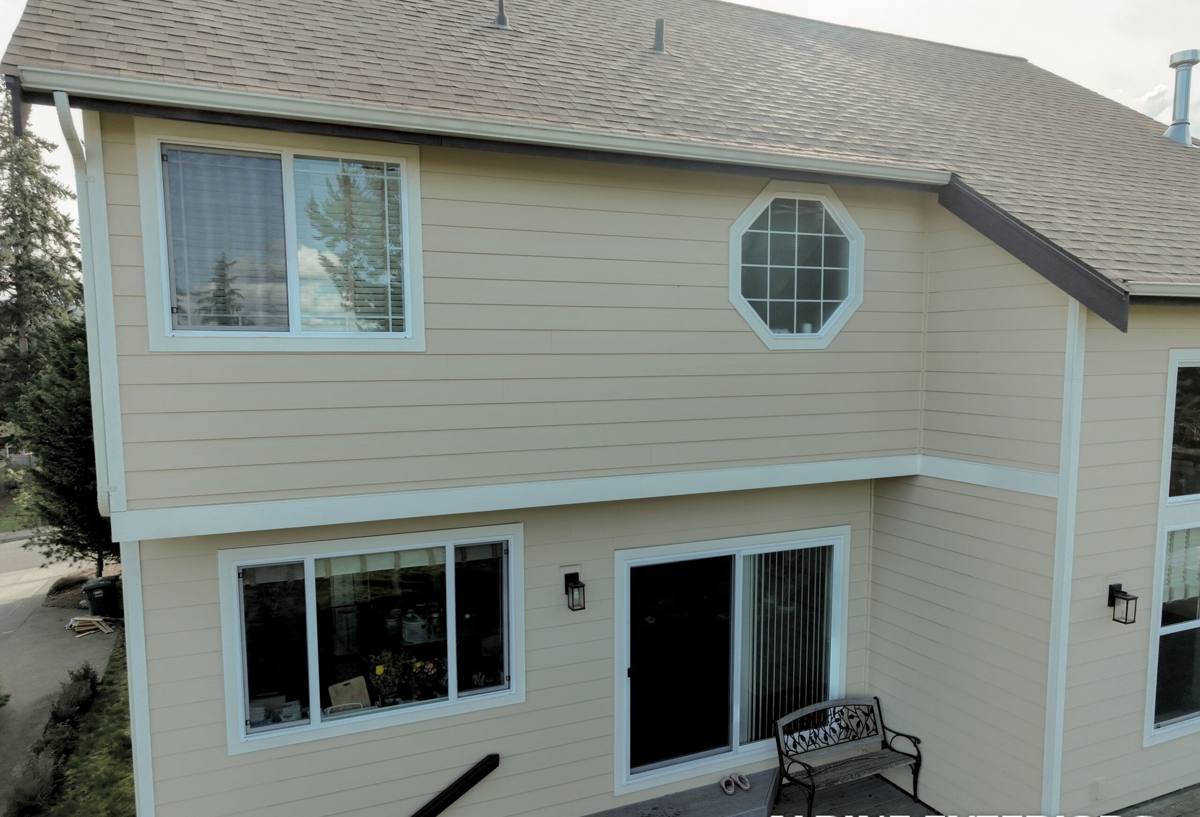
What Whatcom County Weather Does to a Roof Over Time
Three things drive most of the roofing problems we see in this part of the county:
- Driving rain. Wind-driven rain doesn't just fall straight down — it pushes up under laps, around fasteners, and into valleys. Roofing systems here need to handle water moving sideways and uphill for short stretches, not just water running downhill.
- Wind exposure. Open farmland and fewer windbreaks in parts of Lynden mean roofs can take a steadier, harder wind load than the same house would see tucked into a wooded Bellingham neighborhood. Panel attachment and edge detailing matter more here.
- Moss and moisture. Cool, damp conditions for much of the year let moss and algae get a foothold on any roof surface that stays shaded and wet, especially on north-facing slopes or under tree cover.
None of this is unique to Lynden — it's the same salt-tinged, rain-heavy air mass that sits over Bellingham Bay and pushes inland — but a property with more open exposure and, often, more roof area (house plus shop plus barn) feels the cumulative effect more.
Why Metal Holds Up Well Against This Climate
Metal roofing has a few real advantages for this kind of weather, when it's installed correctly:
Water shedding
A smooth metal panel gives water very little to grab onto. Compared to a textured surface, it sheds wind-driven rain and drains faster, which matters on the long, low-pitched runs common on shops and additions around Lynden.
Wind performance
Properly fastened metal panel systems carry strong wind uplift ratings. On an open lot with little wind break, that's a meaningful advantage over lighter roofing materials.
Moss resistance
Moss needs a rough, porous surface and organic debris to establish itself. A clean metal panel gives it much less to hold onto than composite or wood surfaces, so moss tends to show up later and grow slower — though it isn't immune, especially where leaves and needles collect in valleys or against a chimney.
Longevity
A well-installed metal roof is a long-term investment. It won't need the periodic resurfacing some other roofing types do, which matters if you're trying to get decades out of a roof rather than planning around a shorter replacement cycle.
Metal Roofing Options We Install
"Metal roofing" covers a range of products, and the right one depends on the building, the budget, and how visible the roof is from the street.
| System | Best for | Trade-offs |
|---|---|---|
| Standing seam (concealed fastener) | Homes, additions, anywhere long-term low maintenance matters most | Higher upfront cost; needs a crew experienced with seaming equipment |
| Exposed-fastener panel (corrugated/ribbed) | Barns, shops, pole buildings, budget-conscious outbuildings | Fasteners and washers are a wear point and need periodic inspection |
| Stone-coated steel (shake or shingle profile) | Homes where the owner wants a traditional look with metal's durability | Higher material cost; installation detailing is less forgiving than it looks |
For a house, we most often recommend standing seam or stone-coated steel, since both give a finished, residential appearance while keeping metal's wind and water performance. For a barn or shop, exposed-fastener panel is usually the practical, cost-effective choice, and it's a system we're comfortable maintaining long after installation.
What a Correct Metal Roof Installation Actually Involves
Metal roofing has a reputation for being simple to install, and the basic panel work is straightforward. The details that actually determine how the roof performs over the next 30-plus years are less visible:
Underlayment and ice/water protection
Given how much wind-driven rain this area gets, we don't treat underlayment as an afterthought. A high-temp synthetic underlayment across the deck, with self-adhered ice-and-water membrane at eaves, valleys, and around penetrations, gives the roof a backup layer if wind ever pushes water past the panel seams.
Fastening and attachment
Concealed-fastener systems rely on clips spaced correctly for the wind exposure of that specific roof. Exposed-fastener systems rely on every screw being driven straight and to the right torque — overdriven or underdriven fasteners are one of the most common causes of leaks we find on older metal roofs in this area.
Flashing at valleys, walls, and penetrations
Valleys, chimney flashing, and wall-to-roof transitions are where most metal roof leaks originate, not the open panel field. These details need to be formed and installed to shed water in a driving-rain climate, not just a light-rain one.
Ventilation
A metal roof over an unventilated or poorly ventilated attic can trap moisture underneath the panels. Ridge and soffit ventilation sized correctly for the attic keeps condensation from becoming a hidden problem under a roof that looks fine from above.
Houses, Shops, and Barns: Different Roofs, Different Priorities
A lot of Lynden properties aren't just a house roof — there's often a detached shop, garage, or barn on the same lot, sometimes several roofs of different ages and materials. We treat them differently:
- The house usually gets more attention to finish quality, color match, trim details, and how the roofline reads from the road.
- Shops and garages can often use a more economical exposed-fastener system without giving up performance, since appearance matters less.
- Barns and ag buildings are typically the most straightforward roofs to reroof, but even here, fastener quality and proper closures at the ridge make a real difference in how long the roof stays watertight.
If you're weighing options across multiple structures on one property, we're happy to walk the whole lot and give you a straightforward read on what each roof actually needs versus what would just add cost.
Maintenance: What a Metal Roof Does and Doesn't Need
One of the appeals of metal roofing is how little routine maintenance it needs compared to some other materials — but "little" isn't "none."
- Clear leaves, needles, and debris out of valleys and against any wall or chimney flashing at least once a year, more often if the roof sits under trees.
- Check exposed-fastener systems every few years for backed-out screws or worn neoprene washers, and replace them before they leak rather than after.
- Keep an eye on sealant at penetrations (vents, pipe boots) — sealant ages faster than the metal panel itself.
- After any major windstorm, a quick visual check for lifted panel edges or loose trim is worth the ten minutes it takes.
- Moss that does establish in a shaded valley should be removed gently — a soft brush and low-pressure rinse, never a pressure washer aimed at seams or fasteners.
Cost Factors for a Metal Roof in the Lynden Area
Metal roofing costs more upfront than some other materials, and the range is wide depending on the system and the building. These are the factors that actually move the number, not padding:
| Factor | Why it matters |
|---|---|
| System type | Exposed-fastener panel is the most affordable; standing seam and stone-coated steel cost more in material and labor |
| Roof complexity | Valleys, dormers, and multiple roof planes add cutting, flashing, and labor time |
| Existing roof condition | Deck repairs or a full tear-off versus a straightforward reroof change the scope |
| Gauge and finish | Heavier-gauge steel and premium paint finishes (like PVDF/Kynar) cost more but last longer and hold color better |
| Building size and pitch | Steeper pitches and larger roof areas mean more material, more safety setup, and more labor time |
We'll always give you a real number for your specific roof rather than a generic per-square estimate that doesn't hold up once we're actually up there.
Our Process
The process is the same whether it's a house, a shop, or a barn:
- On-site inspection of the existing roof, deck condition, and any problem areas (valleys, chimneys, low-slope sections).
- A clear recommendation on system type and gauge for that specific structure, with honest trade-offs explained.
- A written estimate that spells out underlayment, flashing, and ventilation work — not just "install metal roof."
- Careful tear-off (when needed) and deck inspection before a single panel goes down.
- Installation with attention to the details covered above: underlayment, fastening, flashing, ventilation.
- Final walkthrough so you know what maintenance, if any, the new roof actually needs.
Why a Crew That Already Works in Lynden Matters
Roofing crews that mostly work in denser, more sheltered neighborhoods don't always think about wind exposure the same way a crew working open farmland does. A crew that's used to Lynden and the surrounding Whatcom County countryside knows to pay extra attention to fastener spacing and edge detailing on an exposed lot, understands the practical difference between a house roof and a barn roof, and isn't guessing at how the local combination of driving rain and moss season will treat a given system over the next twenty years. That local familiarity shows up less in the sales pitch and more in the details you don't see once the roof is finished — which is exactly where it should show up.
If you're weighing metal roofing for a home, shop, or barn in Lynden, we're glad to take a look and give you a straightforward assessment. Use the form below to request a free, no-pressure estimate.