 Bellingham Siding
 Building Decks for Sudden Valley's Unique Conditions
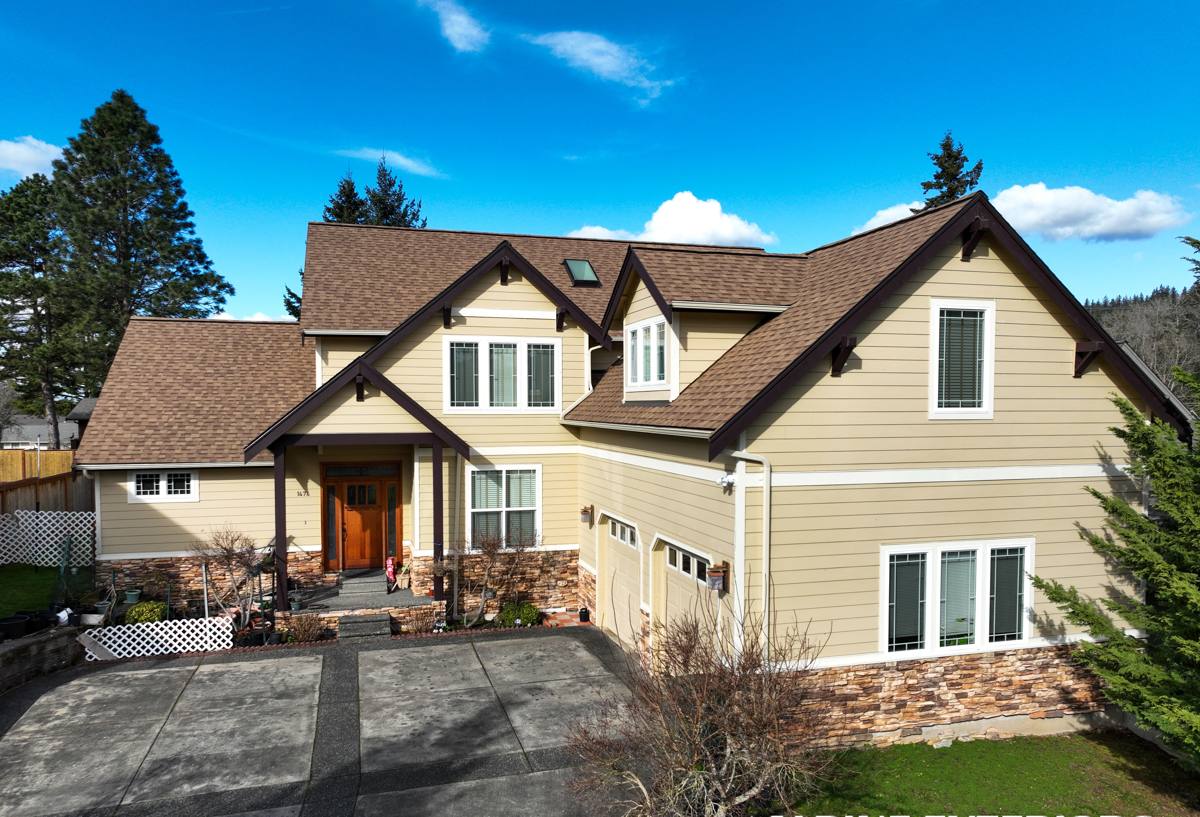
Sudden Valley sits in a wooded, hillside setting along Lake Whatcom, just outside Bellingham in Whatcom County. It's one of the more distinct pockets of our service area — mature tree canopy, sloped lots, and a lot of homes positioned to take in lake or forest views from a deck or elevated porch. That setting is part of why people live there, but it also means a deck built here faces different conditions than one built on an open, sunny lot closer to downtown Bellingham.
Heavy tree cover keeps decks shaded and damp for long stretches of the year. Combined with Western Washington's driving rain and a moss season that can run from fall through spring, that shade turns into a real maintenance and structural issue if the deck wasn't built with it in mind. We've built and repaired enough decks in this neighborhood to know which details matter here and which corners get cut on decks that fail early.
What Makes Sudden Valley Different from a Typical Bellingham Lot
Three things come up again and again on Sudden Valley properties:
- Tree canopy that limits direct sun on the deck surface for most of the day, slowing drying time after rain
- Sloped or terraced lots that call for taller support posts, deeper footings, or stepped framing
- Proximity to Lake Whatcom, which adds humidity to the air even on days without rain
None of these are unusual on their own. Together, on the same property, they mean a deck here needs more attention to drainage, airflow underneath the structure, and material selection than a deck built on a flat, open lot in town.
How the Climate Actually Attacks a Deck
It helps to understand the failure pattern before talking about how to prevent it. Moisture doesn't usually rot a deck by sitting on top of the boards — it gets in through the parts you can't see.
Moss and Standing Moisture
Shaded decking holds moisture longer after rain, and moss takes hold anywhere organic debris — needles, leaf litter, pollen — collects and stays wet. Moss itself isn't just cosmetic; it holds water against the board surface, which accelerates wood decay and makes the surface slick and unsafe underfoot.
Hidden Rot at Connection Points
The ledger board (where the deck attaches to the house), the tops of support posts, and joist ends are where water gets trapped against wood fibers and stays there. A deck can look fine on the surface for years while these connection points quietly rot, because they're covered by decking boards or flashing that was installed without enough attention to water flow.
Fastener Corrosion
Damp, salt-tinged marine air moving up from Bellingham Bay and constant humidity near the lake both accelerate corrosion on cheap or mismatched fasteners. Once a fastener corrodes and weakens, it can fail long before the wood around it shows obvious damage.
Material Choices That Make Sense for a Shaded, Wet Lot
There's no single "best" decking material for every situation — it depends on how much sun the deck gets, how much upkeep the homeowner wants to do, and budget. Here's how the common options actually perform in a shaded, moss-prone Whatcom County setting:
| Material | Moss/Moisture Behavior | Maintenance | Typical Lifespan Here |
|---|---|---|---|
| Pressure-treated fir/pine | Absorbs moisture readily; needs sealing to resist moss and rot | Annual cleaning and re-sealing recommended in shaded areas | 10-15 years with upkeep |
| Cedar | Naturally more rot-resistant, but still needs cleaning where shaded | Periodic cleaning and oil/stain | 15-20 years with upkeep |
| Composite decking | Doesn't absorb moisture into the board itself, but surface algae/moss can still grow on grain-textured caps | Occasional washing; no sealing or staining | 25+ years, varies by manufacturer warranty |
| PVC decking | Fully moisture-resistant board material; surface can still need washing in heavy shade | Low — washing only | 25+ years, varies by manufacturer warranty |
We don't push one material as universally correct. What we do insist on is matching the material to the actual sun exposure of that specific deck. A composite board on a mostly-shaded Sudden Valley lot still needs occasional washing — no decking material is maintenance-free under a tree canopy — but it removes the wood-absorption and rot variable that causes most early failures in this kind of setting.
What a Properly Built Deck Involves Here
Regardless of which decking material a homeowner chooses, the structure underneath is what determines whether the deck lasts. This is where we see the most corner-cutting on decks we're called out to repair.
Ledger Attachment and Flashing
The ledger board needs proper flashing that directs water away from the house sheathing, not just caulk or a wrap that degrades in a few years. This single detail is behind a large share of the hidden rot we find during deck repairs and rebuilds.
Footings Sized for the Site
On sloped Sudden Valley lots, footing depth and post height often need to be engineered case-by-case rather than built to a generic flat-lot spec. Footings need to sit below frost depth and on undisturbed or properly compacted soil, which matters more on a graded hillside lot than a flat one.
Joist Protection
Joist tape or a comparable moisture barrier on top of every joist keeps water from wicking into the end grain — the most vulnerable part of any framing member. This is inexpensive at the framing stage and expensive to fix later.
Airflow Underneath
Decks built low to the ground or against a shaded foundation wall need enough clearance and, where possible, gaps or venting so air can actually move underneath. Without airflow, the underside of the deck stays damp long after the surface has dried, which is exactly the environment moss and rot need.
Fastener and Hardware Grade
Structural connectors, screws, and joist hangers should be rated for ground-contact and coastal/high-moisture exposure, not a generic interior-grade fastener. This is a small cost difference at build time and a major difference in how long the connections hold up.
Our Process for a Sudden Valley Deck Project
Because Sudden Valley has its own access considerations, tree cover, and often HOA design guidelines, we treat it as its own site visit rather than assuming it's identical to a Bellingham in-town lot.
1. Site Walk and Assessment
We look at sun exposure, slope, existing drainage patterns, and how close the deck will sit to trees or the lake-facing side of the home. If we're replacing an existing deck, we check the substructure for rot before quoting, since that often changes the scope of the job.
2. Design and Material Selection
We walk through material trade-offs honestly — what will actually need less upkeep given that specific lot's shade pattern, and what the homeowner's budget and style preferences call for. If the property is part of an HOA with design guidelines, we factor that into the plan up front rather than after materials are ordered.
3. Permitting
Deck projects above certain heights or attached to the home typically require a permit through the applicable local jurisdiction. We handle this as part of the project so the homeowner isn't left navigating it alone.
4. Build
Framing first, with ledger flashing, joist protection, and footings done to spec before any decking goes down. We don't skip the "unseen" steps to save time, because those are the steps that determine whether the deck is still solid in ten years.
5. Final Walkthrough
We walk the finished deck with the homeowner, cover basic care for whichever material was installed, and make sure everything is clean and functioning before we consider the job done.
Keeping a Sudden Valley Deck in Good Shape
A well-built deck still needs some seasonal attention in a shaded, moss-prone setting. Here's a practical maintenance checklist we give homeowners in this neighborhood:
- Sweep leaves, needles, and debris off the deck surface regularly, especially in fall
- Rinse or gently wash the surface a couple of times a year to remove early moss and algae growth before it takes hold
- Check that gaps between boards aren't clogged with debris, which traps moisture
- Inspect the ledger board area and post bases once a year for soft spots or discoloration
- Trim back overhanging branches where practical to increase sun and airflow to the deck surface
- Re-seal or re-stain wood decking on the manufacturer's or installer's recommended schedule — don't wait until it looks bad
- Check railings and stair connections for looseness, which can indicate fastener corrosion underneath
Cost Factors for a Sudden Valley Deck
Exact pricing depends on size, material, slope, and access, but the main cost drivers on a project like this are consistent:
| Factor | Why It Affects Cost |
|---|---|
| Decking material | Composite and PVC cost more upfront than wood but reduce long-term maintenance costs |
| Slope and footing depth | Sloped Sudden Valley lots often need taller posts and deeper or engineered footings |
| Site access | Wooded lots or limited driveway access can add labor time for material staging |
| Existing structure removal | Tearing out a rotted deck adds cost but is often necessary once framing is compromised |
| Railing and stair complexity | Custom railing styles, glass panels, or multi-level stairs add labor and material cost |
| Permitting requirements | Larger or higher decks may require engineering review, adding time and fees |
We give straightforward, itemized estimates so homeowners can see where the money is going rather than a single lump number.
Why Local Experience in Sudden Valley Matters
A crew that hasn't worked in Sudden Valley before is learning the neighborhood's quirks on the homeowner's dime — figuring out HOA design expectations, dealing with tight or sloped access for the first time, or under-building for the moisture load a heavily shaded lot actually sees. We've built and repaired decks throughout Bellingham and Whatcom County, and the patterns specific to Sudden Valley — the shade, the slope, the moss cycle — are ones we plan for from the first site visit rather than discovering partway through the job.
That matters most on the details nobody sees once the deck is finished: the flashing behind the ledger, the footing depth on a graded lot, the fastener grade in the framing. Those are the choices that decide whether a homeowner is looking at a deck that needs real work again in eight years or one that just needs normal seasonal care for the next two decades.
If you're planning a new deck or need to replace one that's showing rot or moss buildup, we're happy to come out, take a look at your specific lot and sun exposure, and put together a clear, no-pressure estimate. There's a form below — reach out and we'll set up a time to come take a look.