 Bellingham Siding
 Siding Installation Built for Blaine's Coastal Climate
Blaine sits about as close to the water and the wind as a Whatcom County home can get. That location is part of what makes it a great place to live, but it's hard on exterior siding. Salt-laden air off the Strait of Georgia and Semiahmoo Bay, driving rain that comes in sideways during winter storms, and a moss and mildew season that can stretch from October through April all put steady pressure on whatever material is on your walls. Siding installation here isn't just about appearance — it's about choosing a system and an installation method that can shrug off years of that exposure without warping, rotting, or breaking down at the seams.
We install James Hardie fiber cement siding exclusively. That's not a marketing angle — it's a standard we hold because we've seen what coastal Whatcom County conditions do to softer or less stable materials over time, and we don't want to hand a homeowner a siding job we know is going to give them problems in ten years.
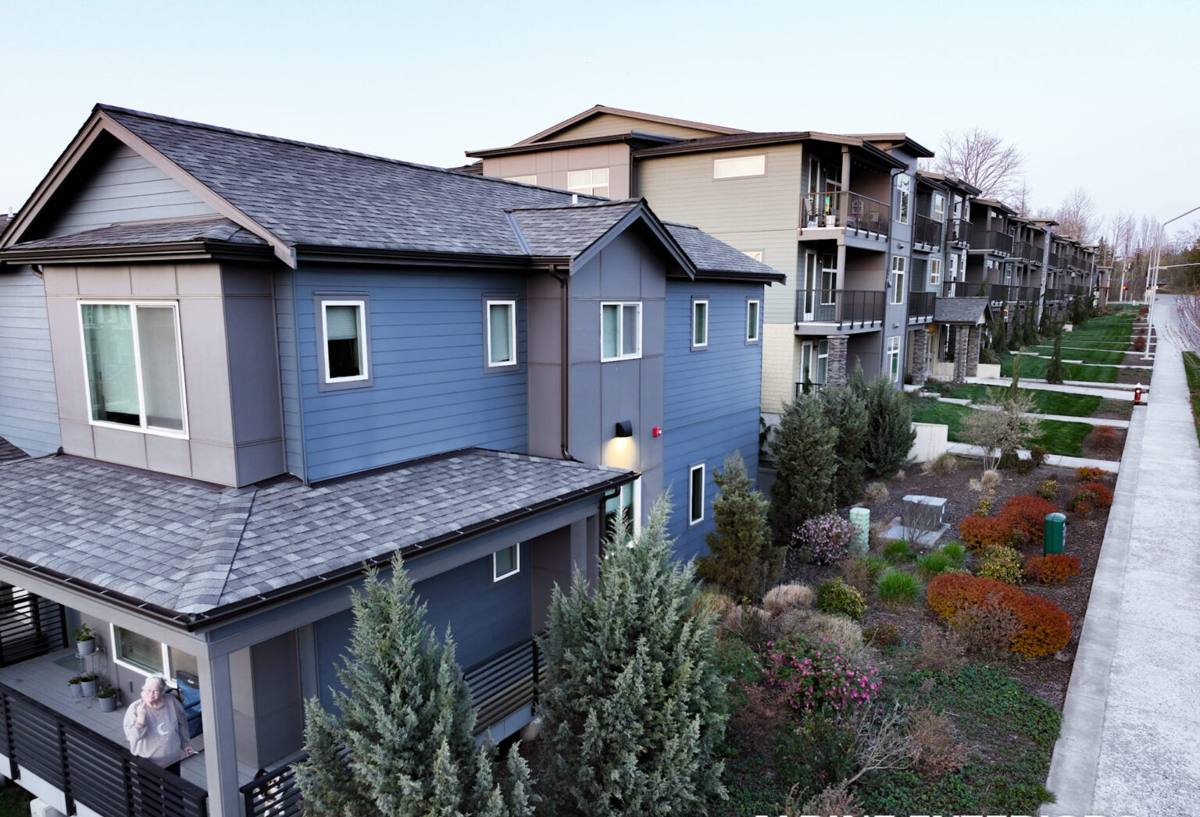
What Blaine's Environment Actually Does to Siding
Salt Air and Corrosion
Airborne salt from the Strait doesn't just affect metal fasteners and flashing — it accelerates the breakdown of certain siding finishes and can work its way into seams and joints over years of exposure. Materials that rely on paint film or factory coatings not engineered for marine air tend to chalk, fade, and lose their protective seal faster near the water than they would ten or twenty miles inland.
Driving Rain and Wind-Driven Moisture
Blaine's exposure to open water means storms often arrive with real horizontal force behind the rain. That kind of wind-driven moisture finds every gap in a siding installation — poorly lapped joints, under-caulked penetrations, missing or undersized flashing. A siding product's inherent water resistance matters, but so does whether the installer respects manufacturer-specified overlaps, gaps, and drainage planes. Most siding failures we get called out to investigate trace back to installation shortcuts, not the material itself.
The Long Moss Season
Whatcom County's wet season is long, and Blaine's proximity to the water keeps humidity elevated even on drier days. Moss, algae, and mildew take hold on surfaces that stay damp and shaded, especially on north-facing walls and under roof overhangs. Siding that absorbs moisture rather than shedding it stays damp longer, which gives organic growth more of a foothold and can eventually contribute to material breakdown underneath.
Why We Install James Hardie Fiber Cement in Blaine
James Hardie's HZ5 product line is engineered specifically for the kind of climate exposure the Pacific Northwest delivers — freeze-thaw cycling, sustained moisture, and coastal humidity. Fiber cement itself is a mix of cement, sand, and cellulose fibers, which makes it dimensionally stable: it doesn't expand and contract with moisture the way wood-based products do, and it won't rot, delaminate, or feed pests. That stability matters enormously in a place where the siding is wet more often than it's dry for half the year.
The ColorPlus factory finish is also relevant here. It's baked on in a controlled environment rather than field-applied, which gives it more consistent coverage and better adhesion than site-applied paint — an advantage in an area where UV exposure and salt air both work against paint longevity. Hardie backs the product with a strong transferable warranty, which matters to homeowners who may sell within the warranty period.
None of this means Hardie siding is maintenance-free or immune to Blaine's climate. It still needs to be installed correctly, caulked and flashed properly, and kept clean of moss and debris. But it starts from a material baseline that's built to take the punishment this location delivers, rather than one that's fighting the climate from day one.
Fiber Cement vs. Other Common Siding Materials in a Marine Climate
| Factor | James Hardie Fiber Cement | Vinyl | Wood / Engineered Wood |
|---|---|---|---|
| Moisture response | Dimensionally stable, does not swell or rot | Doesn't absorb water but can warp with heat/cold cycling | Absorbs moisture; prone to swelling and rot over time |
| Salt air durability | Engineered coastal-rated line (HZ5) | Can become brittle and fade faster near salt air | Finish breaks down faster; more frequent recoating needed |
| Fire resistance | Non-combustible | Combustible, can melt or deform | Combustible |
| Finish longevity | Factory-baked ColorPlus finish | Color molded in, but can fade and chalk | Field-applied paint/stain, needs regular upkeep |
| Pest resistance | Not a food source for insects | Not a food source, but seams can trap moisture insects exploit | Vulnerable to insects and wood-decay fungi |
What a Correct Siding Installation Involves
The material is only half the equation. A siding job done right in a place like Blaine follows a specific sequence, and skipping steps is exactly what leads to premature failures we get called to fix.
Tear-Off and Substrate Inspection
Before new siding goes up, the old material comes off and the sheathing underneath gets inspected. Hidden moisture damage or rot from years of wind-driven rain intrusion needs to be found and repaired before anything new is installed over it — covering up a problem doesn't fix it.
Weather-Resistive Barrier
A properly lapped weather-resistive barrier goes over the sheathing, giving the wall assembly a drainage plane behind the siding. In a high-rain, high-wind coastal location, this layer is doing real work, not just checking a code box.
Flashing at Every Penetration
Windows, doors, vents, and any other wall penetration need proper flashing integrated with the weather barrier so water is directed out and away from the structure, not behind the siding. This is one of the most common places we find shortcuts on prior installations.
Correct Fastening and Clearances
James Hardie specifies fastener type, spacing, and clearances above grade, decks, and roof lines for a reason — those details are what let the system perform as engineered. Panels installed with the wrong fasteners or without proper ground clearance are more vulnerable to moisture wicking, which matters a lot given how much of the year Blaine spends wet.
Caulking and Sealant at Joints
Every butt joint, corner, and trim intersection needs the right sealant applied correctly. In a climate with sustained wind-driven rain, this is where water intrusion starts if it's rushed or skipped.
Our Process for a Blaine Siding Installation
- On-site assessment of your current siding, sheathing condition, and any moisture or rot concerns specific to your home's exposure
- Product and color selection from Hardie's HZ5 lines and ColorPlus finish options suited to Blaine's coastal exposure
- Detailed written estimate covering tear-off, substrate repair if needed, materials, and installation
- Removal of old siding and inspection/repair of sheathing before anything new goes up
- Installation of weather-resistive barrier, flashing, and Hardie panels or lap siding to manufacturer specification
- Final walkthrough so you know what was done and what ongoing care, if any, the siding needs
Why Hiring a Crew That Already Works in Blaine Matters
Siding installation isn't identical everywhere in Whatcom County. A crew that mostly works drier, more sheltered inland jobs may not think as carefully about wind-driven rain details or salt air exposure as one that regularly works close to the water. Knowing how a specific coastal location behaves — which walls take the worst weather, how moss tends to establish itself locally, what kind of moisture problems tend to show up in homes near the Strait — shapes decisions on flashing, clearances, and sealant that don't always show up in a generic installation manual.
There's also a practical side: a crew already familiar with Blaine's permitting expectations and typical home construction in the area can move through a project more efficiently, with fewer surprises once tear-off begins.
Signs Your Blaine Home May Need New Siding
- Visible warping, buckling, or gaps between siding panels
- Persistent moss or algae growth that returns quickly after cleaning
- Soft or spongy spots when pressed, especially near the bottom of walls or under windows
- Peeling or bubbling paint that keeps recurring in the same spots
- Visible cracking, especially around corners and butt joints
- Rising energy bills that may point to a compromised weather barrier behind the siding
- Siding that's original to a home built more than 20-25 years ago, nearing or past its expected service life
What to Expect Cost-Wise
Siding installation cost depends on the size and shape of your home, the amount of trim and detail work, whether tear-off reveals sheathing repairs, and which Hardie product line and finish you choose. We won't quote a number without seeing the home, but we'll give you a clear, itemized estimate before any work starts, so there are no surprises once tear-off begins.
If you're considering new siding for a Blaine home, we're happy to take a look and walk you through what your specific home needs. Reach out for a free, no-pressure estimate using the form below.