 Bellingham Siding
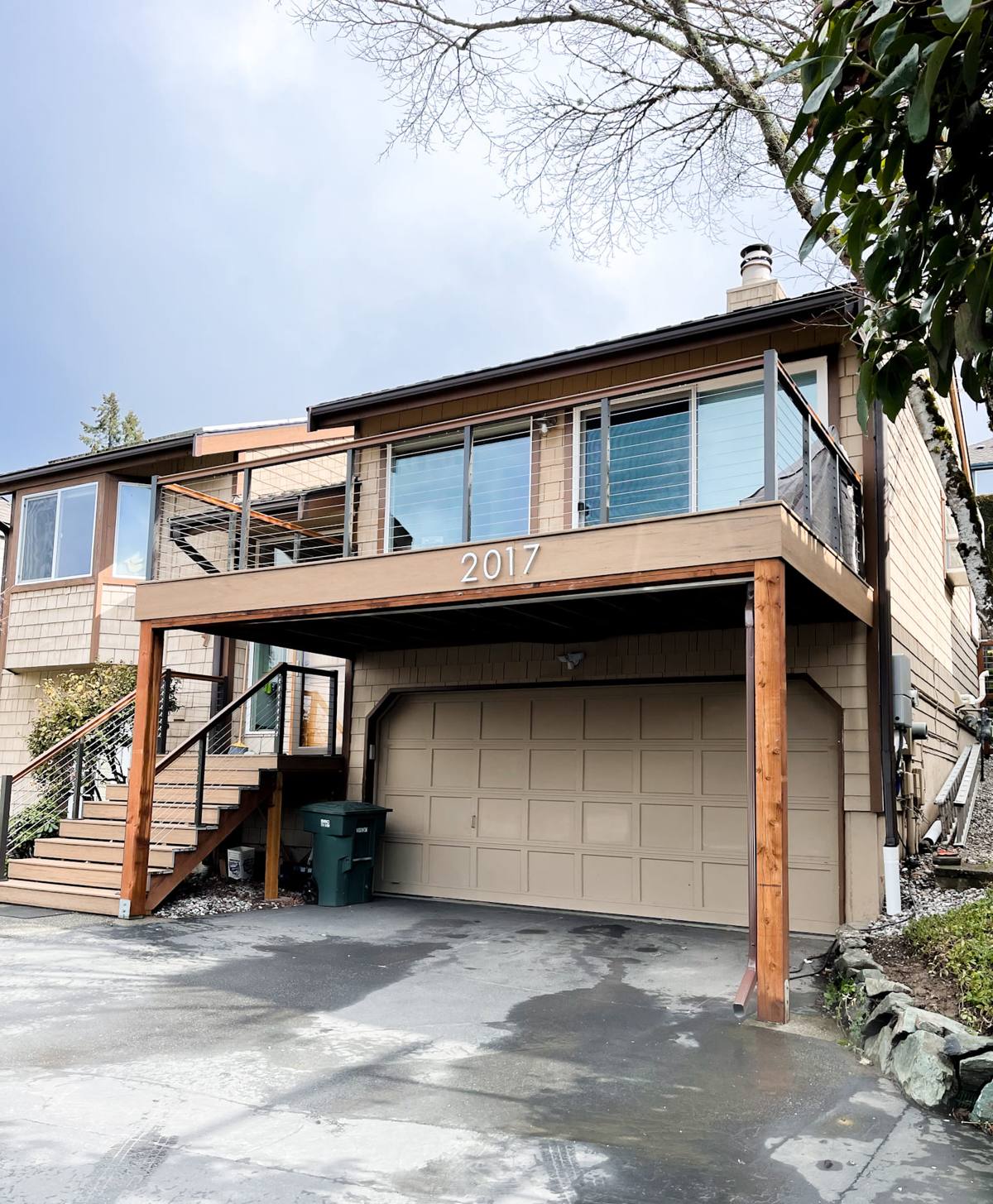
 Composite Decking Built for Sudden Valley's Wooded, Lakeside Setting
Sudden Valley sits in a different microclimate than a lot of Bellingham. The tree canopy around Lake Whatcom holds moisture close to the ground, keeps shade on decks for large parts of the day, and slows down the drying that a more open, sun-exposed yard would get after a storm rolls through. That combination — shade, moisture, and Whatcom County's wet season stretching from fall through spring — is exactly the environment where a poorly built deck shows problems first: soft spots, green film on the boards, fasteners that back out, and rot at the ledger where the deck meets the house.
Composite decking, installed correctly for this setting, holds up to that pattern far better than untreated or even pressure-treated wood. But "composite" isn't a single product with one set of rules. How it's framed, ventilated, and fastened matters as much as the brand of board on top. This page covers what a Sudden Valley composite deck actually needs, what a correct install looks like, and how we approach the job.
What Bellingham's Climate Does to a Deck Over Time
Moss and Shade
Whatcom County's moss season is long — moss and algae don't need much more than shade, moisture, and organic debris (fir needles, leaves, pollen) to get established. On a shaded Sudden Valley lot, a deck surface can stay damp for days after rain simply because it doesn't get direct sun to dry it out. Moss and algae growth on a walking surface isn't just cosmetic — it gets slick, and on wood decking it traps moisture against the board, accelerating rot underneath the growth.
Driving Rain and Standing Water
Wind-driven rain off the water and through the trees doesn't just fall straight down — it gets pushed sideways into gaps, under rail bases, and around post connections. If a deck's drainage plane and flashing details aren't right, that water finds its way into the framing instead of running off the surface. Standing water in low spots on the decking itself is the other half of the problem: any board that ponds water, even composite, will show staining, growth, and eventually surface degradation faster than one that sheds it.
Marine Air and Metal Fasteners
Bellingham's proximity to the Salish Sea puts a mild marine influence on air quality across Whatcom County, and that moisture-laden air is part of why untreated fasteners and hardware corrode faster here than they would in a drier inland climate. Every screw, bracket, and post base on a deck needs to be rated for exterior, corrosion-resistant use — not just standard interior-grade hardware.
Why Composite Makes Sense for This Setting
We install composite decking on the majority of the deck jobs we do in Whatcom County, and Sudden Valley's shaded, moisture-heavy lots are a good example of why. Composite boards don't absorb water into the wood grain, don't need annual staining, and resist the surface growth that wood decking picks up fast under tree cover. That said, composite isn't maintenance-free — it still needs to be cleaned, and it still depends entirely on the framing and drainage underneath it being done right. A composite deck built on a poorly ventilated, poorly flashed substructure will trap moisture just as badly as a wood deck would; the boards on top don't fix bad framing.
| Factor | Wood Decking | Composite Decking |
|---|---|---|
| Moss/algae resistance | Absorbs moisture into grain; grows moss and algae readily in shade | Non-porous surface resists growth; still needs periodic cleaning |
| Annual maintenance | Cleaning, sanding, and staining or sealing most years | Occasional wash-down; no staining or sealing required |
| Splintering/cupping | Common as boards weather and dry unevenly | Not prone to splintering; quality boards resist cupping |
| Upfront material cost | Lower | Higher |
| Typical lifespan with correct install | 15–20 years with regular upkeep | 25–30+ years, backed by manufacturer warranty |
| Fastener/hardware needs | Standard exterior-rated fasteners | Manufacturer-specific hidden fastener systems, still corrosion-rated |
What a Correct Composite Deck Install Involves
Substructure and Framing
The framing is where most deck failures actually start, regardless of what decking material sits on top. Joists need to be sized and spaced for the specific composite product going down — composite boards generally call for tighter joist spacing than wood decking, and manufacturers publish exact span tables that we follow rather than guess at. Joist tape or another moisture barrier on top of the joists keeps standing water off the wood framing itself, which matters more in a shaded, slow-to-dry lot than it would in full sun.
Drainage and Ventilation
Under-deck airflow is what lets the substructure actually dry between rain events. On lots with heavy tree cover, we pay extra attention to skirting design, gaps at the perimeter, and grading underneath the deck so water has somewhere to go instead of pooling against posts and footings. Ledger flashing where the deck attaches to the house is non-negotiable — this is one of the most common failure points on older decks we're asked to repair or replace.
Fastening and Trim
Hidden fastener systems keep the deck surface free of exposed screw heads, which also means fewer points where water can sit and work its way into the board. All fasteners, brackets, and post hardware need to be stainless steel or otherwise rated for coastal/marine exposure — standard galvanized hardware corrodes faster under Whatcom County's moisture levels than most homeowners expect.
Board Selection
Not every composite board is built the same. Capped composite boards (with a protective outer shell) handle moisture and staining better than uncapped boards, and that difference shows up faster on a shaded lot than a sunny one. We'll walk through board options, color, and grain pattern with you and explain the real trade-offs — we're not going to sell you the most expensive option if a mid-tier capped board is the right fit for your deck and budget.
Our Process, Start to Finish
- On-site walkthrough — we look at the existing deck or the build site, the tree cover, drainage slope, and how the deck connects to the house.
- Written estimate — clear scope, materials, and price, no vague allowances.
- Framing and structural work — including any ledger, footing, or joist repairs needed before decking goes down.
- Moisture barrier and drainage detailing — joist tape, flashing, and skirting/vent planning specific to the site.
- Decking installation — hidden fastener systems, correct board spacing for expansion, and clean trim work.
- Final walkthrough — we go over the finished deck with you and cover basic care before we leave.
Maintenance: What Sudden Valley Homeowners Actually Need to Do
Composite cuts down maintenance significantly, but "low maintenance" isn't "no maintenance," especially under tree cover. A little seasonal attention keeps a composite deck looking and performing the way it should for decades.
- Sweep off leaves, fir needles, and pollen regularly — organic debris left sitting is what feeds moss and algae growth on any surface, composite included.
- Wash the deck surface once or twice a year with a soft-bristle brush and a mild soap-and-water solution or a composite-safe cleaner; avoid pressure washing at close range, which can damage the board's outer shell.
- Check under-deck skirting and vents periodically to make sure they haven't been blocked by debris or plant growth.
- Inspect railing posts and stair connections once a year for looseness — hardware can shift slightly as the structure settles.
- Trim back overhanging branches where practical to give the deck more light and airflow, which cuts down moss buildup significantly.
- Address any standing water or slow-draining spots right away rather than waiting for it to become a bigger problem.
Why Hiring a Crew That Already Works Sudden Valley Matters
A deck built for a sunny, open lot in another part of Whatcom County doesn't need the same drainage and ventilation detailing as one built under Sudden Valley's tree canopy near Lake Whatcom. A crew that's worked this community before knows to plan for shade, slower drying times, and the moss and moisture pressure that comes with it — instead of building to a generic spec and letting the homeowner find out the hard way what the local climate does to it. That local familiarity also matters for permitting, HOA or community guidelines that may apply to exterior work in Sudden Valley, and simply knowing what durable, correctly built decks in this area actually look like a few years in.
We're a Bellingham-based crew that works throughout Whatcom County, and Sudden Valley's lakeside, wooded lots are a setting we build for regularly. We're not guessing at what holds up here — we're building to what we've seen work.
Getting Started
If you're planning a new composite deck or replacing one that's showing its age, we're happy to come take a look, walk the site with you, and put together a clear, honest estimate — no pressure, no obligation. Use the form below to get started.