 Bellingham Siding
 Why Siding Repair Looks Different in Puget
Homes in the Puget area of Bellingham sit close enough to the water and the weather patterns coming off Bellingham Bay that siding takes a beating most inland Whatcom County neighborhoods never see. Salt-laden air corrodes fasteners and finishes faster than dry-climate wear ever would. Driving rain — the kind that comes in sideways during a fall or winter system — finds every gap in flashing, caulk, and lap joints. And the long, damp moss season here means anything wood-based or poorly ventilated stays wet longer than it should, which is exactly what rot and mold need to get started.
That combination is why a siding repair that would hold up fine in a drier part of the state can fail again within a year or two here. Fixing Puget siding correctly means understanding what's actually causing the damage, not just patching what's visible.
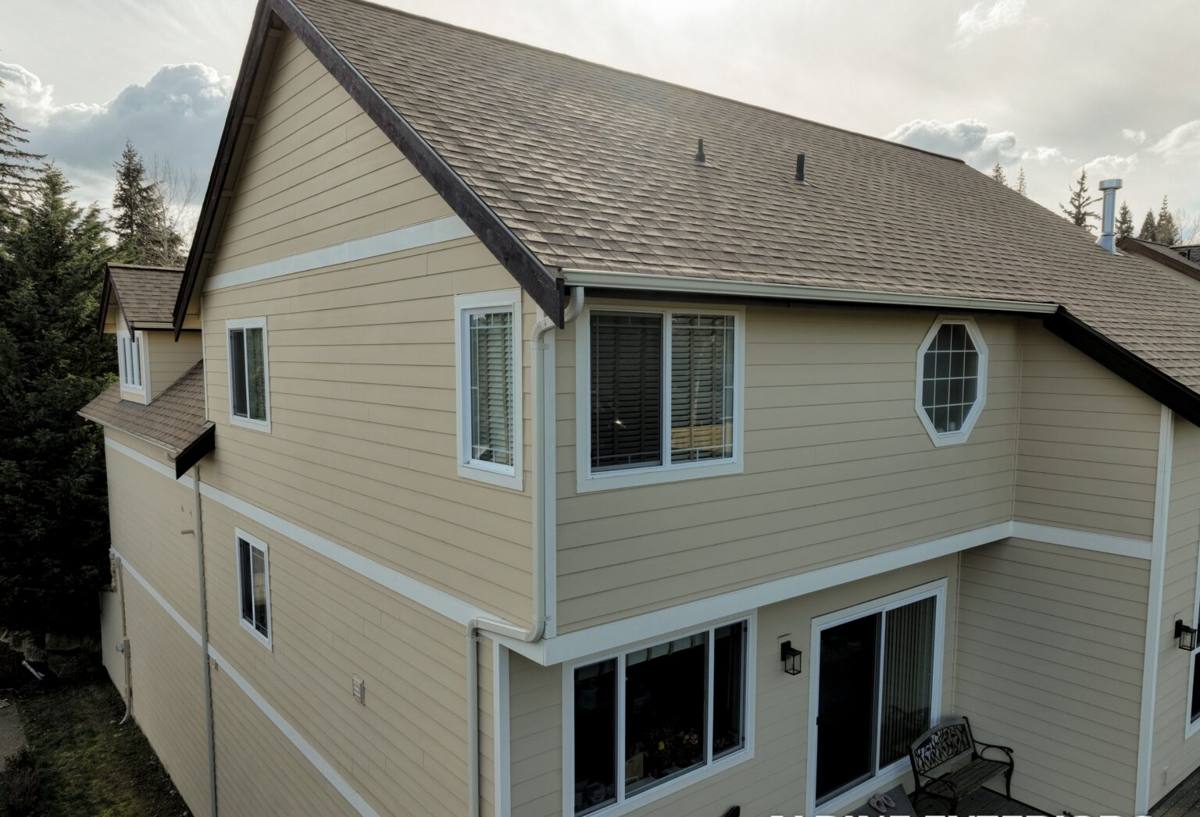
Signs Your Siding Needs Attention
Most siding problems in this area start small and stay hidden behind the surface until they're expensive. Catching them early is the difference between a repair and a full section replacement.
- Soft or spongy spots when you press on the siding, especially near the bottom courses and around windows
- Peeling, bubbling, or chalky paint that keeps coming back after repainting
- Visible moss or dark green-black staining that returns within months of cleaning
- Gaps opening up at seams, corners, or where siding meets trim
- Warped, cupped, or bowed boards, particularly on north- and west-facing walls
- Rust streaking from nail heads or fastener corrosion
- A musty smell in an interior wall near an exterior wall with none of the above visible yet
If you're seeing more than one of these at once, it usually means moisture has been getting behind the siding for a while, not just sitting on top of it.
What's Actually Driving the Damage
Salt air and fastener corrosion
Proximity to Bellingham Bay means airborne salt settles on exterior surfaces year-round, not just during storms. Standard fasteners and unprotected metal flashing corrode faster here than the same materials would fifty miles inland. Corroded nails lose their grip, which lets siding boards shift, crack their caulk lines, and open new paths for water.
Driving rain and wind-driven moisture
Bellingham's storms often come with enough wind to push rain sideways into joints and laps that were only ever designed to shed water moving straight down. Repairs that don't account for wind-driven rain — replacing a board without correcting the flashing or house wrap behind it — tend to fail again in the same spot during the next big system.
Moss season and prolonged dampness
Whatcom County's moss season can stretch for months. Moss holds moisture directly against the siding surface, which keeps that section wet far longer than the rest of the wall. On wood-based products this accelerates rot; on any material it accelerates coating breakdown and creates conditions for mold behind the siding if water is finding its way in.
What a Correct Repair Actually Involves
A repair that only replaces the damaged board and stops is treating the symptom. A repair that lasts in this climate goes a step further.
Diagnosis before demolition
Before pulling anything, we check how far the damage extends — is it isolated to the visible board, or has water tracked behind adjacent panels and into the sheathing? Pulling one board and finding soft sheathing underneath changes the scope of the job, and it's better to know that before quoting the work than after.
Fixing the water path, not just the symptom
If the failure was caused by a flashing gap, a caulk joint that opened up, or house wrap that was cut wrong around a penetration, replacing the siding without correcting that source just resets the clock on the same failure.
Matching materials honestly
Where we can match existing siding closely enough that a repair looks clean, we will. Where the existing material is discontinued, badly faded, or a product we don't stand behind for long-term performance, we'll tell you plainly and lay out the honest options rather than force a mismatched patch that looks worse than the damage did.
Fastening and sealing for this environment
Given the salt air here, fastener choice matters more than it would elsewhere in the state. We use corrosion-resistant fasteners and detail joints so wind-driven rain doesn't have an easy path back in.
Repair or Replace: How to Decide
Not every damaged section needs full replacement, and not every "just patch it" job is the right call either. These are the factors that actually drive the decision.
| Factor | Leans Toward Repair | Leans Toward Replacement |
|---|---|---|
| Extent of damage | Isolated to one or two boards/panels | Spread across a wall or multiple elevations |
| Sheathing condition | Dry and solid behind the damaged area | Soft, stained, or already rotting |
| Age of existing siding | Still within its expected service life | Nearing or past it, with widespread wear |
| Material match availability | Close match available, joint will be clean | Discontinued or badly faded, patch would stand out |
| Root cause | Isolated event (impact damage, one bad flashing detail) | Systemic moisture or design issue affecting the whole wall |
We'll walk through this with you honestly on site. If a repair genuinely solves the problem, that's what we'll recommend — we don't upsell replacement work that isn't needed.
Our Repair Process
- On-site inspection. We look at the visible damage and check adjacent areas, corners, and penetrations for related issues before scoping the job.
- Honest scope and quote. You get a clear explanation of what's damaged, why, and what fixing it correctly requires — including if we find something worse once we open it up.
- Remove and inspect behind. Damaged siding comes off carefully so we can check sheathing, house wrap, and flashing before anything goes back on.
- Correct the water path. Flashing, wrap, and sealant details get fixed, not just covered over.
- Install and finish. New material goes in matched as closely as possible, fastened and sealed for this climate, and finished to blend with the surrounding wall.
Why Material Choice Matters on a Repair, Not Just a New Install
We install James Hardie fiber cement siding exclusively on full jobs, and that standard shapes how we think about repairs too. When a repair calls for replacing enough of a wall that a material decision is actually on the table — rather than a small patch to existing siding — we'll tell you what we see in the field: engineered wood products and vinyl tend to show the effects of this climate faster than fiber cement does, particularly with the moisture exposure and moss coverage common in this area. Hardie's HZ5 product line is engineered specifically for climates like ours, its ColorPlus factory finish resists the fading and peeling that repeat cleaning and repainting cycles cause, and it doesn't feed rot the way wood-based siding can.
That doesn't mean every repair turns into a full Hardie install — plenty of repairs are legitimately small and don't call for that. But when a homeowner is deciding whether to keep patching an aging wall or address it properly, we'll give you a straight answer based on what we're actually seeing on your house, not a sales pitch.
Why a Crew That Knows Puget Matters
Siding repair mistakes in this climate are usually invisible for a while — a repair that looks fine on install day but was never sealed against wind-driven rain, or a board that was replaced without checking whether moss had already worked moisture into the sheathing behind it. A crew that works Bellingham and Whatcom County regularly has already seen how salt air, driving rain, and moss season show up on local homes, and knows to check for it rather than treat this as a generic siding call.
Keeping Repaired Siding in Good Shape
Once a section is repaired correctly, a little seasonal attention keeps it that way:
- Rinse moss and algae buildup off before it has a chance to hold moisture against the surface for months
- Check caulk lines at joints, corners, and trim once a year and re-seal anything that's cracked or pulled away
- Keep gutters and downspouts clear so runoff isn't sheeting down the siding face
- Trim back vegetation that's shading a wall and keeping it damp longer than the rest of the house
- Walk the exterior after major storms and note any new soft spots or gaps early, while they're still a small fix
If you're seeing soft spots, moss that won't stay gone, or siding that's opening up at the seams on a Puget-area home, we're happy to take a look and give you a straight read on what's going on and what it'll take to fix it right. Request a free, no-pressure estimate below.