 Bellingham Siding
 Why Birchwood Homes Need Siding Built for This Exact Climate
Birchwood sits close enough to the water and the low-lying drainage patterns of Bellingham that its homes take on a specific combination of punishment: salt-laden air moving in off the Sound, long stretches of driving rain through fall and winter, and a moss season that can run eight months or longer on north- and east-facing walls. None of these on their own is unusual for Whatcom County. Together, on the same wall, they add up to siding that has to resist corrosion, shed water aggressively, and tolerate being damp more often than dry for a good chunk of the year.
That combination is exactly where cheaper siding products start to show their weaknesses first — usually at seams, fastener points, and lower courses near grade. Fiber cement siding, installed correctly, is built to handle that load. This page covers what that actually means for a Birchwood home, not in generic terms, but in terms of what we look at, what we install, and why.
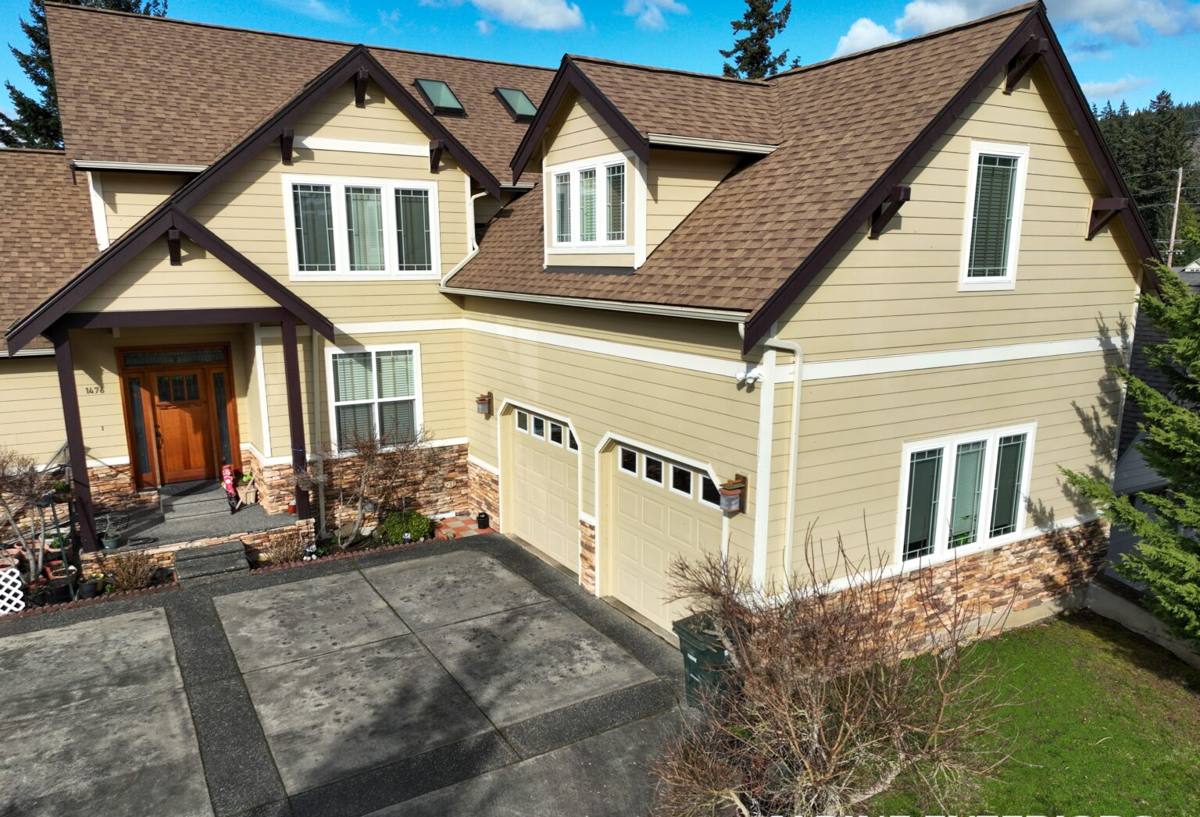
What Salt Air, Rain, and Moss Actually Do to Siding
Salt Air
Airborne salt is corrosive to metal fasteners, flashing, and trim, and it can accelerate finish breakdown on painted wood and some composite products. It doesn't take a beachfront lot to be affected — moisture carries salt further inland than most homeowners expect, especially on exposed or elevated sites around Bellingham.
Driving Rain
Wind-driven rain doesn't just wet a wall — it forces water sideways and upward under laps, around penetrations, and into any gap in the water-resistive barrier. A siding system is only as good as its weakest joint in this kind of weather, which is why lap coverage, caulking discipline, and flashing details matter more here than in a drier climate.
Moss Season
Extended damp periods with limited direct sun let moss and algae establish on siding surfaces, especially on north-facing walls, under eaves, and near landscaping that holds moisture close to the house. Moss retains water against the siding surface, which is a problem for any product that can absorb or swell with prolonged moisture exposure.
Why We Install Only James Hardie Fiber Cement
We standardized on James Hardie fiber cement siding for every home we side, including in Birchwood, and we don't install LP SmartSide, vinyl, Cemplank, Allura, primed spruce, or cedar. That's not a marketing position — it's a decision based on what holds up under the specific conditions described above, and what we're willing to warranty our workmanship against.
Fiber cement is a mix of cement, sand, and cellulose fibers, engineered to be dimensionally stable and non-combustible. James Hardie's HZ5 product line, in particular, is engineered for the wetter, freeze-thaw-influenced climate zones the Pacific Northwest falls into — it's not a one-size-fits-all product pulled from a warmer market. Combined with a factory-applied ColorPlus finish, it resists the moisture absorption, swelling, and coating breakdown that lower-grade materials are more prone to in a climate that stays damp for months at a stretch.
We're not going to tell you other products are junk — some of them have real advantages in the right application. What we will say is that after years of doing exterior work in this county, the trade-offs on the alternatives (moisture sensitivity, coating maintenance, installation forgiveness, warranty structure) aren't ones we're willing to put our name behind here. Hardie is what we put on the wall.
What a Correct Fiber Cement Installation Involves
The material is only half the equation. A large share of the siding failures we get called out to inspect in this area trace back to installation shortcuts, not the product itself. For a Birchwood home, we pay particular attention to:
- Proper weather-resistive barrier installation and correct lapping sequence, sealed and shingled so water sheds down and out, never trapped behind the cladding
- Flashing at every horizontal trim board, window head, and roof-to-wall intersection — the details wind-driven rain finds first
- Correct fastener spacing, depth, and placement per James Hardie's published installation instructions, using corrosion-resistant fasteners suited to a salt-air environment
- Minimum ground clearance and proper drainage planes so lower courses aren't sitting in splash-back moisture
- Caulking only where James Hardie specifies it — over-caulking traps moisture just as badly as under-caulking lets it in
- Proper joint treatment at butt seams so cut ends are sealed and protected, not left absorbing water at every joint
James Hardie's warranty coverage assumes installation to their written specifications. Skip a step and you're not just risking a callback — you're risking the warranty itself, which is one more reason installation quality matters as much as the product choice.
Comparing Common Siding Choices for This Climate
| Factor | James Hardie Fiber Cement | Vinyl | Wood (cedar/spruce) |
|---|---|---|---|
| Moisture behavior | Engineered non-combustible, low moisture absorption with ColorPlus finish | Doesn't absorb, but can warp and gap, letting water behind it | Absorbs moisture readily; prone to rot in extended damp seasons |
| Salt air resistance | Stable; factory finish resists breakdown | Can chalk and become brittle over time | Finish breaks down faster; needs frequent recoating |
| Moss/algae resistance | Dense material resists surface breakdown; can be gently cleaned | Surface can host growth in seams and laps | Porous surface holds moisture, encourages growth |
| Maintenance | Occasional wash; repaint interval measured in decades with ColorPlus | Low, but cracks/fades and is hard to color-match later | Regular painting/staining, caulking, and rot inspection |
| Fire resistance | Non-combustible core material | Combustible, can melt or deform near heat sources | Combustible |
This is a general comparison, not a claim that every vinyl or wood installation fails — it's an honest picture of the trade-offs we weigh, and why fiber cement wins that comparison for the conditions Birchwood homes face.
Our Process for a Birchwood Siding Project
1. On-Site Assessment
We walk the exterior and note moisture patterns specific to the lot — which walls stay damp longest, where moss is already established, where existing trim or flashing is failing, and how the site drains around the foundation.
2. Scope and Product Selection
We talk through James Hardie's plank profiles, textures, and ColorPlus color options, and recommend the HZ5 product line appropriate for this climate zone. We explain what's included — trim, flashing, fasteners — so there's no ambiguity in the estimate.
3. Tear-Off and Substrate Check
Old siding comes off, and we inspect the sheathing underneath for existing rot or moisture damage before anything new goes up. Hiding a bad substrate under new siding just moves the problem a few years down the road.
4. Weather Barrier and Flashing
This is the step that matters most in a driving-rain climate. We install and lap the weather-resistive barrier correctly and flash every penetration and horizontal trim intersection before a single piece of siding goes up.
5. Installation to Manufacturer Spec
Fastening, spacing, clearances, and joint treatment follow James Hardie's written installation guidelines, which is also what keeps the manufacturer's warranty intact.
6. Final Walkthrough
We review the finished work with the homeowner, cover basic care (an occasional gentle wash handles most moss and salt residue), and make sure any warranty paperwork is in hand.
Why a Crew That Already Works Birchwood Matters
Siding crews that mostly work drier inland climates sometimes bring installation habits that don't hold up here — under-flashed trim, caulk used as a substitute for proper drainage details, or fastener choices that aren't rated for salt exposure. A crew that regularly works Birchwood and the surrounding Bellingham neighborhoods has already seen which walls take the worst of the weather and adjusts the installation accordingly, instead of treating every job the same way regardless of exposure.
That local pattern recognition — knowing which elevations need extra attention to flashing, which lots hold moisture longest, where moss takes hold first — isn't something a spec sheet teaches. It's the difference between siding that looks good for a season and siding that performs for decades in Whatcom County's specific weather.
What Homeowners Should Ask Before Hiring
Whoever you hire for fiber cement siding in Birchwood, it's fair to ask direct questions before signing anything:
- Are you James Hardie certified or factory-trained, and can you explain the HZ5 product line specifically?
- What's your process for flashing windows, doors, and roof-to-wall intersections?
- Do you inspect and address substrate/sheathing issues before installing new siding, or just cover over what's there?
- What fasteners do you use, and are they rated for a coastal/salt-air environment?
- What warranty applies to the workmanship, separate from the manufacturer's material warranty?
A contractor who answers these clearly and specifically, without hedging, is one worth trusting with the job.
Ready to Talk About Your Birchwood Home
If your siding is showing moss staining that won't wash off, gaps or warping at the seams, or you're just planning ahead before the next wet season hits Bellingham, we're happy to take a look. We'll walk the exterior, point out what we see, and give you a straightforward estimate for James Hardie fiber cement siding — no pressure, no upsell to a product we wouldn't put on our own homes. Use the form below to request a free estimate.