 Bellingham Siding
 Asphalt Shingle Roofing Built for South Hill's Weather
South Hill sits above much of Bellingham, which means homes here catch more open exposure to wind and driving rain than properties tucked into lower, more sheltered neighborhoods. That elevation is part of what makes the area desirable — but it also means roofs take a harder hit from the weather Whatcom County is known for: long stretches of steady rain, salt-laden air moving in off Bellingham Bay, and shaded, moisture-trapping tree cover that keeps moss and algae active nearly year-round. An asphalt shingle roof that's installed correctly for this specific mix of conditions will hold up for decades. One that's installed to a generic spec, or repaired with shortcuts, tends to show problems early — soft spots, granule loss, moss creeping under the shingle edges, and leaks that show up two or three winters after the work was done.
This page is about doing that job right, specifically for South Hill homes, and specifically with asphalt shingles — still the most practical, cost-effective roofing material for most houses in this part of Bellingham when it's installed with the right underlayment, ventilation, and moss strategy.
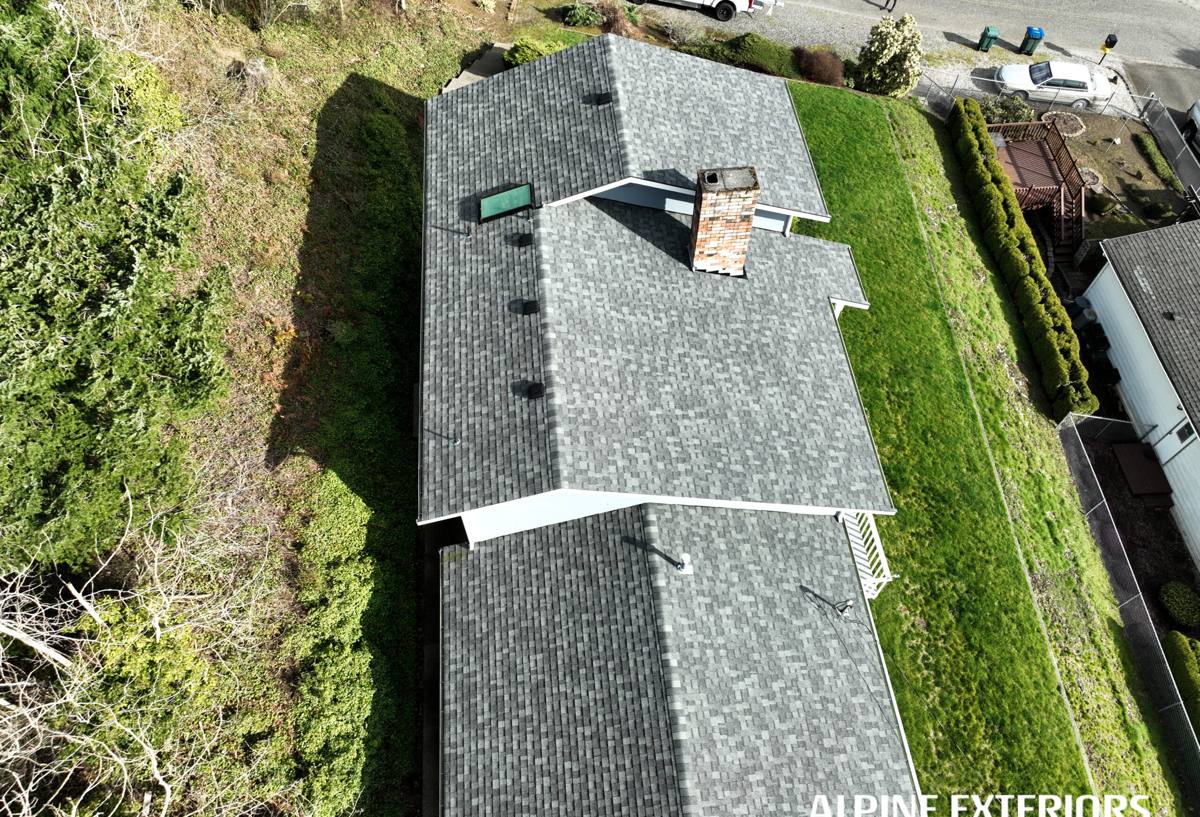
What South Hill's Climate Actually Does to a Shingle Roof
It helps to understand the specific forces at work, because they should shape every decision a roofer makes on your house.
Driving Rain and Wind Exposure
South Hill's higher, more open lots see wind-driven rain that pushes water sideways and upward under shingle edges, not just straight down. That's a different load than a sheltered valley lot deals with, and it means flashing details, nail patterns, and underlayment choices all need to account for wind-driven moisture, not just gravity.
Salt Air
Proximity to Bellingham Bay means airborne salt settles on roofing materials over time. Salt accelerates corrosion on exposed metal — flashing, nail heads, vent stacks, gutter hardware — which is why fastener and flashing material choice matters more here than it would inland.
Moss Season
Whatcom County's mild, wet winters and shaded tree cover give moss and algae a long growing season with very little dry-out time. Moss doesn't just sit on top of a shingle roof — it works into the granule surface and butt joints, holds moisture against the shingle mat, and over years that constant dampness is what actually shortens a roof's life, more than the moss itself.
What a Correctly Installed Roof Needs in This Environment
A shingle roof that's going to perform in South Hill's conditions needs several things working together — not just quality shingles laid down fast.
- Ice-and-water shield at eaves and valleys — a self-adhering membrane under the shingles in the areas most prone to wind-driven water and ice damming, not just the code minimum.
- Synthetic underlayment across the full roof — a durable, water-resistant layer beneath the shingles that gives the roof a real second line of defense if wind or moss ever gets water past the shingle surface.
- Balanced attic ventilation — intake at the eaves and exhaust at the ridge, sized correctly for the attic volume. Poor ventilation traps moisture, which speeds up sheathing rot and shortens shingle life from underneath.
- Corrosion-resistant flashing and fasteners — chosen with salt exposure in mind, especially on chimneys, sidewalls, and valleys.
- Algae-resistant (AR) shingles — shingles with copper or zinc granules mixed in, which slow algae and moss growth without changing the shingle's appearance or cost much more than standard product.
Signs a South Hill Roof Needs Attention
Most roofing problems here don't start as leaks — they start as small, visible warning signs weeks or months before water gets inside. Worth checking a couple times a year, especially after a windy winter storm:
- Moss visible along ridge lines, valleys, or the north-facing slope (the shadiest, slowest-drying areas)
- Granules collecting in gutters or at downspout outlets
- Shingle edges that look curled, cupped, or lifted
- Dark streaking (algae) across the shingle field
- Soft or spongy feel underfoot near valleys or penetrations (if safely walkable)
- Rust staining around vent stacks, chimney flashing, or nail heads
- Daylight or water staining in the attic near the roof deck
Catching these early is almost always a repair. Ignoring them for a season or two often turns into a full re-roof, because trapped moisture damages the sheathing underneath, not just the shingles.
Shingle Options: What Actually Makes Sense for This Area
Not every asphalt shingle product is worth the upgrade in cost, and not every budget option holds up here. This is a general comparison to frame the conversation — your actual roof's pitch, exposure, and structure will factor into what we recommend.
| Shingle Type | Typical Lifespan | Wind Rating | Best For |
|---|---|---|---|
| 3-Tab (standard) | 15–20 years | Lower | Budget-conscious re-roofs on sheltered, lower-exposure sections |
| Architectural / Dimensional | 25–30 years | Higher | Most South Hill homes — the standard we recommend for exposed roofs |
| Impact-Resistant / Premium | 30+ years | Highest | Homes wanting maximum durability and stronger manufacturer warranty terms |
For most South Hill properties, we steer people toward architectural shingles with an algae-resistant rating. They handle wind-driven rain better than 3-tab product, resist moss growth longer, and the cost difference over the life of the roof is modest compared to the extra years of service.
How We Approach a South Hill Roofing Job
1. Inspection and Honest Assessment
We start by getting on the roof (weather permitting) and in the attic. We're checking sheathing condition, ventilation, existing flashing, and how much of the problem is the shingles themselves versus moisture that's already gotten underneath. We'll tell you plainly if a repair is enough, or if a full replacement is the more honest long-term call.
2. Tear-Off Done Right
Full replacements get a complete tear-off to bare deck — no roofing over existing layers. That lets us inspect and repair any damaged sheathing before anything new goes down, which matters most in a climate where hidden moisture damage is common.
3. Underlayment and Flashing First
Before a single shingle goes down, the ice-and-water membrane, synthetic underlayment, and all flashing (valleys, chimneys, sidewalls, vents) are installed to handle wind-driven rain, not just vertical rainfall.
4. Shingle Installation to Manufacturer Spec
Correct nail placement, exposure, and sealing are what keep shingles locked down through Whatcom County's windier months — this is where a lot of shortcut jobs fail first.
5. Ventilation Check and Correction
If attic ventilation is undersized or unbalanced, we address it as part of the job, not as an upsell afterward.
6. Final Walkthrough
We walk the finished roof and the site with you, confirm cleanup, and explain what maintenance (if any) makes sense going forward.
Living with Moss: Realistic Maintenance for This Climate
No shingle roof in Whatcom County is fully moss-proof — the climate simply favors it too much. But there's a real difference between a roof that's set up to resist and shed moss and one that isn't. Algae-resistant shingles, proper ventilation to reduce trapped attic moisture, and keeping overhanging branches trimmed back all reduce how aggressively moss takes hold. Where trees shade a roof heavily, periodic gentle cleaning (never pressure washing, which strips protective granules) and zinc or copper strips at the ridge can help keep moss from re-establishing between full cleanings. We'll walk you through what actually makes sense for your specific roof and tree cover rather than selling a one-size-fits-all maintenance plan.
Why Local Experience in South Hill Matters
A crew that already works in this neighborhood knows its wind exposure, its shade patterns, and how differently a south-facing slope ages compared to a shaded north slope on the same street. That local knowledge shows up in the small decisions — where to add extra underlayment, which flashing details need reinforcing, how ventilation should be sized for the tree cover around a given lot. It's the difference between a roof that's technically up to code and one that's actually built for South Hill.
What's Included and What to Expect
Every asphalt shingle job we do — repair or full replacement — includes a written scope of work, manufacturer-spec installation, and a clear explanation of warranty coverage (both the manufacturer's material warranty and our workmanship coverage) before any work begins. We don't believe in vague verbal promises on something as important as your roof.
If your South Hill roof is showing moss, granule loss, or you're just due for an honest inspection, we're happy to come take a look and give you a straightforward, no-pressure estimate — use the form below to get started.