 Bellingham Siding
 Why Silver Beach Homeowners Are Rethinking Their Windows
Silver Beach is one of those Bellingham neighborhoods where the housing stock spans decades — older single-pane homes sitting a few doors down from newer construction with double-pane vinyl. What they all have in common is exposure to the same Whatcom County weather, year after year, and that exposure eventually shows up in the windows first. Homeowners here usually don't call us because a window shattered. They call because a room feels cold no matter what the thermostat says, because the heating bill keeps creeping up, or because they've noticed condensation building up between the panes on a window that's barely ten years old.
Energy-efficient window replacement isn't a cosmetic upgrade in this part of Bellingham — it's a practical response to a climate that's damp most of the year and salty near the water. Done right, it solves comfort problems and moisture problems at the same time. Done wrong, or with the wrong materials, it just delays the same issues by a few years.
What Bellingham's Climate Does to Windows Over Time
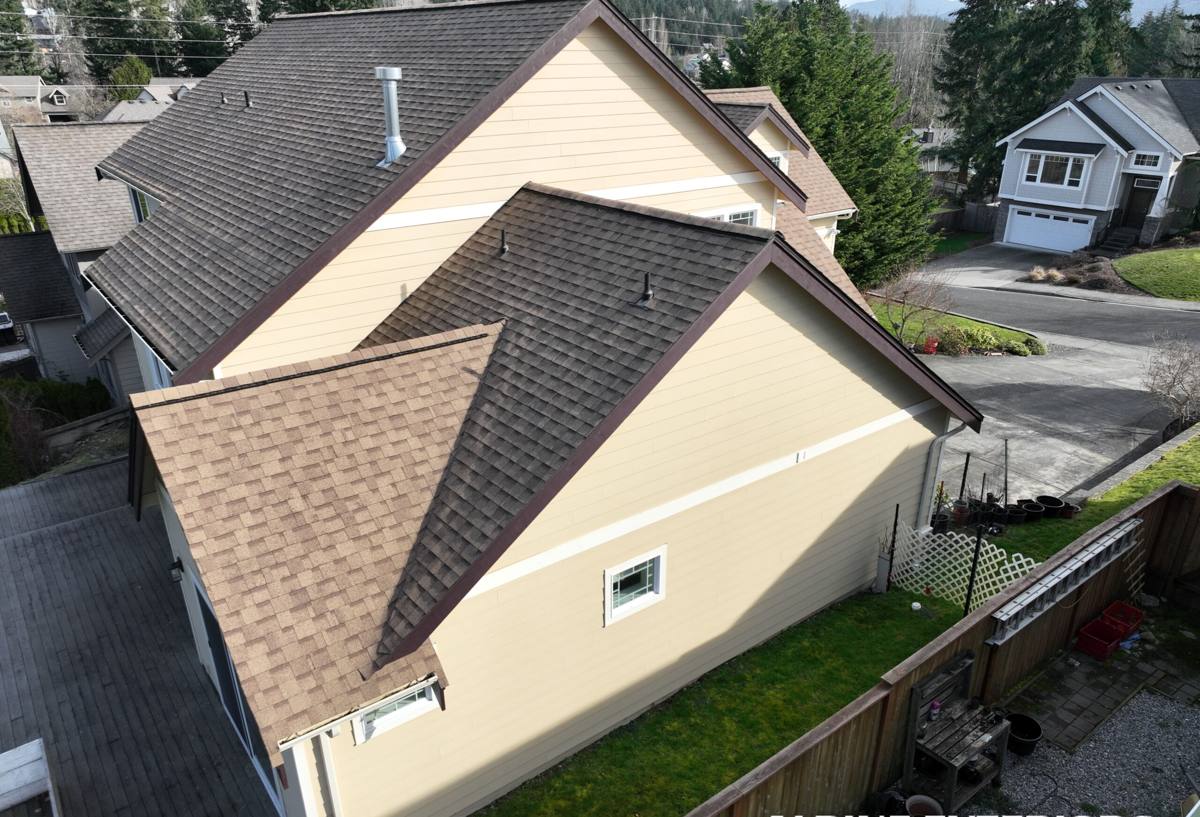
Whatcom County doesn't get extreme heat or brutal cold most winters, but it makes up for that with persistence. Salt air off the water, driving rain that comes in sideways during winter storms, and a long moss season that keeps everything shaded and damp for months at a stretch — that combination is hard on building materials in general, and windows take more of it than almost anything else on a house.
A few specific ways this shows up in Silver Beach homes:
- Salt-laden air accelerates corrosion on window hardware, hinges, and metal spacers inside older double-pane units
- Driving, wind-blown rain finds its way past aging seals and flashing that were adequate when the window was new but have since shrunk or cracked
- Constant dampness and shade encourage moss and algae growth on sills, tracks, and exterior trim, which holds moisture against the frame
- Wide daily humidity swings stress seals on insulated glass units, which is usually the real cause of that foggy look between panes
- Wood-frame windows that aren't well maintained can start absorbing moisture at the corners years before it's visible from inside the house
None of this is unique to Silver Beach specifically — it's the reality for most of coastal Whatcom County. But homes closer to the water tend to see it faster and more severely, which is exactly why window choice and installation quality matter more here than in a drier inland climate.
What Actually Makes a Window "Energy-Efficient"
The term gets used loosely, so it's worth being specific. An energy-efficient window is really three things working together: the glass package, the frame, and the installation. Weakness in any one of the three undermines the other two, no matter how good the marketing on the box.
The Glass
Double-pane, argon-filled glass with a low-E (low-emissivity) coating is the practical standard for this climate. Low-E coatings reflect heat back into the room in winter and block excess solar heat in summer, which matters even in a mild climate like ours because it reduces the temperature swing near the glass — that's often what makes a room "feel" cold even when the thermostat reads normal. Triple-pane glass exists and performs slightly better on paper, but for most Bellingham homes the added cost doesn't pencil out against double-pane low-E, unless the home has an unusual noise or exposure issue.
The Frame
Frame material determines how the window handles moisture and temperature swings over 15-20 years, not just how it performs on day one. We'll walk through the trade-offs between vinyl, fiberglass, and wood-clad options below.
The Installation
This is the piece homeowners underestimate most. A high-performance window installed with poor flashing, gapped shims, or inadequate sealant will leak and lose efficiency regardless of its energy rating. In a climate with driving rain, the flashing detail around the rough opening matters as much as the window itself.
Signs It's Time to Replace
Not every older window needs to go. Some just need better weatherstripping or a resealed exterior joint. Here's how we tell homeowners to think about it before calling anyone out:
- Visible fog or moisture trapped between the panes — the seal has failed and can't be repaired, only replaced
- Drafts you can feel with your hand near the frame, even with the window fully latched
- Wood trim or sills that feel soft, spongy, or show dark staining, especially on window facing prevailing weather
- Windows that are difficult to open, close, or lock — often a sign the frame has swollen or shifted
- Visible daylight or gaps around the frame from outside
- A noticeably higher heating bill compared to similar-sized homes nearby, with no other clear cause
- Single-pane glass anywhere in the home — these are almost always worth upgrading for comfort alone
If you're only seeing one or two of these on a single window, a repair or reseal may be the more honest answer, and we'll tell you that. Full replacement makes sense when several of these show up across multiple windows, or when the frame itself is compromised.
Frame Material Options for This Climate
We install a range of frame materials, and the right one depends on the home's exposure, style, and budget. Here's how the common options compare specifically for a damp, salt-air, moss-prone climate like ours:
| Frame Material | Moisture Resistance | Maintenance | Typical Fit |
|---|---|---|---|
| Vinyl | Excellent — won't rot or corrode | Low, occasional cleaning | Most homes, best value |
| Fiberglass | Excellent — very stable in temperature swings | Low | Higher-exposure walls, larger openings |
| Wood-clad | Good on the exterior, but interior wood needs protection | Higher — periodic finish maintenance | Homes prioritizing interior wood look |
| Aluminum | Poor in salt air — prone to corrosion and poor thermal performance | Moderate | Generally not our recommendation here |
For most Silver Beach homes, we steer people toward vinyl or fiberglass because they simply don't give salt air and driving rain anything to work with — no wood grain to swell, no bare metal to corrode. That's a professional judgment call based on how these materials hold up over time in this specific climate, not a knock on any manufacturer. Wood-clad windows can still be the right call when a homeowner wants that interior wood appearance and is willing to keep up with the finish maintenance it requires.
What Drives the Cost
Every home is different, and we won't quote a number without seeing the actual openings, but these are the factors that move the price up or down on most jobs:
| Factor | Effect on Cost |
|---|---|
| Frame material (vinyl vs. fiberglass vs. wood-clad) | Vinyl is typically the lowest cost; fiberglass and wood-clad run higher |
| Number of windows replaced at once | Doing a full-home replacement in one pass usually lowers the per-window cost |
| Condition of the rough opening | Rot or damage found once old trim is removed adds carpentry time |
| Window size and configuration | Larger units, bays, and custom shapes cost more than standard sizes |
| Full-frame vs. insert replacement | Full-frame replacement (removing down to the studs) costs more but is often necessary when there's existing water damage |
Broadly, homeowners in this area should expect a wide range depending on these factors — a straightforward standard-size insert replacement is far less than a full-frame replacement on a large or custom window. We'll always walk you through exactly which category your project falls into and why, before any work starts.
How Our Installation Process Works
The process matters more than the product in this climate, so here's what a proper job looks like from our end:
- On-site assessment. We look at every window being considered, check for existing moisture damage, and measure the actual openings — not just take your word on sizes.
- Honest scope decision. We tell you plainly whether each window needs full-frame replacement or whether an insert unit is appropriate, and why.
- Removal and inspection. Once the old window is out, we inspect the rough opening for rot, soft framing, or prior water intrusion before anything new goes in. This is often where hidden problems from years of driving rain finally surface.
- Flashing and weather barrier. Proper flashing tape and weather-resistant barrier integration around the opening is what actually keeps wind-driven rain out over the next 20 years — this step gets rushed on cheap installs, and it's the one we spend the most care on.
- Setting and shimming. The window is leveled, plumbed, and shimmed correctly so it operates smoothly and seals evenly for its full service life.
- Sealing and insulation. Gaps are insulated (not overpacked, which can bow the frame) and exterior joints are sealed with a product rated for our climate.
- Trim and finish work. Interior and exterior trim is reinstalled or replaced to match, and the site is cleaned up.
- Final walkthrough. We test operation, check seals, and walk the homeowner through basic care before we consider the job done.
Why a Crew That Already Works Silver Beach Matters
Window installation looks similar on paper everywhere, but a crew that regularly works Silver Beach and the surrounding Bellingham neighborhoods has already seen how this specific climate behaves against real houses — which orientations take the worst of the driving rain, how quickly moss builds up on north-facing sills, and where salt-air corrosion tends to show up first on hardware. That's not something you get from a spec sheet; it comes from doing the work here, repeatedly, and following up on how it holds up.
It also means we're not guessing about permitting, typical construction in this area, or what a rough opening built decades ago is likely to look like once the old window comes out. Local experience shortens the number of surprises on a job — and when a surprise does show up, like unexpected rot behind an old sill, a local crew knows how to handle it correctly the first time instead of covering it up.
A Simple Maintenance Checklist to Extend the Life of New Windows
New windows are only as good as the upkeep behind them. Once your new energy-efficient windows are in, a few habits go a long way in this climate:
- Rinse salt residue and grime off exterior glass and frames a few times a year, especially after storms
- Keep gutters and downspouts clear so water isn't running down over window heads
- Check and clear moss or algae buildup on sills and tracks before it holds moisture against the frame
- Inspect exterior caulking annually and touch up any cracked or separated joints
- Vacuum and lubricate tracks on operable windows so hardware doesn't seize or corrode
- Watch for condensation between panes — it means a seal has failed, not that something is wrong with your heating
If you're weighing whether your Silver Beach home's windows need attention, or you already know they do, we're happy to take a look and give you a straightforward assessment. There's no pressure and no obligation — just a clear picture of what's going on and what it would take to fix it. Fill out the form below to get a free estimate.