 Bellingham Siding
 Siding Replacement Built for South Hill's Climate
South Hill sits on elevated, sloped terrain close to downtown Bellingham, and that elevation changes how weather hits a house. Homes up here catch more direct wind off the water, take driving rain at steeper angles against the walls, and stay shaded and damp longer under mature tree cover than homes down on flatter ground. Add in Bellingham Bay's salt air and Whatcom County's long, gray moss season, and you have a combination that is genuinely hard on exterior siding — especially siding that was never engineered for it.
Wood and wood-composite sidings absorb moisture through end cuts, seams, and any place the factory coating gets nicked during installation. Once moisture gets in, it doesn't leave quickly in our climate — South Hill's tree canopy and hillside shade mean walls dry slower than they would on an open, sunny lot. That slow-dry cycle is exactly what feeds rot, delamination, and the moss and algae staining that shows up on north- and west-facing walls first. Siding replacement here isn't just a cosmetic upgrade; it's a chance to put a material and installation system on the house that's actually built for these conditions.
Signs a South Hill Home Needs Siding Replacement
Some damage is obvious from the street. Other problems hide behind the siding until a wall is opened up. Here's what we look for during an inspection:
- Soft, spongy, or crumbling spots when you press on the siding, especially near the bottom courses and around windows
- Visible cracking, buckling, or warping — a common failure point for wood and engineered wood products once moisture gets behind the coating
- Persistent moss, algae, or black streaking that comes back within a season or two of cleaning
- Peeling or bubbling paint, which usually points to moisture trying to escape from inside the wall assembly
- Rising utility bills or noticeably drafty rooms, which can mean the weather barrier behind the siding has failed
- Visible gaps at seams, corners, or trim where caulk has shrunk, cracked, or pulled away
- Interior signs like musty smells, discolored drywall, or soft trim near exterior walls
If you're seeing more than one or two of these, it's worth having a contractor look at what's happening behind the siding, not just at the surface.
Why Small Problems Don't Stay Small Here
In a drier climate, a cracked board or a gap at a seam might sit for years without causing real damage. In South Hill's combination of driving rain, shade, and salt-laden air, the same crack becomes a moisture entry point almost immediately, and it stays wet longer between rain events. That's why we don't recommend patch-and-paint fixes on siding that's already showing multiple failure points — it's usually cheaper over the life of the house to replace the whole elevation correctly than to keep chasing individual repairs.
What a Correct Siding Replacement Actually Involves
Tear-Off and Inspection
Replacement starts with full removal of the old siding, not an overlay. That's the only way to actually see the sheathing and framing underneath. On hillside lots like South Hill's, we pay close attention to any wall that's been shaded or moisture-exposed for years — those are the areas most likely to need sheathing repair before new siding goes on.
Weather-Resistive Barrier and Flashing
This is the layer that does the real waterproofing work — the siding itself is the second line of defense, not the first. We install a continuous weather-resistive barrier and properly lapped flashing at every window, door, and penetration. Given how much wind-driven rain South Hill homes take, sloppy flashing here is the single most common cause of the "new siding, same old leak" problem homeowners run into with lower-quality installs.
Installation to Manufacturer Spec
James Hardie fiber cement has specific requirements for fastener spacing, clearances, caulking, and painting that directly affect the warranty and the product's real-world performance. We follow those specs exactly — not as a formality, but because the gap between a "close enough" install and a correct one is usually where premature failures start.
Why We Only Install James Hardie Fiber Cement
We made a decision as a company to install James Hardie fiber cement siding exclusively, and we don't install vinyl, LP SmartSide, or primed wood products like cedar or spruce. That's not a marketing position — it's a response to what we've seen happen to those materials in this specific climate.
Vinyl expands and contracts with temperature swings and can crack in cold snaps; it also has seams and a lap system that give wind-driven rain more chances to work its way behind the cladding over time. Engineered wood products and traditional wood sidings depend entirely on an intact factory or field coating to stay dry — any breach, and the substrate can swell or degrade, especially in a climate that doesn't dry out quickly between rain events. Hardie's fiber cement is non-combustible, dimensionally stable, and doesn't rely on keeping wood fiber sealed from moisture the way those other products do. It's also backed by a strong transferable warranty when installed by a certified crew, which matters more here than in drier parts of the country.
Choosing the Right Hardie Line for South Hill Homes
James Hardie makes several product lines, and the right one depends on the home's style, exposure, and budget. We help homeowners weigh the options rather than defaulting to the cheapest board:
| Product Line | Best For | Key Trait |
|---|---|---|
| HardiePlank Lap Siding | Most South Hill homes, traditional and updated styles | Widest color and texture range, most common choice |
| HardieShingle | Craftsman and cottage-style homes | Shingle look without wood's moisture sensitivity |
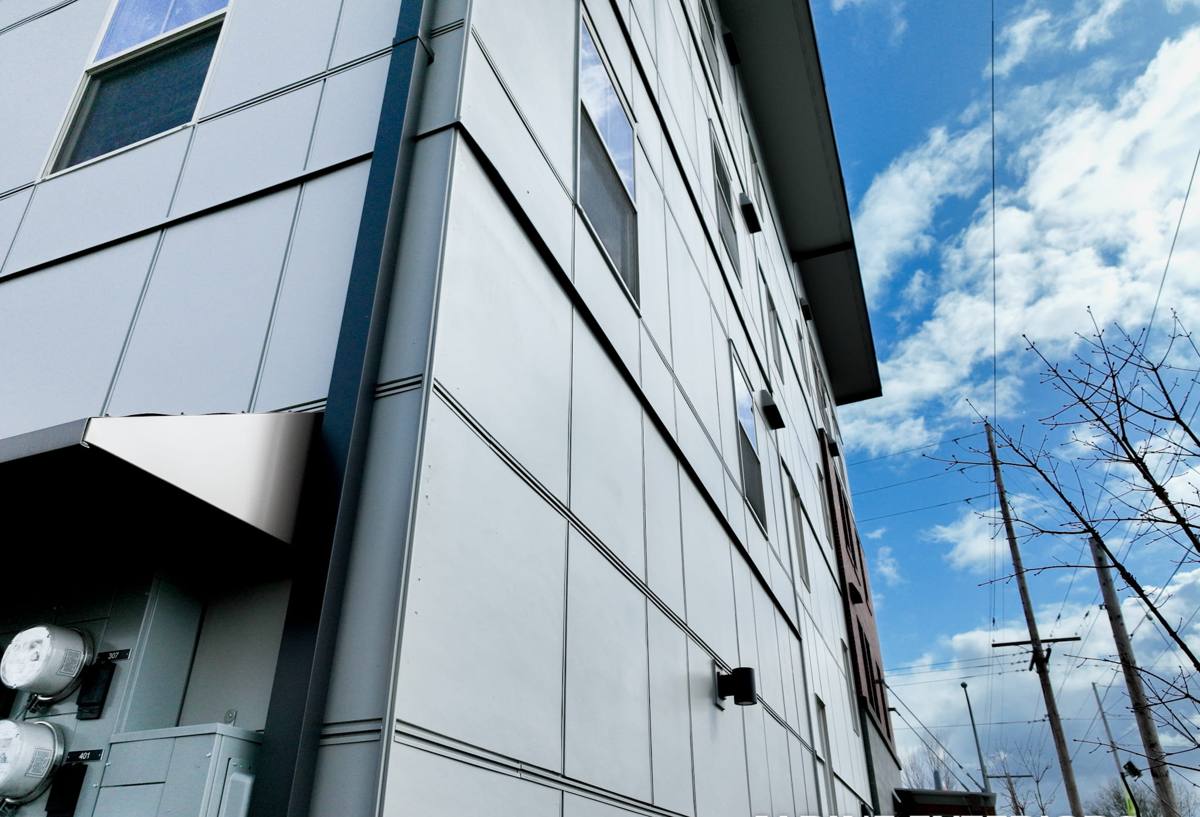
| HardiePanel | Modern builds, accent walls, gable ends | Clean vertical lines, works well with trim boards |
| HardieTrim | Corners, window and door surrounds | Matches durability of the field siding, no rotting trim |
All of these are available in Hardie's HZ10 formulation, engineered for wetter, colder Pacific Northwest climate zones — which includes Whatcom County. It's a meaningful difference from the HZ5 product built for hot, dry regions, and it's one reason we specify HZ10 as the default for jobs in and around Bellingham.
Our Siding Replacement Process
1. On-Site Evaluation
We walk the exterior with you, check for moisture damage, and talk through which Hardie product and color fit the house and your budget.
2. Written Estimate
You get a clear, itemized quote — no vague allowances, no pressure to sign on the spot.
3. Tear-Off and Substrate Repair
Old siding comes off, damaged sheathing or framing gets addressed, and we confirm the wall is ready before anything new goes on.
4. Barrier, Flashing, and Installation
Weather-resistive barrier, flashing, and Hardie siding go on to manufacturer spec, with attention to the details — fastener pattern, clearances, caulking — that determine how the job performs in five, ten, and twenty years.
5. Final Walkthrough
We inspect the finished work with you and make sure every question is answered before we call the job done.
What Siding Replacement Costs in South Hill
Every home is different, but the main cost drivers are consistent. Rather than quote a number that doesn't mean anything without context, here's what actually moves the price:
| Factor | Why It Matters |
|---|---|
| Home size and wall complexity | More corners, dormers, and cutouts mean more labor and trim |
| Extent of hidden damage | Sheathing or framing repair adds cost but is essential to a lasting job |
| Product line chosen | Lap, shingle, and panel siding carry different material and labor costs |
| Access and lot slope | Hillside lots common in South Hill can require extra scaffolding or staging |
| Trim and detail work | Full HardieTrim packages cost more than reusing existing wood trim |
We give a real, itemized number after seeing the house in person — broad ballpark estimates before an inspection tend to be wrong in one direction or the other, and we'd rather be accurate than fast.
Why Hire a Crew That Already Works South Hill
A siding job that's correct on paper can still fail if it's not adapted to the specific conditions of the lot. A crew that regularly works South Hill's sloped terrain knows to expect shaded, slow-drying walls on certain elevations, understands how wind funnels across hillside lots during storms, and doesn't need to relearn the local moss and algae patterns from scratch. That familiarity shows up in small decisions — where to add extra flashing attention, which walls need the most careful weather barrier work — that a crew unfamiliar with Bellingham's terrain and climate might miss.
It also matters for accountability. A local, established contractor is easy to reach if a question comes up two years after the job, and has a reputation in the neighborhood worth protecting.
If your South Hill home needs new siding, or you're just not sure what's happening behind the walls, we're glad to take a look. Reach out for a free, no-pressure estimate using the form below.