 Bellingham Siding
 Board & Batten Siding in Columbia: Built for Bellingham's Climate
Board and batten has been a staple look on Pacific Northwest homes for generations, and it's a natural fit for the mix of craftsman, ranch, and updated mid-century homes you'll find in and around Columbia. The vertical lines read as clean and substantial from the street, and the deep shadow lines the battens create hold up well against Bellingham's gray-sky months when flat, low-contrast siding can look washed out. But the same climate that makes board and batten look good here is also the climate that punishes it when it's installed wrong.
Whatcom County sits where marine air off the Salish Sea meets a long, wet winter season. Homes near Bellingham Bay and the surrounding low-lying neighborhoods deal with salt-laden air, driving rain that hits siding at an angle instead of straight down, and a moss and algae season that can run eight months or longer in shaded, north-facing exposures. Vertical siding profiles like board and batten have more seams, more batten-to-substrate transitions, and more places for water to find a way in than a standard lap profile does. That's not a reason to avoid the look — it's a reason to be exacting about how it's installed.
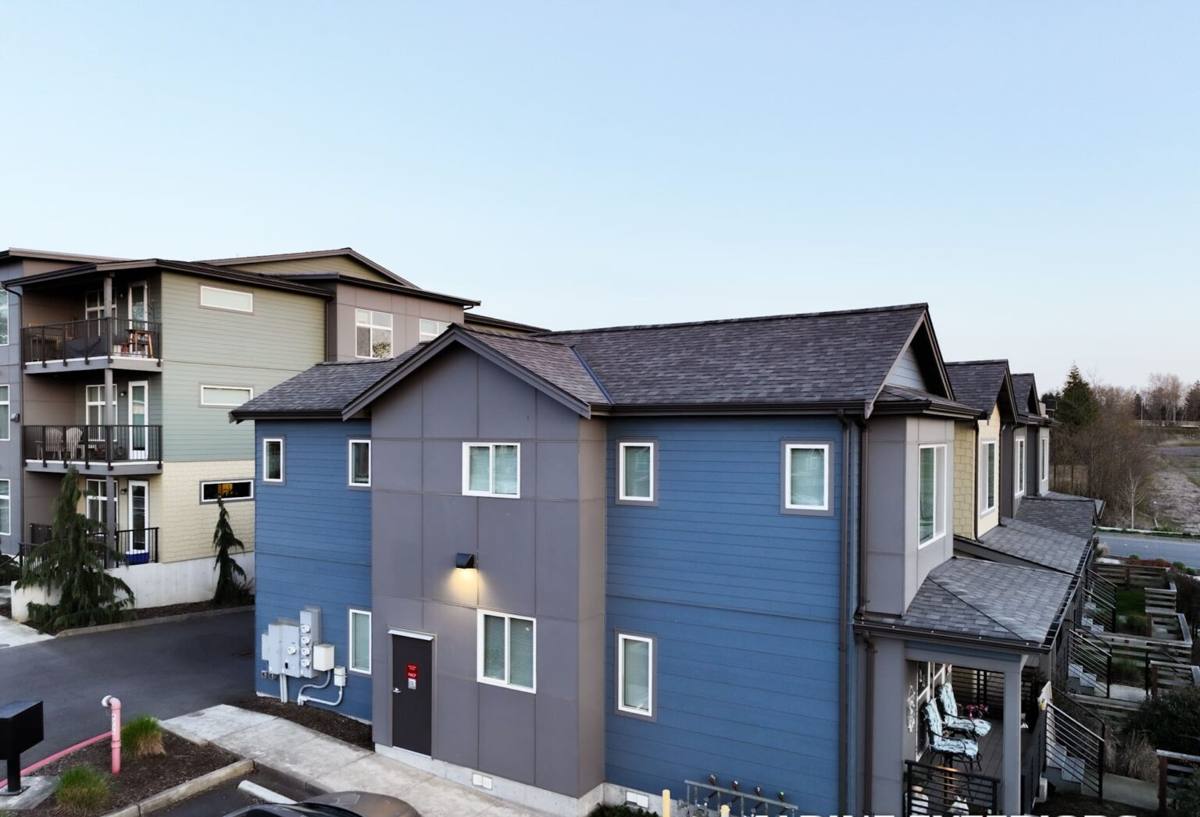
Why Board & Batten Suits Columbia's Housing Stock
A lot of the homes in this area were built in eras when board and batten, cedar shakes, or vertical wood siding were common exterior choices. When we replace siding on these homes, board and batten is often the closest match to the original architectural intent — it keeps the home looking like it belongs on its lot instead of looking retrofitted. It also pairs well with the gable-heavy rooflines and covered porches common in this part of Bellingham, since the vertical lines complement steep pitches better than horizontal lap siding does.
Board and batten also reads well in accent applications — over a garage, on a dormer, or as a contrast material against lap siding on the main body of the house. A lot of Columbia homeowners we talk to want that layered look rather than a single siding profile wrapping the whole house, and board and batten is the profile that does that job best.
What This Climate Demands From Vertical Siding
Three things matter more here than in a drier inland climate:
- Drainage behind the siding. Vertical battens create more fastening points and more opportunities for water to track behind the panel if there's no drainage plane. A proper rain screen gap matters more with board and batten than with lap siding.
- Moss and algae resistance on north and shaded walls. Bellingham's tree cover and cloud cover mean some wall faces almost never fully dry out between rain events. Whatever finish is on the siding needs to hold color and resist organic growth without the homeowner having to pressure-wash it every year.
- Salt-air corrosion resistance on fasteners and trim. Homes closer to the water deal with airborne salt that accelerates corrosion on lower-grade fasteners and metal flashing. That's a detail that's invisible on install day and very visible five years later if it was cut.
James Hardie Board & Batten: The Only System We Install
We install James Hardie fiber cement exclusively — we don't offer vinyl, LP SmartSide, Cemplank, Allura, primed spruce, or raw cedar board and batten, and we're upfront about why. Wood board and batten looks great on day one, but it's the profile most exposed to moisture intrusion at every batten seam, and in a climate with this much sustained dampness, that maintenance burden shows up fast — recaulking, repainting, and watching for rot at the base of every batten. Vinyl board and batten avoids the rot problem but flexes and gaps over time, doesn't hold the crisp shadow line that makes the profile look good in the first place, and doesn't perform well in wind-driven rain because it isn't rigid at the seams.
James Hardie's fiber cement board and batten system is dimensionally stable, non-combustible, and comes with a factory-applied ColorPlus finish that's baked on and warranted against fading and peeling — not something you're repainting every few years. It's engineered as a system: matched battens, matched fasteners, and installation specs written for exactly the wet, wind-driven conditions we get in Whatcom County. For a profile that depends on tight, consistent seams to perform, that kind of engineered consistency is the difference between siding that lasts and siding that becomes a maintenance project.
Board & Batten Material Comparison
| Material | Moisture Behavior in This Climate | Maintenance | Finish Longevity |
|---|---|---|---|
| James Hardie fiber cement | Dimensionally stable, engineered rain-screen compatible install | Occasional wash; no repainting under normal use | Factory ColorPlus finish, long transferable warranty |
| Cedar / primed spruce | Absorbs moisture at batten seams and end grain; prone to rot in shaded, damp walls | Regular recaulking and repainting; ongoing rot inspection | Paint film fails in 4-8 years depending on exposure |
| Vinyl board & batten | Doesn't absorb water but flexes and gaps; poor performance in driving, wind-blown rain | Low, but cracks and fades over time; not repairable in sections | Color fades; not factory-baked |
| LP SmartSide / engineered wood | Wood-based core is more moisture-tolerant than raw wood but still vulnerable at cut edges and seams | Edge sealing and seam maintenance required | Shorter track record in sustained marine-climate exposure |
What a Correct Board & Batten Install Involves
Board and batten has more failure points than lap siding if it's rushed, so we treat the install as a system, not just a facade. On every Columbia job, that means:
- A continuous weather-resistive barrier and rain-screen gap behind the panels, so any moisture that does get past the battens has somewhere to drain and dry instead of sitting against the sheathing.
- Correct batten spacing and fastening per Hardie's engineering specs — not "close enough" spacing, since uneven batten reveals are one of the most common signs of a rushed install.
- Proper flashing at every horizontal transition — window heads, roof-to-wall intersections, and the base of the wall — since board and batten's vertical seams route water downward faster than lap siding does.
- Corrosion-resistant fasteners appropriate for a marine-influenced climate, not generic fasteners left over from an inland job.
- Factory-caulked or engineered seam details at panel joints, following Hardie's published details rather than field improvisation.
Skipping any one of these doesn't necessarily show up on install day. It shows up two or three wet seasons later as staining, soft spots at the base of battens, or moss taking hold behind panels that aren't drying out properly. That's the gap between siding that looks right and siding that's actually built right for this climate.
Our Process for Columbia Homeowners
1. On-Site Assessment
We walk the exterior with you, looking at sun exposure, shaded and north-facing walls, existing moisture damage, and how the home's rooflines and trim details will interact with a board and batten profile.
2. Product and Layout Planning
We talk through batten spacing, reveal width, and whether board and batten makes sense across the whole exterior or as an accent against a lap-sided body — plus color selection from Hardie's ColorPlus palette.
3. Tear-Off and Substrate Check
We remove the existing siding and inspect the sheathing and framing underneath for any moisture damage before anything new goes up — this is often where a wall's real condition gets discovered.
4. Weather Barrier and Rain-Screen Installation
We install a continuous drainage plane built for our rain and moss conditions before a single batten goes up.
5. Hardie Board & Batten Installation
Panels and battens go up to manufacturer spec, with attention to fastening, flashing, and seam details at every transition.
6. Final Walkthrough
We review the finished exterior with you, including what routine care looks like going forward.
Maintenance in a Moss-Prone, Salt-Air Climate
James Hardie board and batten is low-maintenance compared to wood, but "low-maintenance" isn't "no-maintenance" anywhere in Whatcom County. A short annual routine keeps it performing:
- Rinse siding gently once or twice a year, focusing on shaded, north-facing walls where moss and algae take hold fastest.
- Keep gutters clear so overflow doesn't run down the face of the siding and feed moss growth at the top of the wall.
- Trim back vegetation and tree cover that keeps a wall section damp and shaded longer than the rest of the house.
- Do a quick visual check after major windstorms for any loose battens, trim, or flashing.
- Watch caulked seams at trim and window transitions and have any cracked caulk addressed before a wet season starts.
Why Hiring a Crew That Already Works Columbia Matters
A siding crew that mostly works drier inland climates will detail a house differently than one that works Bellingham exteriors year-round. The rain-screen gap, the flashing sequence, the fastener spec — these aren't generic best practices, they're decisions shaped by what actually fails on homes exposed to this much sustained moisture and salt air. When we quote a Columbia job, we're accounting for the same wind-driven rain patterns, moss pressure, and marine air that every other home in this part of Whatcom County deals with, because we see it on every job we do here.
If you're considering board and batten for your Columbia home, we're happy to walk your exterior with you, talk through layout and color options, and give you a straightforward, no-pressure estimate — just fill out the form below to get started.