 Bellingham Siding
 Siding Replacement in Barkley: What Local Homes Are Up Against
Barkley is one of Bellingham's newer planned neighborhoods, and that matters more than most homeowners realize when it comes to siding. A lot of the housing stock here went up over roughly the last two to three decades, which means a meaningful share of homes are now hitting the age where original siding — whatever it was — is reaching the end of its practical service life. Add in Whatcom County's marine climate, and siding that looked fine ten years ago can be hiding real problems today.
This page is specifically about siding replacement for homes in and around Barkley, not a general overview. We'll cover what the local climate does to siding over time, what a correct replacement actually involves, how to tell if your home needs one, and why working with a crew that already knows this part of Bellingham makes a practical difference.
What Bellingham's Climate Does to Siding Over Time
Bellingham sits right on the water, and Barkley isn't far enough inland to escape it. Three climate factors do most of the damage to siding here, and they compound each other over the years.
Salt air
Proximity to Bellingham Bay means a steady low-level exposure to salt-laden air. Salt is corrosive to metal fasteners, flashing, and trim, and it accelerates the breakdown of paint films and lower-grade siding materials. It's a slow process — you won't see damage in year one — but over ten or fifteen years it adds up, especially on the sides of a house that face the water or catch prevailing wind.
Driving rain
Pacific storm systems don't just bring rain — they bring wind-driven rain that hits siding at an angle instead of running straight down. That matters because wind-driven rain finds its way into laps, seams, and butt joints that would stay dry in a calmer climate. A siding system that isn't detailed correctly for this kind of exposure will eventually let moisture behind the cladding, and once that happens, the sheathing and framing underneath pay the price, not just the siding itself.
A long moss season
Bellingham's mild, wet fall-through-spring stretch is close to ideal growing conditions for moss and algae. Shaded elevations, north-facing walls, and anywhere siding stays damp longer than it should will grow moss given enough time. Moss isn't just cosmetic — it holds moisture against the siding surface for extended periods, which shortens the life of paint, caulking, and the substrate underneath.
None of these three factors is unique to Barkley, but together they explain why siding in this part of Whatcom County ages differently than it would in a drier, inland climate — and why a replacement done here needs to be detailed for these specific conditions, not just installed by the book for an average climate zone.
Signs Your Barkley Home May Need Siding Replacement
Siding failure is rarely sudden. It shows up as a pattern of small signs that homeowners often dismiss individually. Here's what we look for, and what you can check yourself before calling anyone:
- Boards that feel soft, spongy, or crumble slightly when pressed near the bottom edges
- Paint that's peeling, bubbling, or needs repainting far more often than it used to
- Persistent moss or dark streaking that comes back within a season of cleaning
- Visible gaps, warping, or bowing between boards or panels
- Cracking at butt joints, corners, or around window and door trim
- A musty smell or soft drywall on interior walls that back up to exterior siding
- Siding that's original to a home built 20+ years ago and has never been replaced
Any one of these on its own might just need a repair. Several together, especially combined with the age of the home, usually point to a replacement being the more honest recommendation than another round of patching.
What a Correct Siding Replacement Actually Involves
Siding replacement is often sold as a cosmetic upgrade, but the parts nobody sees are what actually determine whether the new siding lasts. A correct job, done right, involves several distinct stages:
Full tear-off, not a re-side over the old layer
We remove the existing siding rather than installing new siding over it. Covering up old siding hides whatever condition the wall is actually in — including rot, mold, or moisture damage that needs to be dealt with, not sealed behind a new layer.
Sheathing inspection and repair
Once the old siding is off, the wall sheathing gets inspected board by board. Any sections that are soft, delaminated, or water-damaged get cut out and replaced before anything new goes back on. This is the step that gets skipped on corner-cutting jobs, and it's the one that matters most for long-term durability.
Weather-resistive barrier and flashing
A new, continuous weather-resistive barrier (WRB) goes over the sheathing, with proper flashing integrated at every window, door, and penetration. Given how much wind-driven rain this area sees, this layer is what actually keeps water out if it gets past the siding surface — the siding itself is the first line of defense, not the last.
Correct fastening and clearances
Fasteners, lap spacing, and ground/deck clearances all get set to manufacturer specification. Undersized fasteners, over-driven nails, and tight-to-grade installations are common shortcuts that cause premature failure, and they're invisible to a homeowner once the job is finished.
Trim, caulking, and paint or factory finish
Trim details and joint sealing are finished last, using materials and sealants suited to a wet marine climate, not a generic all-purpose product.
Why We Install James Hardie Fiber Cement — and Nothing Else
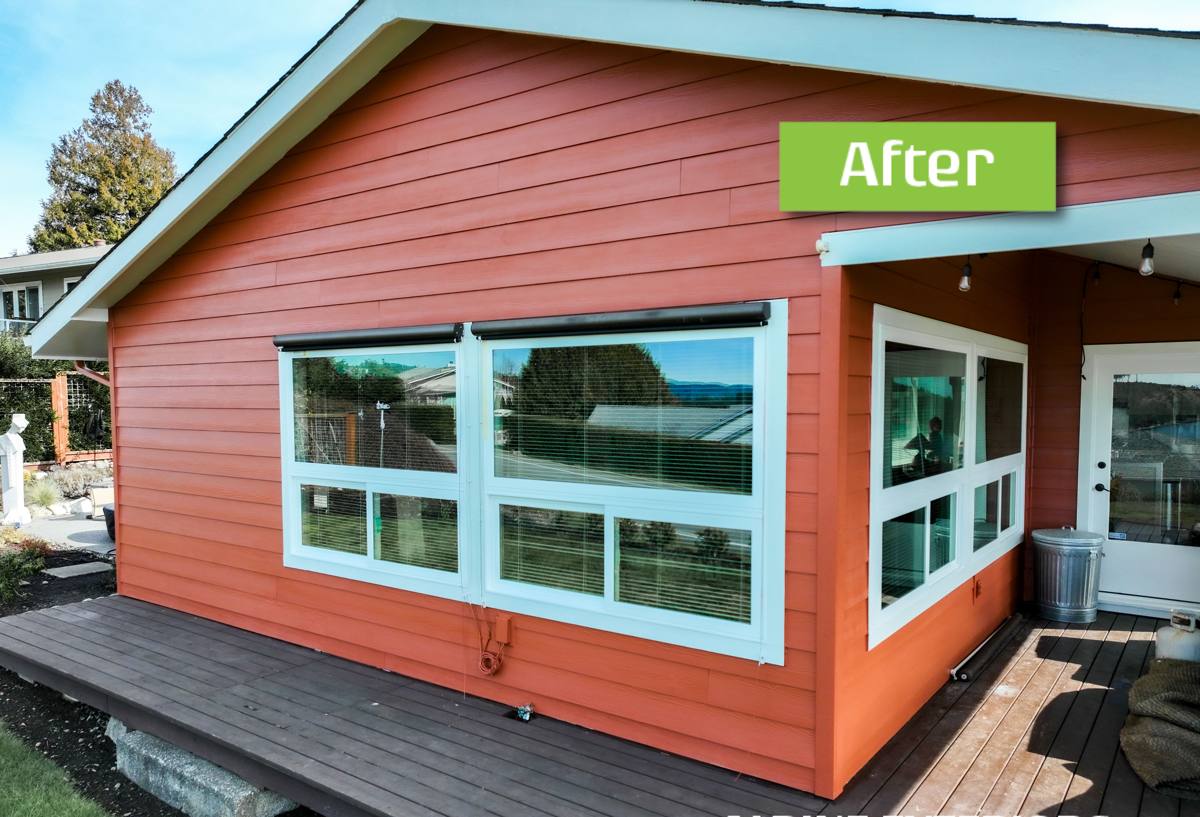
We standardized on James Hardie fiber cement siding for every project we take on, including in Barkley. It's a non-combustible material, it doesn't feed moss and rot the way wood-based products can, and its HZ product lines are engineered for specific climate zones rather than a one-size-fits-all approach. The factory-applied ColorPlus finish holds up to UV and moisture exposure better than field-applied paint, which matters in a climate where repainting every few years isn't realistic for most homeowners. It also carries a strong, transferable warranty, which is worth something if you ever sell the house.
We don't install vinyl, LP SmartSide, Cemplank, Allura, or primed wood siding. That's not because those products have no merit — some perform reasonably well when installed correctly — but we've made a professional decision to specialize in one system we can install to spec every time and stand behind without qualification, rather than stock five product lines and hope each installation goes right.
Our Process, Start to Finish
- Free on-site estimate: we walk the exterior with you, check for the warning signs above, and give you an honest read on repair vs. replacement.
- Written scope and pricing: you get a clear breakdown of materials, labor, and any sheathing repair allowance before work starts.
- Tear-off and inspection: old siding comes off, sheathing gets inspected, and you're told immediately if anything unexpected turns up.
- WRB, flashing, and siding installation: installed to Hardie's published specifications for our climate zone.
- Trim, caulking, and finish work.
- Final walkthrough: we go over the finished job with you before calling it done.
Cost Factors for Siding Replacement in Barkley
Every home is different, but the same handful of factors drive most of the cost variation we see on Barkley projects:
| Factor | Why It Matters |
|---|---|
| Home size and wall complexity | More square footage, more corners, dormers, and gables mean more material and labor |
| Sheathing condition | Hidden rot found during tear-off adds repair scope you can't fully price until the old siding is off |
| Siding profile chosen | Lap width, panel style, and trim details vary in material and labor cost |
| Story height and access | Two- and three-story sections need more scaffolding and staging time |
| Trim and detail work | Window and door trim, corner boards, and fascia detail add labor beyond the flat wall area |
We won't quote a number here without seeing the home — anyone who does is guessing. What we can tell you is that the sheathing condition line item is the one that most often changes a quote after tear-off begins, which is exactly why a full tear-off and honest inspection matters more than a fast estimate.
Why a Crew That Already Works in Barkley Makes a Difference
Barkley's mix of home ages and styles means the right siding approach for one house isn't automatically right for the one next door. A crew that's worked this neighborhood before has already seen how the local exposure — water-facing walls, shaded north sides, wind corridors between houses — plays out on homes with similar construction and age to yours. That's not a substitute for inspecting your specific house, but it does mean fewer surprises and a more accurate first estimate.
Planned communities like Barkley also sometimes carry HOA or covenant guidelines around exterior colors and materials. If your property is subject to any, we can work within them rather than finding out about a conflict after material has already been ordered.
Maintenance After Replacement: Keeping Moss and Moisture at Bay
New siding still needs some basic upkeep in this climate, though far less than an aging or failing system requires:
- Rinse siding annually, focusing on shaded and north-facing walls where moss establishes first
- Keep gutters clear so overflow doesn't run down the wall face
- Trim back vegetation that keeps siding shaded and damp
- Re-caulk trim joints if you notice separation, rather than waiting for water intrusion
- Have caulking and trim checked every few years, even though ColorPlus finish itself doesn't need repainting on the same schedule as field-applied paint
None of this is a substitute for correct installation — it's what keeps a properly installed system performing the way it's designed to over the long run.
Getting Started
If your Barkley home is showing any of the signs above, or you're simply planning ahead for siding that's approaching the end of its life, we're happy to take a look. The estimate is free, there's no pressure to move forward, and you'll get a straight answer about what your home actually needs. Use the form below to get in touch and schedule a time for us to come out.