 Bellingham Siding
 Happy Valley's Siding Has a Harder Job Than Most People Think
Happy Valley is one of Bellingham's older, more established residential pockets — mature tree canopy, a mix of home ages, and lots close enough to the water and to Bellingham Bay's weather patterns that siding takes a real beating over the decades. Homeowners here often assume siding failure is about age. More often it's about moisture that never had a clean way out, or a material that was never built for this specific climate in the first place.
Whatcom County sits in a temperate rainforest zone. That means long stretches of low-intensity rain punctuated by wind-driven storms off the Strait of Georgia and Bellingham Bay, salt-laden air that accelerates corrosion on fasteners and trim, and shaded, tree-covered lots where surfaces stay damp far longer than they would in a drier climate. Happy Valley's tree cover is part of its character — it's also exactly the condition that keeps moss, algae, and mildew established on north-facing walls and shaded siding runs for most of the year.
None of that means siding here is doomed. It means the installation has to be done with this climate specifically in mind — correct flashing, correct drainage plane, correct fastening, and a material that was engineered to take moisture cycling without falling apart. Get those right and a Happy Valley home's siding can go decades without drama. Skip any one of them and problems show up early, usually hidden behind the wall before they ever show on the surface.
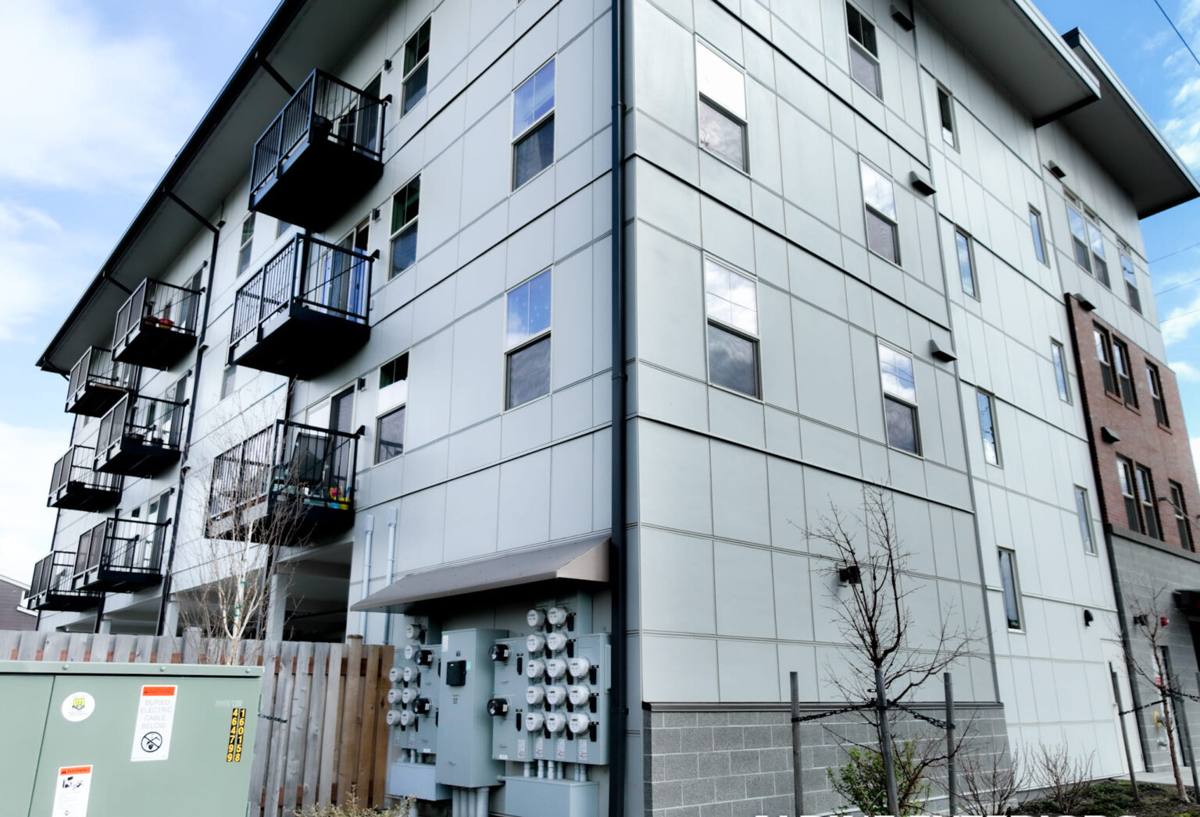
What Driving Rain and Salt Air Actually Do to Siding
It helps to understand the specific failure modes this climate causes, because they're different from what a siding crew in Phoenix or Denver worries about.
Driving Rain
Storms off the water don't just fall straight down — wind pushes rain sideways into wall assemblies, especially on exposed elevations. If house wrap, flashing, and lap overlaps aren't installed correctly, that water finds its way behind the siding. Once it's behind the cladding, it's working on your sheathing and framing, not just the paint.
Salt Air
Being close enough to Bellingham Bay means airborne salt settles on exterior surfaces. It's hard on uncoated or lightly coated metal fasteners and trim, and it accelerates the breakdown of lower-quality paint finishes over time. Materials and hardware need to be chosen with that in mind, not just for looks.
Moss and Sustained Dampness
Shaded, tree-covered streets like the ones common in Happy Valley keep siding damp for extended periods, especially in fall and winter. Wood-based products are the most vulnerable here — sustained moisture is exactly what causes swelling, delamination, and rot in engineered wood and untreated wood siding. Moss and algae growth on north-facing and shaded walls is also mostly cosmetic on the right material, but it can be a serious structural warning sign on the wrong one.
What a Correct Installation Actually Involves
"Siding installation" sounds simple from the outside — panels go up, house looks new. The work that actually determines whether that siding lasts 10 years or 40 happens in steps most homeowners never see once the job is finished.
- Tear-off and sheathing inspection — removing old siding and checking the sheathing underneath for hidden rot or moisture damage before anything new goes up.
- Repair before recover — any soft or compromised sheathing gets replaced, never covered over.
- Weather-resistive barrier — a correctly lapped and sealed house wrap that manages bulk water and lets incidental moisture drain and dry.
- Flashing at every penetration — windows, doors, hose bibs, vents, and any other wall penetration get proper flashing so water is directed out, not in.
- Rainscreen or drainage gap where called for — a small air gap behind the cladding lets any moisture that does get through dry out instead of sitting against the wall.
- Correct fastening pattern and material — nailing schedule, fastener type, and spacing matched to the manufacturer's specification and to this coastal climate.
- Proper clearances — siding kept off grade, roof lines, and decks at the manufacturer-specified gap so water doesn't wick up from below.
- Factory-finished color and caulking done to spec — sealed joints and trim that won't need repainting in a few years.
Every one of those steps matters more in Bellingham's climate than it would somewhere dry. Skipping any of them is how a home ends up with siding that looks fine for three or four years and then fails all at once.
How to Tell If Happy Valley Siding Needs Replacing — Not Just Patching
A lot of the siding we look at in this neighborhood is repairable in spots but structurally past the point of patching overall. Warning signs worth taking seriously:
- Soft spots or visible bowing when you press on the siding, especially near the bottom courses
- Paint that's peeling or bubbling repeatedly in the same spots, even after repainting
- Persistent moss or algae growth that keeps coming back within a season of cleaning
- Visible gaps, warping, or delamination at panel seams and corners
- Interior signs — musty smell, staining, or soft drywall near exterior walls
- Siding that's original to a home built more than 20-25 years ago, particularly wood-based products
Any one of these on its own might just need a repair. Several together, especially on a home with wood or engineered wood siding, usually means the underlying material has reached the end of what it can handle in this climate.
Our Installation Process
The process is the same discipline everywhere we work in Whatcom County, applied to Happy Valley's specific conditions — shaded lots, mature trees close to structures, and homes where access and staging need to be planned around established landscaping.
- On-site assessment — we look at existing siding, sheathing condition, drainage patterns around the foundation, and any trouble spots specific to the lot (shade exposure, tree proximity, wind-exposed elevations).
- Written scope and estimate — what's being removed, what's being repaired, what product and color are going up, and a realistic timeline.
- Tear-off and sheathing repair — old siding comes off, sheathing gets inspected and repaired where needed before anything new is installed.
- Weather barrier and flashing installation — the part of the job that determines how the home performs in a storm, done to manufacturer and code specification.
- James Hardie panel or lap installation — installed to Hardie's published fastening and clearance specifications, not shortcuts.
- Trim, caulking, and final detailing — the finish work that keeps water out of joints and corners long-term.
- Final walkthrough — we go over the finished work with you before calling the job done.
Material Comparison: Why the Choice Matters More Here
Not every siding material handles sustained damp shade and driving coastal rain the same way. Here's an honest look at how the common options stack up under Happy Valley's actual conditions.
| Material | Moisture Behavior | Moss/Algae Resistance | Long-Term Maintenance |
|---|---|---|---|
| James Hardie Fiber Cement | Dimensionally stable; doesn't swell, warp, or rot when wet | Factory ColorPlus finish resists staining; surface cleans up well | Low — repainting generally not needed for the life of the factory finish |
| Vinyl | Doesn't rot, but can warp or crack in temperature swings and impacts | Grime and algae show clearly on lighter colors | Low upfront, but fading and brittleness increase over time |
| LP SmartSide (Engineered Wood) | Wood-based; vulnerable to swelling and edge delamination if moisture reaches the substrate | Susceptible in sustained shade/damp conditions if seals fail | Moderate to high — depends heavily on caulking and paint upkeep |
| Cedar/Primed Wood | Absorbs moisture readily; needs consistent sealing to resist rot | Prone to moss and mildew in shaded, damp conditions | High — regular refinishing required |
Why We Only Install James Hardie
We used to get asked to install a wider range of siding products. We don't anymore, and it's because of exactly what shows up on older Happy Valley homes when we tear off failed siding: moisture that got behind the material and had nowhere to go, in a climate that doesn't give damp wood-based products much of a break.
James Hardie fiber cement is non-combustible, dimensionally stable, and doesn't swell or rot when it gets wet — which matters in a place where "wet" describes most of the calendar year. The ColorPlus factory finish is baked on and warranted against fading and peeling, which means far less repainting than wood-based alternatives need here. Hardie's HZ5 product line is engineered specifically for climates like ours — freeze-thaw cycling, sustained moisture, and coastal exposure — rather than a one-size-fits-all national spec. It carries a strong transferable warranty, which matters if you ever sell the home.
Standardizing on one product means our crews install it the same correct way every time, on every home, instead of switching techniques between five different materials. That consistency is a big part of why the installation quality holds up over the decades this climate demands.
What to Ask Before You Hire Anyone for Siding Work
Happy Valley has enough tree-covered, moisture-exposed homes that this work needs to be done right the first time. Before you hire any contractor for siding replacement, ask:
- Are you licensed and insured to work in Washington State, and can you show proof?
- Will you inspect and repair sheathing before installing new siding, or just cover what's there?
- What weather-resistive barrier and flashing details will you use, specifically?
- Are you following the manufacturer's published fastening and clearance specifications?
- Do you have experience working on homes in this specific neighborhood's shade and moisture conditions?
- What does your warranty cover, and is it transferable if you sell the home?
A contractor who can answer these clearly and specifically — not just with "yes, of course" — is one who actually understands what this climate does to a wall assembly.
Timeline and What to Expect
Most single-family siding replacements in this area take somewhere between one and a few weeks, depending on the size of the home, how much sheathing repair is needed, and weather windows during Whatcom County's wetter months. Access on Happy Valley's more mature, tree-lined lots sometimes takes a little extra planning for staging and equipment, which we account for during the estimate rather than as a surprise mid-project.
If your Happy Valley home's siding is showing its age, or you're just planning ahead before it becomes a bigger problem, we're happy to take a look. We'll give you a straightforward, no-pressure estimate — what we see, what it would take to do right, and what it would cost — using the form below.