 Bellingham Siding
 Why Window Choice Matters More in Sehome
Sehome sits close enough to the water and the hills around Bellingham that its homes take a specific kind of weather beating: salt-laden air off Bellingham Bay, wind-driven rain that doesn't just fall but pushes sideways into wall and window assemblies, and long stretches of gray, damp months where moss and mildew get a foothold anywhere moisture lingers. None of that is dramatic on any single day. It's the accumulation — years of it — that separates windows that hold up from windows that fail early.
Older single-pane or early double-pane windows in this part of Whatcom County usually aren't failing because the glass broke. They're failing because the seals gave out, the frames absorbed moisture, or the original installation never properly managed water at the sill and flashing. Energy efficiency and durability are the same conversation here, not two separate ones.
What Sehome's Housing Stock Means for a Window Job
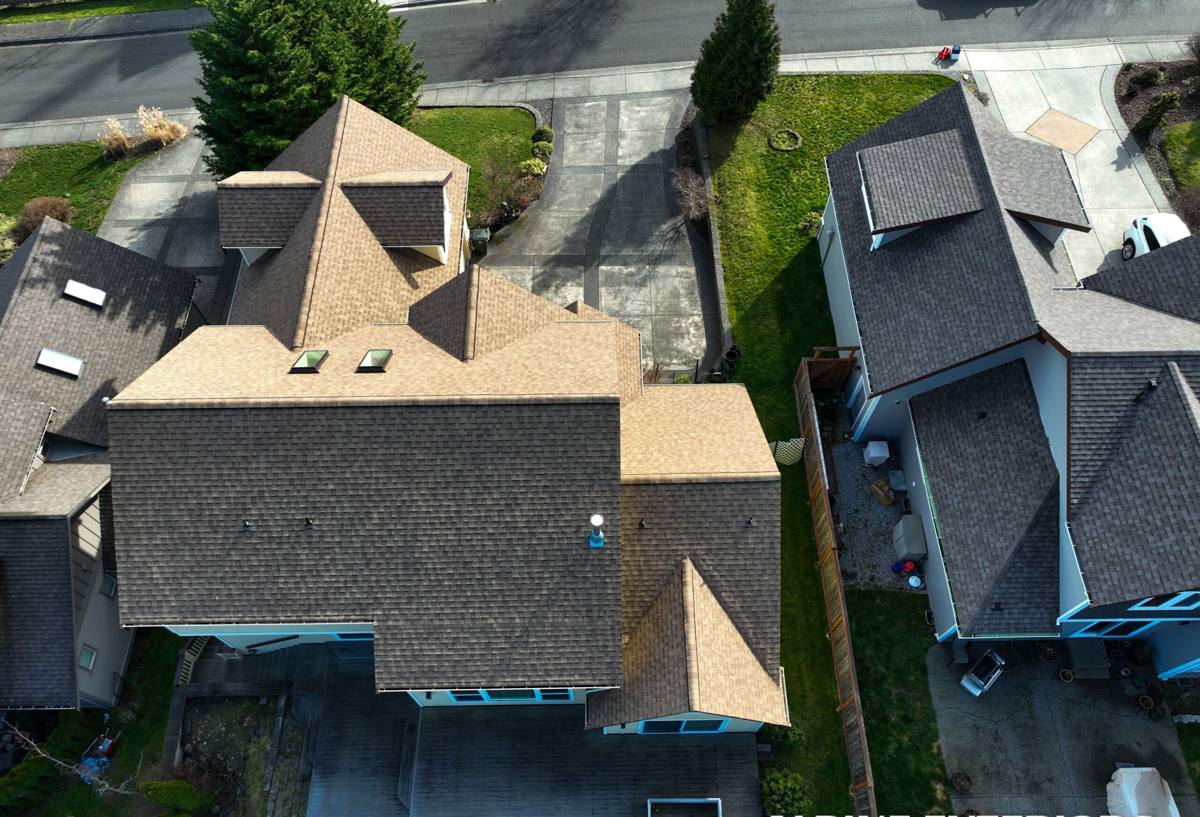
Sehome has a mix of older craftsman-era homes, mid-century houses, and newer infill construction near the WWU area. That mix matters for a window replacement:
Older Homes
Many of the older houses still have original wood-frame windows or a first-generation vinyl retrofit from decades back. These openings were often built to dimensions that don't match modern standard sizes, and the original flashing details — if any existed — were designed for a building science standard that's since been updated. A correct replacement respects the character of the house while fixing what was never done right the first time.
Newer Construction
Homes built in the last couple decades usually have more standardized rough openings and better original flashing, but the windows themselves may simply be reaching the end of their expected seal life, or were value-engineered with lower-end glass packages that don't perform well against Bellingham's damp, mild-but-persistent climate.
What "Energy-Efficient" Actually Means
The phrase gets used loosely. For a window to actually perform in this climate, three numbers matter more than marketing language:
| Rating | What It Measures | Why It Matters Here |
|---|---|---|
| U-Factor | Heat loss through the window | Lower is better for our cool, wet winters — keeps heating costs down |
| SHGC (Solar Heat Gain Coefficient) | How much solar heat passes through | Moderate SHGC balances winter light gain against summer overheating on south/west exposures |
| Air Leakage Rating | How much air passes through the assembly | Directly tied to draft complaints and moisture intrusion around the frame |
Any window we install carries NFRC (National Fenestration Rating Council) labels with these numbers documented — not just an ENERGY STAR sticker. ENERGY STAR tells you a window meets a regional baseline; the NFRC numbers tell you how it actually performs on your specific house.
Frame Material: Trade-Offs for a Damp, Salt-Air Climate
There isn't one "best" frame material — there's a best fit for the house, the budget, and how much upkeep the homeowner wants to do.
| Frame Type | Moisture Behavior | Maintenance | Best Fit |
|---|---|---|---|
| Vinyl | Doesn't absorb water or rot; won't corrode from salt air | Low — occasional cleaning | Most Sehome homes, especially budget-conscious full-house replacements |
| Fiberglass | Very stable, minimal expansion/contraction, excellent moisture resistance | Low | Homes wanting a stronger frame and paintable finish, willing to pay more upfront |
| Wood-clad | Interior wood needs protection from condensation and humidity; exterior cladding shields from rain | Higher — interior finish needs occasional attention | Homeowners prioritizing traditional interior appearance, especially on older craftsman-style houses |
| Aluminum | Conducts cold, prone to condensation; can corrode over time in salt-air exposure without proper coatings | Moderate | Generally our least-recommended option for this climate unless it's a thermally-broken commercial-grade product |
We steer most Sehome homeowners toward vinyl or fiberglass not because wood or aluminum are bad products, but because the maintenance burden and moisture sensitivity of those materials is a harder match for a climate that stays damp for months at a stretch. If a homeowner wants a wood-interior look, we'll say so honestly and talk through what upkeep that involves rather than pretend it's maintenance-free.
Glass Packages
Double-pane with low-E coating and argon gas fill is the practical standard for this region — it balances cost against real performance gains. Triple-pane is available and does perform better, but the marginal efficiency gain over a quality double-pane low-E/argon unit is often smaller than the price jump justifies for most Sehome homes. We'll walk through the actual numbers for your specific windows rather than upsell by default.
Our Installation Process
Most window failures we get called out to inspect trace back to installation, not the window unit itself. The process matters as much as the product.
1. Assessment
We check the existing rough openings for rot, measure for accurate fit, and look at how water has historically moved around each opening — critical on a house that's taken years of driving rain.
2. Removal and Opening Prep
Old windows come out carefully to avoid damaging surrounding siding or trim. Any water damage or soft framing found at this stage gets addressed before a new window ever goes in — installing a good window into a compromised opening just delays the same problem.
3. Flashing and Moisture Management
This is the step that separates a durable install from a future leak. Proper flashing tape, sill pans, and weather-resistant barrier integration direct water away from the structure instead of letting it collect at the sill — the single most common point of hidden rot in this climate.
4. Setting, Shimming, and Sealing
The window gets set level and plumb, shimmed correctly so it doesn't bind or sag over time, then sealed with appropriate exterior sealant and insulated at the interior gap — not overfilled with spray foam, which can bow frames.
5. Finish and Cleanup
Interior and exterior trim gets reinstalled or replaced, hardware checked for smooth operation, and the site cleaned up.
Moss, Mildew, and the Long Wet Season
Whatcom County's extended damp season means anything that holds moisture against a window frame or sill for weeks at a time becomes a problem eventually. A few things we build into every job and recommend homeowners keep up with:
- Keep weep holes on vinyl and fiberglass frames clear so water can drain out instead of pooling
- Trim back vegetation or moss growth that's shading and keeping window sills damp
- Check exterior caulk lines once a year — UV and moisture cycling break sealant down faster here than in drier climates
- Watch for condensation between panes, which signals a failed seal, not a cleaning issue
- Clean tracks and sills at the start and end of the wet season so debris doesn't trap moisture
Why a Crew That Already Works Sehome Matters
Window replacement in this neighborhood isn't generic. A crew that regularly works Sehome and greater Bellingham knows the common opening sizes in the area's older housing stock, has a feel for which streets sit in more wind-exposed or rain-exposed pockets, and understands City of Bellingham permitting norms for exterior work. That local familiarity shows up in fewer surprises mid-job — fewer special-order delays, fewer "we didn't expect that" moments when old flashing gets opened up.
It also means someone who can come back. If a question comes up two years after install, a local crew with a track record in the neighborhood is a phone call away, not a franchise call center.
Choosing a Window Contractor: What to Actually Check
- Ask for the specific NFRC ratings (U-factor, SHGC) of the window product being quoted — not just "energy efficient" as a marketing phrase
- Confirm whether flashing and sill pan details are included in the written scope, not assumed
- Verify current WA state contractor licensing and insurance
- Ask how rot or damaged framing discovered mid-install is handled and priced — get this in writing before work starts
- Get the warranty terms in writing: what's covered on the product versus the labor, and for how long
- Ask for a written, itemized estimate rather than a single lump number
What Affects the Cost
| Factor | Impact |
|---|---|
| Number of openings | Largest driver of total project cost |
| Frame material | Vinyl generally lowest upfront cost; fiberglass and wood-clad run higher |
| Glass package | Double-pane low-E/argon is standard; triple-pane adds cost |
| Opening condition | Rot repair or reframing adds labor beyond the window install itself |
| Trim and siding work | Matching or repairing exterior trim around new openings adds scope |
| Access and window size | Large picture windows or hard-to-access second-story openings take more labor |
We don't publish blanket per-window prices because the honest answer depends on your specific openings and their condition — but we'll give you a clear, itemized number after a walk-through, not a vague range that changes once work starts.
If your Sehome home has drafty, foggy, or hard-to-operate windows, or you just want an honest read on whether repair or full replacement makes sense, we're glad to walk the house with you. The estimate is free, there's no pressure, and you'll get a straight answer either way — just fill out the form below to get started.