 Bellingham Siding
 Roofing in a Neighborhood That Sits Right Up Against the Weather
Happy Valley homes take a steady beating that a lot of inland Whatcom County neighborhoods don't see in the same combination. You've got salt-laden air rolling off Bellingham Bay, driving rain that comes in sideways more often than straight down, and a shaded, tree-lined tree canopy in parts of the neighborhood that keeps roofs damp long after a storm has passed. None of those three things is unusual on its own. Together, over years, they age a roof faster than the calendar suggests it should be aging.
That's the context this page is written for: not roof replacement in general, but roof replacement for the specific mix of conditions a Happy Valley roof actually lives with. If you're trying to figure out whether your roof needs replacing, what a correct job looks like here, or why it matters to hire a crew that already knows this neighborhood, this is meant to answer those questions honestly.
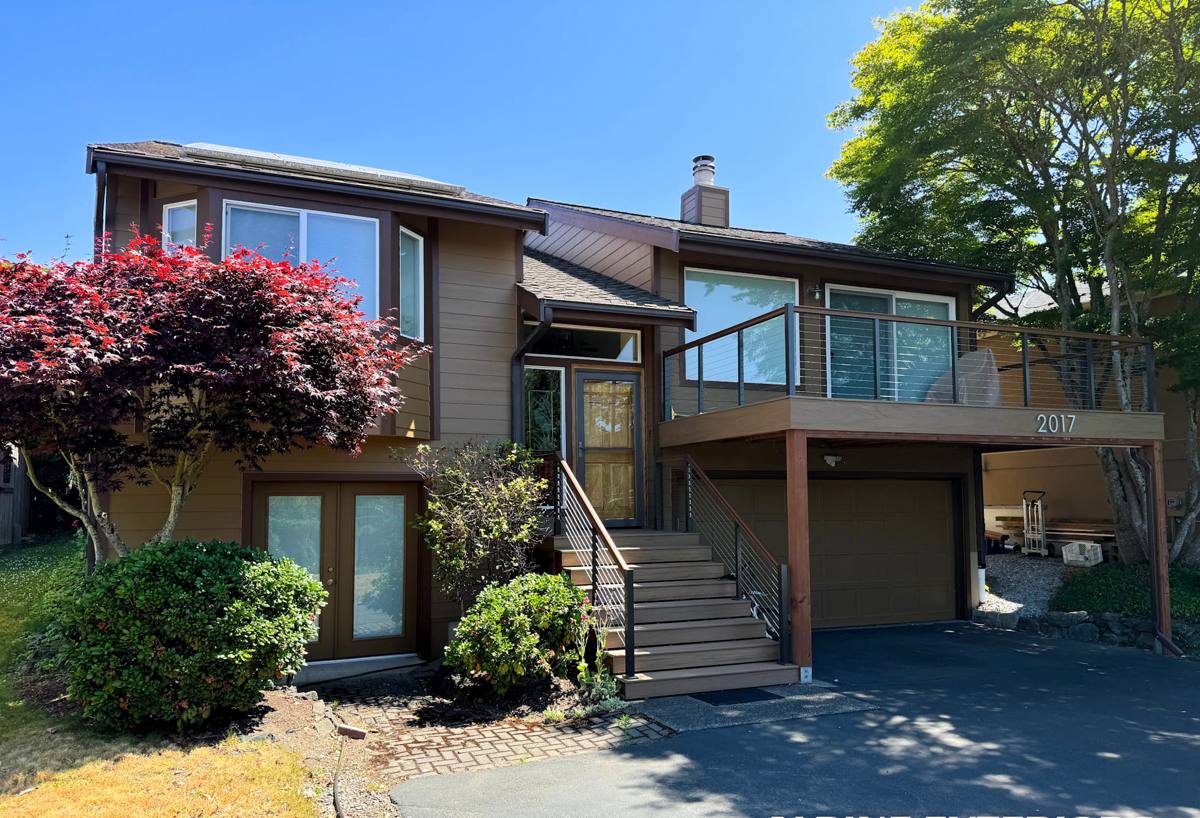
Why Happy Valley Roofs Wear Differently
Three factors do most of the damage, and they compound each other rather than acting alone.
Salt Air
Proximity to the bay means airborne salt settles on roofing materials and metal components. It accelerates corrosion on exposed fasteners, flashing, and vents, and it can gradually break down the surface of lower-grade shingles faster than the manufacturer's rated lifespan would suggest. This is a slow, cumulative effect — you won't see it in year one, but you'll see it show up early in year fifteen instead of year twenty-five.
Driving Rain
Bellingham's rain doesn't just fall, it's frequently pushed by wind off the water. Wind-driven rain finds gaps that vertical rain never would — under shingle tabs, around chimney flashing, at the edges of skylights and roof-to-wall transitions. A roofing system that's adequate in a calmer climate can be marginal here, particularly at those transition points.
Moss and Shade
Parts of Happy Valley have mature tree cover that keeps certain roof faces — usually north- and west-facing slopes — shaded and damp well after the rest of the roof has dried. That's exactly the environment moss needs. Moss doesn't just look bad; it holds moisture against the roofing surface, lifts shingle edges as it grows, and works its way into fastener holes over time.
Signs a Roof Needs Replacing, Not Just Repairing
A lot of homeowners call for a repair and end up needing a replacement conversation instead — and it's a fair question why. Here's how we tell the difference:
- Granule loss is widespread across multiple roof faces, not isolated to one storm-damaged area
- Shingles are curling, cupping, or cracking in more than one section of the roof
- There's moss growth established across a significant portion of the roof, not just a patch you can clean off
- Flashing around chimneys, vents, or valleys is original and hasn't been updated in a prior repair
- You've had two or more leak repairs in different spots over the last few years
- The roof is 18+ years old and made of standard composition shingle
- Decking feels soft, spongy, or shows sagging when viewed from the attic or from the street
One or two of these might point to a targeted repair. Several at once usually means the underlying materials are past the point where repair is the economical choice — you'd be patching a system that's failing broadly, not fixing an isolated problem.
What a Correct Roof Replacement Involves Here
A roof replacement done right in this neighborhood isn't just "new shingles, same as before." Given the conditions above, a few steps matter more here than they would in a drier, more sheltered part of the county.
Full Tear-Off and Deck Inspection
We don't install over an existing layer. A full tear-off is the only way to actually see the decking underneath, which is where salt air and years of trapped moisture do their real damage. Soft or delaminated plywood gets replaced before anything new goes down — installing new roofing over a compromised deck just guarantees an earlier failure.
Underlayment and Water Barriers
Given how often wind-driven rain works its way under the primary roofing surface, the underlayment layer is doing more work here than it would in a calmer climate. We use synthetic underlayment across the field and self-adhering, waterproof membrane at the vulnerable spots — valleys, eaves, and around every penetration — rather than treating those areas as an afterthought.
Ventilation
Proper intake and exhaust ventilation keeps the underside of the roof deck dry and temperature-balanced. This matters everywhere, but it matters more on shaded, moisture-prone roof faces, where poor airflow gives moss and mildew an even bigger head start. Ventilation gets checked and corrected as part of the job, not assumed to already be adequate.
Flashing and Fasteners
Given the corrosive effect of salt air, we pay close attention to the metal components — corrosion-resistant flashing and fasteners hold up longer around chimneys, skylights, and roof-to-wall junctions than standard-grade hardware does this close to the bay.
Moss Prevention Built In
Where a roof has shaded, damp-prone faces, we typically recommend zinc or copper strips near the ridge on those sections. Rain washing over the strip carries trace metal ions down the roof face, which suppresses moss and algae regrowth for years without chemical treatments.
Comparing Material Options
Most Happy Valley roof replacements land on one of a few material choices. Here's how they stack up against the specific conditions this neighborhood deals with.
| Material | Typical Lifespan Here | Moss / Moisture Resistance | Best Fit |
|---|---|---|---|
| Standard 3-tab shingle | 15–20 years | Lower — more susceptible to granule loss and moss anchoring | Budget-conscious replacements, rental properties |
| Architectural (dimensional) shingle | 25–30 years | Better — thicker mat holds up longer under damp shade | Most owner-occupied homes; the common default choice |
| Metal (standing seam or panel) | 40–50+ years | Very good — sheds moisture fast, little surface for moss to grip | Homes wanting long-term, low-maintenance performance |
| Cedar shake | 20–30 years with upkeep | Requires active maintenance in shaded, damp conditions | Homeowners committed to regular maintenance for the look |
We don't push cedar shake on shaded Happy Valley roof faces as a first recommendation. It's a legitimate, attractive product, but in a damp, low-sun environment it needs consistent cleaning and treatment to perform the way it's meant to — and that's a maintenance commitment worth being upfront about before you commit to it, not something we discover after installation.
Cost Factors Specific to This Neighborhood
Every roof is priced on its own specifics, but a few local factors tend to move the number more than homeowners expect:
| Factor | Why It Affects Cost Here |
|---|---|
| Deck condition | Roofs with a history of slow leaks often need more decking replaced than is visible from the ground |
| Roof pitch and access | Steeper roofs and tree-obstructed access (common on wooded lots) increase labor time |
| Number of valleys and penetrations | More transitions mean more flashing and membrane work, which is where wind-driven rain problems usually start |
| Moss remediation | Established moss growth may need treatment and cleanup before or during tear-off |
| Material choice | Metal and architectural shingle carry a higher upfront cost but a longer service life in this climate |
We'll walk through which of these apply to your roof specifically during an on-site estimate — broad national average price ranges you'll find online rarely account for local conditions like these.
Our Replacement Process
- On-site inspection of the roof, decking, ventilation, and flashing before any quote is written
- Written estimate that explains material choice and any deck repair contingencies up front
- Full tear-off of existing roofing, with decking inspected and replaced where needed
- Installation of synthetic underlayment and waterproof membrane at valleys, eaves, and penetrations
- Ventilation check and correction where intake or exhaust airflow is inadequate
- Corrosion-resistant flashing and fasteners installed at all transitions
- Zinc or copper moss-prevention strips added on shaded or historically moss-prone roof faces
- Final walkthrough and cleanup, including magnetic sweep for stray fasteners
Why Hiring a Crew That Already Works Happy Valley Matters
A roofing crew that mostly works drier, more sheltered parts of the region can still do competent work — but they're often applying a standard playbook to conditions it wasn't built for. A crew that regularly works Happy Valley and the surrounding Bellingham neighborhoods already knows which roof faces on a given lot tend to hold moss, which detailing holds up against wind-driven rain off the bay, and which corners get cut on lower-bid jobs that show up as problems in year three instead of year twenty. That familiarity shows up in the details — the extra membrane at a valley, the flashing grade specified, the ventilation that actually gets checked instead of assumed.
It also matters for licensing and accountability. Washington state requires roofing contractors to be licensed and bonded, and a legitimate local contractor should be able to show you that registration without hesitation. Anyone hesitant to provide it, or offering a price that seems disconnected from the scope of work discussed, is worth a second look before you sign anything.
Maintaining a New Roof Through Whatcom County's Moss Season
A correctly installed roof still benefits from basic seasonal upkeep, especially given the conditions here:
- Keep gutters clear so water isn't backing up under the roof edge during heavy rain
- Trim back tree limbs that keep a roof face shaded and damp longer than necessary
- Do a visual moss check each fall before the wet season sets in, and again in spring
- Have flashing and penetrations checked periodically, since that's where most leaks originate
None of this replaces the value of correct installation, but it extends the life of a well-built roof and helps you catch small issues before they become expensive ones.
Get an Honest Look at Your Roof
If you're not sure whether your Happy Valley roof needs a repair or a full replacement, the most useful next step is having someone look at it in person rather than guessing from the ground. We're happy to walk the roof, explain what we see, and put together a straightforward estimate — no pressure, no obligation. Use the form below to request a free estimate.