 Bellingham Siding
 Birchwood Homes Face a Specific Kind of Weather Beating
Birchwood sits close enough to Bellingham Bay and the surrounding waterways that homes here deal with a combination of stresses that inland Whatcom County properties simply don't see as often: salt-laden air drifting in off the water, wind-driven rain that hits siding sideways rather than falling straight down, and a moss and algae season that can stretch for the better part of the year in our marine climate. Any one of those factors will shorten the life of the wrong siding material. Together, they make material selection and installation quality the two things that matter most when it's time to re-side a Birchwood home.
This page is about one thing: what it actually takes to do a James Hardie fiber cement siding job right on a Birchwood house, given what this specific neighborhood's weather does to a building envelope year after year.
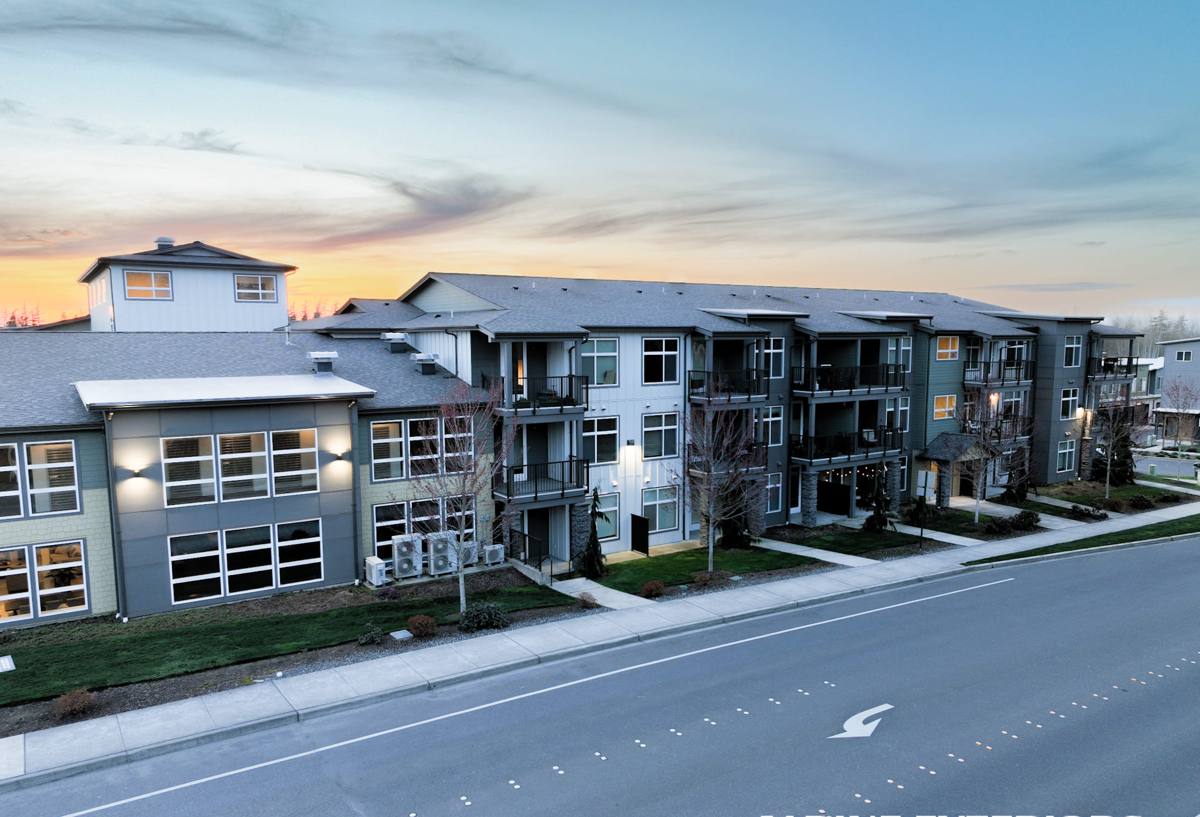
What Salt Air, Driving Rain, and Moss Season Actually Do to Siding
Salt Air
Airborne salt from the bay doesn't just sit on the surface of your siding — it works into fasteners, trim seams, and any exposed cut edges. On materials that aren't dimensionally stable or that rely on a factory coating to keep moisture out, salt exposure accelerates corrosion at the metal fasteners and speeds up finish breakdown at the surface. Over years, that shows up as chalking, fading, and soft spots forming wherever the protective layer has worn thin.
Driving Rain
Bellingham's storms frequently come with enough wind to drive rain sideways into wall assemblies rather than letting gravity carry it straight down and off. That means the joints, laps, and butt seams in your siding system are doing real work, not just sitting there for looks. A siding product that swells, warps, or wicks water at the seams when it's hit at an angle is going to fail at exactly the spots where driving rain concentrates — corners, window returns, and lower courses near grade.
Moss and Algae Season
Whatcom County's damp, mild climate keeps surfaces wet or humid for long stretches of the year, which is exactly what moss and algae need to establish themselves. On siding that absorbs moisture into its surface, organic growth doesn't just look bad — it holds water against the material longer, which compounds whatever moisture problem already exists underneath. Siding that sheds water cleanly and doesn't give moss a foothold in the first place stays healthier for far longer with far less maintenance.
Why James Hardie Is the Product We Install in Birchwood
We install James Hardie fiber cement exclusively, and in a neighborhood like Birchwood that reasoning is easy to explain in plain terms. Hardie's HZ5 product line is engineered specifically for climates like ours — cold, wet, and humid for long stretches — with a formulation designed to resist moisture absorption and hold up to freeze-thaw cycling without the swelling or delaminating that wood-based and some engineered wood products can experience when they take on water repeatedly.
The ColorPlus factory finish matters just as much as the substrate. It's baked on in a controlled factory environment rather than field-applied, which gives it better adhesion and more consistent coverage than a job-site paint job — including at cut edges when they're properly sealed during installation. In a salt-air, high-moisture environment, a finish that resists fading and doesn't need repainting every few years is the difference between siding you maintain occasionally and siding you're fighting with constantly.
Fiber cement is also non-combustible, which is a genuine safety advantage regardless of coastal exposure, and it holds paint and color far longer than wood-based sidings because it doesn't move dimensionally the way wood does with humidity swings — a real issue in a marine climate where humidity rarely sits still for long.
What a Correct Installation Involves
The product only performs as designed if the installation respects Hardie's published specifications — and this is where a lot of siding jobs quietly go wrong, especially in a demanding climate like Birchwood's. Correct installation isn't optional detail; it's the difference between siding that lasts decades and siding that fails at the seams within a few years.
| Installation Element | Done Correctly | Common Mistake |
|---|---|---|
| Fastener placement | Correct type, length, and spacing per Hardie spec; corrosion-resistant fasteners suited for coastal exposure | Wrong fastener material or spacing that leaves boards prone to movement and water entry |
| Clearance from grade and roofline | Minimum clearances maintained so siding isn't sitting in standing moisture or splash-back | Siding installed too close to grade, decks, or roof lines, trapping moisture against the bottom edge |
| Cut-edge sealing | Every field cut sealed with an appropriate touch-up product before installation | Unsealed cut edges left exposed, giving moisture a direct entry point into the substrate |
| Flashing and water management | Proper flashing at windows, doors, and penetrations integrated with a weather-resistive barrier | Missing or poorly lapped flashing that lets driving rain behind the siding plane |
| Joint and lap treatment | Butt joints and laps installed per spec with correct overlap for wind-driven rain resistance | Tight or improperly lapped joints that trap water instead of shedding it |
None of this is exotic knowledge, but every one of these details is exactly the kind of thing that gets rushed or skipped on a crew that doesn't do fiber cement siding as its core business. In a climate that punishes shortcuts as fast as Birchwood's does, those shortcuts show up early.
Product Options That Make Sense for Birchwood Homes
Most Birchwood siding jobs draw from a few core parts of the Hardie lineup, matched to the home's architecture and exposure:
- HardiePlank lap siding — the standard horizontal siding for most single-family homes, available in a range of textures and ColorPlus finishes
- HardiePanel vertical siding — often used for accent sections, gables, or homes with a more modern or board-and-batten look
- HardieTrim — matched trim boards around windows, corners, and fascia so the whole envelope shares the same moisture performance, not just the field siding
- HardieSoffit — vented or non-vented panels for eaves and overhangs, which matter for controlling moisture at the roofline in a wet climate
Color selection matters here too. ColorPlus finishes are formulated to resist the fading and chalking that salt air and UV exposure both accelerate, so a color chosen today should still look close to true a decade out rather than needing a repaint to stay presentable.
How We Approach a Birchwood Siding Job
Our process on a Birchwood home follows the same core steps every time, because skipping steps is where problems start:
- On-site assessment — we look at the existing siding, sheathing condition, and any signs of past moisture intrusion before quoting anything
- Water management plan — flashing, weather-resistive barrier, and drainage details are planned around the specific exposure of that wall — a Birchwood home facing prevailing wind and rain needs more attention at certain elevations than others
- Tear-off and substrate check — we don't cover up rot or compromised sheathing; if we find it, we address it before new siding goes on
- Installation to Hardie spec — fastener schedule, clearances, cut-edge sealing, and joint treatment all follow the manufacturer's published requirements, not shortcuts
- Trim and detail work — windows, corners, and penetrations get the same care as the field siding, since these are the spots that fail first when rushed
- Final walkthrough — we go over the finished job with the homeowner before calling it done
Cost Factors on a Birchwood Job
Every siding job is priced around the specifics of the house, but a few factors consistently move the number on projects in this area:
| Factor | Why It Matters Here |
|---|---|
| Home size and wall complexity | More corners, gables, and cutouts mean more trim work and labor time |
| Existing siding removal | Tear-off and disposal of old material adds time versus a bare-sheathing install |
| Substrate repair | Rot or moisture damage found underneath old siding needs to be fixed before new siding goes on |
| Product mix | Plank versus panel siding, trim profiles, and soffit work all affect material cost |
| Access and site conditions | Slopes, tight lot lines, and multi-story sections affect staging and labor |
We give straightforward, itemized estimates so a homeowner can see exactly where the cost is going rather than a single lump number.
Why It Matters That We Already Work in Birchwood
A crew that has already sided homes in this specific stretch of Bellingham knows what the wind does off the bay, which elevations take the worst of the driving rain, and how aggressively moss establishes itself here compared to a drier inland neighborhood. That's not something you can fully account for by reading a spec sheet — it comes from having done the work in this exact climate, on homes with this exact exposure. It also means we're a known, reachable crew if a question comes up five or ten years after installation, not a company that worked the area once and moved on.
Signs Your Current Siding Is Losing the Fight
- Visible moss or algae buildup that returns quickly after cleaning
- Soft spots, bubbling, or warping, especially near the bottom courses or window trim
- Paint that's chalking, peeling, or fading unevenly within just a few years
- Gaps opening up at seams, corners, or trim joints
- Musty smells or visible staining on interior walls that share an exterior wall
- Fasteners that are rusting, backing out, or staining the siding surface
If you're seeing any of these on a Birchwood home, it's worth having someone look at the wall assembly, not just the surface — by the time siding shows visible damage, the substrate underneath has often been dealing with moisture for a while.
If you're weighing a siding project in Birchwood, we're glad to come take a look and walk you through what we'd recommend for your home — no pressure, no obligation. Use the form below to request a free estimate.