 Bellingham Siding
 Roof Repair Built for Sudden Valley's Wooded, Wet Setting
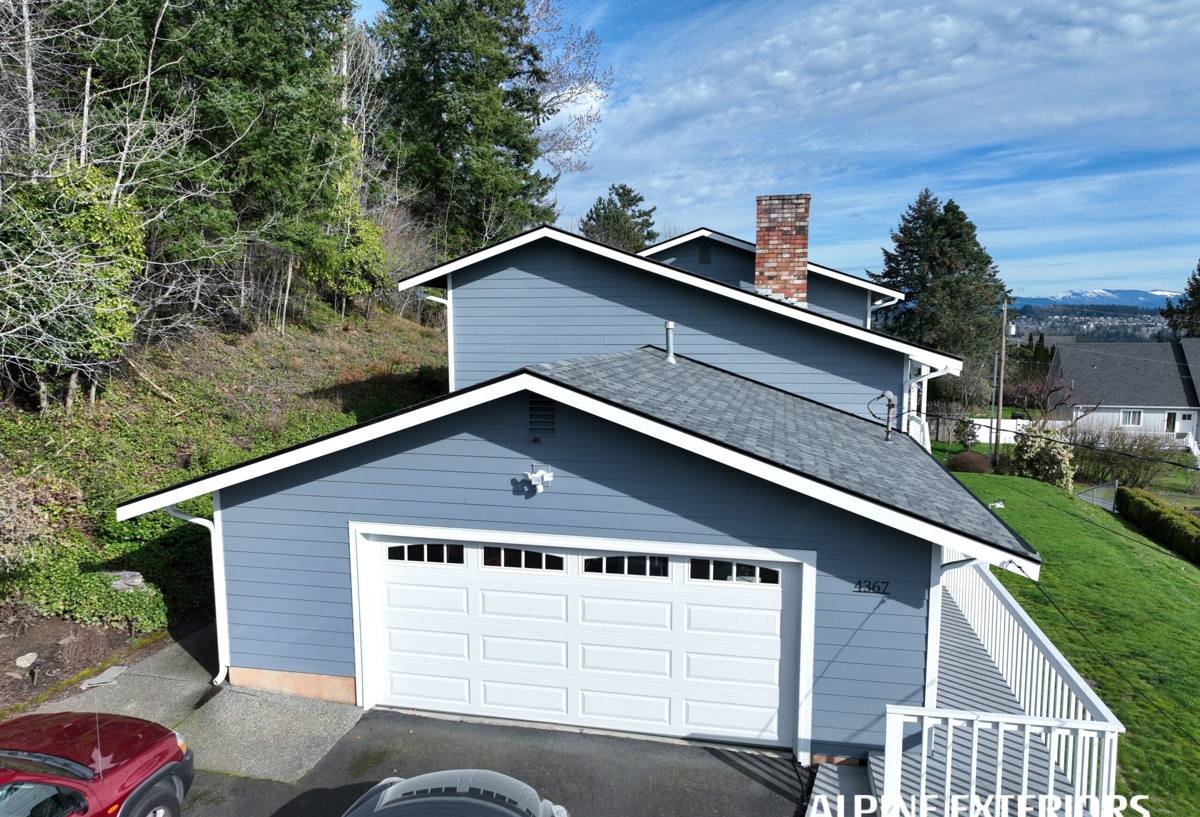
Sudden Valley sits in a pocket of Whatcom County that gets more shade, more moss, and more standing moisture than most Bellingham neighborhoods closer to open water or town. The tree cover around Lake Whatcom is part of what makes the community attractive, but it's also exactly what shortens a roof's working life. Needles and leaf litter collect in valleys and behind chimneys, shade keeps shingles damp long after a storm passes, and moss gets a head start it never quite loses. A roof repair here has to account for all of that, not just patch the spot that's leaking.
We work on homes throughout Bellingham and the surrounding county, and Sudden Valley is a neighborhood we come back to regularly. That matters more than it sounds like it should — a crew that already knows how the tree canopy sheds moisture onto specific roof sections, and how long shingles stay wet after a marine front rolls through, spends less of your money chasing the problem and more of it actually fixing the roof.
What the Local Climate Actually Does to a Roof
Whatcom County's marine climate brings a long wet season, salt-tinged air off the Sound and the bays, and a moss season that can run most of the year in shaded spots. On a roof, that combination shows up in a few predictable ways:
- Moss and lichen growth that lifts shingle edges and holds water against the roof deck long after the surface looks dry
- Slow-draining valleys and north-facing slopes shaded by mature trees, where granule loss and soft spots tend to start first
- Fastener and flashing corrosion from prolonged dampness and salt-laden air, especially around chimneys, vents, and skylights
- Gutter and downspout overload from needle drop and leaf debris, which backs water up under the roof edge instead of moving it off the roof
None of this is unique to Sudden Valley, but the tree cover and lake-adjacent humidity make it more pronounced here than on an open, sun-exposed roof closer to downtown Bellingham. A repair that doesn't address moss and drainage as part of the fix is a repair that's likely to reopen within a season or two.
Why "Just Patch the Leak" Often Isn't Enough
A leak inside the house is usually the last symptom to show up, not the first. Water travels along the underlayment and roof deck before it finds a gap in the ceiling, so the stain you see may be several feet from where the water is actually getting in. On a moss-affected or heavily shaded roof, we've found that the real entry point is often upslope from the visible damage — under a moss mat, behind a flashing joint that's been sitting wet, or at a valley that's been slowly draining wrong for a year or more. A correct repair traces the water path, not just the water stain.
What a Correct Roof Repair Involves
Every repair we do follows the same basic sequence, adjusted for what we find on the roof:
- Inspection from the roof surface, not just the ground or the attic — moss, granule loss, and flashing wear are easy to miss from below
- Tracing the actual water path, including checking the attic or roof deck from underneath where accessible
- Removing moss and debris from the affected area and surrounding roof, since leaving it in place undermines any repair done near it
- Replacing damaged materials — shingles, underlayment, decking, or flashing — rather than sealing over them
- Correcting the cause where one exists: poor drainage, undersized or clogged gutters, a flashing detail that was never right, or ventilation that's kept the deck too damp
- Confirming the fix before we consider the job done, including checking nearby areas that show early wear
Skipping any of those steps is how a "fixed" roof ends up leaking again in the next heavy rain. We'd rather take the extra time up front than have you calling us back for the same spot.
Moss: The Repair Issue Most Homeowners Underestimate
Moss doesn't just look bad — it holds moisture against the shingle surface and roof deck for days after the rest of the roof has dried out. Over a full wet season, that constant dampness accelerates granule loss, softens the deck underneath, and works shingle tabs loose at the edges. In shaded parts of Sudden Valley, moss can establish itself again within a year or two of removal if the underlying shade and drainage conditions aren't addressed.
We treat moss as part of the repair, not a separate cosmetic step. That means physically removing it (not just chemically browning it and leaving the mat in place), checking the shingles and deck underneath for damage the moss was hiding, and talking through realistic options for slowing regrowth — things like improved gutter flow, trimming back overhanging limbs where that's the homeowner's call to make, or zinc/copper control strips on future roof work. We're honest that moss control in a heavily shaded setting is ongoing maintenance, not a one-time fix.
Common Repair Scenarios We See in This Neighborhood
| Symptom | Likely Cause | Typical Fix |
|---|---|---|
| Ceiling stain near a chimney or skylight | Failed or corroded flashing, often hidden under moss | Flashing replacement, moss removal, deck check |
| Damp spot after every storm, same location | Clogged or undersized gutter backing water under the roof edge | Gutter clearing/repair plus edge flashing correction |
| Soft or spongy roof deck underfoot | Long-term moisture intrusion under moss or debris | Deck section replacement, not just a surface patch |
| Granule buildup in gutters, thinning shingles | Age plus prolonged dampness from shade | Targeted shingle replacement; full re-roof if widespread |
| Musty attic smell, no visible leak yet | Slow moisture intrusion or poor ventilation | Source tracing, ventilation review, repair before drywall damage |
Repair vs. Replacement: An Honest Read
Not every roof problem in Sudden Valley needs a full replacement, and we won't tell you it does. A single failed flashing detail, a localized moss patch, or storm damage to one section is usually a straightforward repair. Replacement becomes the more honest recommendation when the damage is spread across multiple sections, the roofing material is near the end of its service life across the board, or repeated repairs in the same area suggest the underlying roof system — not just one spot — is worn out. We'll tell you plainly which category your roof falls into and why, including what we found during the inspection that led us there.
Materials and Long-Term Fit for This Setting
Whatever material is already on your roof, a repair should match it in type, weight, and profile — mismatched shingles or flashing metals are a common source of repeat leaks. If you're weighing a future full replacement, materials that resist moss growth and handle sustained dampness well are worth the conversation, since a shaded, lake-adjacent lot works any roofing material harder than an open, sun-exposed one. We'll walk through the real trade-offs — upfront cost, expected maintenance, and how each option actually performs under Whatcom County's wet season — rather than pushing one product as a cure-all.
Our Process, Start to Finish
- Free on-site inspection, including getting on the roof when conditions allow
- Clear explanation of what we found, what's causing it, and what it will take to fix
- A written estimate before any work starts — no surprise add-ons once we're up there
- Repair work scheduled around Bellingham's wet-season weather windows, not rushed between rain systems
- A final check of the repaired area and anything nearby showing early wear
We don't upsell a full re-roof when a repair will genuinely hold, and we don't undersell a repair when the roof actually needs more. Our goal is a straight answer, whichever direction that points.
Why a Crew That Already Works Sudden Valley Matters
Roofing problems in this neighborhood tend to repeat themselves — the same tree cover, the same drainage patterns, the same moss pressure show up on house after house. A crew that's worked here before recognizes those patterns quickly instead of treating every roof as a blank slate. That familiarity shortens the diagnostic time, helps us anticipate where a leak is likely coming from before we're even on the roof, and means the repair addresses the setting your home is actually in, not a generic textbook fix.
It also means we're a known, reachable local business if a repair needs a follow-up visit — not a crew that did one job and moved on to the next county. For a community with this much tree cover and this long a wet season, that kind of continuity is worth something.
Get a Straight Answer About Your Roof
If you're seeing a stain, a soft spot, heavy moss, or just want a second opinion on a roof that's getting up in years, we're happy to take a look. The estimate is free, there's no pressure to book anything on the spot, and you'll get a plain explanation of what we found. Use the form below to get in touch and we'll schedule a time to come out.