 Bellingham Siding
 Roof Repair Built for Sehome's Climate
Sehome sits close enough to Bellingham Bay that roofs here deal with a combination most inland homes never see: salt-laden air, driving rain that comes in sideways off the water, and a moss season that can run nine months out of the year. Add in the mature tree canopy around Sehome Hill and the older housing stock typical of this part of Bellingham, and you get roofs that age differently than roofs twenty miles inland. A repair approach that works in a dry climate often fails here within a season or two, because it doesn't account for how much water this neighborhood actually sees and how long that water sits on a roof surface between dry spells.
This page is about one thing: getting a roof repair right for a Sehome home, not a generic patch job. That means understanding what Whatcom County's weather does to different roofing materials, what a correct repair looks like from tear-off to cleanup, and why local experience matters more here than it does in most parts of the country.
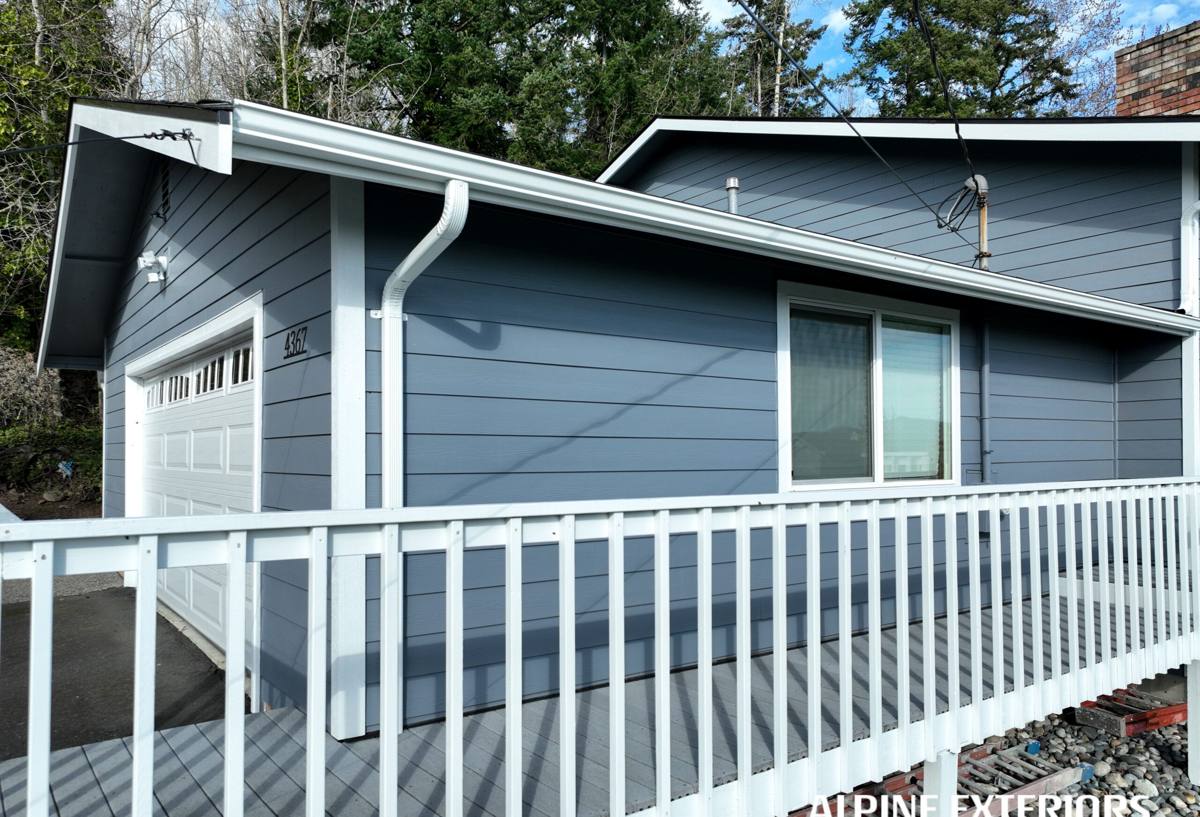
What Bellingham's Weather Does to Sehome Roofs
Three climate factors drive almost every roof repair call we get from this neighborhood:
Moss and Organic Growth
Bellingham's mild, wet winters and shaded lots create ideal conditions for moss, lichen, and algae. Moss doesn't just look bad — it holds moisture against the roofing material, lifts shingle edges as it grows, and works its way under laps where it keeps that section of roof damp long after the rest has dried out. On older roofs, moss growth is often the first visible sign that a deeper moisture problem is developing underneath.
Driving, Wind-Driven Rain
Rain that falls straight down is relatively easy for a roof to shed. Rain that's pushed sideways by wind off the bay is a different problem — it gets forced up under shingle tabs, around vent boots, and behind flashing that would otherwise be fine. Most of the leak calls we get in this neighborhood trace back to wind-driven rain finding a small gap that a straight-down rainstorm never would have exposed.
Salt Air and Corrosion
Proximity to the water means metal components — flashing, fasteners, vent caps, and gutter hardware — corrode faster here than they do further inland. A fastener that would last decades in a dry climate can start failing in ten to fifteen years near Bellingham Bay. When we're repairing a roof in Sehome, we're always checking metal components for early corrosion, not just the roofing material itself.
Signs Your Sehome Home Needs Roof Repair
Roof damage in this climate is often gradual and easy to miss until it becomes a bigger problem. Watch for:
- Dark streaking, green tint, or visible moss patches on the roof surface
- Granules collecting in gutters or at the base of downspouts
- Curling, cupping, or lifted shingle edges, especially on north-facing slopes that stay shaded and damp longer
- Water stains on interior ceilings or upper walls, particularly after a windy rainstorm
- Soft or spongy spots when walking the roof (a sign of decking damage underneath)
- Rust streaks near flashing, vent boots, or metal valleys
- Daylight visible through the roof deck from inside the attic
- Sagging along a specific section rather than the whole roofline
Any one of these on its own might be minor. Several together usually mean it's time for a real inspection rather than a wait-and-see approach.
What a Correct Roof Repair Actually Involves
A roof repair done right isn't just replacing the shingles you can see damaged from the ground. It's a sequence of steps, and skipping any of them is how "repairs" fail again within a year or two.
1. Diagnosis Before Any Work Starts
We start by identifying the actual source of the problem, not just the visible symptom. A stain on a ceiling doesn't always mean the leak is directly above it — water travels along decking and rafters before it shows up inside, so tracing it back to the real entry point matters.
2. Moss and Debris Removal
Before any repair, the surrounding area gets cleared of moss, needles, and debris so we can see the actual condition of the roofing material and decking. Repairing over moss just traps moisture under the new work.
3. Decking Inspection
If water has been getting in for a while, the plywood or board decking underneath may be soft, delaminated, or rotted. Any compromised decking gets cut out and replaced — patching shingles over bad decking doesn't hold and creates a soft spot that will fail again.
4. Flashing and Underlayment Repair
Flashing around chimneys, vents, skylights, and valleys is where most Sehome leaks originate, especially with driving rain in the mix. We repair or replace flashing and the underlayment beneath it so water is directed off the roof rather than finding its way under the surface layer.
5. Material Matching
Wherever possible, we match the repair material to the existing roof — same shingle type, similar color and profile — so the repair blends in rather than standing out as an obvious patch. On older roofs where exact matches aren't available, we'll talk through the closest reasonable option honestly rather than guessing.
Repair vs. Replacement: How We Help You Decide
Not every roof problem calls for a repair, and not every roof problem calls for full replacement. The right call depends on a handful of factors we walk through during inspection.
| Factor | Leans Toward Repair | Leans Toward Replacement |
|---|---|---|
| Roof age | Under 15 years, or roof has significant remaining service life | Nearing or past its material's expected lifespan |
| Extent of damage | Isolated to one section or feature (valley, chimney, one slope) | Widespread across multiple slopes |
| Decking condition | Solid, dry decking beneath the damaged area | Rot or soft decking found in several locations |
| Repair history | First or second repair in this area | Same section has already been repaired multiple times |
| Moss/algae coverage | Light to moderate, treatable | Heavy, longstanding growth affecting large areas |
We'll always give you our honest read on which side of that table your roof falls on, including the trade-offs, so you can make the call with real information rather than a sales pitch.
Our Roof Repair Process
Inspection and Estimate
We walk the roof, check the attic where accessible, and document what we find with photos. You get a clear, written estimate before any work begins — no surprise add-ons once we're up on the roof.
Scheduling Around Bellingham Weather
Roofing work needs a reasonably dry window, and Whatcom County doesn't always cooperate. We plan repair timing around the forecast and, where a job can't start immediately, we can put temporary weatherproofing in place so a small leak doesn't turn into interior damage while you wait for a repair window.
The Repair Itself
Work follows the sequence above — clear, diagnose, replace damaged decking if needed, repair flashing and underlayment, then install and match the roofing material. We protect landscaping and gutters during the work and do a full cleanup, including a magnetic sweep for stray fasteners, before we consider the job done.
Follow-Up
After a repair, we'll tell you honestly what to expect from the rest of the roof — whether it's good for years or whether you should be budgeting for replacement down the road. We're not interested in coming back for the same leak twice.
Roofing Materials Common on Sehome Homes
Sehome's mix of older craftsman-style homes, mid-century houses, and newer infill construction means we see a range of roofing materials in the neighborhood:
- Composition (asphalt) shingle — the most common roofing material in the area; repairs involve careful shingle matching and flashing work
- Metal roofing — increasingly common on newer builds and additions; repairs focus on seam integrity and fastener condition given salt air exposure
- Cedar shake and shingle — found on older homes in the neighborhood; requires specific repair techniques since dried-out or moss-covered cedar behaves differently than composition materials
We don't push homeowners toward a different material than what they already have unless there's a real reason to. If your roof is cedar and cedar is repairable, we'll repair it. If moss and moisture have gotten far enough that repair no longer makes sense, we'll say so directly instead of patching something that won't hold.
Why Hire a Crew That Already Works in Sehome
Roofing companies that mostly work outside Whatcom County tend to underestimate how much moss, salt air, and wind-driven rain actually affect a roof here. A crew that regularly works Sehome and the rest of Bellingham knows which flashing details tend to fail first in this climate, how aggressive the moss season really gets, and how to schedule around the region's weather patterns rather than guessing. That local pattern recognition is often the difference between a repair that lasts and one that reopens the same leak next winter.
Being local also means a faster response when a leak shows up during a storm, and a crew that's still around next year if a follow-up question comes up — not a truck that showed up from out of the area for one job and moved on.
Maintaining Your Roof Between Repairs
A repair holds longer when the rest of the roof is kept in reasonable shape. A few habits make a real difference in this climate:
- Clear moss and debris from the roof surface at least once a year, ideally before the wet season builds up
- Keep gutters and downspouts clear so water isn't backing up under the roof edge
- Trim back overhanging branches to reduce shade, debris, and abrasion on the roof surface
- Have the roof looked at after any major windstorm, even if nothing looks obviously wrong from the ground
- Address small leaks or moss patches early, before they turn into decking damage
None of this replaces a proper inspection, but it stretches the life of both your roof and any repair work done on it.
If you're dealing with a leak, moss buildup, or storm damage on a Sehome home, we're happy to take a look and give you a straightforward, no-pressure estimate — just fill out the form below to get started.