 Bellingham Siding
 Why Puget Roofs Wear Differently Than Roofs Inland
Homes in the Puget area sit close enough to open water and marine weather that they take a different kind of beating than a roof twenty miles inland. Salt-laden air moves through fasteners, flashing, and any exposed metal edge year-round, not just during storms. Add Whatcom County's long stretch of driving rain each fall and winter, plus a moss season that can run from October through May in shaded, north-facing sections, and you have a combination that finds every weak point in a roof system faster than drier climates do. A roof that would hold up fine in eastern Washington can start showing corrosion streaks, soft spots, or moss colonies within a few years out here if it wasn't built with this specific exposure in mind.
Metal roofing, done correctly, handles this combination better than most other roofing materials available to homeowners in this price range. But "metal roofing" covers a wide range of products and installation quality, and not every metal roof installed in Bellingham was actually specified or installed for coastal conditions. This page covers what a metal roof needs to do right in Puget specifically, and what our crew does differently because we already work this part of the county.
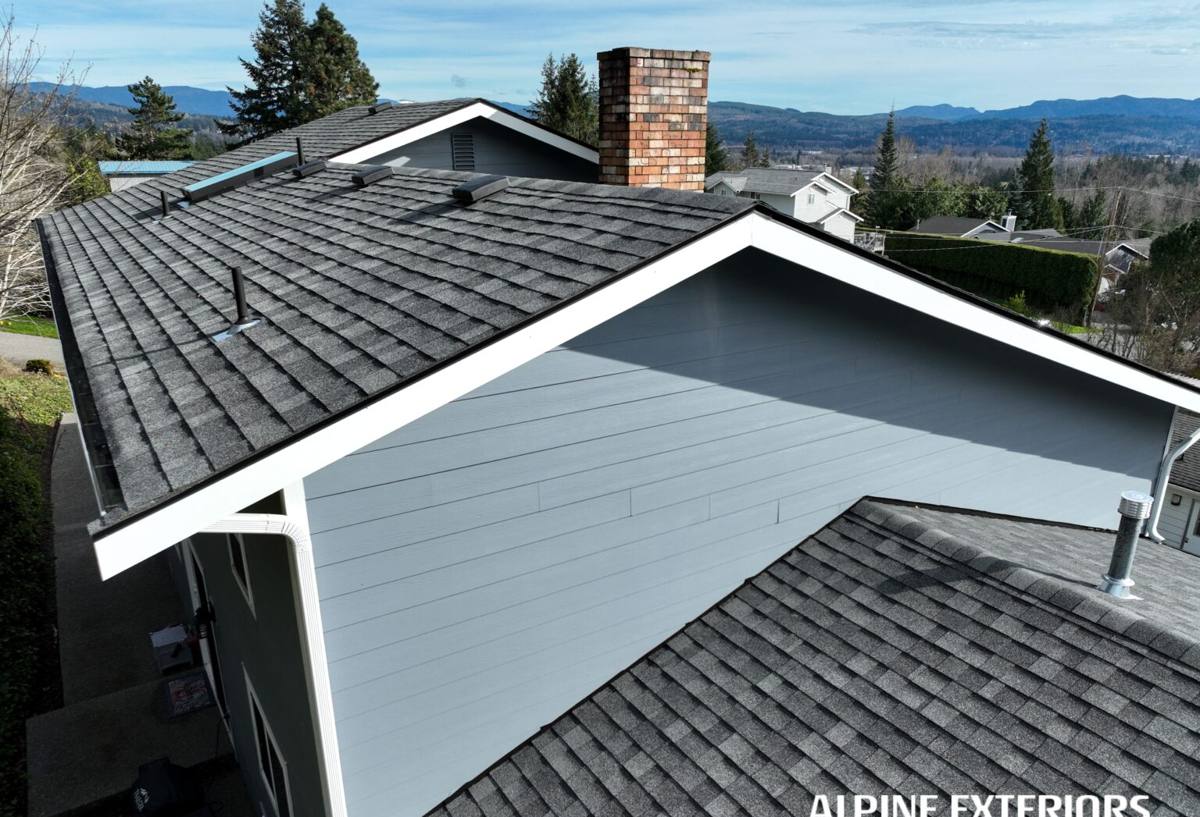
What Salt Air and Driving Rain Actually Do to a Roof
Salt air and corrosion
Airborne salt is corrosive to bare or poorly coated metal, and it's persistent — it doesn't take a direct ocean view for salt exposure to matter, just proximity and prevailing wind patterns off the water. Over time, unprotected fasteners, cut edges, and thin factory coatings can develop rust or white corrosion staining well before the panel itself fails structurally. The panel isn't usually the first thing to go; the fasteners, flashing, and any exposed cut edges are.
Driving rain and wind-driven water
Bellingham's storms frequently come with sideways rain, not just straight-down rain. That matters for roofing because wind-driven water gets pushed sideways and even slightly upward under laps, seams, and flashing details that would stay dry in a calmer climate. A roof detail that's "close enough" in a low-wind region can leak here specifically because the water isn't falling where the installer assumed it would.
Moss season and moisture retention
Shaded roof sections — north slopes, areas under tree cover, low-pitch sections — stay damp for extended stretches during the wet months. Moss and algae take hold in that sustained moisture. On asphalt shingles, moss roots into the granule surface and lifts shingle edges, accelerating wear. Metal roofing doesn't give moss the same foothold, but it isn't automatically immune either — debris buildup in valleys and around penetrations can still trap moisture against the panel and its coating over time.
What a Metal Roof Needs to Get Right in This Climate
Coating and material selection
The coating system matters as much as the base metal in a marine-influenced climate. Coatings are rated for how well they resist salt exposure, UV fading, and coastal corrosion, and this is one area where we don't cut corners — we spec coatings and finishes that are appropriate for proximity to salt air, not just whatever is cheapest to source. Fasteners matter just as much as the panel: mismatched or under-rated fasteners are frequently where corrosion starts first, well before the panel itself shows any wear.
Panel profile and fastening method
Standing seam systems use concealed fasteners and interlocking seams, which means far fewer penetration points for wind-driven rain to exploit. Exposed-fastener panels are less expensive but rely on gasketed screws that compress over time and need periodic checking. In a driving-rain climate, that difference in exposure isn't cosmetic — it's the difference between a roof that needs occasional fastener maintenance and one that mostly doesn't.
Flashing, laps, and sealed penetrations
Every valley, wall transition, vent pipe, and chimney is a place water can get pushed sideways or upward during a real Puget storm. These details need to be built for wind-driven water specifically — adequate lap length, correctly sequenced flashing, and sealant used as a backup, not as the primary defense. A roof that leaks almost always leaks at one of these transition points, not through the field of the panel itself.
Common Metal Roofing Systems: A Comparison
Homeowners in Puget generally choose between a few metal roofing approaches. Here's how they compare for this specific climate:
| System | Fastener Type | Coastal Durability | Typical Lifespan | Relative Cost |
|---|---|---|---|---|
| Standing seam | Concealed clips | Best — fewest exposed penetrations | 40-70 years | Higher |
| Exposed-fastener panel | Gasketed screws, visible | Good, needs periodic fastener checks | 25-40 years | Moderate |
| Metal shingles/tiles | Concealed or exposed, varies | Good, more seams than standing seam | 30-50 years | Moderate to higher |
Lifespan ranges assume correct installation, appropriate coating selection for this climate, and reasonable maintenance. A poorly installed standing seam roof will underperform a well-installed exposed-fastener roof — the installation quality matters more than the category of product.
What a Correct Metal Roof Installation Involves
Underlayment and moisture barrier
A synthetic or self-adhered underlayment appropriate for this rainfall volume goes down before any metal, giving the roof deck a second line of defense if wind-driven water ever gets past the panel seams. This isn't optional in a climate that sees the amount of driving rain Whatcom County does.
Deck condition and ventilation
Metal panels are only as good as what's underneath them. We check the deck for soft spots, moisture damage, and adequate ventilation before panels go on — a roof system that traps moisture underneath the metal will develop problems regardless of how good the panel and coating are.
Valleys, ridges, and edge metal
These are the highest-exposure areas on any roof and the most common failure points when a crew rushes a metal roofing job. Correctly formed valley metal, ridge caps, and drip edge — sized and lapped for this rainfall and wind exposure — are what keep water moving off the roof instead of finding a way under it.
Our Process for Puget Homes
- On-site assessment of the existing roof, deck condition, and specific exposure (tree cover, prevailing wind direction, proximity to water)
- Recommendation matched to the home's exposure level, not a one-size-fits-all package
- Coating and fastener selection appropriate for salt air and coastal corrosion resistance
- Full tear-off and deck inspection rather than roofing over existing problems
- Underlayment and flashing details built for wind-driven rain, not just vertical rain
- Final walkthrough covering valleys, penetrations, and edge metal before we consider the job done
We don't treat every metal roofing job the same way regardless of where it sits. A home tucked under tree cover with heavy shade needs different attention to moss and debris management than a more exposed home closer to open water needs for wind and salt. Because we already work in this area regularly, we're not guessing at these exposure differences — we've seen how roofs in this specific part of the county actually age.
Maintenance That Keeps a Metal Roof Performing Here
Metal roofing needs less maintenance than shingle roofing in this climate, but "less" isn't "none." A short seasonal routine goes a long way:
- Clear debris from valleys and around penetrations before the fall rains start
- Check for moss or algae buildup in shaded sections and remove it before it retains moisture against the panel
- Look for any loosened fasteners or lifted panel edges after major windstorms
- Keep gutters and downspouts clear so water isn't backing up against roof edges
- Have a professional check flashing and sealant at penetrations every few years rather than waiting for a visible leak
Most of this is a once- or twice-a-year task, not a constant chore — but skipping it entirely is how small issues in valleys and penetrations turn into deck damage over a few wet seasons.
Why a Local Crew Matters for This Job
Metal roofing manufacturers publish general installation guidelines, but general guidelines don't account for a specific neighborhood's wind exposure, tree cover, or proximity to salt air. A crew that already works Puget and the surrounding Bellingham area has seen how roofs here actually fail — which valleys collect debris, which orientations hold moss longest, which fastener choices have held up and which haven't. That's the kind of judgment that doesn't come from a spec sheet; it comes from doing this work in this specific climate, repeatedly, and paying attention to what happens to it a few winters later.
Whatcom County's mix of marine air, sustained rain, and moss-friendly shade isn't unique in the abstract, but it's specific enough that a roof built for a drier or less coastal climate will underperform here. Getting the coating, fastening method, and flashing details right up front costs less than fixing corrosion or a moss-related leak a few years down the road.
Get a Straight Answer for Your Roof
If you're weighing metal roofing for a home in Puget, we're glad to take a look and give you an honest read on what your roof's specific exposure calls for — no pressure, no upsell to a system your home doesn't need. Use the form below to request a free estimate and we'll walk the roof with you.