 Bellingham Siding
 Why Sudden Valley Roofs Age on Their Own Timeline
Sudden Valley sits in the trees along Lake Whatcom, and that setting changes how a roof holds up over time. Heavy conifer cover shades large sections of most roofs for much of the day, so shingles that would dry out within an hour in an open Bellingham subdivision can stay damp well into the afternoon here. Add in Whatcom County's long wet season and the marine, moisture-laden air that moves inland off Bellingham Bay, and you get a roofing environment that's more demanding than the general "Pacific Northwest" label suggests. Moss, trapped moisture, and organic debris are the three forces we plan around on every Sudden Valley roof — not problems we discover after the fact, but conditions we design the installation around from the start.
None of this means a roof in this neighborhood is doomed to fail early. It means the shade, the needle and leaf litter, and the slower drying times need to be answered with the right material, the right ventilation, and careful attention to the small flashing and underlayment details that keep water moving out instead of soaking in.
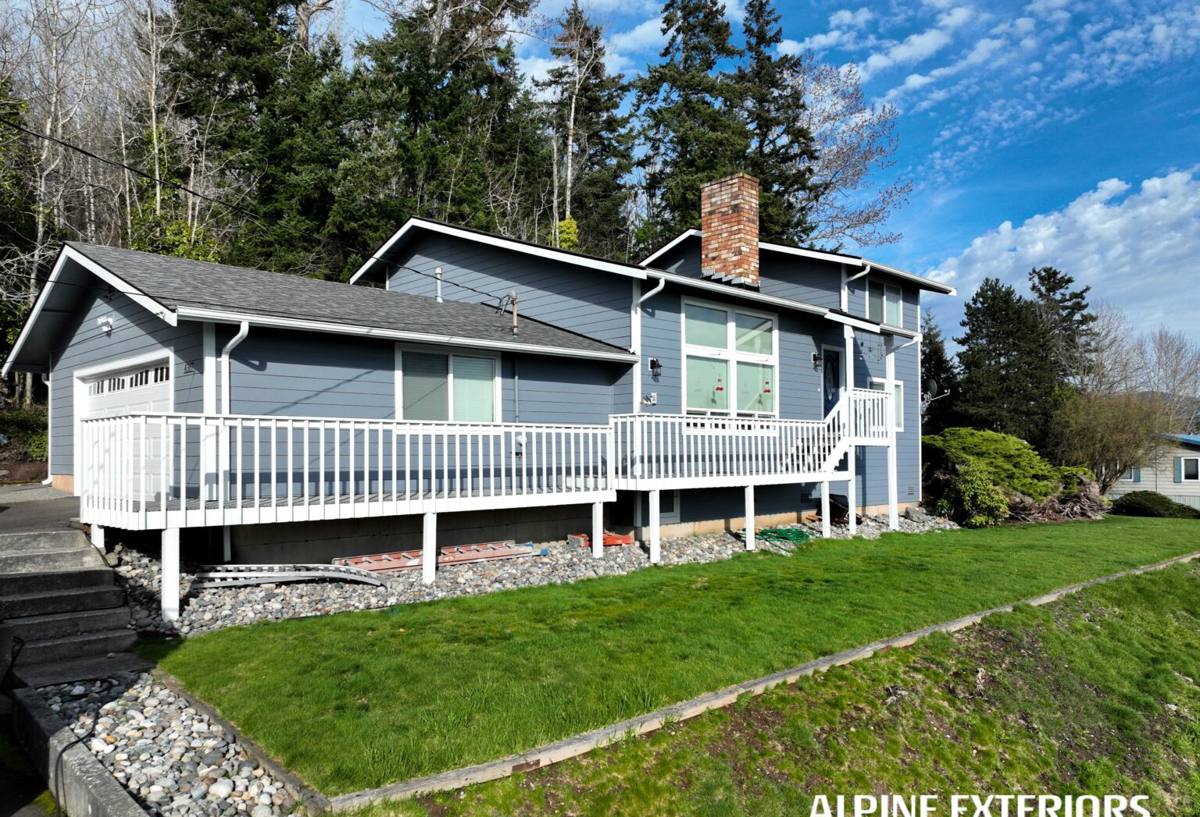
Signs a Roof Has Reached Replacement Age
When repair stops making sense
Most roofs give warning signs well before a leak shows up inside the house. On shaded, moss-prone roofs like the ones common in Sudden Valley, those signs often show up earlier than the shingle manufacturer's rated lifespan would suggest, because moss holds moisture against the surface and speeds up granule loss. If you're seeing thick moss mats rather than light surface growth, shingles that are cupping or losing their granules in patches, soft or spongy spots underfoot, or repeated leaks around the same valley or penetration no matter how many times it's patched, you're past the point where another repair buys you much time.
What we look for underneath
A visual check from the ground only tells part of the story. During an estimate, we're looking at the decking condition once shingles come up in problem areas, the state of the existing underlayment, how the attic is ventilating (or isn't), and whether previous flashing work was done correctly or just caulked over. That inspection is what separates an honest "you need a new roof" from a sales pitch — and it's also what tells us whether a targeted repair could still buy a few more years.
What a Correct New Roof Installation Actually Involves
Full tear-off and deck inspection
We don't install new roofing over old layers. A full tear-off lets us inspect every square foot of decking, replace any wood that's soft, delaminated, or stained from long-term moisture, and start the new roof system on a solid, dry base. Skipping this step is one of the most common ways a new roof underperforms — new shingles over compromised decking still fail early, no matter how good the shingle is.
Underlayment built for a wet, shaded climate
In a climate where roofs stay wet longer, the underlayment matters as much as the shingle on top of it. We use synthetic underlayment across the field for its water resistance and durability, with self-adhered ice-and-water shield at the vulnerable spots — eaves, valleys, and around every chimney, vent, and skylight — where wind-driven rain and standing moisture are most likely to find a way in.
Ventilation sized for shade, not sun
A shaded roof doesn't get the solar drying that helps burn off trapped moisture the way a sun-exposed roof does, so proper intake and exhaust ventilation matters more here, not less. Balanced ventilation keeps attic moisture from condensing on the underside of the decking, which is one of the quieter causes of premature rot in tree-covered neighborhoods.
Flashing, valleys, and penetrations
Most roof leaks start at a transition, not in the open field of shingles. Every valley, chimney, sidewall, and pipe penetration gets new metal flashing set correctly into the underlayment sequence — not just sealed with tar or caulk over the old flashing, which is a common shortcut that fails within a few years.
Choosing the Right Material for a Sudden Valley Roof
There's no single "best" roofing material for every home — it depends on your roof's exposure to shade, your budget, and how long you plan to stay in the house. Here's how the common options compare for a shaded, moss-prone, wet-climate lot like most in Sudden Valley:
| Material | Typical Lifespan | Moss & Moisture Behavior | Relative Cost | Best For |
|---|---|---|---|---|
| Architectural asphalt shingle | 25–35 years | Good with proper ventilation and zinc/copper strips; needs periodic moss removal on heavily shaded slopes | $ | Most homes; best balance of cost, appearance, and proven performance |
| Standing seam metal | 40–60 years | Sheds moss and standing water well; smooth surface gives algae little to grip | $$$ | Steep or heavily shaded roofs, homeowners planning to stay long-term |
| Synthetic/composite shake | 30–50 years | Better moisture resistance than wood shake; still benefits from good airflow | $$ | Homeowners who want a shake look without wood's maintenance burden |
| Cedar shake | 20–30 years with diligent upkeep | Absorbs moisture readily; highest moss and rot risk in shaded, wet settings without regular maintenance | $$–$$$ | Homeowners committed to frequent cleaning and treatment |
For most Sudden Valley homes, we steer people toward a quality architectural shingle or, where budget allows and the roof is heavily shaded, standing seam metal. Wood shake can look great, but on a lot with mature tree cover it demands a maintenance schedule most homeowners don't keep up with — that's a trade-off worth knowing before you commit, not a knock on the product itself.
Moss and Algae Prevention Built Into the Job
Rather than treating moss as an annual chore to fight after the fact, we build prevention into the installation. That includes zinc or copper control strips near the ridge on shingle roofs, which release trace metals with every rain to slow moss and algae growth down the slope, along with algae-resistant shingle products where they make sense for the exposure. We'll also flag any tree limbs overhanging the roofline during the estimate, since overhanging branches are one of the biggest drivers of moss growth and gutter debris on wooded lots like these — sometimes the most cost-effective "roof upgrade" is a conversation about trimming back what's shading it.
Our Installation Process, Start to Finish
- On-site inspection and estimate — we walk the roof (weather permitting) and the attic, note deck condition, ventilation, and shading, and give you a written scope and price.
- Material selection — we go over the trade-offs above based on your budget and how long you plan to be in the home.
- Permitting and scheduling — we handle the local permit and work around Sudden Valley's access and weather windows.
- Tear-off and deck repair — old roofing comes off, decking is inspected, and any compromised wood is replaced before anything new goes down.
- Underlayment, flashing, and ventilation install — the water-management layer goes in first, correctly, before a single shingle is nailed.
- New roof installation — shingles, metal, or composite go on to manufacturer spec, with attention to the shaded and valley areas that need it most.
- Final walkthrough and cleanup — gutters checked, debris cleared, and the finished roof reviewed with you before we consider the job done.
Why Local Sudden Valley Experience Matters
A neighborhood like Sudden Valley has its own set of practical wrinkles that a crew unfamiliar with the area can miss. Many homes sit on wooded lots with limited staging space, tree cover close to the roofline, and driveways or access points that take some planning for material delivery and dumpster placement. Some homes here are part of a community association with its own guidelines on exterior appearance, so we factor that into material and color choices where it applies. Because Sudden Valley falls outside Bellingham's city limits, permitting runs through Whatcom County rather than the city — a detail that's easy to get wrong if a contractor is used to working strictly in-town. A crew that already knows these particulars saves you the back-and-forth of them learning it on your job.
Keeping a New Roof Performing After Installation
A well-installed roof still benefits from a little seasonal attention, especially on a shaded, tree-heavy lot. A short annual routine goes a long way toward getting the full lifespan out of the investment:
- Clear gutters and valleys of needles and leaf litter at least twice a year, more often under heavy tree cover
- Have overhanging branches trimmed back so the roof gets more light and airflow
- Rinse off heavy moss buildup rather than scraping or pressure-washing, which can strip granules
- Check attic ventilation isn't blocked by insulation or debris
- Have the roof looked at after any major windstorm, common in this region during the wet season
- Schedule a professional look every couple of years even if nothing looks obviously wrong
If your Sudden Valley roof is showing its age, moss is winning the fight, or you just want an honest read on how much life is left in it, we're happy to take a look. Estimates are free, there's no pressure to move forward, and you'll get a straight answer about repair versus replacement — use the form below to get started.