 Bellingham Siding
 Deck Repair Built for Lynden's Climate
Lynden sits in the heart of Whatcom County's farm country, a few miles south of the Canadian border, and decks out here take a different kind of beating than decks in drier parts of the state. Long, soaking rain seasons that stretch from fall through spring keep wood surfaces wet for days at a time. Add in the moss and algae that thrive in our mild, damp air, plus the freeze-thaw swings that hit low-lying Whatcom County ground in winter, and you get decks that look fine from the porch but are quietly failing underneath. We've repaired enough of them around Lynden to know the pattern: the problems that matter most are rarely the ones a homeowner notices first.
This page covers deck repair specifically for Lynden properties — what tends to go wrong here, what a repair should actually include, and how we approach the work so it holds up through the next decade of Whatcom County weather, not just the next dry summer.
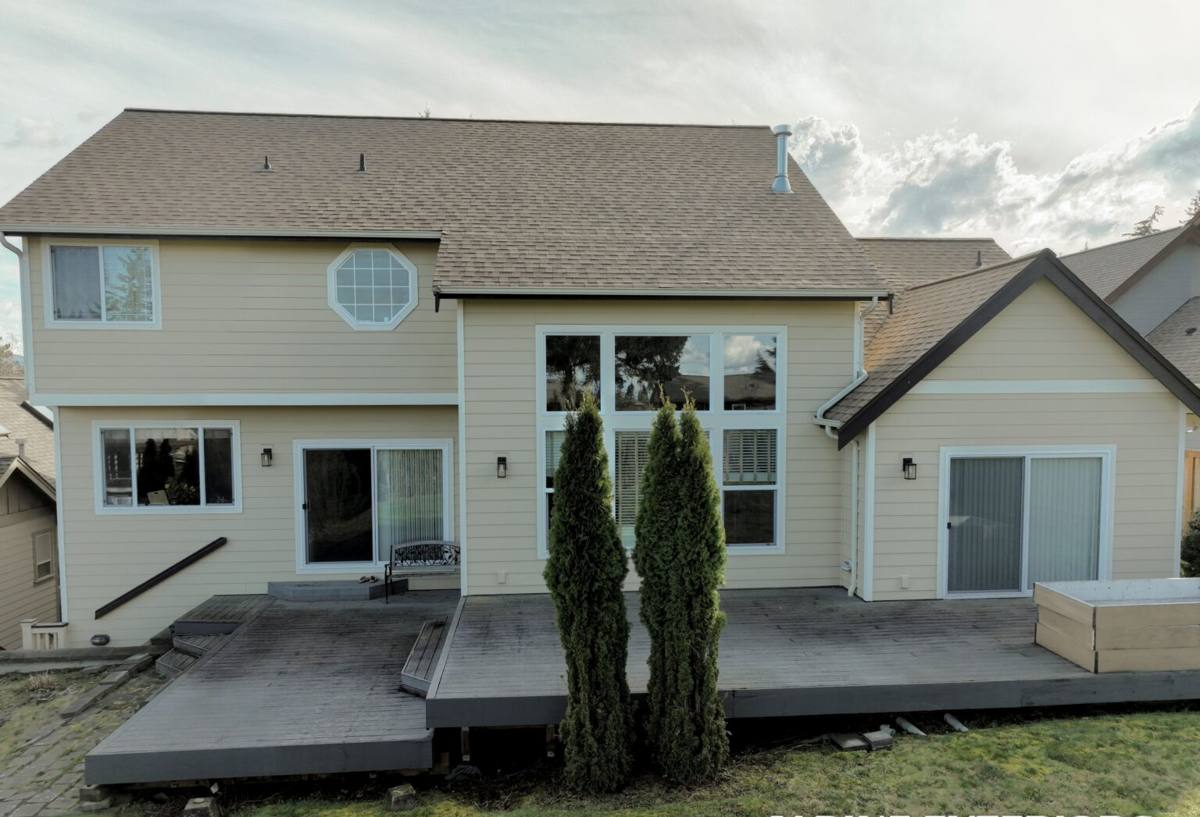
Why Decks Fail in This Area
Most deck damage we find in Lynden isn't dramatic — it's slow, moisture-driven deterioration that builds for years before it becomes a safety issue. A few conditions specific to this region make it worse:
- Extended wet seasons. Whatcom County gets long stretches of steady, driving rain rather than short heavy downpours. That means wood stays saturated longer, which accelerates rot at joints, fasteners, and anywhere water can pool instead of shed.
- Moss and algae growth. Our mild, damp climate is ideal moss habitat. A mossy deck surface isn't just a cosmetic problem — moss holds moisture against the wood constantly, which is one of the fastest ways to rot decking boards and turn a walking surface slick and unsafe.
- Freeze-thaw cycling. Lynden sees more frost than coastal Bellingham neighborhoods. Water that gets into cracks, fastener holes, or checked wood grain expands when it freezes, which widens cracks and loosens connections a little more each winter.
- Ground-level and low-clearance decks. Many Lynden properties, especially older farmhouses and rural lots, have decks built close to grade with limited airflow underneath. Poor ventilation means the structure below the decking never fully dries out between storms.
What We Check on a Lynden Deck Inspection
A deck repair estimate should never be a quick glance at the surface. Before we recommend anything, we inspect the parts of the deck that actually determine whether it's safe:
Structure First
We check ledger board attachment (where the deck connects to the house — the single most common point of catastrophic failure), post bases, beam connections, and joist condition. We probe wood with an awl in areas prone to moisture, especially near the house, around posts, and anywhere two pieces of lumber meet without a gap to drain.
Fasteners and Hardware
Older Lynden decks were often built before current code required corrosion-resistant hardware and proper joist hangers at every connection. We look for rusted or failing fasteners, missing hangers, and hardware that's incompatible with modern pressure-treated lumber chemicals, which can accelerate corrosion.
Decking and Railing
Boards get checked for soft spots, cupping, and splitting. Railings and guardrails get a hand-test for movement — a wobbly railing is a liability issue, not a cosmetic one, and it's one of the more common repair requests we get.
Drainage and Ventilation
We look at how water moves off and out from under the deck. Standing water at the base of posts or against the house foundation is a sign the deck is contributing to a bigger moisture problem than the deck itself.
Common Repairs We Handle in Lynden
| Issue | What It Looks Like | Typical Fix |
|---|---|---|
| Rotted decking boards | Soft, spongy, or discolored spots you can press a finger into | Spot replacement of affected boards; full resurface if damage is widespread |
| Failing ledger connection | Gap between deck and house, water staining on siding above the deck | Re-flash and re-fasten to current structural standards |
| Loose or rotted railing posts | Railing that moves or flexes under light pressure | Post replacement or reinforcement with proper structural blocking |
| Moss and algae buildup | Green or black film, slick surface, especially on north-facing decks | Deep clean, treat, and address underlying moisture/shade issue |
| Corroded fasteners | Rust streaks around screw heads, popped nails | Replace with corrosion-rated fasteners matched to the lumber |
| Undersized or missing joist hangers | Sagging or bouncy deck surface | Add proper hangers and blocking to bring framing up to code |
Repair vs. Replace: Making the Honest Call
Not every deck problem needs a full rebuild, and not every deck is worth saving as-is. We walk every Lynden homeowner through this decision honestly rather than defaulting to the bigger job.
Repair usually makes sense when:
- The main structural frame — posts, beams, ledger — is sound
- Damage is limited to specific boards, railings, or fasteners
- The deck is a reasonable age and was originally built to a solid standard
Replacement is the better call when:
- Rot has reached the structural framing, not just the surface boards
- The ledger connection has failed or was never flashed correctly
- Multiple systems (framing, railing, decking) are all failing at once, meaning repair costs start approaching rebuild costs
- The deck predates current safety code for guardrails and stair requirements
We'll tell you plainly which category your deck falls into. A deck with a rotted ledger board isn't safe to patch around — that's a structural repair, not optional maintenance, regardless of how the rest of the deck looks.
Materials: What Holds Up Around Lynden
Material choice matters more here than in drier climates, because whatever we use has to survive months of continuous dampness every year.
Pressure-Treated Lumber
Still the standard for framing and a common, budget-friendly decking choice. It needs to be properly sealed and maintained on a regular schedule — in a climate like ours, skipping a year of sealant is where problems start.
Composite and PVC Decking
A strong option for the decking surface itself in this climate, since it doesn't absorb water the way wood does and resists the moss staining that's common on shaded Lynden lots. Our standard is to still use fully corrosion-rated fasteners and proper spacing underneath, since the framing below composite decking is still wood and still needs to breathe and drain.
Cedar
A traditional Pacific Northwest choice with real natural rot resistance, but it's a higher-maintenance material that needs consistent sealing to perform well through our wet seasons. We're upfront with homeowners about that maintenance commitment before recommending it.
We don't push one material as universally "best" — the right call depends on your deck's exposure, how much maintenance you want to keep up with, and your budget. What we won't do is use hardware or fastener combinations that are known to corrode faster in damp climates just to save a few dollars on a repair.
Our Repair Process
- On-site inspection. We check structure, hardware, and surface condition, and explain what we find in plain terms.
- Written scope and estimate. You get a clear breakdown of what's being repaired and why, not a vague lump-sum number.
- Repair work. We address structural issues first, then surface and cosmetic items, using fasteners and materials rated for continuous Whatcom County moisture exposure.
- Final walkthrough. We check railing stability, walking surface, and drainage before calling the job done, and point out any maintenance items you should keep an eye on going forward.
A Homeowner's Deck Checklist
Between professional inspections, these are worth checking yourself once or twice a year, especially heading into and coming out of our wet season:
- Press on decking boards near the house and around posts — any softness means moisture has gotten in
- Give railings a firm push — any noticeable movement needs attention
- Look for gaps, staining, or separation where the deck meets the house siding
- Check for moss buildup, especially on shaded or north-facing sections
- Look under the deck for standing water or blocked drainage paths
- Check fastener heads for rust streaking
Why Local Experience Matters for This Job
Deck repair looks straightforward, but doing it wrong is easy — swapping a rotted board without checking what caused the rot, or reattaching a railing without addressing a failing post, just delays the same problem. A crew that works Lynden and greater Whatcom County regularly knows which failure points show up again and again in this climate, knows what proper drainage and flashing detail actually needs to look like here, and isn't guessing at how a repair will hold up through a Whatcom County winter — we've already seen how the last one went.
If you've got a deck in Lynden that's showing wear, feels less solid than it used to, or just needs an honest second opinion, we're happy to take a look. Reach out for a free, no-pressure estimate using the form below.