 Bellingham Siding
 Roof Repair Built for Happy Valley's Climate
Happy Valley sits close enough to the water and to Bellingham's tree canopy that its roofs take a particular kind of beating. Salt-tinged air off the bay accelerates corrosion on exposed metal fasteners and flashing. Driving rain off Puget Sound doesn't just fall straight down here — wind pushes it sideways into laps, seams, and vents that were never designed to handle water moving uphill. And the combination of shade, moisture, and mild temperatures gives moss a long growing season that, left alone, works its way under shingles and lifts them off the deck. None of this is unique to any one house in the neighborhood. It's the baseline every roof in this part of Whatcom County has to survive, year after year.
A roof repair that doesn't account for those three factors — salt air, wind-driven rain, and moss — tends to fail again within a season or two. We treat Happy Valley roof repair as its own category of work, not a smaller version of a full re-roof, because the goal is different: find where water is actually getting in, fix that specific failure correctly, and leave the rest of a serviceable roof alone.
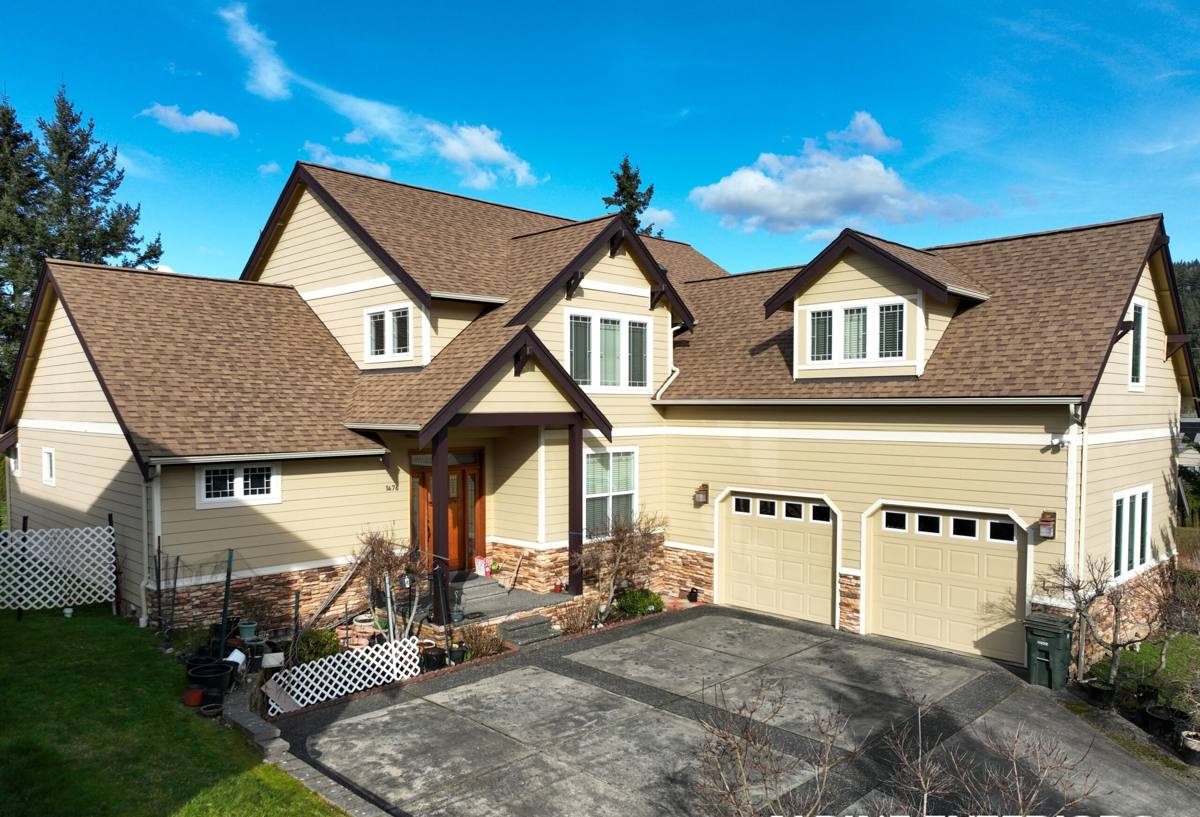
What's Actually Failing on Happy Valley Roofs
Most of the repair calls we get in this neighborhood fall into a handful of categories. Knowing which one you're dealing with matters, because the fix — and the cost — is different for each.
Moss and Organic Growth
Moss doesn't just look bad. It holds water against the shingle surface far longer than the shingle was designed to tolerate, and its root structure physically wedges under shingle tabs and lifts them. On north-facing slopes and anywhere a roof sits under tree cover, moss can establish itself within a couple of growing seasons. By the time it's visible from the ground, it's often already lifted shingles enough to let water track underneath.
Flashing and Penetration Failures
Flashing around chimneys, skylights, vents, and roof-to-wall transitions is the single most common source of leaks we find — far more often than the shingles themselves. Wind-driven rain finds any gap in a flashing seal and pushes water uphill under the counterflashing. Salt air speeds up corrosion on galvanized flashing and fasteners, which shortens the useful life of a detail that's supposed to outlast the roofing material around it.
Fastener and Metal Corrosion
Homes closer to the water see faster corrosion on exposed nail heads, drip edge, and metal valleys. Corroded fasteners back out or lose their grip, which is a quiet failure — you won't see it until a shingle blows loose or a leak shows up on the ceiling below.
Underlayment and Deck Damage from Long-Term Moisture
When a leak goes unaddressed for a while, moisture doesn't stay at the surface. It saturates underlayment and, eventually, the roof deck itself. This is the difference between a repair that takes an afternoon and one that requires opening up a section of deck to dry out and rebuild.
Signs It's Time to Call, Not Wait
Roofs rarely fail all at once. They give warnings first, and catching them early is what keeps a repair a repair instead of a much bigger job.
- Green or black streaking, or visible moss growth, especially on shaded or north-facing slopes
- Granules collecting in gutters or at downspout outlets
- Shingles that look cupped, curled, or lifted at the edges
- Staining on interior ceilings or upper walls, particularly after a windy rainstorm
- Daylight visible through the roof deck from inside the attic
- Rust streaks below metal flashing or vent boots
- Soft or spongy spots when walking the roofline (we check this, not something to test yourself)
- Debris buildup around chimneys, skylights, or valleys that traps moisture
If you're seeing more than one of these, it's worth an inspection before the next heavy rain, not after.
Repair vs. Replacement: How We Make the Call
Not every roof problem in Happy Valley means a new roof, and we don't sell repairs we don't think will hold. The honest answer usually comes down to how contained the damage is and what condition the rest of the roof is in.
| Factor | Favors Repair | Favors Replacement |
|---|---|---|
| Age of roof | Under 15-20 years, depending on material | At or past expected service life |
| Extent of damage | Localized — one slope, one penetration, one valley | Widespread across multiple slopes |
| Moss/growth condition | Surface growth, shingles still intact underneath | Growth has caused shingle loss or granule stripping over large areas |
| Deck condition | Dry, solid deck under the affected area | Soft, delaminated, or repeatedly wet deck |
| Leak history | First occurrence, source clearly identified | Recurring leaks in different spots, unclear source |
We'll tell you plainly which side of that table your roof falls on, and why — including if the honest answer is that a repair now buys you a few good years before replacement makes more sense.
What a Correct Repair Actually Involves
A roof repair done right in this climate isn't just patching the spot where water is showing up inside the house. Water often travels along the underlayment or decking before it drips through, so the entry point can be several feet from the stain on your ceiling.
- Trace the leak to its actual source — not just the visible symptom, by inspecting the roof surface, flashing, and attic or roof deck from underneath where accessible.
- Remove moss and organic debris from the affected area and surrounding slopes, using methods that don't strip granules or damage the shingle surface.
- Assess the deck for soft spots or moisture damage before closing anything back up — patching over a compromised deck just delays the next failure.
- Replace or reseal flashing at the actual point of failure, matching materials appropriately for corrosion resistance given the salt air exposure.
- Replace damaged shingles or roofing material in the repair zone, matching existing material as closely as possible.
- Check fasteners and metal edges in the surrounding area for early corrosion, since one failed fastener is rarely alone.
- Confirm the fix and clean up the site, leaving you with clear notes on what was found and what was done.
Moss Prevention: Part of the Repair, Not an Upsell
Because moss is such a persistent driver of roof damage in this area, we treat moss removal and prevention as part of a proper repair, not a separate add-on. That typically means clearing existing growth without damaging the shingle surface, clearing debris from valleys and around penetrations where moisture collects, and — where it makes sense for the roof and the property — installing zinc or copper strips near the ridge, which release trace metals that inhibit new moss growth as rain washes over them. It's a low-maintenance step that meaningfully extends the time between moss treatments, and it's worth discussing on any roof in Happy Valley with shade or a north-facing slope.
Why Local Experience on This Roof Type Matters
A roof repair crew that mainly works drier inland climates tends to under-treat moss and under-spec flashing corrosion resistance, because those aren't the failure modes they see most often. Working Bellingham and Whatcom County roofs regularly means we're used to diagnosing wind-driven rain intrusion at flashing details, recognizing how far moss has to progress before it's actually compromising the shingle mat versus just being cosmetic, and specifying fasteners and metal that hold up near the water. That's not a marketing point — it's the difference between a repair that lasts and one that reopens with the next fall storm.
It also means we're familiar with the roofing materials and slope pitches common in Happy Valley and the surrounding Bellingham neighborhoods, so an inspection doesn't start from zero. We can usually tell you within the first walk of the roof whether you're looking at a straightforward repair or something that needs a closer look at the deck.
What to Expect When You Call Us
We start with an inspection — on the roof and, where accessible, from inside the attic — to find the actual source of the problem, not just patch a symptom. You'll get a straight answer about what we found, what's causing it, and what it will take to fix, including whether repair or replacement is the better use of your money. If it's a repair, we'll walk you through the scope before we start, and we clean up thoroughly when we're done. No pressure to upgrade to a full roof if a repair will genuinely hold.
If you've got a leak, moss buildup, or a roof that just doesn't look right anymore, we're happy to take a look. Reach out for a free, no-pressure estimate using the form below, and we'll get you a straight assessment of what your Happy Valley roof actually needs.