 Bellingham Siding
 Why Decks in Happy Valley Wear Out Faster Than Homeowners Expect
Bellingham sits in a marine climate that's hard on exterior wood, and Happy Valley properties feel it as much as anywhere else in the city. Between the salt-laden air rolling in off the water, the long stretch of driving rain that runs from fall through spring, and a moss season that can linger for months under any shade or tree cover, a deck here is under near-constant moisture pressure for most of the year. That's very different from a deck built in a dry inland climate, and it means the materials, fasteners, and construction details that work fine elsewhere can fail early in Whatcom County.
Most homeowners don't notice the damage until it's well underway. Moss holds moisture against the deck boards long after a storm has passed, salt air accelerates corrosion on fasteners and hardware, and repeated wet-dry cycles slowly work joints and connections loose. By the time a deck looks obviously bad — soft boards, visible rot, a railing that wiggles — the structure underneath has often been compromised for a while.
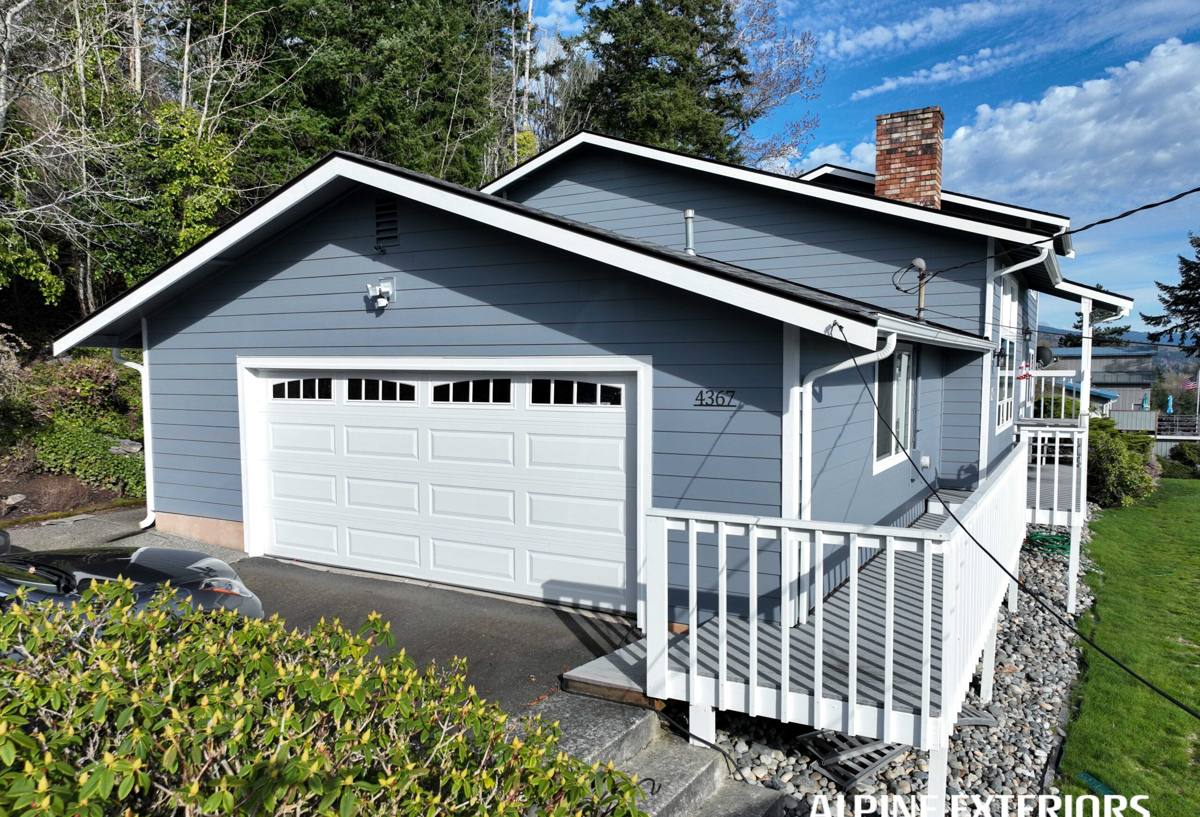
Signs a Happy Valley Deck Needs Replacement, Not Just Repair
Not every tired-looking deck needs to come out. But there's a point where patching boards is just delaying an inevitable, more expensive job — and in some cases, patching over a compromised structure is a safety issue. Here's what tells us a deck is past the point of repair:
- Soft, spongy, or spring-back decking across multiple boards, not just one or two isolated spots
- Rot or discoloration at the ledger board where the deck attaches to the house
- Rust streaking or crumbling fasteners, hinges, or post bases
- Persistent moss or algae growth that returns within weeks of cleaning
- Posts or footings that feel loose, or visible movement when the deck is walked on or loaded
- Railings that flex or separate from posts under normal pressure
- A deck older than 15-20 years that has never had structural connectors upgraded
If a deck is showing two or more of these, replacement is almost always the more honest recommendation than another round of board swaps and stain.
Choosing the Right Decking Material for This Climate
There's no single "best" decking material — every option is a tradeoff between upfront cost, maintenance, and how it holds up to Bellingham's wet, mossy conditions. Here's how the common choices compare for a Happy Valley project:
| Material | Moisture & moss resistance | Maintenance | Typical lifespan |
|---|---|---|---|
| Pressure-treated lumber | Good if properly sealed and re-coated regularly | High — annual cleaning and periodic sealing | 15-20 years |
| Cedar | Naturally moisture- and insect-resistant, but surface still needs care | Moderate to high — regular cleaning and refinishing | 15-25 years |
| Composite decking | Excellent — doesn't absorb water or rot | Low — periodic washing to keep moss/algae from gripping the surface | 25-30+ years |
| PVC decking | Excellent — fully synthetic, no wood fiber to feed rot | Low | 25-30+ years |
Composite and PVC decking cost more up front, but in a climate where moss and standing moisture are a year-round fact of life, the reduced maintenance often makes them the more practical long-term choice. Wood is still a legitimate option — it's less expensive and can look great — but it requires an honest commitment to yearly upkeep to hold up here. We'll walk through the real tradeoffs for your project rather than pushing one product line.
What We Won't Do
We don't install decking systems that trap moisture against the structure or that rely on finishes needing constant re-application to avoid failure. If a product has a maintenance schedule that's unrealistic for how most homeowners actually live, we'll say so up front rather than let you find out the hard way in year three.
What a Correct Deck Replacement Actually Involves
A deck replacement is more than pulling up old boards and screwing down new ones. In a climate like this, the details that don't show on the surface are what determine whether the new deck lasts 10 years or 30.
Structural Basics
- Ledger board flashing — proper flashing where the deck meets the house is one of the most common failure points we find on older decks, and it's the single most important detail for keeping water out of your home's structure
- Joist and beam sizing — spans need to match the actual load and species/grade of lumber, not just "what was there before"
- Footings — footings need to be sized and set to current code depth, which matters for frost and soil stability in our region
- Fasteners and hardware — corrosion-resistant, code-rated connectors matter enormously here given the salt air; using standard hardware in a coastal-influenced climate is a shortcut that shows up as rust within a few seasons
Drainage and Airflow
Because moss and rot both need standing moisture to take hold, we pay close attention to how water moves off and under the deck — board spacing, joist tape, and grading beneath the structure all affect how quickly it dries out between storms. A deck that can't shed water efficiently will grow moss faster no matter what decking material sits on top.
Our Deck Replacement Process
- On-site assessment — we inspect the existing deck, ledger connection, footings, and framing to understand what's actually failing and why
- Honest scope and estimate — you get a clear breakdown of what needs to be replaced, what materials we recommend and why, and a real cost range
- Permitting — we handle the permit process where required so the project is done to code, not just done to look finished
- Demolition and disposal — old decking, framing, and hardware removed and hauled off
- Structural rebuild — new footings, framing, ledger flashing, and connectors installed to current code
- Decking, railing, and finish work — installed per manufacturer specs, with attention to fastener choice and drainage details
- Final walkthrough — we go over the finished deck with you, including basic care guidance for our climate
Permits and Building Code Considerations
Most deck replacements in Bellingham and unincorporated Whatcom County require a permit, particularly when footings, framing, or railings are being rebuilt rather than just resurfaced. Requirements can vary depending on deck height, size, and whether it's attached to the house. We handle the permit application and inspection process as part of the job so you're not left guessing whether your new deck meets current code — this matters both for safety and for resale, since an unpermitted structural deck can become a real problem when a home is sold.
What Deck Replacement Typically Costs
Every deck is different, but the biggest cost drivers are consistent from project to project:
| Cost factor | Why it matters |
|---|---|
| Deck size and shape | More square footage and complex angles mean more material and labor |
| Decking material | Pressure-treated lumber is the least expensive up front; composite and PVC cost more but need less upkeep |
| Height and structure | Decks with stairs, multiple levels, or significant height off grade require more framing and railing |
| Site access | Sloped lots and limited access, common on Happy Valley's hillier streets, can add labor time |
| Condition of existing footings | Footings that don't meet current code need to be replaced, not reused |
| Railing and finish choices | Cable, metal, or composite railing systems cost more than basic wood balusters |
We'd rather walk your specific deck and give you real numbers than quote a broad range that doesn't mean much for your property.
Why Hiring a Crew That Already Works Happy Valley Matters
Happy Valley's mix of hillside lots, mature tree cover, and older housing stock alongside newer construction means every deck project comes with its own site conditions — slope, access, drainage patterns, and existing structure quality all vary block to block. A crew that regularly works this neighborhood already has a feel for how the terrain and climate here affect a build, from footing placement on sloped ground to which drainage details actually hold up through a wet Bellingham winter. That local familiarity translates into fewer surprises mid-project and a deck that's built for the conditions it will actually face, not a generic spec.
Keeping Your New Deck in Good Shape Through Moss Season
A properly built deck still needs basic seasonal care to get its full lifespan out of it, especially through Whatcom County's long stretch of wet weather. A few habits make a real difference:
- Sweep leaves and debris off regularly, especially in fall — trapped organic matter feeds moss and holds moisture against the boards
- Rinse or wash the surface a couple of times a year to knock back algae and moss before it takes hold
- Keep gutters and downspouts near the deck clear so water isn't dumping directly onto or under it
- Check railings and stairs for movement each spring after the wet season
- For wood decks, re-seal on the schedule recommended for the product — skipping a year in this climate adds up fast
- Trim back overhanging branches to improve airflow and sun exposure where possible
If you're noticing soft boards, rust, persistent moss, or a deck that just feels less solid than it used to, it's worth having it looked at before it becomes a bigger repair. We're happy to come take a look, give you a straight assessment, and put together a free, no-pressure estimate for a deck built to hold up to what Bellingham weather actually does. There's a form below to get started whenever you're ready.