 Bellingham Siding
 Silver Beach's Siding Problem Isn't Like Inland Bellingham's
Silver Beach sits close enough to Bellingham Bay that salt-laden air is part of daily life, not an occasional weather event. Add Whatcom County's long wet season — months of driving rain off the water, followed by extended stretches of low sun and high humidity — and you get a siding environment that's noticeably harder on a house than what a homeowner a few miles inland deals with. Salt air accelerates corrosion on fasteners and trim. Wind-driven rain finds its way behind siding that isn't detailed correctly. And a shaded, damp exterior wall becomes a moss and mildew magnet for a good chunk of the year.
None of this means siding is doomed in Silver Beach. It means the product and the installation both have to be chosen with this specific climate in mind, not a generic "siding is siding" approach.
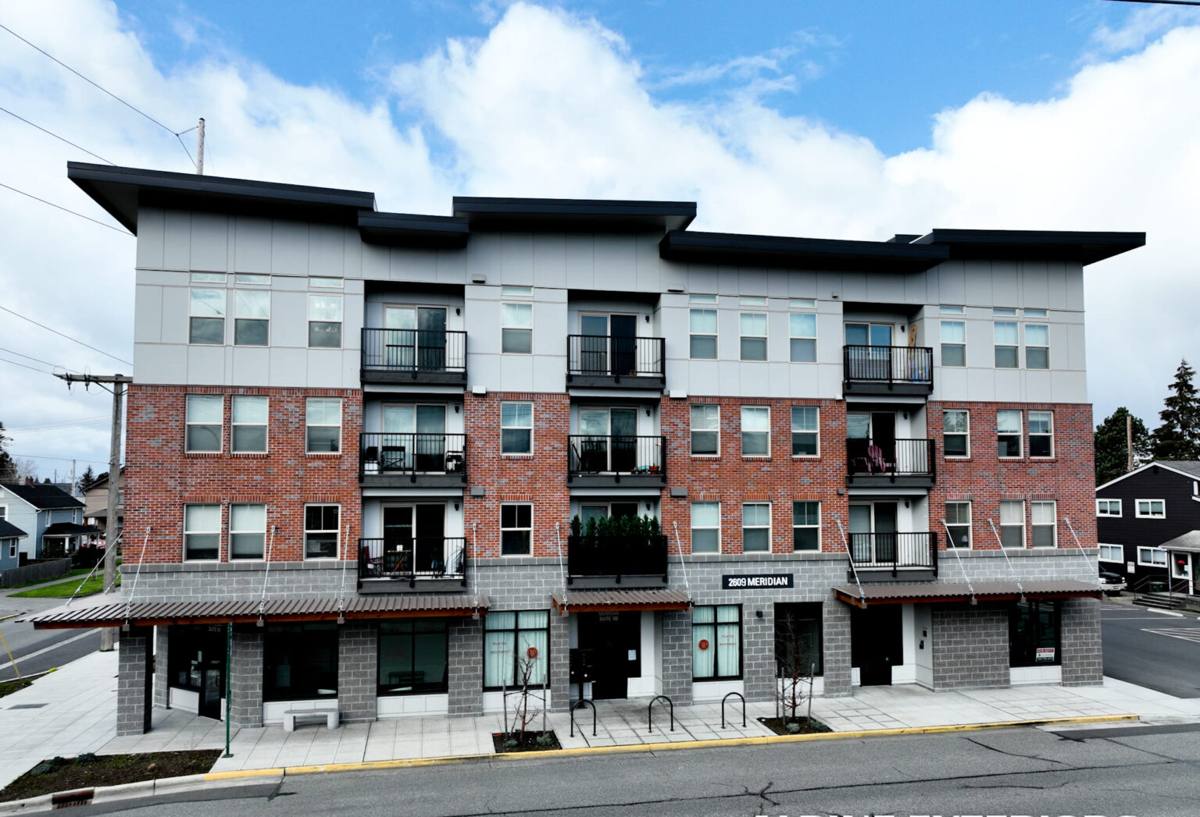
What Fiber Cement Siding Needs to Do Here
Fiber cement, done right, handles this environment better than most alternatives — but only if a few things are true about the product and the install:
- It has to resist moisture absorption. Siding that swells, warps, or delaminates when it's wet for weeks at a time will fail early in a marine climate.
- The finish has to hold up to salt air and UV. Field-applied paint chalks and fades faster near the water; a factory-cured finish holds color and film integrity longer.
- It has to be non-combustible. Wildfire smoke has reached Whatcom County in recent summers, and insurers increasingly look at exterior cladding material.
- The install has to manage bulk water, not just shed it. Rain screens, flashing, and correct fastening matter more here than in a dry climate where mistakes get a pass.
Why We Install Only James Hardie
We standardized on James Hardie fiber cement and don't install LP SmartSide, vinyl, Cemplank, Allura, or bare cedar and spruce siding. That's not a marketing position — it's a decision based on what holds up when we go back and look at siding we or others installed years earlier in wet, coastal-adjacent conditions like Silver Beach's.
Hardie's HZ5 formulation is engineered specifically for climates with prolonged moisture exposure and freeze-thaw cycling, which describes a Bellingham winter well. The ColorPlus factory finish is baked on and warrantied separately from the substrate, which matters in a place where a field-painted product would need repainting sooner. And because fiber cement is fundamentally a cement-and-cellulose product rather than wood or wood-derived, it doesn't feed moss and mildew growth the way organic materials do — a real advantage during Whatcom County's moss season, which can stretch from fall through spring.
We're not going to tell you every other product is unusable — homeowners install and live with all of the alternatives, and each has situations where it performs adequately. What we will say is that we've drawn a line based on what we're willing to warranty our workmanship against, and Hardie is the product that clears that bar consistently in this climate.
Comparison of common concerns
| Concern in a marine climate | Fiber cement (Hardie) | Vinyl | Untreated wood/spruce |
|---|---|---|---|
| Moisture absorption / swelling | Very low | Doesn't absorb, but can trap moisture behind it if not vented correctly | High if finish isn't maintained |
| Salt air / UV finish durability | Factory finish, separately warrantied | Color molded in, can chalk over time | Field finish, needs recoating on a schedule |
| Combustibility | Non-combustible | Combustible (melts/deforms at lower heat) | Combustible |
| Moss/mildew feeding | Doesn't feed organic growth | Doesn't feed growth, but seams trap debris | Feeds organic growth if finish fails |
What a Correct Installation Involves
Moisture management behind the siding
The siding itself is only part of the system. Behind every Hardie board we install in a wet-climate project like this, there's a water-resistive barrier and, on most jobs, a drainage gap (rain screen) that lets any moisture that does get past the siding drain and dry out instead of sitting against the sheathing. Skipping this step is one of the most common shortcuts we see on older installs we're asked to repair.
Flashing and clearances
Windows, doors, and roof-to-wall transitions are where wind-driven rain actually gets in — not through the flat field of the siding. Correct head flashing, kick-out flashing at roof lines, and proper caulking at penetrations matter more here than in a dry climate where a marginal detail might never get tested by weather.
Fastening and gaps
Hardie specifies fastener type, spacing, and butt-joint gaps for a reason — get it wrong and you get panel buckling, rust streaking from the wrong fastener in a salt-air environment, or cracking at joints that were installed too tight. We follow Hardie's published installation specs, not a generalized "siding install," because that's what keeps the manufacturer's warranty valid and the wall assembly performing as designed.
Ventilation and drying capacity
A wall that can dry out when it does get wet is far more forgiving than one that can't. That means respecting clearances at grade, decks, and roof lines so the bottom of the siding isn't sitting in standing water or buried in soil or mulch — a detail that gets overlooked more often than it should on homes close to the water.
Our Process for a Silver Beach Job
- On-site assessment. We look at existing siding condition, moisture damage at trim and penetrations, and the specific exposure of each elevation — a north wall facing prevailing wind and rain gets treated differently than a sheltered south wall.
- Tear-off and sheathing check. We don't side over rot. If sheathing is compromised, we address it before anything new goes up — covering damage instead of fixing it just moves the problem behind new siding.
- Water-resistive barrier and rain screen installation. This is the step that determines how the wall performs in ten years, not year one.
- Hardie panel or lap installation to spec, including correct fastening, gapping, and flashing at every window, door, and transition.
- Trim, caulking, and final detail work, including the transitions most prone to leaks if rushed.
- Walkthrough and cleanup. We review the finished work with the homeowner before calling the job done.
What Drives the Cost of a Job Like This
Every estimate is specific to the house, but a few factors consistently move the price on Silver Beach projects:
| Cost factor | Why it matters in this area |
|---|---|
| Tear-off and disposal | Older homes near the bay often have multiple layers of prior siding or damaged material that needs full removal |
| Hidden moisture/rot repair | Sheathing damage is more common here than in drier parts of the county and isn't visible until tear-off |
| Siding profile and accessories | Lap vs. panel, trim width, and corner details all affect material and labor |
| Number and complexity of elevations | Water-exposed sides may need extra flashing and rain-screen detailing that sheltered sides don't |
| Color and finish choice | Factory ColorPlus finishes cost more upfront but remove a repainting cycle from the maintenance schedule |
Living With Fiber Cement Siding in a Marine Climate
Fiber cement is low-maintenance compared to wood, but "low" isn't "none." In Silver Beach's climate, plan on:
- Periodic gentle washing to remove salt residue and organic buildup, especially on shaded or north-facing walls where moss season leaves the most growth
- Checking caulking at trim and penetrations every year or two, since UV and moisture cycling break down sealants faster near the water
- Keeping gutters and downspouts clear so bulk water isn't running down the face of the siding or pooling at the base
- Trimming back vegetation and keeping mulch or soil off the bottom edge of the siding to preserve the clearance the system depends on
Signs Your Current Siding Is Telling You Something
Before a full replacement makes sense, these are the signs we watch for on homes in this area:
- Moss or dark streaking concentrated on one or two elevations, especially shaded or north-facing walls
- Soft or spongy trim boards, particularly near window sills and corners
- Paint that's failing faster in one area than the rest of the house — often a sign of moisture getting behind the siding, not just weathering
- Visible rust streaks below fasteners, a marine-climate issue that shows up faster here than inland
- Panels that have started to buckle, cup, or separate at butt joints
Why Hiring a Crew That Already Works This Area Matters
A lot of siding problems in Whatcom County aren't product failures — they're installation shortcuts that a drier climate would have hidden for longer. A crew that regularly works Silver Beach and similar Bellingham Bay-adjacent neighborhoods has already seen which details actually get tested by this weather: which flashing details leak, which fastener choices rust, which clearances get ignored and cause rot two years later. That's the difference between a crew that installs siding correctly on paper and one that installs it correctly for this specific climate.
If you're weighing a siding replacement or repair in Silver Beach, we're happy to take a look and give you a straightforward, no-pressure estimate — including an honest read on whether repair, partial replacement, or a full residing makes the most sense for your home. Use the form below to get started.