 Bellingham Siding
 Ferndale sits close enough to the water and the Nooksack lowlands that its homes take a specific kind of beating: salt-tinged marine air rolling in off the Strait, wind-driven rain that finds every gap in a wall assembly, and a moss season that can stretch from October clear into May. If you're planning a siding replacement in Ferndale, the product and the installation both need to be chosen for that reality, not for a showroom photo. This page covers what that actually means for your home.
Why Ferndale Siding Wears Differently Than Siding Inland
Whatcom County isn't uniform when it comes to weather exposure. Homes closer to the water and open fields around Ferndale see more sustained wind-driven rain than homes tucked into denser, more sheltered parts of Bellingham. That wind pushes moisture sideways into siding laps, corner boards, and trim joints that were never designed to handle constant lateral pressure. Add in the area's persistent damp season, and you get long stretches where siding simply doesn't get a chance to fully dry out between rain events.
That combination is hard on any wood-based or wood-look product. Paint film breaks down faster. End grain absorbs water at butt joints. And moss and algae get a foothold anywhere siding stays shaded and damp, which describes a lot of north-facing walls and tree-lined lots in this part of the county.
What This Means for Material Choice
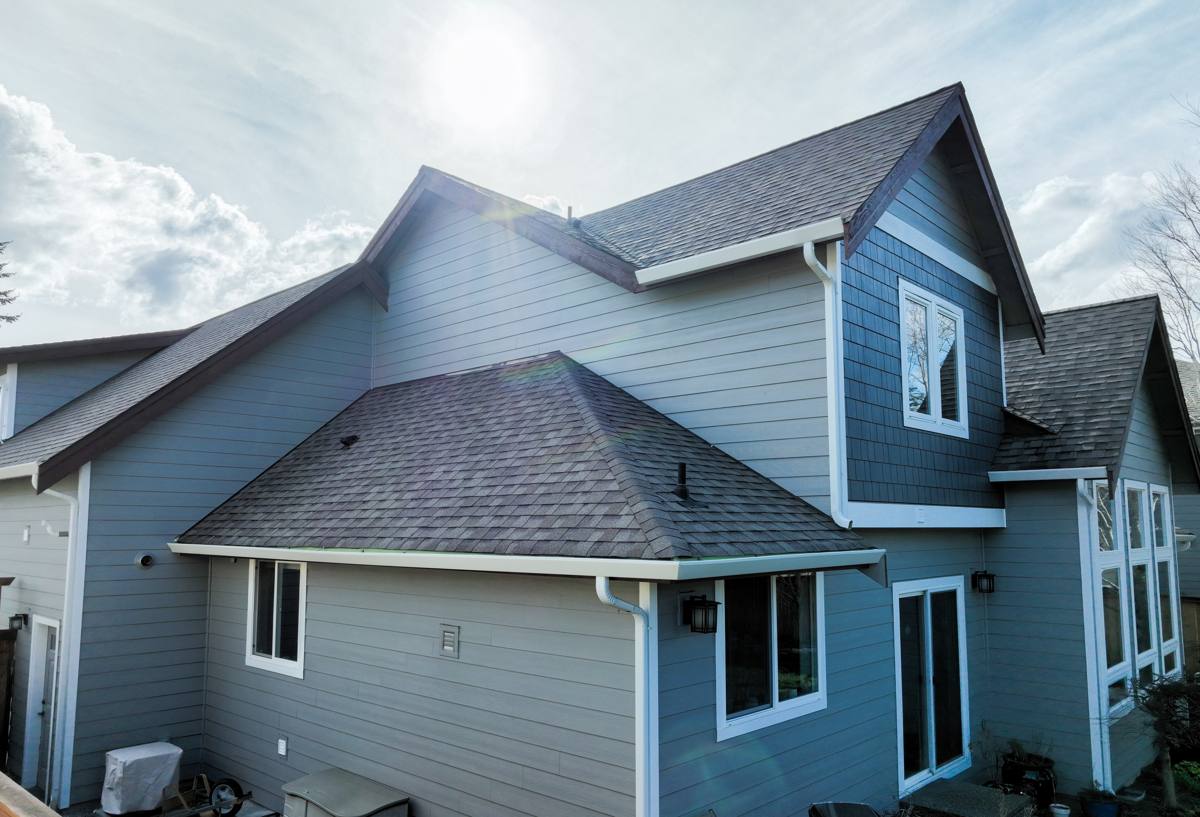
We install James Hardie fiber cement siding exclusively, and Ferndale's climate is a big part of why. Fiber cement doesn't swell, rot, or delaminate the way wood-based sidings can when they stay wet for extended periods. It's also non-combustible, which matters given how much dry vegetation and outbuilding density you see on larger Ferndale lots in summer. We're not going to pretend every siding product on the market is equally suited to this environment — some hold up fine in drier climates and struggle here. Hardie's HZ5 product line is engineered specifically for climates like this, with a moisture and freeze-thaw performance profile built for the Pacific Northwest.
What a Correct Siding Replacement Job Involves
Siding replacement isn't just pulling off old panels and nailing up new ones. In a wind-driven-rain area like Ferndale, most of the actual performance of the wall comes from what's underneath the siding, not the siding itself.
- Full tear-off to bare sheathing, so hidden rot, soft spots, and old moisture damage get found and fixed instead of covered up
- Inspection and repair of sheathing, framing, and window/door flashing before anything new goes on
- A correctly lapped weather-resistive barrier (housewrap) installed shingle-style so water sheds down and out, never behind the barrier
- Proper flashing at every penetration — windows, doors, hose bibs, light fixtures, vents — since these are the most common leak points on older homes
- Rainscreen or furring strip installation where conditions call for it, creating a drainage gap and airflow channel behind the siding
- James Hardie panels, lap siding, or shingle siding installed to manufacturer fastening and clearance specs, including correct gaps at grade and roofline
- Factory-finished ColorPlus trim and accessories so caulking and field-painting are minimized at the joints most exposed to water
Skipping any one of these steps doesn't necessarily show up right away. It shows up in year three or four, as trapped moisture, peeling paint, or soft trim — usually right around the time a homeowner assumed the "new siding" problem was solved for good.
Moss, Algae, and North-Facing Walls
Ferndale's tree cover, cloud cover, and humidity give moss and algae exactly what they need: shade, moisture, and time. On older siding, especially wood-based products, this shows up as dark streaking, soft or spongy patches, and paint that lifts from the surface underneath the growth. Pressure washing knocks it back temporarily, but it doesn't fix the underlying moisture retention that let it grow in the first place.
James Hardie's factory ColorPlus finish is baked on rather than field-applied, which gives it better resistance to the kind of surface breakdown that lets moss and algae get a grip. It's not a guarantee against biological growth — nothing outdoors in this climate is — but a properly ventilated rainscreen assembly behind the siding, combined with a dense fiber cement substrate, gives moisture far less opportunity to sit against the wall long enough to become a problem.
Salt Air and Long-Term Durability
Homes on the western and northern edges of Ferndale get more direct exposure to salt-laden air off the Strait of Georgia than homes further inland in Whatcom County. Salt air accelerates corrosion of metal fasteners and hardware, and it can be harder on certain paint systems and caulks over time. This is one more reason fastener choice and flashing material matter as much as the siding panel itself — using the wrong screws or nails in a marine-influenced environment is a slow, invisible way to shorten the life of an otherwise good installation.
Why We Don't Install Vinyl, LP SmartSide, or Other Composite Sidings Here
We get asked about vinyl and engineered wood siding regularly, and we're upfront about why we don't install them. Vinyl is inexpensive and low-maintenance in mild, dry climates, but it can warp or become brittle under Ferndale's temperature swings, and its seams and J-channels give wind-driven rain more opportunities to work moisture behind the cladding. Engineered wood products like LP SmartSide perform reasonably well when installation and maintenance are perfect, but they rely on a treated wood strand substrate that is more sensitive to sustained moisture exposure than fiber cement — and sustained moisture exposure is exactly what this climate delivers for months at a stretch. These aren't bad products in every setting. They're just not the standard we're willing to put our name behind for homes that see this much wind-driven rain and damp-season duration.
Cost Factors for a Ferndale Siding Replacement
Every home is different, but the variables that move the price of a siding replacement in Ferndale tend to be the same ones every time. We won't quote a number without seeing the house, but here's what typically drives cost up or down.
| Factor | Why It Matters |
|---|---|
| Extent of hidden sheathing/framing damage | Rot repair found during tear-off adds material and labor before new siding can go on |
| Home size and wall complexity | More corners, gables, and dormers mean more cutting, flashing, and labor time |
| Siding profile chosen | Lap, shingle, and panel Hardie products differ in material and install labor cost |
| Trim and accessory scope | Full trim replacement with ColorPlus accessories costs more upfront but reduces future painting |
| Rainscreen/furring installation | Adds a step and material cost, but improves drainage and drying performance long-term |
| Existing exterior access | Landscaping, decks, fencing, or tight lot lines can add setup and protection time |
Our Process for a Ferndale Project
We walk every Ferndale home in person before writing an estimate, because the tear-off is where the real scope of a job gets defined. That inspection includes checking for existing moisture damage around windows, at the base of walls, and anywhere trim meets grade. From there we put together a written scope covering the tear-off, any sheathing or framing repair, the water-resistive barrier and flashing plan, and the specific James Hardie products and colors for your home. We schedule around Whatcom County's wetter months where we can, and we protect landscaping and adjacent surfaces for the duration of the job.
Why Local Installation Experience Matters
A siding crew that already works Ferndale and the surrounding areas of Whatcom County has seen this climate's failure patterns repeatedly — where wind-driven rain gets in on a typical Ferndale wall assembly, which north-facing details grow moss first, and how salt air affects fastener and hardware choices over time. That's different knowledge than a general contractor picking up a Hardie job for the first time. It shows up in the small decisions: where the rainscreen gap gets added even when it's not strictly required, which flashing details get extra attention, and how trim gets detailed at grade to keep water moving away from the house instead of into it.
Get a Free Estimate
If your Ferndale home's siding is showing moss staining, soft trim, peeling paint, or you're simply planning ahead of a full replacement, we're happy to take a look and walk you through what your home specifically needs. There's no pressure and no cost to have us out — use the form below to request a free estimate.